Loading...
Empress Dowager Cixi vs George Washington
George Washington leads by 21.8 pts · 2 figures compared
…
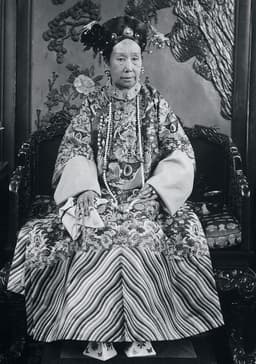
Empress Dowager Cixi
Politician · Modern
55.0Total
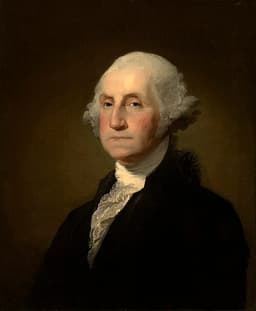
George Washington
Politician · Modern
76.8Total
Basic Information
Born
1835
1732
Died
1908
1799
Era
Modern
Modern
Nationality
China
United States
Occupation
Politician
Politician
Civilization
Eastern
Western
Score Comparison
Military (10%)
25.9
75.0
Political (20%)
53.8
82.0
Influence (20%)
58.3
75.0
Legacy (20%)
52.0
80.0
Leadership (15%)
72.0
85.0
Strategy (15%)
60.0
55.0
TOTAL
55.0
76.8
Empress Dowager Cixi — Complete Timeline
1861 AD
Self-Strengthening MovementReform◆ Major
Cixi supported the Self-Strengthening Movement, which modernized China's military and infrastructure. Arsenals, shipyards, and railways were built, and the Tongwen Guan language school was established. However, the movement avoided political reform, limiting its effectiveness.
Qing dynastyModernizationReform
Impact: nationalconstructive
Xinyou CoupPolitical Action
Cixi, with Prince Gong, staged a coup against the eight regents appointed by the dying Xianfeng Emperor. She had the regents arrested and executed, establishing herself as co-regent for the young Tongzhi Emperor. This began her effective control over the Qing government.
Qing dynastyCoupRegency
Impact: national
1898 AD
Hundred Days' Reform CoupPolitical Action◆ Major
Cixi staged a coup to end the Hundred Days' Reform, a series of modernization edicts by the Guangxu Emperor. She imprisoned the emperor, executed six reform leaders, and rescinded most reforms. This reversed political liberalization and strengthened conservative forces.
Qing dynastyReform suppressionCoup
Impact: nationaldestructive
1900 AD
Boxer RebellionWar◆ Major
Cixi declared war on eight foreign powers after the Boxers besieged foreign legations in Beijing. The Eight-Nation Alliance invaded, defeated Qing forces, and occupied Beijing. Cixi fled to Xi'an. The resulting Boxer Protocol imposed heavy reparations and further weakened the Qing.
Qing dynastyForeign interventionWar
Impact: globaldestructive
1901 AD
Late Qing ReformsReform◆ Major
After the Boxer Rebellion, Cixi initiated the Late Qing Reforms, including abolition of the civil service examination, establishment of modern schools, and military modernization. These reforms aimed to strengthen the dynasty but came too late to prevent its collapse.
Qing dynastyModernizationReform
Impact: nationalconstructive
George Washington — Complete Timeline
1775 AD
Appointed Commander-in-Chief of the Continental ArmyOther◆ Major
The Second Continental Congress appointed Washington as commander-in-chief of the Continental Army on June 15, 1775. He accepted the position without pay, taking command of the forces besieging Boston at the start of the American Revolutionary War.
American RevolutionMilitary Leadership
Impact: national
1776 AD
Crossed the Delaware RiverOther◆ Major
On the night of December 25-26, 1776, Washington led 2,400 troops across the ice-choked Delaware River. The surprise attack on Hessian forces at Trenton resulted in a decisive American victory, capturing nearly 1,000 prisoners and reviving Patriot morale after a series of defeats.
American RevolutionBattleTurning Point
Impact: nationalconstructive
1787 AD
Presided over the Constitutional ConventionPolitical Action◆ Major
Washington served as president of the Constitutional Convention in Philadelphia from May to September 1787. His presence lent legitimacy to the proceedings, and he formally signed the final draft of the U.S. Constitution, though he contributed little to the debates.
ConstitutionFounding Father
Impact: national
1789 AD
Inaugurated as First President of the United StatesPolitical Action◆ Major
Washington was unanimously elected by the Electoral College and inaugurated on April 30, 1789, at Federal Hall in New York City. He established numerous executive branch precedents, including the cabinet system, the inaugural address, and the title 'Mr. President'.
PresidencyFounding Father
Impact: national
1793 AD
Issued the Proclamation of NeutralityOther◆ Major
Washington issued the Proclamation of Neutrality on April 22, 1793, declaring the United States neutral in the conflict between France and Great Britain. This decision established the precedent of American isolationism and avoided entanglement in European wars.
Foreign PolicyNeutrality
Impact: national
1796 AD
Delivered the Farewell AddressOther◆ Major
Washington published his Farewell Address on September 19, 1796, announcing his decision not to seek a third term. The address warned against political factionalism, permanent foreign alliances, and the influence of the military in government, shaping American political culture.
PresidencyLegacy
Impact: national
Expert Analysis
George Washington vs Empress Dowager Cixi
### The Reluctant Founder and the Reluctant Reformer
On a winter morning in 1783, George Washington stood before the Continental Congress in Annapolis, Maryland, and resigned his commission as commander-in-chief. It was an act so unprecedented, so contrary to the pattern of history, that King George III reportedly declared that if Washington gave up power, he would be “the greatest man in the world.” Half a world away and nearly a century later, in the autumn of 1861, a woman who had entered the Forbidden City as a teenage concubine orchestrated a coup that would place her at the helm of the largest empire on earth—a position she would cling to until her dying breath. One man walked away from absolute power; one woman seized it and never let go. What made them so different?
### Origins
George Washington was born into the Virginia gentry in 1732, a world of tobacco plantations, enslaved labor, and the cautious ambition of colonial aristocrats. His formal education was modest, but he learned surveying, land speculation, and the art of command on the frontier during the French and Indian War. His world was one of Enlightenment ideals, republican virtue, and a growing sense that the American colonies might forge their own destiny. Washington embodied the cautious, self-made gentleman—a man who measured his words and his steps.
Empress Dowager Cixi entered the world in 1835 as a daughter of a minor Manchu official. The Qing dynasty was already creaking under the weight of rebellion, foreign humiliation, and internal decay. Cixi’s early life was one of precarious survival in a rigidly hierarchical court. She was chosen as a low-ranking concubine for the Xianfeng Emperor, a position that offered no guarantee of power or even safety. Her world was one of eunuch intrigue, Confucian orthodoxy, and the constant threat of violence. Where Washington learned to command men in the field, Cixi learned to read men in the shadows.
### Rise to Power
Washington’s path to power was public and, in a sense, reluctant. He was chosen to lead the Continental Army in 1775 not because he was the most brilliant strategist—he would lose more battles than he won—but because he was a Virginian who could unite the colonies. His rise was a matter of reputation, not conspiracy. He endured Valley Forge, held the army together through years of defeat, and emerged as the living symbol of the Revolution.
Cixi’s rise was a masterclass in court politics. In 1861, upon the death of the Xianfeng Emperor, a group of eight regents was appointed to rule for the young Tongzhi Emperor. Cixi, then a concubine of the late emperor, allied with Prince Gong, the emperor’s brother, and staged the Xinyou Coup. She had the regents arrested, executed, or exiled. In one swift, bloody stroke, the woman who had been nothing became the de facto ruler of China. She would never again allow power to slip from her grasp.
### Leadership & Governance
Washington’s leadership was defined by restraint. As president, he established the cabinet system, respected the separation of powers, served only two terms, and refused titles like “His Majesty.” He believed that the republic’s survival depended on the example of its leaders—and that example was self-denial. His military score of 70 reflects a competent commander, but his political score of 80 captures his true genius: building a government that could outlast him.
Cixi’s governance was defined by survival. She supported the Self-Strengthening Movement in the 1860s and 1870s, building arsenals and modernizing the military. But when the Guangxu Emperor attempted the Hundred Days’ Reform in 1898—a genuine effort to transform China’s political system—she crushed it, imprisoning the emperor and executing reformers. She understood that modernization could strengthen the state, but reform could weaken her. After the catastrophe of the Boxer Rebellion in 1900, when she declared war on eight foreign powers and lost, she belatedly launched the Late Qing Reforms, abolishing the civil service examination and creating a modern education system. But it was too little, too late. Her political score of 67 reflects a ruler who was brilliant at holding power but disastrous at wielding it for lasting good.
### Triumph & Tragedy
Washington’s greatest triumph was not a battle but a resignation. When he voluntarily gave up the presidency in 1797, he proved that the American experiment was real. His tragedy was personal: he owned enslaved people, and despite private misgivings, he failed to use his immense moral authority to end slavery. He died in 1799, knowing that the republic he helped create was built on a contradiction.
Cixi’s greatest triumph was sheer endurance. For nearly fifty years, she outmaneuvered emperors, princes, eunuchs, and foreign powers. Her tragedy was that she ruled a dying empire. The Boxer Rebellion, which she encouraged, led to the occupation of Beijing and a crushing indemnity. She died in 1908, just three years before the Qing dynasty collapsed. She had tried to save the dynasty by preserving her own power—and in doing so, she ensured its doom.
### Character & Destiny
Washington was a man of immense self-control. He was not brilliant, but he was steady. He was not charismatic, but he was trusted. His character led him to believe that power was a burden to be laid down. Cixi was a woman of immense ambition. She was not cruel for cruelty’s sake, but she was ruthless when threatened. Her character taught her that power was a fortress to be defended. One man’s destiny was to create a nation that could survive without him. One woman’s destiny was to hold an empire together with her bare hands, even as it crumbled around her.
### Legacy
Washington is remembered as the Father of His Country, a face on the dollar bill, a name on the capital. His legacy is not a set of policies but a precedent: the peaceful transfer of power. Cixi is remembered as a tyrant, a reactionary, and a brilliant survivor. Her legacy is more ambiguous: she modernized China’s military and infrastructure, but she also strangled its political reform. Her score of 78.5 for legacy is nearly identical to Washington’s 78.0, but for opposite reasons—one for what he built, the other for the chaos she left behind.
### Conclusion
In the end, the difference between George Washington and Empress Dowager Cixi is not a matter of intelligence or ambition. Both were shrewd, both were resilient, both faced impossible odds. The difference is what they believed power was for. Washington believed it was a trust to be passed on. Cixi believed it was a prize to be kept. One created a nation that would outlast him; the other tried to save an empire and lost it. Their stories remind us that the greatest leaders are not those who hold power longest, but those who know when to let it go.
Rankings
🥇
George WashingtonLeader
Mil: 75.0Pol: 82.0Inf: 75.0
76.8
🥈
Empress Dowager Cixi
Mil: 25.9Pol: 53.8Inf: 58.3
55.0
+21.8 behind
How This Comparison Works
Algorithm
Each figure is scored on 6 dimensions (0—100 scale) based on structured historical data: Military (10%), Political (20%), Influence (20%), Legacy (20%), Leadership (15%), Strategy (15%). The weighted total produces the final ranking.
Data Sources
Scores are computed from structured sub-indicators in the database. Scale factors adjust for era (Ancient ×0.85, Modern ×1.0) and civilization size (Eastern ×1.05, Other ×0.80) to account for differences in population and military scale.
Maximum 3 Figures
Comparisons are limited to 2—3 figures to ensure readability and statistical meaningfulness.
Error Margins
±5 points per dimension — Sub-scores are derived from historical records with inherent uncertainty. Two figures within 5 points on a dimension should be considered roughly equivalent in that area.
Total Score Accuracy
±3 points overall — The weighted combination of 6 dimensions produces a total score with approximately ±3 points of uncertainty. Differences of less than 3 points are not statistically significant— the figures are effectively tied.
Known Limitations
- Historical records are incomplete and uneven across civilizations
- Figures from oral-tradition societies may be underrepresented
- Occupation labels can misclassify multi-role figures
- Scores measure capability and impact, not moral character
- Quantitative scoring is a comparison tool, not absolute truth
Capability Radar
Military (10%) — Battles & Warfare
Battles
30
75
Win Rate
25
70
Expansion
15
60
Political (20%) — Governance & Reform
Reform
65
90
Diplomacy
60
85
Economy
50
65
Influence (20%) — Cultural & Global Reach
Cultural
60
85
Global
60
85
Legacy (20%) — Historical Impact
Historical
75
95
Longevity
55
90
Leadership (15%) — Power & Stability
Tenure
85
70
Stability
40
85
Strategy (15%) — Tactics & Innovation
Strategy
55
80
Tactics
40
65
Reform
70
85
Similar Comparisons
Comments & Discussion
CincinnatusReborn6/16/2026
Washington’s resignation in 1783 wasn’t about humility—it was the most brilliant power move in military history. By stepping down as commander-in-chief, he established civilian control over the military, a principle that saved the young republic from caudillismo. Compare that to Cixi, who, after the Xinyou Coup, executed eight regents to consolidate power. One man institutionalized trust; one woman normalized purges. Give me Washington’s restraint over Cixi’s survival tactics any day. Peasants p
铁血老佛爷6/16/2026
别拿华盛顿的“退位”神话来吹西方道德了。他不过是英国绅士的傀儡戏——1783年交权后还当总统,这叫放弃权力?Cixi在1861年辛酉政变后,一边重用汉臣如左宗棠,一边力排众议支持洋务运动,这才是真掌舵。华盛顿的庄园里还养着奴隶,而Cixi至少让同治中兴有了十年喘息。没有她的强势,大清早被列强瓜分干净,华盛顿那种白人老爷的理想主义救不了老佛爷的江山。
ChronosDevourer6/16/2026
The core irony: Washington inherited a world of Enlightenment optimism where republics seemed viable; Cixi inherited a collapsing dynasty plagued by the Taiping Rebellion (20 million dead). Context makes comparison unfair. Washington could afford to be “reluctant” because he had a functioning constitutional framework and no existential threat. Cixi, grasping power amid a civil war and foreign humiliation, needed ruthlessness. She wasn’t ambitious—she was desperate. History rewards Washington’s r
紫禁城算盘精6/16/2026
数据不说谎:华盛顿卸任时美国国债8000万美元,人均负债约2美元;Cixi临终时清朝外债11亿两白银,人均负债超过2两。一个靠发行债券建国,一个靠抵押海关税务续命。华盛顿的“不贪权”建立在宽松金融基础上,Cixi的“抓权”是恶性通胀下的死循环。别跟我谈道德,看资产负债表:华盛顿的遗产叫美联储,Cixi的遗产叫《辛丑条约》。数字面前,任何理想主义都是耍流氓。