Loading...
Empress Dowager Cixi vs Joseph Stalin
Joseph Stalin leads by 13.8 pts · 2 figures compared
…
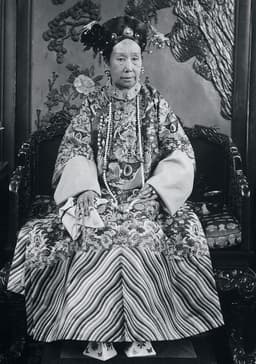
Empress Dowager Cixi
Politician · Modern
55.0Total
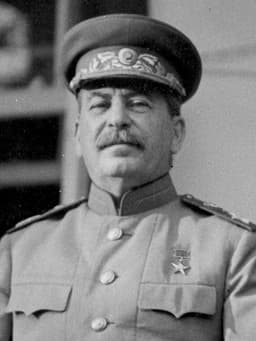
Joseph Stalin
Politician · Modern
68.8Total
Basic Information
Born
1835
1878
Died
1908
1953
Era
Modern
Modern
Nationality
China
Russia
Occupation
Politician
Politician
Civilization
Eastern
Western
Score Comparison
Military (10%)
25.9
75.0
Political (20%)
53.8
70.0
Influence (20%)
58.3
72.0
Legacy (20%)
52.0
55.0
Leadership (15%)
72.0
80.0
Strategy (15%)
60.0
70.0
TOTAL
55.0
68.8
Empress Dowager Cixi — Complete Timeline
1861 AD
Self-Strengthening MovementReform◆ Major
Cixi supported the Self-Strengthening Movement, which modernized China's military and infrastructure. Arsenals, shipyards, and railways were built, and the Tongwen Guan language school was established. However, the movement avoided political reform, limiting its effectiveness.
Qing dynastyModernizationReform
Impact: nationalconstructive
Xinyou CoupPolitical Action
Cixi, with Prince Gong, staged a coup against the eight regents appointed by the dying Xianfeng Emperor. She had the regents arrested and executed, establishing herself as co-regent for the young Tongzhi Emperor. This began her effective control over the Qing government.
Qing dynastyCoupRegency
Impact: national
1898 AD
Hundred Days' Reform CoupPolitical Action◆ Major
Cixi staged a coup to end the Hundred Days' Reform, a series of modernization edicts by the Guangxu Emperor. She imprisoned the emperor, executed six reform leaders, and rescinded most reforms. This reversed political liberalization and strengthened conservative forces.
Qing dynastyReform suppressionCoup
Impact: nationaldestructive
1900 AD
Boxer RebellionWar◆ Major
Cixi declared war on eight foreign powers after the Boxers besieged foreign legations in Beijing. The Eight-Nation Alliance invaded, defeated Qing forces, and occupied Beijing. Cixi fled to Xi'an. The resulting Boxer Protocol imposed heavy reparations and further weakened the Qing.
Qing dynastyForeign interventionWar
Impact: globaldestructive
1901 AD
Late Qing ReformsReform◆ Major
After the Boxer Rebellion, Cixi initiated the Late Qing Reforms, including abolition of the civil service examination, establishment of modern schools, and military modernization. These reforms aimed to strengthen the dynasty but came too late to prevent its collapse.
Qing dynastyModernizationReform
Impact: nationalconstructive
Joseph Stalin — Complete Timeline
1928 AD
Launched the First Five-Year PlanReform
Stalin initiated a series of centralized economic plans aimed at rapid industrialization and collectivization of agriculture. The First Five-Year Plan set ambitious targets for heavy industry, leading to significant growth but also severe shortages and human cost.
Impact: global
1929 AD
Implemented forced collectivization of agricultureReform
Stalin ordered the consolidation of individual peasant farms into collective farms (kolkhozy). This was met with resistance, leading to the liquidation of kulaks (wealthy peasants) as a class. The policy caused a catastrophic famine, particularly in Ukraine (Holodomor), resulting in millions of deaths.
Impact: nationaldestructive
1937 AD
Conducted the Great Purge (Great Terror)Political Action
Stalin orchestrated a campaign of political repression against alleged enemies of the state. Millions were arrested, executed, or sent to the Gulag labor camps. The purges targeted the Communist Party, military leadership, intellectuals, and ordinary citizens, consolidating Stalin's absolute power.
Impact: nationaldestructive
1945 AD
Led the Soviet Union to victory in World War IIWar
Stalin served as Supreme Commander of the Soviet armed forces. The Soviet Union bore the brunt of the war against Nazi Germany, suffering immense casualties. The Red Army's victory at Stalingrad and the capture of Berlin were key turning points. The war ended with Soviet domination of Eastern Europe.
Impact: global
Established the Eastern Bloc and the Iron CurtainPolitical Action◆ Major
After WWII, Stalin imposed communist governments in Eastern European countries occupied by the Red Army, creating a buffer zone against the West. This division of Europe into Soviet and Western spheres of influence marked the beginning of the Cold War.
Impact: globaldestructive
Expert Analysis
Joseph Stalin vs Empress Dowager Cixi
# The Iron Will: How Cixi and Stalin Shaped Their Nations Through Blood and Reform
On a winter morning in 1861, a 26-year-old concubine in Beijing’s Forbidden City watched as her husband, the Xianfeng Emperor, drew his final breath. Few in the court imagined that this young woman, once a low-ranking consort from a Manchu family of modest means, would soon seize control of the world’s most populous empire. Half a world away and decades later, in 1928, a Georgian seminary dropout named Joseph Stalin launched the first of his Five-Year Plans, setting the Soviet Union on a brutal path to industrial superpower status. Both figures rose from obscurity to dominate vast nations during times of profound crisis. Yet their methods, their legacies, and the very nature of their power could not be more different—a contrast that reveals much about the collision of tradition and modernity in the late nineteenth and early twentieth centuries.
Origins
Cixi was born in 1835 into a Manchu family of the Yehe Nara clan, a lineage that had seen better days. Her father was a minor official, and she entered the Forbidden City at age sixteen as a low-ranking concubine—one of hundreds chosen to serve the emperor. In a system where women were expected to be ornamental, she possessed an extraordinary gift: the ability to read and write Chinese, a skill rare among Manchu nobles and virtually unheard of among women. This literacy, combined with a sharp political mind, caught the eye of the Xianfeng Emperor, who elevated her to the rank of Noble Consort. When he died in 1861, leaving a six-year-old son as heir, Cixi was positioned at the center of a power vacuum.
Stalin’s origins were even humbler. Born Ioseb Besarionis dze Jughashvili in 1878 in the Georgian town of Gori, he was the son of a cobbler and a washerwoman. His father was an alcoholic who beat him; his mother, a devout woman, wanted him to become a priest. Stalin attended a theological seminary in Tiflis, but instead of embracing the church, he discovered Marxism. Expelled for revolutionary activity, he spent years as a bank robber, exile, and underground organizer in the Caucasus. Where Cixi learned statecraft in the silk-draped chambers of the palace, Stalin learned it in the cold cells of Tsarist prisons.
Rise to Power
Cixi’s ascent came through a single, audacious act. In the Xinyou Coup of 1861, she allied with Prince Gong, the late emperor’s brother, to arrest the eight regents appointed to rule during her son’s minority. The coup was swift and bloodless—the regents were executed or forced to commit suicide. Cixi emerged as co-regent behind a curtain, literally ruling from behind a screen while her young son sat on the throne. She would spend the next forty-seven years mastering the art of indirect rule, manipulating emperors, ministers, and eunuchs with a subtlety that became legendary.
Stalin’s rise was a longer, more brutal climb. He joined the Bolsheviks under Lenin, serving as editor of *Pravda* and organizing bank robberies to fund the party. After the 1917 Revolution, he took minor posts—Commissar of Nationalities, head of the Workers’ and Peasants’ Inspectorate—positions that allowed him to build a network of loyalists. When Lenin fell ill in 1922, Stalin maneuvered to become General Secretary, a bureaucratic post he transformed into a machine of patronage and surveillance. By the time Lenin died in 1924, Stalin had already outmaneuvered his rivals—Trotsky, Zinoviev, Kamenev—using a combination of ideological flexibility and ruthlessness. He did not seize power in a single coup; he suffocated his opponents slowly, one purge at a time.
Leadership & Governance
Cixi governed through a paradox. She supported the Self-Strengthening Movement of the 1860s and 1870s, which built arsenals, shipyards, and telegraph lines—modernizing China’s military while preserving its Confucian soul. She appointed capable officials like Zeng Guofan and Li Hongzhang, who crushed the Taiping Rebellion and launched industrial projects. Yet she remained deeply conservative, viewing reform as a tool to strengthen the dynasty, not transform society. When her nephew, the Guangxu Emperor, attempted the Hundred Days’ Reform in 1898—a sweeping program to overhaul education, law, and government—Cixi staged a coup, imprisoned the emperor, and executed six reform leaders. Her message was clear: modernization on her terms, never at the expense of imperial authority.
Stalin’s governance was a hammer. His First Five-Year Plan, launched in 1928, forced a peasant society into industrial modernity at breakneck speed. Steel mills rose in the Urals, tractors rolled off assembly lines, and the Soviet Union became the world’s second-largest industrial power within a decade. But the cost was staggering: millions died in the famine caused by forced collectivization of agriculture, and the Great Purge of 1937-1938 saw the arrest, execution, or imprisonment of nearly two million people, including much of the Red Army’s officer corps. Where Cixi used a scalpel—carefully cutting away threats while preserving the body politic—Stalin used a sledgehammer, shattering everything in his path.
Triumph & Tragedy
Cixi’s greatest triumph was survival. She outlasted the Taiping Rebellion, the Sino-Japanese War, and the Boxer Rebellion—though the latter was her greatest disaster. In 1900, she declared war on eight foreign powers after the Boxers besieged Beijing’s legations. The Eight-Nation Alliance crushed the Qing forces, and Cixi fled to Xi’an disguised as a peasant woman. The Boxer Protocol of 1901 imposed a crippling indemnity and humiliated the dynasty. Yet Cixi returned to Beijing and, in a stunning reversal, launched the Late Qing Reforms—abolishing the civil service examination, establishing modern schools, and drafting a constitution. She died in 1908, just three years before the dynasty collapsed.
Stalin’s triumph was World War II. As Supreme Commander, he led the Soviet Union through the darkest days of the Nazi invasion, refusing to evacuate Moscow in 1941 and rallying his people with a mixture of terror and patriotism. The victory at Stalingrad in 1943 turned the tide, and by 1945, Soviet troops had conquered Berlin. Stalin then imposed communist regimes across Eastern Europe, creating the Iron Curtain that divided the continent for half a century. His tragedy was the human cost: estimates of deaths during his rule range from 3 to 10 million from famine, and another million from the purges. He won the war but at a price that haunted his nation for generations.
Character & Destiny
Cixi’s character was a study in contradiction. She was shrewd and pragmatic, capable of both cruelty and charm. She loved art, sponsored painting and opera, and was known for her love of expensive jewelry and fresh flowers. Yet she could order the execution of a eunuch for a minor infraction or have a concubine beaten for jealousy. Her decisions were driven by a single, overriding instinct: the preservation of her own power and the Qing dynasty. This conservatism, while keeping her on the throne for decades, ultimately doomed the empire she sought to save.
Stalin’s character was colder, more paranoid. He was a voracious reader, a skilled chess player, and a man of immense self-discipline—he rarely drank and slept little. But he was also deeply suspicious, seeing enemies everywhere. His purges decimated the Soviet elite, including many of his own allies. His personality shaped his destiny: the same ruthlessness that allowed him to industrialize the Soviet Union and defeat Hitler also created a system of terror that stifled creativity and trust.
Legacy
Today, Cixi is remembered in China as both a villain and a victim—a symbol of the corrupt, backward Qing dynasty that failed to modernize, but also a woman who navigated a patriarchal system with extraordinary skill. Her legacy is the Late Qing Reforms, which laid the groundwork for China’s eventual transformation, but also the Boxer disaster, which hastened the dynasty’s fall. She is a figure of tragedy: a ruler who understood the need for change but could not embrace it.
Stalin’s legacy is more complex. In Russia, opinion polls show that many still view him positively, crediting him with victory in World War II and industrial growth. But the Gulag, the famines, and the purges have made him a symbol of tyranny. His Eastern Bloc collapsed in 1989, and his Five-Year Plans, while creating industrial capacity, also created environmental devastation and human suffering. He is a figure of horror and awe: a man who transformed his nation through violence and left a scar that has not healed.
Conclusion
What separates Cixi from Stalin is not just time or place, but the nature of their power. Cixi ruled through tradition, manipulating a system she never fully controlled. Stalin ruled through terror, creating a system he controlled absolutely. One tried to preserve an ancient empire; the other tried to build a new one. Both succeeded and failed in equal measure. Standing at the crossroads of history, they remind us that power is never clean, never simple, and never without cost. Their lives are a mirror held up to the twentieth century—a century of revolution, war, and the terrible price of ambition.
Rankings
🥇
Joseph StalinLeader
Mil: 75.0Pol: 70.0Inf: 72.0
68.8
🥈
Empress Dowager Cixi
Mil: 25.9Pol: 53.8Inf: 58.3
55.0
+13.8 behind
How This Comparison Works
Algorithm
Each figure is scored on 6 dimensions (0—100 scale) based on structured historical data: Military (10%), Political (20%), Influence (20%), Legacy (20%), Leadership (15%), Strategy (15%). The weighted total produces the final ranking.
Data Sources
Scores are computed from structured sub-indicators in the database. Scale factors adjust for era (Ancient ×0.85, Modern ×1.0) and civilization size (Eastern ×1.05, Other ×0.80) to account for differences in population and military scale.
Maximum 3 Figures
Comparisons are limited to 2—3 figures to ensure readability and statistical meaningfulness.
Error Margins
±5 points per dimension — Sub-scores are derived from historical records with inherent uncertainty. Two figures within 5 points on a dimension should be considered roughly equivalent in that area.
Total Score Accuracy
±3 points overall — The weighted combination of 6 dimensions produces a total score with approximately ±3 points of uncertainty. Differences of less than 3 points are not statistically significant— the figures are effectively tied.
Known Limitations
- Historical records are incomplete and uneven across civilizations
- Figures from oral-tradition societies may be underrepresented
- Occupation labels can misclassify multi-role figures
- Scores measure capability and impact, not moral character
- Quantitative scoring is a comparison tool, not absolute truth
Capability Radar
Military (10%) — Battles & Warfare
Battles
30
85
Win Rate
25
80
Expansion
15
85
Political (20%) — Governance & Reform
Reform
65
90
Diplomacy
60
70
Economy
50
85
Influence (20%) — Cultural & Global Reach
Cultural
60
70
Global
60
95
Legacy (20%) — Historical Impact
Historical
75
95
Longevity
55
80
Leadership (15%) — Power & Stability
Tenure
85
95
Stability
40
60
Strategy (15%) — Tactics & Innovation
Strategy
55
85
Tactics
40
60
Reform
70
90
Similar Comparisons
Comments & Discussion
老佛爷的铁拳6/16/2026
说慈禧和斯大林相似?荒诞至极。斯大林用饿死数百万人换来拖拉机厂和坦克师,而慈禧把海军经费挪去修颐和园——光绪的老师翁同龢写日记记下,1888年她砍掉北洋水师近四成预算,换来的是一座石舫。这女人连电报都抵制,认为它有损龙脉。斯大林杀人是为建帝国,慈禧杀人是为守她的脂粉盒。一个向前烧,一个向后烧。
Data Wrangler6/16/2026
Stalin's Five-Year Plans expanded Soviet industrial output by 400% between 1928 and 1941; Cixi's China saw per capita GDP stagnate and even decline during her rule according to Maddison's historical data. The Soviet Union became the second industrial power; Qing China ended as a semicolony with extraterritoriality rights stripped away. You cannot worship "strength" while ignoring these numbers. Stalin built a nightmare machine; Cixi just let the machine rust.
权力爬藤6/16/2026
你拿一个满洲寡妇跟格鲁吉亚暴君比,等于拿宣纸比钢板。慈禧从秀女爬到太后,全靠杀肃顺、囚慈安、架空光绪——每一步都在宫廷阴谋的泥潭里滚。斯大林从神学院辍学生到总书记,靠的是列宁死后清洗托洛茨基、布哈林、季诺维也夫。一个在紫禁城里耍心计,一个在全苏联开屠宰场。都不是好人,但规模差了三万里。
Byzantine Bureaucrat6/16/2026
The core difference is institutional. Stalin built a totalitarian state with the Cheka, Gulag, and centralized planning committees. Cixi maintained a personal autocracy that consciously resisted modern bureaucracy—she even abolished the Grand Council's effective power when it suited her. Stalin's terror was systematic; Cixi's was personal and reactive, like executing the Six Gentlemen of 1898 not for policy but because they threatened her. One modernized tyranny; the other preserved feudalism wi
Chronicler53156/16/2026
Comparing Cixi to Stalin is like comparing a candle to a blast furnace. Stalin industrialized a backward peasant nation in a single decade, crushing Nazi Germany with tanks from factories that didn't exist in 1928. Cixi spent her reign milking the Forbidden City's treasury while her navy rotted at anchor. By 1895, Japan's modern fleet sank China's Beiyang Fleet—a direct result of Cixi diverting naval funds to rebuild the Summer Palace. She was an empress, not a reformer.