Loading...
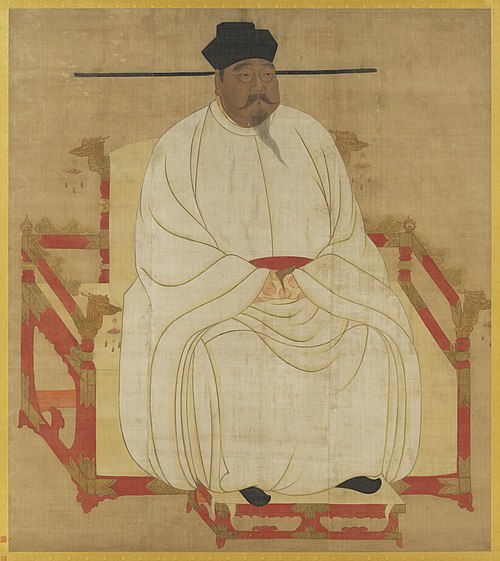
Emperor Taizu of Song
MedievalEmperorChina927 — 976
北宋开国皇帝赵匡胤。陈桥兵变黄袍加身,杯酒释兵权和平解除武将权力,开创文治时代。
Compare Emperor Taizu of Song with another historical figure:
Quick Facts
Born
927
Died
976
Country
China
Era
Medieval
Occupation
Emperor
Score Overview
Military (10%)80
Political (20%)78
Influence (20%)68
Legacy (20%)65
Leadership (15%)78
Strategy (15%)72
Total Score71.9
Emperor Taizu of Song — Complete Timeline
960 AD
Chenqiao MutinyPolitical Action
Zhao Kuangyin, a general of the Later Zhou dynasty, was proclaimed emperor by his troops at Chenqiao. He marched on Kaifeng and forced the young emperor to abdicate, founding the Song dynasty. This coup established a new ruling house without major bloodshed.
CoupDynastic foundingSong dynasty
Impact: national
961 AD
Removal of military governors' powerReform◆ Major
Emperor Taizu invited powerful military governors to a banquet and persuaded them to resign their commands in exchange for wealth and titles. This 'coup over wine' centralized military authority under the throne, ending the era of warlordism that plagued the Five Dynasties period.
Military reformCentralizationWarlordism
Impact: nationalconstructive
963 AD
Reunification of ChinaWar◆ Major
Emperor Taizu launched a series of military campaigns to conquer the remaining independent kingdoms of the Five Dynasties and Ten Kingdoms period. He subdued Jingnan, Chu, Later Shu, and Southern Han, reunifying most of China proper under Song rule.
ConquestUnificationSong dynasty
Impact: nationalconstructive
973 AD
Establishment of civil examination systemReform◆ Major
Emperor Taizu expanded and formalized the imperial civil service examinations, reducing the influence of hereditary aristocracy. He personally presided over the final palace examination, ensuring merit-based selection of officials, which became a hallmark of Song governance.
Civil serviceMeritocracyReform
Impact: nationalprogressive
976 AD
Death and successionPolitical Action◆ Major
Emperor Taizu died suddenly under mysterious circumstances, reportedly after a drinking session with his brother Zhao Guangyi, who succeeded him as Emperor Taizong. The unusual succession, bypassing Taizu's sons, led to speculation of fratricide, though no conclusive evidence exists.
SuccessionMysterySong dynasty
Impact: nationaltragic
Detailed Scores
▶View all detailed scores
Military
Strategy
7
Tactics
7
Battles
7
Army Scale
6
War Impact
7
Political
Governance
6
Reform
7
Stability
6
Policy
7
Power
7
Influence
History
9
Global
8
Culture
8
Ideology
9
Legacy
8
People often compare with
See how Emperor Taizu of Song stacks up against other historical figures
Popular Comparisons
Emperor Taizu of Song vs Genghis Khan
vs Genghis Khan81
Emperor Taizu of Song vs Alexios I Komnenos
vs Alexios I Komnenos78
Emperor Taizu of Song vs Kublai Khan
vs Kublai Khan74
Emperor Taizu of Song vs Tamar of Georgia
vs Tamar of Georgia72
Emperor Taizu of Song vs Taejo of Joseon
vs Taejo of Joseon70
Emperor Taizu of Song vs Wu Zetian
vs Wu Zetian70