Loading...
Alexios I Komnenos vs Emperor Taizu of Song
Alexios I Komnenos leads by 6.5 pts · 2 figures compared
…
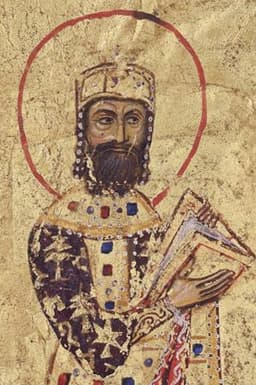
Alexios I Komnenos
Emperor · Medieval
78.4Total
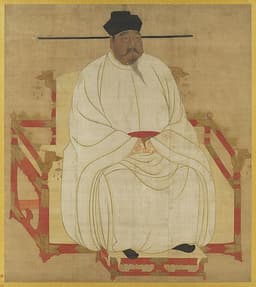
Emperor Taizu of Song
Emperor · Medieval
71.9Total
Basic Information
Born
1048
927
Died
1118
976
Era
Medieval
Medieval
Nationality
Byzantine Empire
China
Occupation
Emperor
Emperor
Civilization
Western
Eastern
Score Comparison
Military (10%)
61.7
80.0
Political (20%)
78.0
78.0
Influence (20%)
88.0
68.0
Legacy (20%)
80.0
65.0
Leadership (15%)
78.0
78.0
Strategy (15%)
68.0
72.0
TOTAL
78.4
71.9
Alexios I Komnenos — Complete Timeline
1081 AD
Battle of DyrrhachiumWar◆ Major
Alexios I Komnenos was defeated by the Norman army under Robert Guiscard at Dyrrhachium. The Byzantine forces were routed, and Alexios barely escaped. This loss allowed the Normans to occupy much of the western Balkans, though Alexios later recovered some territory.
Norman InvasionDefeatBalkans
Impact: regionaltragic
1090 AD
Reforms of the Byzantine Military and EconomyReform◆ Major
Alexios I implemented a series of reforms to restore Byzantine power. He reorganized the army by relying more on foreign mercenaries, reformed the currency (the hyperpyron), and granted tax exemptions to the Church. These measures stabilized the empire after decades of decline.
Military ReformEconomic ReformKomnenian Restoration
Impact: nationalconstructive
1095 AD
Appeal to the West: Council of PiacenzaPolitical Action
Alexios I sent envoys to Pope Urban II at the Council of Piacenza, requesting military aid against the Seljuk Turks. This appeal contributed to Urban's call for the First Crusade at the Council of Clermont later that year, initiating the Crusader movement.
First CrusadePope Urban IISeljuk Turks
Impact: global
1097 AD
First Crusade: Siege of NicaeaWar◆ Major
Alexios I cooperated with the Crusader army to besiege and capture Nicaea from the Seljuk Turks. The city was surrendered to Byzantine control, and Alexios used the Crusaders to recover key territories in Anatolia, though tensions later arose over land claims.
First CrusadeNicaeaByzantine-Crusader Relations
Impact: regionalconstructive
Emperor Taizu of Song — Complete Timeline
960 AD
Chenqiao MutinyPolitical Action
Zhao Kuangyin, a general of the Later Zhou dynasty, was proclaimed emperor by his troops at Chenqiao. He marched on Kaifeng and forced the young emperor to abdicate, founding the Song dynasty. This coup established a new ruling house without major bloodshed.
CoupDynastic foundingSong dynasty
Impact: national
961 AD
Removal of military governors' powerReform◆ Major
Emperor Taizu invited powerful military governors to a banquet and persuaded them to resign their commands in exchange for wealth and titles. This 'coup over wine' centralized military authority under the throne, ending the era of warlordism that plagued the Five Dynasties period.
Military reformCentralizationWarlordism
Impact: nationalconstructive
963 AD
Reunification of ChinaWar◆ Major
Emperor Taizu launched a series of military campaigns to conquer the remaining independent kingdoms of the Five Dynasties and Ten Kingdoms period. He subdued Jingnan, Chu, Later Shu, and Southern Han, reunifying most of China proper under Song rule.
ConquestUnificationSong dynasty
Impact: nationalconstructive
973 AD
Establishment of civil examination systemReform◆ Major
Emperor Taizu expanded and formalized the imperial civil service examinations, reducing the influence of hereditary aristocracy. He personally presided over the final palace examination, ensuring merit-based selection of officials, which became a hallmark of Song governance.
Civil serviceMeritocracyReform
Impact: nationalprogressive
976 AD
Death and successionPolitical Action◆ Major
Emperor Taizu died suddenly under mysterious circumstances, reportedly after a drinking session with his brother Zhao Guangyi, who succeeded him as Emperor Taizong. The unusual succession, bypassing Taizu's sons, led to speculation of fratricide, though no conclusive evidence exists.
SuccessionMysterySong dynasty
Impact: nationaltragic
Expert Analysis
Alexios I Komnenos vs Emperor Taizu of Song
# The Emperor and the Emperor: Two Founders, Two Fates
On a winter night in 976, the most powerful man in China drank wine with his brother in the Forbidden City. By dawn, Zhao Kuangyin, Emperor Taizu of Song, was dead — suddenly, mysteriously, at just forty-nine. A century later, on the other side of the world, another emperor lay dying in Constantinople at seventy, having spent his final years watching crusader armies he had summoned turn against him. Both men founded dynasties. Both reunified fractured empires. But one built a golden age that would last three centuries; the other set in motion forces that would consume his civilization. Why?
Origins
Zhao Kuangyin was born into chaos. The Five Dynasties and Ten Kingdoms period had turned China into a slaughterhouse of warring states, where generals murdered emperors as casually as they changed robes. His father was a military officer, his family part of the warrior class that had dominated a century of violence. Zhao grew up riding horses, wielding swords, and watching men die. He learned early that power belonged to whoever could take it — and hold it.
Alexios Komnenos came from a different world, though no less violent. The Byzantine Empire in 1048 was a shadow of its former glory, bleeding territory to Normans in the west and Seljuk Turks in the east. His family, the Komnenoi, were military aristocrats from Asia Minor, landholders who had watched the imperial throne become a revolving door for incompetent emperors. Alexios was raised in the shadow of Manzikert, the catastrophic defeat in 1071 that had shattered Byzantine confidence forever. He learned not just how to fight, but how to survive.
Rise to Power
Zhao’s path to the throne was swift and almost bloodless. In 960, as a general of the Later Zhou dynasty, he was marching north to confront a Liao invasion when his own troops stopped at Chenqiao, draped a yellow robe over his shoulders, and proclaimed him emperor. The mutiny was carefully staged — Zhao had prepared the ground with loyal officers, ensuring no resistance. He then marched on Kaifeng, where the child emperor abdicated without a fight. In a single day, Zhao Kuangyin became Emperor Taizu of Song.
Alexios took a longer, harder road. He spent his twenties fighting losing battles against Norman invaders, watching Byzantine armies disintegrate. In 1081, he staged a coup against the incompetent Emperor Nikephoros III, marching on Constantinople with a motley army of loyalists and Turkish mercenaries. The city opened its gates, but the prize was poisoned: the treasury was empty, the army was a wreck, and the Normans were already landing in Greece. Alexios became emperor not through a staged mutiny, but through desperate gambles.
Leadership & Governance
Here the two emperors diverged most dramatically. Taizu’s genius was institutional. In 961, he invited his most powerful generals to a banquet, plied them with wine, and gently persuaded them to resign their commands in exchange for vast estates and comfortable retirements. No bloodshed, no purges — just a quiet revolution that transferred military power to the civil bureaucracy. He then expanded the imperial examination system, opening government service to educated commoners and breaking the hereditary aristocracy’s grip on power. The Song Dynasty became a government of scholars, not soldiers.
Alexios faced no such luxury. He spent his entire reign fighting fires: Normans in the west, Pechenegs in the north, Turks in the east. His reforms were pragmatic and desperate. He reorganized the army by relying on foreign mercenaries — Varangian guards, Frankish knights, Turkish horse archers — because Byzantine peasants no longer wanted to fight. He debased the currency to pay for wars. He granted trading privileges to Venice in exchange for naval support, mortgaging the empire’s future for survival.
Triumph & Tragedy
Taizu’s greatest moment came in the 960s, when he systematically conquered the remaining independent kingdoms — Shu, Southern Tang, Northern Han — reunifying China for the first time in half a century. He did it with minimal destruction, preferring diplomacy and intimidation to slaughter. When he captured the poet-emperor Li Yu of Southern Tang, he treated him with courtesy, not cruelty. The tragedy was his death: the mysterious drinking session with his brother Zhao Guangyi, who succeeded him as Emperor Taizong. Rumors of fratricide have never died.
Alexios’s triumph was the First Crusade. In 1095, desperate for help against the Turks, he appealed to Pope Urban II at the Council of Piacenza. The result was an avalanche: thousands of Western knights and peasants pouring into Byzantine territory. Alexios skillfully manipulated the crusaders, using them to recapture Nicaea in 1097 and restore Byzantine control over western Anatolia. But the tragedy was that he could not control what he had unleashed. The crusaders carved out their own kingdoms, refused to return conquered lands, and left the Byzantine Empire weaker than before. Alexios died knowing he had saved Constantinople but mortgaged its soul.
Character & Destiny
Taizu was a man of deliberate restraint. He knew that the Five Dynasties had fallen because generals kept seizing power, so he gave up personal military glory to build systems that would outlast him. He once said, “I would rather have no one in the empire than have it torn apart by war.” His caution was his strength — and his limitation. The Song Dynasty would never conquer the whole of China; the Liao and Xia kingdoms remained independent. But it would enjoy unprecedented peace and prosperity.
Alexios was a man of desperate improvisation. He inherited a dying empire and kept it alive through sheer cunning, always choosing survival over principle. He lied to crusaders, betrayed allies, and sacrificed long-term stability for short-term gains. His contemporary Anna Komnene, his daughter, wrote that he “was like a helmsman steering a ship through a storm, constantly adjusting the sails.” But storms do not last forever, and when the weather cleared, the ship was taking on water.
Legacy
Taizu’s legacy is the Song Dynasty’s golden age: the invention of movable type, the rise of Neo-Confucianism, the world’s first paper money, and a civil service system that would endure for a thousand years. He is remembered as a wise, humane ruler who ended centuries of war and built a civilization of scholars. The mystery of his death only adds to his legend.
Alexios’s legacy is more ambiguous. He founded the Komnenian dynasty, which restored Byzantine prestige for a century, but he also opened the door to the Crusades — a door that would never close. The Fourth Crusade in 1204 would sack Constantinople itself, a catastrophe made possible by Alexios’s original appeal to the West. He is remembered as a capable emperor who could not escape the forces he unleashed.
Conclusion
Two emperors, two worlds, two destinies. Taizu of Song had the luxury of building; Alexios Komnenos had the burden of surviving. One created a system that transcended his own ambitions; the other sacrificed the future for the present. Their lives remind us that history judges leaders not just by what they achieve, but by what they inherit — and that the greatest wisdom is sometimes knowing when not to fight.
Rankings
🥇
Alexios I KomnenosLeader
Mil: 61.7Pol: 78.0Inf: 88.0
78.4
🥈
Emperor Taizu of Song
Mil: 80.0Pol: 78.0Inf: 68.0
71.9
+6.5 behind
How This Comparison Works
Algorithm
Each figure is scored on 6 dimensions (0—100 scale) based on structured historical data: Military (10%), Political (20%), Influence (20%), Legacy (20%), Leadership (15%), Strategy (15%). The weighted total produces the final ranking.
Data Sources
Scores are computed from structured sub-indicators in the database. Scale factors adjust for era (Ancient ×0.85, Modern ×1.0) and civilization size (Eastern ×1.05, Other ×0.80) to account for differences in population and military scale.
Maximum 3 Figures
Comparisons are limited to 2—3 figures to ensure readability and statistical meaningfulness.
Error Margins
±5 points per dimension — Sub-scores are derived from historical records with inherent uncertainty. Two figures within 5 points on a dimension should be considered roughly equivalent in that area.
Total Score Accuracy
±3 points overall — The weighted combination of 6 dimensions produces a total score with approximately ±3 points of uncertainty. Differences of less than 3 points are not statistically significant— the figures are effectively tied.
Known Limitations
- Historical records are incomplete and uneven across civilizations
- Figures from oral-tradition societies may be underrepresented
- Occupation labels can misclassify multi-role figures
- Scores measure capability and impact, not moral character
- Quantitative scoring is a comparison tool, not absolute truth
Capability Radar
Military (10%) — Battles & Warfare
Battles
75
75
Win Rate
70
80
Expansion
60
75
Political (20%) — Governance & Reform
Reform
85
95
Diplomacy
90
80
Economy
70
85
Influence (20%) — Cultural & Global Reach
Cultural
70
75
Global
75
70
Legacy (20%) — Historical Impact
Historical
85
85
Longevity
80
80
Leadership (15%) — Power & Stability
Tenure
80
70
Stability
75
90
Strategy (15%) — Tactics & Innovation
Strategy
85
85
Tactics
80
70
Reform
75
95
Similar Comparisons
Comments & Discussion
No comments yet. Be the first to share your thoughts!