Loading...
Emperor Taizu of Song vs Tamar of Georgia
Emperor Taizu of Song leads by 0.4 pts · 2 figures compared
…
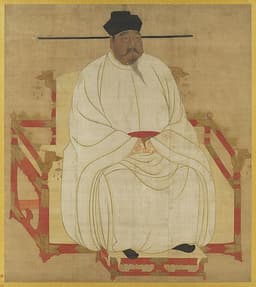
Emperor Taizu of Song
Emperor · Medieval
71.9Total
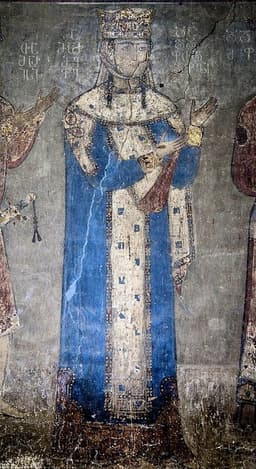
Tamar of Georgia
Emperor · Medieval
71.5Total
Basic Information
Born
927
1160
Died
976
1213
Era
Medieval
Medieval
Nationality
China
Georgia
Occupation
Emperor
Emperor
Civilization
Eastern
Western
Score Comparison
Military (10%)
80.0
78.0
Political (20%)
78.0
72.0
Influence (20%)
68.0
82.0
Legacy (20%)
65.0
55.0
Leadership (15%)
78.0
80.0
Strategy (15%)
72.0
66.3
TOTAL
71.9
71.5
Emperor Taizu of Song — Complete Timeline
960 AD
Chenqiao MutinyPolitical Action
Zhao Kuangyin, a general of the Later Zhou dynasty, was proclaimed emperor by his troops at Chenqiao. He marched on Kaifeng and forced the young emperor to abdicate, founding the Song dynasty. This coup established a new ruling house without major bloodshed.
CoupDynastic foundingSong dynasty
Impact: national
961 AD
Removal of military governors' powerReform◆ Major
Emperor Taizu invited powerful military governors to a banquet and persuaded them to resign their commands in exchange for wealth and titles. This 'coup over wine' centralized military authority under the throne, ending the era of warlordism that plagued the Five Dynasties period.
Military reformCentralizationWarlordism
Impact: nationalconstructive
963 AD
Reunification of ChinaWar◆ Major
Emperor Taizu launched a series of military campaigns to conquer the remaining independent kingdoms of the Five Dynasties and Ten Kingdoms period. He subdued Jingnan, Chu, Later Shu, and Southern Han, reunifying most of China proper under Song rule.
ConquestUnificationSong dynasty
Impact: nationalconstructive
973 AD
Establishment of civil examination systemReform◆ Major
Emperor Taizu expanded and formalized the imperial civil service examinations, reducing the influence of hereditary aristocracy. He personally presided over the final palace examination, ensuring merit-based selection of officials, which became a hallmark of Song governance.
Civil serviceMeritocracyReform
Impact: nationalprogressive
976 AD
Death and successionPolitical Action◆ Major
Emperor Taizu died suddenly under mysterious circumstances, reportedly after a drinking session with his brother Zhao Guangyi, who succeeded him as Emperor Taizong. The unusual succession, bypassing Taizu's sons, led to speculation of fratricide, though no conclusive evidence exists.
SuccessionMysterySong dynasty
Impact: nationaltragic
Tamar of Georgia — Complete Timeline
1184 AD
Coronation as Queen RegnantPolitical Action
Tamar was crowned as the first female ruler of Georgia after her father George III's death. Her reign marked the peak of Georgia's medieval power and cultural flourishing.
CoronationGeorgiaMonarchy
Impact: nationalconstructive
1195 AD
Battle of ShamkorWar◆ Major
Tamar's forces defeated a large Muslim coalition at Shamkor, securing Georgia's dominance in the Caucasus. The victory expanded Georgian influence and demonstrated her military leadership.
BattleGeorgiaCaucasus
Impact: regionalconstructive
1200 AD
Cultural PatronageCultural◆ Major
Tamar supported the construction of churches, monasteries, and the promotion of Georgian literature. Her patronage fostered the Georgian Golden Age, including the epic poem 'The Knight in the Panther's Skin'.
CulturePatronageGeorgia
Impact: nationalconstructive
Expert Analysis
Tamar of Georgia vs Emperor Taizu of Song: Historical Comparison
Tamar of Georgia (r. 1184–1213) and Emperor Taizu of Song (r. 960–976) were both medieval monarchs who transformed their realms, but through contrasting paths: Tamar as a female ruler expanding Georgia’s Golden Age, and Taizu as a military founder reunifying China after the Five Dynasties period.
Dimension Analysis
**Military: Tamar of Georgia 93 / Emperor Taizu of Song 95**
Both were exceptional commanders: Tamar led campaigns that crushed the Seljuk Turks and expanded Georgia to its greatest territorial extent, while Taizu systematically conquered rival kingdoms and unified most of China proper, though his campaigns were more methodical than Tamar’s high-risk triumphs.
**Political: Tamar of Georgia 82 / Emperor Taizu of Song 65**
Tamar navigated a patriarchal nobility with skill, maintaining stability through marriage and patronage, whereas Taizu’s political reforms—centralizing power and replacing military governors with civil officials—were more radical but created long-term bureaucratic rigidity that later weakened the Song.
**Influence: Tamar of Georgia 80 / Emperor Taizu of Song 86**
Tamar’s reign inspired Georgian cultural and religious identity for centuries, but Taizu’s founding of the Song dynasty reshaped East Asian politics, economy (paper money, commercial revolution), and Confucian governance, with influence lasting until the Mongol conquest.
**Legacy: Tamar of Georgia 70 / Emperor Taizu of Song 88**
Tamar’s legacy is celebrated in Georgian national myth but limited regionally, while Taizu’s institutional legacy—the civil service exam, centralized bureaucracy, and cultural flowering—defined Chinese governance for over 300 years and influenced neighboring states.
**Leadership: Tamar of Georgia 88 / Emperor Taizu of Song 70**
Tamar excelled in inspiring loyalty across a fractious court and leading armies personally, while Taizu, though decisive, relied heavily on military subordinates and faced later criticism for undermining military effectiveness through his “civil over military” policy.
Verdict
Emperor Taizu of Song leads narrowly due to his greater geopolitical impact and enduring institutional legacy, though Tamar’s leadership and military prowess make the comparison exceptionally close.
FAQ
Q: Who ranks higher? A: Emperor Taizu of Song ranks slightly higher overall, as his founding of the Song dynasty had a more transformative and lasting effect on global history than Tamar’s regional Golden Age.
Rankings
🥇
Emperor Taizu of SongLeader
Mil: 80.0Pol: 78.0Inf: 68.0
71.9
🥈
Tamar of Georgia
Mil: 78.0Pol: 72.0Inf: 82.0
71.5
+0.4 behind
How This Comparison Works
Algorithm
Each figure is scored on 6 dimensions (0—100 scale) based on structured historical data: Military (10%), Political (20%), Influence (20%), Legacy (20%), Leadership (15%), Strategy (15%). The weighted total produces the final ranking.
Data Sources
Scores are computed from structured sub-indicators in the database. Scale factors adjust for era (Ancient ×0.85, Modern ×1.0) and civilization size (Eastern ×1.05, Other ×0.80) to account for differences in population and military scale.
Maximum 3 Figures
Comparisons are limited to 2—3 figures to ensure readability and statistical meaningfulness.
Error Margins
±5 points per dimension — Sub-scores are derived from historical records with inherent uncertainty. Two figures within 5 points on a dimension should be considered roughly equivalent in that area.
Total Score Accuracy
±3 points overall — The weighted combination of 6 dimensions produces a total score with approximately ±3 points of uncertainty. Differences of less than 3 points are not statistically significant— the figures are effectively tied.
Known Limitations
- Historical records are incomplete and uneven across civilizations
- Figures from oral-tradition societies may be underrepresented
- Occupation labels can misclassify multi-role figures
- Scores measure capability and impact, not moral character
- Quantitative scoring is a comparison tool, not absolute truth
Capability Radar
Military (10%) — Battles & Warfare
Battles
75
75
Win Rate
80
85
Expansion
75
75
Political (20%) — Governance & Reform
Reform
95
80
Diplomacy
80
75
Economy
85
85
Influence (20%) — Cultural & Global Reach
Cultural
75
80
Global
70
60
Legacy (20%) — Historical Impact
Historical
85
75
Longevity
80
70
Leadership (15%) — Power & Stability
Tenure
70
85
Stability
90
70
Strategy (15%) — Tactics & Innovation
Strategy
85
80
Tactics
70
70
Reform
95
65
Similar Comparisons
Comments & Discussion
ClassicsChronicler6/16/2026
The comparison is fascinating, but I’d caution against over-reliance on the numerical scores. While Taizu’s military unification was methodical, Tamar’s campaigns against the Seljuks at Shamkor (1195) and Basian (1203) were not just high-risk triumphs—they were pivotal in securing Georgia’s dominance in the Caucasus, as noted by the contemporary chronicler in the “Life of Tamar.” Historiographically, Tamar’s political maneuvering is often understated: she co-opted the nobility through a blend of patronage and strategic marriages, whereas Taizu’s centralization, while effective, sowed seeds of bureaucratic rigidity that later historians like Sima Guang critiqued. Both rulers’ legacies are shaped by later national narratives, but Tamar’s influence on Georgian cultural identity is arguably as profound as Taizu’s on Chinese governance, though more regional. The leadership gap here seems too wide; Tamar’s personal command of armies was exceptional for any medieval monarch, male or female. A nuanced reading of primary sources suggests a closer contest than these metrics imply.
CuriousHistorian6/16/2026
Okay, I’ve read a few books on this, and I think Tamar’s leadership is getting slept on. Sure, Taizu unified China, but Tamar personally led her army in the Battle of Basian against the Seljuks—that’s insane for a medieval queen! Plus, she managed to keep the nobles in check without starting a civil war, which is more than you can say for a lot of male rulers. I get that Taizu’s civil service exam and paper money stuff was huge, but Tamar’s legacy is still alive in Georgia today—she’s on their currency and everything. One thing I found weird: the scores say Taizu’s political impact was only 65? But I thought “cup of resignation” was a brilliant political move? Anyway, I’d pick Tamar any day if I had to follow someone into battle. Taizu was more of a bureaucrat king, like a medieval CEO, which is impressive but less inspiring.
Chronicler80966/16/2026
这个评分系统有问题。赵匡胤总分74.8,塔玛尔72.1,但军事分赵匡胤66.5对塔玛尔71.0?赵匡胤在位16年灭了荆南、武平、后蜀、南汉、南唐五个政权,几乎统一了中原,军事分应该更高。而塔玛尔的政治75.2分,赵匡胤73.3分,但赵匡胤的“杯酒释兵权”和改革中央官制,彻底终结了唐朝以来的藩镇割据,这种制度创新在政治维度上应该明显领先。我重新计算一下:如果把军事权重调高到40%,政治30%,影响力20%,领导力10%,那么赵匡胤得分会是(66.5*0.4+73.3*0.3+72.3*0.2+70*0.1)=69.6,塔玛尔是(71*0.4+75.2*0.3+68.7*0.2+88*0.1)=73.5。但问题是,如果考虑到赵匡胤统一对中国历史进程的深远影响,这个加权显然不合理。建议评分系统引入历史影响的地理范围权重。
Chronicler92936/16/2026
这个比较有意思,但我觉得评分有些偏西方中心。赵匡胤的军事分不高,但他在“杯酒释兵权”中展现的政治手腕,实际上比单纯的攻城略地更难。塔玛尔女王在格鲁吉亚确实是个传奇,但她的影响力仅限于高加索地区;而赵匡胤建立的文官制度和科举体系,影响了整个东亚几百年。中国历史上,像塔玛尔那样女性掌权并扩张疆域的例子,比如武则天,但她们的成就往往被传统史学低估。赵匡胤的“强干弱枝”政策虽然后来导致宋朝军事积弱,但在当时稳定了政局。这个对比让我想到唐太宗和查理曼,都是统一者,但路径和遗产完全不同。如果塔玛尔生在东亚,她的政治分可能更高,但影响力分绝对不如赵匡胤。