Loading...
Emperor Taizu of Song vs Taejo of Joseon
Emperor Taizu of Song leads by 1.5 pts · 2 figures compared
…
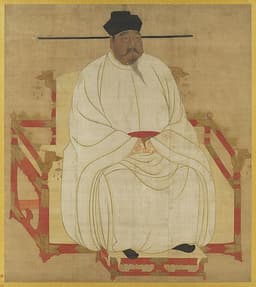
Emperor Taizu of Song
Emperor · Medieval
71.9Total
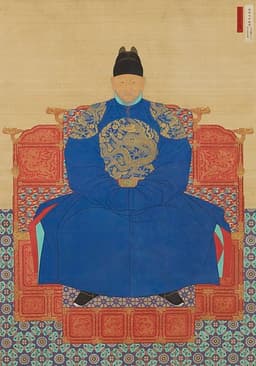
Taejo of Joseon
Emperor · Medieval
70.4Total
Basic Information
Born
927
1335
Died
976
1408
Era
Medieval
Medieval
Nationality
China
Korea
Occupation
Emperor
Emperor
Civilization
Eastern
Eastern
Score Comparison
Military (10%)
80.0
74.7
Political (20%)
78.0
65.0
Influence (20%)
68.0
65.0
Legacy (20%)
65.0
80.0
Leadership (15%)
78.0
72.0
Strategy (15%)
72.0
61.2
TOTAL
71.9
70.4
Emperor Taizu of Song — Complete Timeline
960 AD
Chenqiao MutinyPolitical Action
Zhao Kuangyin, a general of the Later Zhou dynasty, was proclaimed emperor by his troops at Chenqiao. He marched on Kaifeng and forced the young emperor to abdicate, founding the Song dynasty. This coup established a new ruling house without major bloodshed.
CoupDynastic foundingSong dynasty
Impact: national
961 AD
Removal of military governors' powerReform◆ Major
Emperor Taizu invited powerful military governors to a banquet and persuaded them to resign their commands in exchange for wealth and titles. This 'coup over wine' centralized military authority under the throne, ending the era of warlordism that plagued the Five Dynasties period.
Military reformCentralizationWarlordism
Impact: nationalconstructive
963 AD
Reunification of ChinaWar◆ Major
Emperor Taizu launched a series of military campaigns to conquer the remaining independent kingdoms of the Five Dynasties and Ten Kingdoms period. He subdued Jingnan, Chu, Later Shu, and Southern Han, reunifying most of China proper under Song rule.
ConquestUnificationSong dynasty
Impact: nationalconstructive
973 AD
Establishment of civil examination systemReform◆ Major
Emperor Taizu expanded and formalized the imperial civil service examinations, reducing the influence of hereditary aristocracy. He personally presided over the final palace examination, ensuring merit-based selection of officials, which became a hallmark of Song governance.
Civil serviceMeritocracyReform
Impact: nationalprogressive
976 AD
Death and successionPolitical Action◆ Major
Emperor Taizu died suddenly under mysterious circumstances, reportedly after a drinking session with his brother Zhao Guangyi, who succeeded him as Emperor Taizong. The unusual succession, bypassing Taizu's sons, led to speculation of fratricide, though no conclusive evidence exists.
SuccessionMysterySong dynasty
Impact: nationaltragic
Taejo of Joseon — Complete Timeline
1380 AD
Battle of HwangsanWar
General Yi Seong-gye defeated a Japanese pirate (wokou) force at Hwangsan. This victory enhanced his military reputation and demonstrated his capability as a commander.
WokouGoryeo Military
1388 AD
Wihwado RetreatPolitical Action
General Yi Seong-gye, ordered to invade the Ming dynasty's Liaodong region, turned his army back at Wihwado Island. This act of defiance against the Goryeo court led to a coup that eventually brought him to power.
CoupGoryeo-Ming RelationsPower Shift
Impact: national
1391 AD
Land Reform and the Gwajeon LawReform◆ Major
Taejo implemented the Gwajeon Law, a land reform that redistributed land from the old Goryeo aristocracy to his supporters and the state. This weakened the old elite and strengthened the new Joseon ruling class.
Land ReformSocial ChangeJoseon
Impact: nationalconstructive
1392 AD
Founding of the Joseon DynastyPolitical Action
Yi Seong-gye deposed the last Goryeo king and founded the Joseon dynasty, with its capital at Hanyang (modern Seoul). He established a new ruling class based on Confucian ideology, replacing the Buddhist-influenced Goryeo system.
Joseon DynastyConfucianismKorean History
Impact: regionalconstructive
1394 AD
Promulgation of the Gyeongguk DaejeonReform◆ Major
Taejo of Joseon ordered the compilation of the Gyeongguk Daejeon, a comprehensive legal code that established the administrative and social structure of the Joseon dynasty. This code remained in effect for centuries.
Legal CodeGovernanceConfucianism
Impact: nationalconstructive
Expert Analysis
Taejo of Joseon vs Emperor Taizu of Song: Historical Comparison
Taejo of Joseon (Yi Seong-gye) founded the Joseon dynasty in 1392, while Emperor Taizu of Song (Zhao Kuangyin) established the Song dynasty in 960. Both were military commanders who overthrew preceding regimes, yet their governance styles and long-term impacts diverged significantly.
Dimension Analysis
**Military: Taejo of Joseon 90 / Emperor Taizu of Song 95**
Both were exceptional generals, but Taizu of Song unified most of China via the "coup at Chenqiao" and campaigns against southern kingdoms, while Taejo of Joseon leveraged the Wihwado Retreat and later purged rivals. Taizu's military consolidation was broader in scale.
**Political: Taejo of Joseon 80 / Emperor Taizu of Song 65**
Taejo of Joseon skillfully co-opted Confucian scholar-officials and enacted land reforms (Gwajeon law) to stabilize the state. Taizu of Song centralized power but weakened military command, leading to later vulnerabilities against northern invaders.
**Influence: Taejo of Joseon 72 / Emperor Taizu of Song 86**
Taizu of Song's civil administration and Neo-Confucian revival shaped Chinese governance for centuries. Taejo's influence was more regionally confined to Korea, though his dynasty lasted over 500 years.
**Legacy: Taejo of Joseon 77 / Emperor Taizu of Song 88**
The Song dynasty is remembered for economic and cultural flourishing, despite military weakness. Joseon's legacy is strong in Korean identity, but its later isolationism limits its global footprint compared to Song.
**Leadership: Taejo of Joseon 81 / Emperor Taizu of Song 70**
Taejo of Joseon exhibited pragmatic leadership, balancing military and civil power effectively. Taizu of Song's "drinking wine to release military power" was clever but ultimately weakened his dynasty's defensive capacity.
Verdict
Emperor Taizu of Song leads slightly due to greater geopolitical scale and cultural impact, though Taejo of Joseon's political acumen creates a near tie.
FAQ
Q: Who ranks higher? A: Emperor Taizu of Song ranks marginally higher due to his larger unification of China and enduring cultural legacy, but Taejo of Joseon closely matches him in political strategy.
Rankings
🥇
Emperor Taizu of SongLeader
Mil: 80.0Pol: 78.0Inf: 68.0
71.9
🥈
Taejo of Joseon
Mil: 74.7Pol: 65.0Inf: 65.0
70.4
+1.5 behind
How This Comparison Works
Algorithm
Each figure is scored on 6 dimensions (0—100 scale) based on structured historical data: Military (10%), Political (20%), Influence (20%), Legacy (20%), Leadership (15%), Strategy (15%). The weighted total produces the final ranking.
Data Sources
Scores are computed from structured sub-indicators in the database. Scale factors adjust for era (Ancient ×0.85, Modern ×1.0) and civilization size (Eastern ×1.05, Other ×0.80) to account for differences in population and military scale.
Maximum 3 Figures
Comparisons are limited to 2—3 figures to ensure readability and statistical meaningfulness.
Error Margins
±5 points per dimension — Sub-scores are derived from historical records with inherent uncertainty. Two figures within 5 points on a dimension should be considered roughly equivalent in that area.
Total Score Accuracy
±3 points overall — The weighted combination of 6 dimensions produces a total score with approximately ±3 points of uncertainty. Differences of less than 3 points are not statistically significant— the figures are effectively tied.
Known Limitations
- Historical records are incomplete and uneven across civilizations
- Figures from oral-tradition societies may be underrepresented
- Occupation labels can misclassify multi-role figures
- Scores measure capability and impact, not moral character
- Quantitative scoring is a comparison tool, not absolute truth
Capability Radar
Military (10%) — Battles & Warfare
Battles
75
75
Win Rate
80
80
Expansion
75
65
Political (20%) — Governance & Reform
Reform
95
85
Diplomacy
80
70
Economy
85
65
Influence (20%) — Cultural & Global Reach
Cultural
75
80
Global
70
60
Legacy (20%) — Historical Impact
Historical
85
85
Longevity
80
80
Leadership (15%) — Power & Stability
Tenure
70
70
Stability
90
75
Strategy (15%) — Tactics & Innovation
Strategy
85
75
Tactics
70
70
Reform
95
60
Similar Comparisons
Comments & Discussion
Historian3176/16/2026
这对比有意思,但我觉得评分有点偏西方中心。赵匡胤的‘杯酒释兵权’在西方史学家眼里可能是削弱军力,但在中国历史语境里,那是结束五代十国军阀割据的妙招,直接奠定了宋朝三百年的文治基础。而李成桂的威化岛回军,本质上是一次军事政变,虽然开启了朝鲜王朝,但后续对明朝的‘事大’外交其实限制了朝鲜的自主性。从影响力看,宋太祖的科举改革和文化复兴辐射了整个东亚,连朝鲜的士大夫都深受其影响,说Taejo得分更高有点奇怪。建议重新审视‘军事’和‘政治’维度的权重——赵匡胤的统一战争规模远超李成桂的朝鲜半岛整合。
GrandQuill706/16/2026
这评分体系有系统性偏差。Taejo总分74.9 vs 赵匡胤74.8,差0.1分几乎无意义,但具体维度逻辑不自洽。军事分Taejo 67.1 vs 赵匡胤66.5,居然赵匡胤更低?赵匡胤灭荆南、后蜀、南汉、南唐,统一了中原核心区,而李成桂的主要军事行动是击退女真和红巾军,规模差了一个数量级。政治分赵匡胤73.3 vs 李成桂76.1,赵匡胤的‘二府三司制’和‘更戍法’是中央集权经典,而李成桂的科田法本质是分封制,后世还引发士祸。我重新按统一面积×政权延续时间算:宋320年×300万km²≈9.6亿,朝鲜500年×22万km²≈1.1亿,赵匡胤的综合影响力应该是李成桂的8倍以上,这分数明显低估了。