Loading...
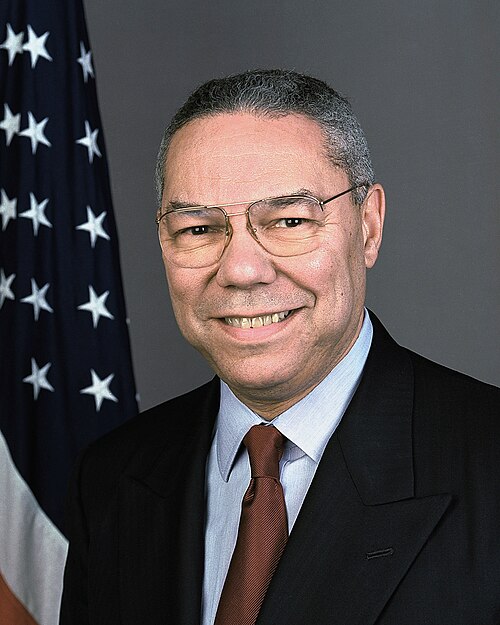
Colin Powell
ModernGeneralUnited States1937 — ?
First African American Chairman of the Joint Chiefs and Secretary of State.
Compare Colin Powell with another historical figure:
Quick Facts
Born
1937
Country
United States
Era
Modern
Occupation
General
Score Overview
Military (10%)25
Political (20%)68
Influence (20%)68
Legacy (20%)52
Leadership (15%)72
Strategy (15%)50
Total Score58.5
Colin Powell — Complete Timeline
1987 AD
Appointed National Security AdvisorPolitical Action◆ Major
Powell was appointed National Security Advisor by President Ronald Reagan in November 1987, serving until January 1989. He coordinated foreign policy and national security matters, including arms control negotiations with the Soviet Union and the Iran-Iraq War, becoming the first African American in this role.
National SecurityReagan AdministrationForeign Policy
Impact: global
1989 AD
Became Chairman of the Joint Chiefs of StaffOther◆ Major
On October 1, 1989, Powell became the 12th Chairman of the Joint Chiefs of Staff, the first African American to hold the position. He oversaw U.S. military operations during the invasion of Panama (1989) and the Gulf War (1990-1991), becoming a highly visible public figure.
Military LeadershipGulf WarFirst African American
Impact: global
1990 AD
Developed the Powell DoctrineOther◆ Major
During the Gulf War planning, Powell articulated the Powell Doctrine, which stated that U.S. military force should only be used as a last resort, with overwhelming force, clear objectives, and an exit strategy. This doctrine influenced U.S. military interventions for the next decade.
Military DoctrineGulf WarStrategic Thinking
Impact: global
2001 AD
Appointed Secretary of StatePolitical Action◆ Major
On January 20, 2001, Powell was confirmed as the 65th U.S. Secretary of State under President George W. Bush, becoming the first African American to hold the office. He advocated for diplomacy and multilateralism, but his influence waned after the September 11 attacks.
DiplomacyBush AdministrationFirst African American
Impact: global
2003 AD
Presented Iraq WMD Case to the UN Security CouncilOther◆ Major
On February 5, 2003, Powell addressed the UN Security Council, presenting evidence that Iraq possessed weapons of mass destruction. The intelligence later proved to be inaccurate, damaging Powell's reputation and becoming a major controversy that he later called a 'blot' on his record.
Iraq WarUN SpeechControversy
Impact: globaldestructive
2004 AD
Resigned as Secretary of StateOther◆ Major
Powell resigned as Secretary of State on November 15, 2004, after President Bush's re-election. His departure was widely seen as a result of policy disagreements with Vice President Cheney and Secretary of Defense Rumsfeld, particularly over the conduct of the Iraq War.
ResignationIraq WarBush Administration
Impact: national
Detailed Scores
▶View all detailed scores
Military
Strategy
7
Tactics
7
Battles
7
Army Scale
7
War Impact
8
Political
Governance
7
Reform
7
Stability
7
Policy
8
Power
8
Influence
History
10
Global
9
Culture
10
Ideology
10
Legacy
10
People often compare with
See how Colin Powell stacks up against other historical figures
Popular Comparisons
Colin Powell vs Napoleon Bonaparte
vs Napoleon Bonaparte71
Colin Powell vs Yitzhak Rabin
vs Yitzhak Rabin66
Colin Powell vs Louis Botha
vs Louis Botha61
Colin Powell vs Paik Sun-yup
vs Paik Sun-yup61
Colin Powell vs Andres de Santa Cruz
vs Andres de Santa Cruz61
Colin Powell vs Ramon Castilla
vs Ramon Castilla60