Loading...
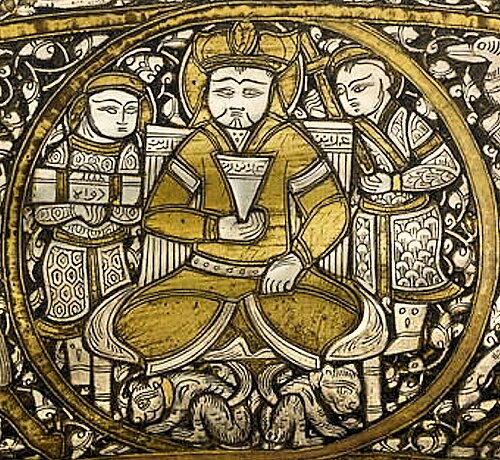
Baybars
MedievalEmperorEgypt1223 — 1277
Greatest Mamluk sultan, defeated Mongols and Crusaders.
Compare Baybars with another historical figure:
Quick Facts
Born
1223
Died
1277
Country
Egypt
Era
Medieval
Occupation
Emperor
Score Overview
Military (10%)85
Political (20%)70
Influence (20%)55
Legacy (20%)52
Leadership (15%)72
Strategy (15%)72
Total Score63.8
Baybars — Complete Timeline
1260 AD
Battle of Ain Jalut (1260)War◆ Major
Baybars served as a key commander under Qutuz at the Battle of Ain Jalut. He led the vanguard and played a crucial role in the Mamluk victory over the Mongols. This battle established his reputation as a military leader.
Mongol InvasionBattleMamluk Victory
Impact: globalconstructive
Accession as Sultan (1260)Political Action◆ Major
After assassinating Qutuz, Baybars proclaimed himself Sultan of Egypt. He was accepted by the Mamluk commanders and the Abbasid Caliph. His reign began a period of Mamluk dominance in the Middle East, lasting for decades.
SuccessionMamluk SultanateAssassination
Impact: regional
1265 AD
Campaigns against the Crusader States (1260s-1270s)War◆ Major
Baybars launched a series of campaigns against the remaining Crusader states in the Levant. He captured key fortresses including Arsuf (1265), Safed (1266), Jaffa (1268), and Antioch (1268). These victories reduced Crusader territory to a few coastal enclaves.
Crusader WarsConquestMamluk Expansion
Impact: regionaldestructive
1277 AD
Defeat of the Mongols at Elbistan (1277)War◆ Major
Baybars defeated a Mongol army at the Battle of Elbistan in Anatolia. He invaded the Seljuk Sultanate of Rum, which was under Mongol suzerainty. Although a tactical victory, Baybars could not hold Anatolia and returned to Syria.
Mongol WarsBattleAnatolia
Impact: regionalconstructive
Death of Baybars (1277)Other◆ Major
Baybars died in Damascus, possibly from poisoning or illness. His death was kept secret for a time to prevent unrest. He was succeeded by his son Al-Said Barakah. Baybars' reign is considered the peak of the early Mamluk Sultanate.
DeathSuccessionMamluk Sultanate
Impact: regionaltragic
Detailed Scores
▶View all detailed scores
Military
Strategy
7
Tactics
7
Battles
7
Army Scale
6
War Impact
7
Political
Governance
6
Reform
7
Stability
6
Policy
7
Power
7
Influence
History
9
Global
8
Culture
8
Ideology
9
Legacy
8
People often compare with
See how Baybars stacks up against other historical figures
Popular Comparisons
Baybars vs Genghis Khan
vs Genghis Khan81
Baybars vs Alexios I Komnenos
vs Alexios I Komnenos78
Baybars vs Kublai Khan
vs Kublai Khan74
Baybars vs Tamar of Georgia
vs Tamar of Georgia72
Baybars vs Taejo of Joseon
vs Taejo of Joseon70
Baybars vs Wu Zetian
vs Wu Zetian70