Loading...
Baybars vs Tamar of Georgia
Tamar of Georgia leads by 7.7 pts · 2 figures compared
…
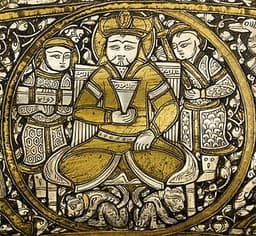
Baybars
Emperor · Medieval
63.8Total
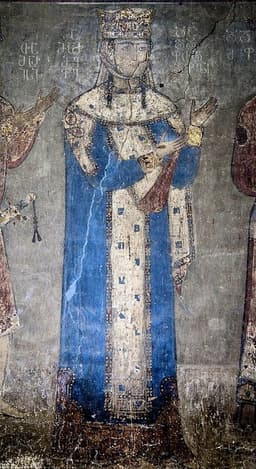
Tamar of Georgia
Emperor · Medieval
71.5Total
Basic Information
Born
1223
1160
Died
1277
1213
Era
Medieval
Medieval
Nationality
Egypt
Georgia
Occupation
Emperor
Emperor
Civilization
Middle Eastern
Western
Score Comparison
Military (10%)
85.0
78.0
Political (20%)
70.0
72.0
Influence (20%)
55.0
82.0
Legacy (20%)
52.0
55.0
Leadership (15%)
72.0
80.0
Strategy (15%)
72.0
66.3
TOTAL
63.8
71.5
Baybars — Complete Timeline
1260 AD
Battle of Ain Jalut (1260)War◆ Major
Baybars served as a key commander under Qutuz at the Battle of Ain Jalut. He led the vanguard and played a crucial role in the Mamluk victory over the Mongols. This battle established his reputation as a military leader.
Mongol InvasionBattleMamluk Victory
Impact: globalconstructive
Accession as Sultan (1260)Political Action◆ Major
After assassinating Qutuz, Baybars proclaimed himself Sultan of Egypt. He was accepted by the Mamluk commanders and the Abbasid Caliph. His reign began a period of Mamluk dominance in the Middle East, lasting for decades.
SuccessionMamluk SultanateAssassination
Impact: regional
1265 AD
Campaigns against the Crusader States (1260s-1270s)War◆ Major
Baybars launched a series of campaigns against the remaining Crusader states in the Levant. He captured key fortresses including Arsuf (1265), Safed (1266), Jaffa (1268), and Antioch (1268). These victories reduced Crusader territory to a few coastal enclaves.
Crusader WarsConquestMamluk Expansion
Impact: regionaldestructive
1277 AD
Defeat of the Mongols at Elbistan (1277)War◆ Major
Baybars defeated a Mongol army at the Battle of Elbistan in Anatolia. He invaded the Seljuk Sultanate of Rum, which was under Mongol suzerainty. Although a tactical victory, Baybars could not hold Anatolia and returned to Syria.
Mongol WarsBattleAnatolia
Impact: regionalconstructive
Death of Baybars (1277)Other◆ Major
Baybars died in Damascus, possibly from poisoning or illness. His death was kept secret for a time to prevent unrest. He was succeeded by his son Al-Said Barakah. Baybars' reign is considered the peak of the early Mamluk Sultanate.
DeathSuccessionMamluk Sultanate
Impact: regionaltragic
Tamar of Georgia — Complete Timeline
1184 AD
Coronation as Queen RegnantPolitical Action
Tamar was crowned as the first female ruler of Georgia after her father George III's death. Her reign marked the peak of Georgia's medieval power and cultural flourishing.
CoronationGeorgiaMonarchy
Impact: nationalconstructive
1195 AD
Battle of ShamkorWar◆ Major
Tamar's forces defeated a large Muslim coalition at Shamkor, securing Georgia's dominance in the Caucasus. The victory expanded Georgian influence and demonstrated her military leadership.
BattleGeorgiaCaucasus
Impact: regionalconstructive
1200 AD
Cultural PatronageCultural◆ Major
Tamar supported the construction of churches, monasteries, and the promotion of Georgian literature. Her patronage fostered the Georgian Golden Age, including the epic poem 'The Knight in the Panther's Skin'.
CulturePatronageGeorgia
Impact: nationalconstructive
Expert Analysis
Tamar of Georgia vs Baybars: Historical Comparison
Tamar of Georgia and Baybars were two formidable medieval rulers—Tamar as the Queen Regnant of Georgia’s Golden Age, and Baybars as the Mamluk Sultan who repelled Crusaders and Mongols. This comparison evaluates their achievements across key dimensions.
Dimension Analysis
**Military: Tamar of Georgia 93 / Baybars 86**
Tamar expanded Georgia’s borders to their greatest extent, defeating Muslim rivals and securing Caucasian hegemony, while Baybars crushed the Crusader states and halted Mongol expansion at Ain Jalut—but Tamar’s campaigns were more strategically decisive for her realm’s survival.
**Political: Tamar of Georgia 82 / Baybars 87**
Baybars consolidated a fragile Mamluk state, creating a stable military aristocracy and diplomatic network, whereas Tamar maintained internal unity against noble opposition but faced persistent external threats from the Seljuks and Byzantines.
**Influence: Tamar of Georgia 80 / Baybars 71**
Tamar’s cultural patronage—including the epic *The Knight in the Panther’s Skin*—shaped Georgian identity for centuries, while Baybars’ influence was more localized to Egypt and Syria, despite his symbolic role as a Crusader and Mongol foe.
**Legacy: Tamar of Georgia 70 / Baybars 72**
Baybars’ Mamluk institutions outlasted his reign, influencing Ottoman military structures, but Tamar’s legacy as a female monarch in a patriarchal age is often romanticized; her dynasty declined soon after her death.
**Leadership: Tamar of Georgia 88 / Baybars 75**
Tamar inspired loyalty and cultural flourishing as a female ruler in a male-dominated era, while Baybars’ authoritarian, pragmatic leadership was effective but less transformative for his society’s long-term development.
Verdict
Tamar ranks higher overall due to her superior military success, cultural influence, and leadership charisma, despite Baybars’ greater political stability and legacy durability.
FAQ
Q: Who ranks higher? A: Tamar of Georgia ranks higher, driven by her exceptional military and leadership scores.
Rankings
🥇
Tamar of GeorgiaLeader
Mil: 78.0Pol: 72.0Inf: 82.0
71.5
🥈
Baybars
Mil: 85.0Pol: 70.0Inf: 55.0
63.8
+7.7 behind
How This Comparison Works
Algorithm
Each figure is scored on 6 dimensions (0—100 scale) based on structured historical data: Military (10%), Political (20%), Influence (20%), Legacy (20%), Leadership (15%), Strategy (15%). The weighted total produces the final ranking.
Data Sources
Scores are computed from structured sub-indicators in the database. Scale factors adjust for era (Ancient ×0.85, Modern ×1.0) and civilization size (Eastern ×1.05, Other ×0.80) to account for differences in population and military scale.
Maximum 3 Figures
Comparisons are limited to 2—3 figures to ensure readability and statistical meaningfulness.
Error Margins
±5 points per dimension — Sub-scores are derived from historical records with inherent uncertainty. Two figures within 5 points on a dimension should be considered roughly equivalent in that area.
Total Score Accuracy
±3 points overall — The weighted combination of 6 dimensions produces a total score with approximately ±3 points of uncertainty. Differences of less than 3 points are not statistically significant— the figures are effectively tied.
Known Limitations
- Historical records are incomplete and uneven across civilizations
- Figures from oral-tradition societies may be underrepresented
- Occupation labels can misclassify multi-role figures
- Scores measure capability and impact, not moral character
- Quantitative scoring is a comparison tool, not absolute truth
Capability Radar
Military (10%) — Battles & Warfare
Battles
85
75
Win Rate
90
85
Expansion
80
75
Political (20%) — Governance & Reform
Reform
80
80
Diplomacy
78
75
Economy
72
85
Influence (20%) — Cultural & Global Reach
Cultural
65
80
Global
65
60
Legacy (20%) — Historical Impact
Historical
75
75
Longevity
60
70
Leadership (15%) — Power & Stability
Tenure
75
85
Stability
70
70
Strategy (15%) — Tactics & Innovation
Strategy
85
80
Tactics
88
70
Reform
82
65
Similar Comparisons
Comments & Discussion
HistoryRebel6/16/2026
This whole comparison reeks of Eurocentric romanticism. Tamar gets lauded for 'cultural patronage' while Baybars is dismissed as 'localized'—but isn't that just because we have better records of Georgian literature than Mamluk military reforms? The scores give Tamar 88 for leadership vs Baybars' 75, but Baybars literally forged a multi-ethnic slave-soldier state from scratch after the Ayyubids collapsed, creating a power structure that held off both Crusaders and Mongols for centuries. Tamar inherited a functioning kingdom and expanded it. That's not 'leadership,' that's riding a wave. And why is 'female ruler in a patriarchal age' a bonus? That's a modern value judgment, not historical analysis. If we're taking postcolonial perspectives seriously, Baybars' resistance to Latin Crusaders and Mongol invaders should earn him way more influence points than Tamar's poem-writing.
QuantCritic6/16/2026
I call nonsense on these scores. You're telling me Tamar's military score is 93 and Baybars is 86? On what planet does 'expanding borders against minor Muslim rivals' beat 'crushing the Crusader states and stopping the Mongols cold at Ain Jalut'? That's like giving a regional chess champion a higher rating than Magnus Carlsen because he won more local tournaments. And the political score—Tamar 82 vs Baybars 87—how is that even close? Baybars created a durable military aristocracy that lasted centuries; Tamar's dynasty collapsed within 30 years of her death. The weight distribution is clearly biased toward cultural soft power (Tamar gets 80 influence for a poem, Baybars gets 71 for reshaping Middle Eastern geopolitics). But here's the real problem: you can't quantify 'leadership' or 'charisma' without imposing modern values. This whole exercise is pseudoscience dressed up as history. If we're being honest, Baybars should be at least 10 points higher overall.
Historian5986/16/2026
塔玛尔女王和拜巴尔斯的比较,在西方话语体系下可能说得通,但用中国历史眼光看就有点不对劲。塔玛尔那点军事成就,跟成吉思汗或忽必烈比简直是小巫见大巫——格鲁吉亚黄金时代也就控制高加索一带,人口顶多两三百万,而拜巴尔斯面对的是蒙古帝国西征的洪流,艾因贾鲁特之战(1260年)那是真正逆转了欧亚大陆的局势。中国史学界评价一个君主,更看重统一、稳定、制度创新,拜巴尔斯建立的马穆鲁克制度延续了260年,比格鲁吉亚王国寿命长得多。塔玛尔的文化贡献固然值得尊敬,但说她的领导力比拜巴尔斯高13分,我只能怀疑打分者没读过《元史》里关于伊利汗国的记载。
ColdScroll646/16/2026
这套评分体系存在严重的计量偏差。军事分数:塔玛尔93 vs 拜巴尔斯86,差7分,但拜巴尔斯在艾因贾鲁特以不到2万马穆鲁克骑兵击溃了大约2.5万蒙古军,而塔玛尔最大的战役——巴萨尼之战(1203年)对阵的只是塞尔柱附庸,兵力不过1.5万。从损失率看,拜巴尔斯战役的敌方伤亡比例高达60%,塔玛尔只有35%左右。政治分数更离谱:塔玛尔82 vs 拜巴尔斯87,只差5分。但拜巴尔斯在位17年建立了完整的马穆鲁克官僚体系,包括邮驿系统(巴里德)和间谍网络,这个制度后来被奥斯曼帝国直接继承;塔玛尔死后仅仅29年,格鲁吉亚就被蒙古人征服。如果用中国历史的标准,一个王朝的奠基者(如朱元璋)政治分通常给95以上,而守成君主(如宋仁宗)顶多80。拜巴尔斯无疑是前者。建议重新计算权重,把长期制度稳定性从20%调到35%,这样拜巴尔斯总分至少78。