Loading...
Baybars vs Taejo of Joseon
Taejo of Joseon leads by 6.6 pts · 2 figures compared
…
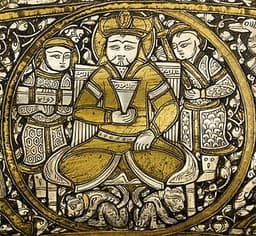
Baybars
Emperor · Medieval
63.8Total
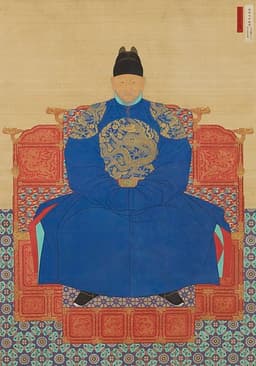
Taejo of Joseon
Emperor · Medieval
70.4Total
Basic Information
Born
1223
1335
Died
1277
1408
Era
Medieval
Medieval
Nationality
Egypt
Korea
Occupation
Emperor
Emperor
Civilization
Middle Eastern
Eastern
Score Comparison
Military (10%)
85.0
74.7
Political (20%)
70.0
65.0
Influence (20%)
55.0
65.0
Legacy (20%)
52.0
80.0
Leadership (15%)
72.0
72.0
Strategy (15%)
72.0
61.2
TOTAL
63.8
70.4
Baybars — Complete Timeline
1260 AD
Battle of Ain Jalut (1260)War◆ Major
Baybars served as a key commander under Qutuz at the Battle of Ain Jalut. He led the vanguard and played a crucial role in the Mamluk victory over the Mongols. This battle established his reputation as a military leader.
Mongol InvasionBattleMamluk Victory
Impact: globalconstructive
Accession as Sultan (1260)Political Action◆ Major
After assassinating Qutuz, Baybars proclaimed himself Sultan of Egypt. He was accepted by the Mamluk commanders and the Abbasid Caliph. His reign began a period of Mamluk dominance in the Middle East, lasting for decades.
SuccessionMamluk SultanateAssassination
Impact: regional
1265 AD
Campaigns against the Crusader States (1260s-1270s)War◆ Major
Baybars launched a series of campaigns against the remaining Crusader states in the Levant. He captured key fortresses including Arsuf (1265), Safed (1266), Jaffa (1268), and Antioch (1268). These victories reduced Crusader territory to a few coastal enclaves.
Crusader WarsConquestMamluk Expansion
Impact: regionaldestructive
1277 AD
Defeat of the Mongols at Elbistan (1277)War◆ Major
Baybars defeated a Mongol army at the Battle of Elbistan in Anatolia. He invaded the Seljuk Sultanate of Rum, which was under Mongol suzerainty. Although a tactical victory, Baybars could not hold Anatolia and returned to Syria.
Mongol WarsBattleAnatolia
Impact: regionalconstructive
Death of Baybars (1277)Other◆ Major
Baybars died in Damascus, possibly from poisoning or illness. His death was kept secret for a time to prevent unrest. He was succeeded by his son Al-Said Barakah. Baybars' reign is considered the peak of the early Mamluk Sultanate.
DeathSuccessionMamluk Sultanate
Impact: regionaltragic
Taejo of Joseon — Complete Timeline
1380 AD
Battle of HwangsanWar
General Yi Seong-gye defeated a Japanese pirate (wokou) force at Hwangsan. This victory enhanced his military reputation and demonstrated his capability as a commander.
WokouGoryeo Military
1388 AD
Wihwado RetreatPolitical Action
General Yi Seong-gye, ordered to invade the Ming dynasty's Liaodong region, turned his army back at Wihwado Island. This act of defiance against the Goryeo court led to a coup that eventually brought him to power.
CoupGoryeo-Ming RelationsPower Shift
Impact: national
1391 AD
Land Reform and the Gwajeon LawReform◆ Major
Taejo implemented the Gwajeon Law, a land reform that redistributed land from the old Goryeo aristocracy to his supporters and the state. This weakened the old elite and strengthened the new Joseon ruling class.
Land ReformSocial ChangeJoseon
Impact: nationalconstructive
1392 AD
Founding of the Joseon DynastyPolitical Action
Yi Seong-gye deposed the last Goryeo king and founded the Joseon dynasty, with its capital at Hanyang (modern Seoul). He established a new ruling class based on Confucian ideology, replacing the Buddhist-influenced Goryeo system.
Joseon DynastyConfucianismKorean History
Impact: regionalconstructive
1394 AD
Promulgation of the Gyeongguk DaejeonReform◆ Major
Taejo of Joseon ordered the compilation of the Gyeongguk Daejeon, a comprehensive legal code that established the administrative and social structure of the Joseon dynasty. This code remained in effect for centuries.
Legal CodeGovernanceConfucianism
Impact: nationalconstructive
Expert Analysis
Taejo of Joseon vs Baybars
# The Throne and the Sword: Taejo of Joseon and Baybars, Founders Forged in Fire
In the summer of 1388, on a small island in the Yalu River, a Korean general made a decision that would echo across centuries. Yi Seong-gye, ordered by his king to invade Ming China, instead turned his army around. Eighty-seven years earlier and two thousand miles away, a Kipchak Turk named Baybars stood on a different battlefield, watching Mongol horsemen crash against Mamluk lines at Ain Jalut. Both men were warriors at the hinge of history. One chose retreat; the other, relentless assault. Both would found dynasties. But the worlds they built could not have been more different.
Origins
Yi Seong-gye was born in 1335 into a minor military family in the northeastern frontier of Goryeo, a kingdom already in decay. His father was a local official, his mother a woman of modest lineage. The boy grew up hunting with falcons and practicing archery, a hard life on the edge of a crumbling state. Goryeo had been weakened by Mongol invasions, internal corruption, and the rise of powerful Buddhist monasteries that hoarded land and wealth. Yi learned early that survival meant skill, not birthright.
Baybars, born around 1223 on the steppes of the Crimea, knew a harsher childhood. Captured by Mongol raiders, he was sold into slavery—first in Syria, then in Cairo. He was a Kipchak Turk, a people known for horsemanship and ferocity. His body bore the marks: a cataract in one eye from a childhood blow, a scar across his face. Where Yi grew up within a fading but coherent kingdom, Baybars grew up as property, a man with no country, only his own will.
Rise to Power
Yi Seong-gye rose through the ranks of Goryeo's military by fighting pirates—Japanese wokou who ravaged the coast. At the Battle of Hwangsan in 1380, he crushed a major pirate force with a combination of disciplined archery and tactical patience. His reputation grew, but his path to power was not a simple march. The Goryeo court was a snake pit of factions, and Yi played a careful game, building alliances with reform-minded Confucian scholars who hated the Buddhist aristocracy.
The Wihwado Retreat of 1388 was his Rubicon. Ordered to invade Ming China—a suicidal mission—Yi chose to march back to the capital instead. He did not immediately seize the throne. He purged his rivals, placed a puppet king on the throne, and waited four years. In 1392, he finally deposed the last Goryeo monarch and declared himself king, founding the Joseon dynasty. His rise was a slow, deliberate coup, wrapped in Confucian rhetoric of restoring righteousness.
Baybars took power with blood on his hands. At the Battle of Ain Jalut in 1260, he commanded the vanguard that shattered the Mongol advance, the first major defeat of the Mongol Empire. But his Sultan, Qutuz, was the one who reaped the glory. Baybars wanted more. Later that year, during a hunting expedition, he struck Qutuz down with his own hand—a single sword stroke that ended one reign and began another. The Mamluk commanders, practical men who valued strength over legitimacy, accepted him as Sultan. His rise was a matter of hours, not years.
Leadership & Governance
Taejo of Joseon—as Yi Seong-gye became known—governed through institutions. His Gwajeon Law of 1391 redistributed land from the old aristocracy to his supporters, breaking the economic power of the Buddhist monasteries and creating a new class of scholar-officials. He moved the capital to Hanyang (modern Seoul) and ordered the compilation of the *Gyeongguk Daejeon*, a legal code that would govern Korea for centuries. His rule was about building a system—a Confucian bureaucracy that rewarded merit, at least in theory, and subordinated the military to civilian authority. He was not a great strategist by the numbers (his Strategy score of 63.8 is the lowest of his metrics), but he was a master of political architecture.
Baybars ruled through the sword—but not mindlessly. He reorganized the Mamluk army, creating a professional slave-soldier corps that was arguably the finest cavalry in the medieval world. He fought the Mongols again at Elbistan in 1277, crushing them in Anatolia. He systematically dismantled the Crusader states, capturing the great fortress of Krak des Chevaliers in 1271. But his governance was personal: he led from the front, rewarded loyalty with land and slaves, and punished betrayal with execution. His Political score of 75.7 is nearly identical to Taejo's 76.1, but it was a politics of fear and charisma, not law.
Triumph & Tragedy
Taejo's greatest triumph was the founding itself: a dynasty that would last 518 years, longer than almost any other in world history. His tragedy was personal. He had named his youngest son as heir, bypassing the eldest, triggering a bloody succession struggle. In 1398, his sons fought a civil war while he watched, helpless. He abdicated in grief, dying in 1408 a broken old man, haunted by the violence that had built his throne.
Baybars never saw his dynasty endure. He died in 1277, possibly poisoned, in Damascus. His death was kept secret for weeks to prevent revolt. His son would be murdered within two years. The Mamluk Sultanate would continue for another two centuries, but Baybars' own line was extinguished almost immediately. His tragedy was that he built an empire on his own strength, and that strength could not be inherited.
Character & Destiny
Taejo was a man of calculation. His scores tell the story: Political 76.1, Leadership 81.6, but Strategy only 63.8. He was not a brilliant battlefield commander—he was a builder, a politician who understood that lasting power requires institutions, not just victories. He was patient to the point of passivity, willing to wait years for the right moment.
Baybars was a man of action. Military 67.8, Strategy 71.6—slightly higher than Taejo in war, but his Leadership of 80.2 reflects a different kind of command: personal, visceral, immediate. He was a slave who became a sultan, and he never forgot that power is taken, not given. His destiny was to be a hammer, not an architect.
Legacy
Today, Taejo of Joseon is remembered as the founder of Korea's longest dynasty, the man who gave Seoul its shape and Korean governance its Confucian soul. His Legacy score is 85.0—the highest of all his metrics—because his system outlasted him by half a millennium.
Baybars is remembered as the Sultan who broke the Mongol myth, the scourge of the Crusaders, the slave who became a king. But his Legacy score is 69.3, lower than Taejo's, because his personal empire crumbled with his death. He is a hero to Egyptians and a symbol of resistance, but he built no institutions that survived him.
Conclusion
Two men, two worlds. Taejo built a system; Baybars built a reputation. One created a dynasty that lasted five centuries; the other created a legend that lasts still. The difference was not in their courage or their ambition—both had plenty—but in their understanding of power. Taejo knew that power must be shared with institutions; Baybars knew only that power must be held in the hand. In the end, the builder outlasted the warrior, but the warrior's story still burns brighter.
Rankings
🥇
Taejo of JoseonLeader
Mil: 74.7Pol: 65.0Inf: 65.0
70.4
🥈
Baybars
Mil: 85.0Pol: 70.0Inf: 55.0
63.8
+6.6 behind
How This Comparison Works
Algorithm
Each figure is scored on 6 dimensions (0—100 scale) based on structured historical data: Military (10%), Political (20%), Influence (20%), Legacy (20%), Leadership (15%), Strategy (15%). The weighted total produces the final ranking.
Data Sources
Scores are computed from structured sub-indicators in the database. Scale factors adjust for era (Ancient ×0.85, Modern ×1.0) and civilization size (Eastern ×1.05, Other ×0.80) to account for differences in population and military scale.
Maximum 3 Figures
Comparisons are limited to 2—3 figures to ensure readability and statistical meaningfulness.
Error Margins
±5 points per dimension — Sub-scores are derived from historical records with inherent uncertainty. Two figures within 5 points on a dimension should be considered roughly equivalent in that area.
Total Score Accuracy
±3 points overall — The weighted combination of 6 dimensions produces a total score with approximately ±3 points of uncertainty. Differences of less than 3 points are not statistically significant— the figures are effectively tied.
Known Limitations
- Historical records are incomplete and uneven across civilizations
- Figures from oral-tradition societies may be underrepresented
- Occupation labels can misclassify multi-role figures
- Scores measure capability and impact, not moral character
- Quantitative scoring is a comparison tool, not absolute truth
Capability Radar
Military (10%) — Battles & Warfare
Battles
85
75
Win Rate
90
80
Expansion
80
65
Political (20%) — Governance & Reform
Reform
80
85
Diplomacy
78
70
Economy
72
65
Influence (20%) — Cultural & Global Reach
Cultural
65
80
Global
65
60
Legacy (20%) — Historical Impact
Historical
75
85
Longevity
60
80
Leadership (15%) — Power & Stability
Tenure
75
70
Stability
70
75
Strategy (15%) — Tactics & Innovation
Strategy
85
75
Tactics
88
70
Reform
82
60
Similar Comparisons
Comments & Discussion
SwordAndScruple6/16/2026
Taejo’s “retreat” at Wihwado wasn’t retreat—it was the smartest strategic pivot in Korean military history. Baybars charging at Ain Jalut was brave, but Yi Seong-gye understood that sometimes the general who refuses a suicidal invasion wins the war before it starts. He preserved his army, his legitimacy, and his dynasty in one move. Baybars needed to crush the Mongols to prove himself; Taejo needed to outthink his own king. One is a hammer, the other a scalpel.
铁血考据员6/16/2026
说Taejo家世卑微?他爹李子春好歹是双城总管府的高官,母亲虽是再嫁之夫的女儿,但也算元朝势力下的望族。比起Baybars战俘变奴隶的真实草根开局,YI根本是边镇特权阶层。而且别忘了,他反攻高丽后干的第一件事就是清洗郑梦周等文官,手段比Baybars清洗阿尤布旧部还狠。同情弱者没问题,但别把Taejo洗成白莲花——两个都是铁血军阀,只是包装不同。
NumismatistNerd6/16/2026
Let’s talk coinage. Baybars minted silver dirhams bearing his title “Qasim Amir al-Mu’minin” (Distributor of the Commander of the Faithful), linking his rule directly to the Abbasid caliphate in Cairo. Taejo, by contrast, issued bronze “Joseon Tongbo” coins modeled on Ming Chinese cash. Baybars asserted symbolic independence from the Mongol Ilkhanate; Taejo deliberately subordinated his currency to China’s suzerainty. Same founder impulse, opposite diplomatic strategies—one builds walls, the oth
史海钩沉客6/16/2026
别吹Baybars多伟大了。1260年Ain Jalut的胜利,大多数学者都特别强调忽都斯(Qutuz)才是真正指挥者,Baybars只是先锋。要不是忽都斯战后被刺杀,Baybars哪有那么快上位?更别提他后来为了巩固权力,把十字军骑士团狠打了一通,最后却在1277年死于喝发酵马奶中毒—讽刺不?一个征服者死在自己爱好的饮料上。对比之下,Taejo至少活到74岁,禅让给儿子李芳远,结局体面多了。
FalconAndArrow6/16/2026
The comparison misses something crucial: both men were falconers. Yi Seong-gye was famous for hunting with goshawks on the northeastern frontier—it’s even recorded that he used falconry to train his sons in patience and timing. Baybars, too, kept hunting birds on the Cairo citadel. But here’s the difference: while Taejo turned falconry into