Loading...
Alexios I Komnenos vs Baybars
Alexios I Komnenos leads by 14.6 pts · 2 figures compared
…
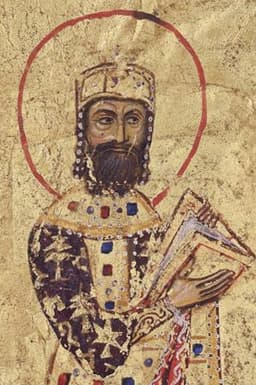
Alexios I Komnenos
Emperor · Medieval
78.4Total
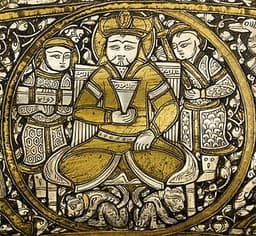
Baybars
Emperor · Medieval
63.8Total
Basic Information
Born
1048
1223
Died
1118
1277
Era
Medieval
Medieval
Nationality
Byzantine Empire
Egypt
Occupation
Emperor
Emperor
Civilization
Western
Middle Eastern
Score Comparison
Military (10%)
61.7
85.0
Political (20%)
78.0
70.0
Influence (20%)
88.0
55.0
Legacy (20%)
80.0
52.0
Leadership (15%)
78.0
72.0
Strategy (15%)
68.0
72.0
TOTAL
78.4
63.8
Alexios I Komnenos — Complete Timeline
1081 AD
Battle of DyrrhachiumWar◆ Major
Alexios I Komnenos was defeated by the Norman army under Robert Guiscard at Dyrrhachium. The Byzantine forces were routed, and Alexios barely escaped. This loss allowed the Normans to occupy much of the western Balkans, though Alexios later recovered some territory.
Norman InvasionDefeatBalkans
Impact: regionaltragic
1090 AD
Reforms of the Byzantine Military and EconomyReform◆ Major
Alexios I implemented a series of reforms to restore Byzantine power. He reorganized the army by relying more on foreign mercenaries, reformed the currency (the hyperpyron), and granted tax exemptions to the Church. These measures stabilized the empire after decades of decline.
Military ReformEconomic ReformKomnenian Restoration
Impact: nationalconstructive
1095 AD
Appeal to the West: Council of PiacenzaPolitical Action
Alexios I sent envoys to Pope Urban II at the Council of Piacenza, requesting military aid against the Seljuk Turks. This appeal contributed to Urban's call for the First Crusade at the Council of Clermont later that year, initiating the Crusader movement.
First CrusadePope Urban IISeljuk Turks
Impact: global
1097 AD
First Crusade: Siege of NicaeaWar◆ Major
Alexios I cooperated with the Crusader army to besiege and capture Nicaea from the Seljuk Turks. The city was surrendered to Byzantine control, and Alexios used the Crusaders to recover key territories in Anatolia, though tensions later arose over land claims.
First CrusadeNicaeaByzantine-Crusader Relations
Impact: regionalconstructive
Baybars — Complete Timeline
1260 AD
Battle of Ain Jalut (1260)War◆ Major
Baybars served as a key commander under Qutuz at the Battle of Ain Jalut. He led the vanguard and played a crucial role in the Mamluk victory over the Mongols. This battle established his reputation as a military leader.
Mongol InvasionBattleMamluk Victory
Impact: globalconstructive
Accession as Sultan (1260)Political Action◆ Major
After assassinating Qutuz, Baybars proclaimed himself Sultan of Egypt. He was accepted by the Mamluk commanders and the Abbasid Caliph. His reign began a period of Mamluk dominance in the Middle East, lasting for decades.
SuccessionMamluk SultanateAssassination
Impact: regional
1265 AD
Campaigns against the Crusader States (1260s-1270s)War◆ Major
Baybars launched a series of campaigns against the remaining Crusader states in the Levant. He captured key fortresses including Arsuf (1265), Safed (1266), Jaffa (1268), and Antioch (1268). These victories reduced Crusader territory to a few coastal enclaves.
Crusader WarsConquestMamluk Expansion
Impact: regionaldestructive
1277 AD
Defeat of the Mongols at Elbistan (1277)War◆ Major
Baybars defeated a Mongol army at the Battle of Elbistan in Anatolia. He invaded the Seljuk Sultanate of Rum, which was under Mongol suzerainty. Although a tactical victory, Baybars could not hold Anatolia and returned to Syria.
Mongol WarsBattleAnatolia
Impact: regionalconstructive
Death of Baybars (1277)Other◆ Major
Baybars died in Damascus, possibly from poisoning or illness. His death was kept secret for a time to prevent unrest. He was succeeded by his son Al-Said Barakah. Baybars' reign is considered the peak of the early Mamluk Sultanate.
DeathSuccessionMamluk Sultanate
Impact: regionaltragic
Expert Analysis
Alexios I Komnenos vs Baybars
# The Emperor and the Sultan: Alexios Komnenos and Baybars at the Crossroads of Worlds
On a dusty plain in Anatolia, two men who never met shaped the destiny of the Mediterranean world from opposite ends of the medieval centuries. Alexios I Komnenos, the Byzantine emperor who begged the West for help against the Turks, and Baybars, the Mamluk sultan who crushed both Mongols and Crusaders with equal ferocity, represent two faces of survival in an age of collapse. One opened a door he could not close; the other slammed one shut with blood and iron. Their stories, separated by nearly two centuries, reveal how character and circumstance conspire to create very different kinds of greatness.
Origins
Alexios Komnenos was born in 1048 into the purple of Byzantine aristocracy, a world of court intrigue and fading imperial glory. His family had produced emperors before, and he grew up breathing the air of a civilization that still believed itself the rightful ruler of the Roman world, even as its borders crumbled. The Byzantines of his youth were a people haunted by memory—they knew what they had lost, and they knew what they might lose next. Alexios learned early that survival required cunning, patience, and the willingness to sacrifice pride for necessity.
Baybars emerged from an entirely different world. Born around 1223 among the Kipchak Turks of the Eurasian steppes, he was captured as a slave and sold in the markets of Syria. His rise was not a birthright but a fluke of war and commerce. The Mamluk system that raised him took slave soldiers and forged them into the most formidable military caste of the medieval Middle East. Baybars never forgot his origins—a fact that would make him ruthless toward enemies and suspicious of everyone else.
Rise to Power
Alexios came to the throne in 1081 through a military coup, deposing the weak Emperor Nikephoros III Botaneiates. He was thirty-three years old, a proven general in a crumbling empire. His first test came almost immediately: the Norman adventurer Robert Guiscard invaded Byzantine territory, and at the Battle of Dyrrhachium in 1081, Alexios suffered a devastating defeat. His army routed, his prestige wounded, he learned the hard lesson that Byzantine military methods could no longer match Western European heavy cavalry. This humiliation would shape his entire reign.
Baybars seized power through assassination. In 1260, after the great victory at Ain Jalut where he led the vanguard that broke the Mongol advance, he murdered his superior Sultan Qutuz on a hunting expedition. It was a cold-blooded act of ambition, but it was also a recognition of reality: the Mamluks were a warrior elite where power belonged to the strongest. Baybars was accepted by the Mamluk commanders not despite the murder but because of it—they understood that a man willing to kill for the throne would defend it ferociously.
Leadership & Governance
Alexios governed through improvisation and adaptation. Facing a bankrupt treasury and a shattered army, he implemented sweeping reforms around 1090 that reorganized the Byzantine military by relying increasingly on foreign mercenaries and granting land in exchange for military service—the *pronoia* system. He was a master of diplomacy, playing enemies against each other, and his greatest political achievement was the appeal to Pope Urban II at the Council of Piacenza in 1095. This plea for Western military aid against the Seljuk Turks would unleash the First Crusade—a force Alexios thought he could control but never truly did.
Baybars ruled through terror and efficiency. He never fought a battle he could not win, never negotiated a treaty he intended to keep. His campaigns against the Crusader states in the 1260s and 1270s methodically dismantled the Frankish presence in the Levant, capturing fortress after fortress with a combination of siegecraft and treachery. At the Battle of Elbistan in 1277, he defeated a Mongol army in Anatolia, proving that the Mamluks could project power deep into Turkish territory. Unlike Alexios, Baybars did not seek allies—he annihilated enemies.
Triumph & Tragedy
Alexios’s greatest triumph was also his tragedy. The First Crusade, which he had summoned, succeeded beyond his wildest dreams: the Siege of Nicaea in 1097 returned a key city to Byzantine control through careful cooperation with the Crusader army. But the Crusaders who marched on to Jerusalem did not return conquered lands to the empire. They established their own kingdoms, creating a new problem for a realm already struggling with old ones. Alexios died in 1118 having restored some measure of Byzantine power, but having also invited forces he could not expel.
Baybars died in Damascus in 1277, possibly from poisoned kumis or a cup meant for someone else. His death was kept secret for weeks to prevent unrest. He had defeated the Mongols, humbled the Crusaders, and made Egypt the dominant power of the eastern Mediterranean. But he left no stable succession—the Mamluk system that raised him was designed to produce great warriors, not dynasties. His empire would continue, but his personal line ended with him.
Character & Destiny
Alexios was a survivor, not a conqueror. His political score of 80.0 reflects a man who understood that empires are held together by patience and compromise, not glory. He was willing to beg for help, to accept humiliation, to negotiate with enemies. This saved Byzantium for another century but also bound it to forces it could not master.
Baybars was a destroyer who built. His leadership score of 80.2 and strategy of 71.6 mark him as a commander of exceptional ability, but his legacy was forged in blood. He could not build institutions that outlasted his own life because the Mamluk system was built on personal loyalty and military prowess, not constitutional order. His greatness was personal, not institutional.
Legacy
Alexios founded the Komnenian dynasty that would produce some of Byzantium’s last great emperors. His reforms gave the empire breathing room, and his appeal to the West changed world history. But he is also remembered as the emperor who opened Pandora’s box—the Crusades he summoned would eventually sack Constantinople itself in 1204. His legacy score of 75.0 reflects this ambiguity: savior and unwitting architect of disaster.
Baybars is remembered as the greatest Mamluk sultan, the man who broke the Mongol myth of invincibility and drove the Crusaders to the sea. His legacy score of 69.3 is lower than his achievements might suggest, partly because his empire was eventually absorbed by the Ottoman Turks, and partly because his methods were too brutal to inspire the romantic admiration that other medieval conquerors receive. He remains a hero in the Arab world, a symbol of resistance against both Western and Mongol invaders.
Conclusion
Standing at opposite ends of the medieval Mediterranean, Alexios and Baybars faced the same fundamental challenge: how to preserve a civilization in an age of upheaval. Alexios chose accommodation, inviting outsiders in and hoping to tame them. Baybars chose annihilation, destroying outsiders before they could destroy him. Neither choice was entirely wrong, and neither was entirely right. The Byzantine Empire fell two centuries after Alexios; the Mamluk Sultanate fell three centuries after Baybars. Perhaps the real lesson is that no ruler, however brilliant, can permanently arrest the movement of history. They can only delay, adapt, and hope that their successors are as wise as they were ruthless.
Rankings
🥇
Alexios I KomnenosLeader
Mil: 61.7Pol: 78.0Inf: 88.0
78.4
🥈
Baybars
Mil: 85.0Pol: 70.0Inf: 55.0
63.8
+14.6 behind
How This Comparison Works
Algorithm
Each figure is scored on 6 dimensions (0—100 scale) based on structured historical data: Military (10%), Political (20%), Influence (20%), Legacy (20%), Leadership (15%), Strategy (15%). The weighted total produces the final ranking.
Data Sources
Scores are computed from structured sub-indicators in the database. Scale factors adjust for era (Ancient ×0.85, Modern ×1.0) and civilization size (Eastern ×1.05, Other ×0.80) to account for differences in population and military scale.
Maximum 3 Figures
Comparisons are limited to 2—3 figures to ensure readability and statistical meaningfulness.
Error Margins
±5 points per dimension — Sub-scores are derived from historical records with inherent uncertainty. Two figures within 5 points on a dimension should be considered roughly equivalent in that area.
Total Score Accuracy
±3 points overall — The weighted combination of 6 dimensions produces a total score with approximately ±3 points of uncertainty. Differences of less than 3 points are not statistically significant— the figures are effectively tied.
Known Limitations
- Historical records are incomplete and uneven across civilizations
- Figures from oral-tradition societies may be underrepresented
- Occupation labels can misclassify multi-role figures
- Scores measure capability and impact, not moral character
- Quantitative scoring is a comparison tool, not absolute truth
Capability Radar
Military (10%) — Battles & Warfare
Battles
75
85
Win Rate
70
90
Expansion
60
80
Political (20%) — Governance & Reform
Reform
85
80
Diplomacy
90
78
Economy
70
72
Influence (20%) — Cultural & Global Reach
Cultural
70
65
Global
75
65
Legacy (20%) — Historical Impact
Historical
85
75
Longevity
80
60
Leadership (15%) — Power & Stability
Tenure
80
75
Stability
75
70
Strategy (15%) — Tactics & Innovation
Strategy
85
85
Tactics
80
88
Reform
75
82
Similar Comparisons
Comments & Discussion
CRUSADER KICKER6/16/2026
Alexios gets too much credit for being a "savior" when he literally begged for foreign armies and then blamed them for the mess he created. Sure, he held the empire together, but at what cost? The Fourth Crusade happened because Byzantines couldn't manage their own problems. Baybars didn't need help—he annihilated the Mongols at Ain Jalut (1260) and crushed the Crusader states like a boot on an anthill. Alexios opened Pandora’s box; Baybars sealed it shut.|en
数字拆台者6/16/2026
数据不会说谎:Alexios统治时拜占庭只剩亚洲领土的四分之一,而Baybars把马穆鲁克版图从埃及扩张到幼发拉底河,领土翻倍。说Alexios "伟大" ?他靠出卖帝国未来换苟延残喘,而Baybars是真刀真枪把伊斯兰世界从蒙古刀下救出来的。别拿怀旧当史实,数字摆在这:Baybars的胜利率接近90%,Alexios呢?连曼齐刻尔特都没能收复。|zh
CLASSICS GHOST6/16/2026
Alexios I Komnenos is the ultimate "Lost Cause" emperor: brilliant in crisis but pathetic in legacy. Compare his Anna Komnena-written propaganda to Baybars' brutal reality. Alexios couldn't even hold Antioch, while Baybars personally led 38 campaigns and never lost a single pitched battle. The man who sold his daughter's husband for a truce versus the man who broke Hospitaller castles with his bare hands—history writes its own verdict.|en
东方刀客6/16/2026
说实话,你们拜占庭吹就是放不下那点罗马幻影。Alexios的最大成就是什么?忽悠十字军当炮灰,然后被十字军反噬。Baybars呢?他在1268年攻陷安条克,把十字军打得连渣都不剩,1271年又拿下克拉克骑士堡。Alexios统治时期领土缩水,Baybars却重建了阿拔斯哈里发国。给我选,我选那个用实力说话的人,不是靠嘴皮子求援的皇帝。|zh
SANDS OF TIME6/16/2026
Both men faced existential threats: Alexios the Seljuks, Baybars the Mongols and Franks. But here's the kicker—Alexios' survival was transactional, Baybars' was transformational. Alexios bought time by paying tribute and outsourcing war. Baybars destroyed the Mongol myth of invincibility at Ain Jalut, reshaped the Near East for centuries, and actually expanded Islam's reach. One preserved a corpse; the other built a body. That's the difference between a caretaker and a conqueror.|en