Loading...
This comparison has not been analyzed yet.
One-time AI generation (~1 minute). Scores and timeline are already available below.
Win Myint vs Zoran Đinđic
Zoran Đinđic leads by 17.9 pts · 2 figures compared
…

Win Myint
Politician · Modern
34.7Total
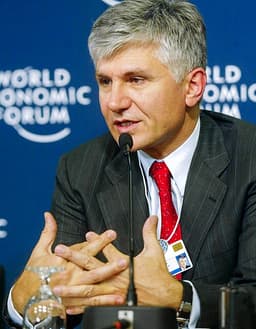
Zoran Đinđic
Politician · Modern
52.6Total
Basic Information
Born
1951
1952
Died
—
—
Era
Modern
Modern
Nationality
Myanmar
Serbia
Occupation
Politician
Politician
Civilization
Eastern
Western
Score Comparison
Military (10%)
13.0
50.0
Political (20%)
29.3
60.0
Influence (20%)
47.1
58.0
Legacy (20%)
35.8
45.8
Leadership (15%)
38.1
55.3
Strategy (15%)
25.3
43.8
TOTAL
34.7
52.6
Win Myint — Complete Timeline
2018 AD
Elected President of MyanmarPolitical Action◆ Major
Win Myint was elected as the 10th President of Myanmar by the Pyidaungsu Hluttaw (Assembly of the Union). He succeeded Htin Kyaw and was seen as a close ally of Aung San Suu Kyi, serving as a figurehead president.
PresidencyMyanmarNLD
Impact: nationalconstructive
2021 AD
Deposed in the 2021 Myanmar coup d'étatPolitical Action
Win Myint was arrested by the Myanmar military during the 2021 coup d'
CoupArrestMyanmar
Impact: nationaltragic
2022 AD
Sentenced to prison on corruption chargesPolitical Action◆ Major
Win Myint was sentenced to four years in prison by a military-controlled court on charges of corruption related to election fraud. The charges were widely seen as politically motivated to legitimize the coup.
ImprisonmentCorruptionMyanmar
Impact: nationaltragic
Zoran Đinđic — Complete Timeline
2000 AD
Overthrow of Slobodan MiloševićPolitical Action◆ Major
Đinđić played a key role in the Bulldozer Revolution on October 5, 2000, which forced Slobodan Milošević to resign after disputed elections. The peaceful uprising ended Milošević's 13-year rule and paved the way for democratic reforms in Serbia.
RevolutionDemocracySerbia
Impact: nationalconstructive
2001 AD
Extradition of Slobodan Milošević to ICTYPolitical Action◆ Major
Đinđić's government extradited former President Slobodan Milošević to the International Criminal Tribunal for the former Yugoslavia on June 28, 2001. This controversial move was crucial for Serbia's reintegration into the international community but sparked political crisis.
ExtraditionWar CrimesICTY
Impact: globalconstructive
Election as Prime Minister of SerbiaPolitical Action◆ Major
Đinđić became Prime Minister of Serbia on January 25, 2001, after leading the Democratic Opposition of Serbia (DOS) to victory in the 2000 elections. He pursued pro-Western reforms, including economic liberalization, anti-corruption measures, and EU integration.
ElectionReformSerbia
Impact: nationalconstructive
2003 AD
Assassination in BelgradePolitical Action◆ Major
Zoran Đinđić was assassinated on March 12, 2003, by a sniper in Belgrade. The assassination was orchestrated by the Zemun Clan, a criminal group linked to the security services. His death was a major blow to Serbia's democratic reforms and EU integration efforts.
AssassinationDemocracySerbia
Impact: nationaltragic
This comparison has not been analyzed yet.
One-time AI generation (~1 minute). Scores and timeline are already available below.
Rankings
🥇
Zoran ĐinđicLeader
Mil: 50.0Pol: 60.0Inf: 58.0
52.6
🥈
Win Myint
Mil: 13.0Pol: 29.3Inf: 47.1
34.7
+17.9 behind
How This Comparison Works
Algorithm
Each figure is scored on 6 dimensions (0—100 scale) based on structured historical data: Military (10%), Political (20%), Influence (20%), Legacy (20%), Leadership (15%), Strategy (15%). The weighted total produces the final ranking.
Data Sources
Scores are computed from structured sub-indicators in the database. Scale factors adjust for era (Ancient ×0.85, Modern ×1.0) and civilization size (Eastern ×1.05, Other ×0.80) to account for differences in population and military scale.
Maximum 3 Figures
Comparisons are limited to 2—3 figures to ensure readability and statistical meaningfulness.
Error Margins
±5 points per dimension — Sub-scores are derived from historical records with inherent uncertainty. Two figures within 5 points on a dimension should be considered roughly equivalent in that area.
Total Score Accuracy
±3 points overall — The weighted combination of 6 dimensions produces a total score with approximately ±3 points of uncertainty. Differences of less than 3 points are not statistically significant— the figures are effectively tied.
Known Limitations
- Historical records are incomplete and uneven across civilizations
- Figures from oral-tradition societies may be underrepresented
- Occupation labels can misclassify multi-role figures
- Scores measure capability and impact, not moral character
- Quantitative scoring is a comparison tool, not absolute truth
Capability Radar
Military (10%) — Battles & Warfare
Battles
11
31
Win Rate
19
31
Expansion
22
32
Political (20%) — Governance & Reform
Reform
20
65
Diplomacy
20
55
Economy
15
60
Influence (20%) — Cultural & Global Reach
Cultural
10
40
Global
10
40
Legacy (20%) — Historical Impact
Historical
15
45
Longevity
10
30
Leadership (15%) — Power & Stability
Tenure
15
30
Stability
10
20
Strategy (15%) — Tactics & Innovation
Strategy
22
39
Tactics
27
42
Reform
31
45
Similar Comparisons
Comments & Discussion
No comments yet. Be the first to share your thoughts!