Loading...
Ham Lini vs Zoran Đinđic
Zoran Đinđic leads by 11.4 pts · 2 figures compared
…

Ham Lini
Politician · Modern
41.2Total
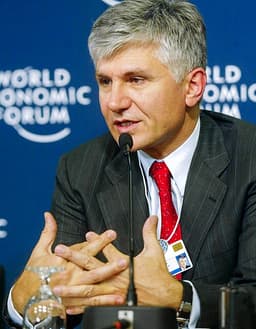
Zoran Đinđic
Politician · Modern
52.6Total
Basic Information
Born
1951
1952
Died
—
—
Era
Modern
Modern
Nationality
Vanuatu
Serbia
Occupation
Politician
Politician
Civilization
Other
Western
Score Comparison
Military (10%)
27.0
50.0
Political (20%)
35.1
60.0
Influence (20%)
47.1
58.0
Legacy (20%)
37.5
45.8
Leadership (15%)
51.9
55.3
Strategy (15%)
43.2
43.8
TOTAL
41.2
52.6
Ham Lini — Complete Timeline
2004 AD
Elected Prime Minister of VanuatuPolitical Action◆ Major
Ham Lini was elected Prime Minister, leading a coalition government. His tenure focused on infrastructure and economic development.
ElectionLeadership
Impact: national
2005 AD
Hosted the Melanesian Spearhead Group summitPolitical Action
Lini hosted the Melanesian Spearhead Group summit in Vanuatu, strengthening regional ties. The summit addressed trade and political cooperation.
Regional CooperationSummit
Impact: regionalconstructive
2008 AD
Lost re-electionPolitical Action◆ Major
Ham Lini lost the general election and was succeeded as Prime Minister. His defeat marked the end of his term after four years.
ElectionDefeat
Impact: national
Zoran Đinđic — Complete Timeline
2000 AD
Overthrow of Slobodan MiloševićPolitical Action◆ Major
Đinđić played a key role in the Bulldozer Revolution on October 5, 2000, which forced Slobodan Milošević to resign after disputed elections. The peaceful uprising ended Milošević's 13-year rule and paved the way for democratic reforms in Serbia.
RevolutionDemocracySerbia
Impact: nationalconstructive
2001 AD
Extradition of Slobodan Milošević to ICTYPolitical Action◆ Major
Đinđić's government extradited former President Slobodan Milošević to the International Criminal Tribunal for the former Yugoslavia on June 28, 2001. This controversial move was crucial for Serbia's reintegration into the international community but sparked political crisis.
ExtraditionWar CrimesICTY
Impact: globalconstructive
Election as Prime Minister of SerbiaPolitical Action◆ Major
Đinđić became Prime Minister of Serbia on January 25, 2001, after leading the Democratic Opposition of Serbia (DOS) to victory in the 2000 elections. He pursued pro-Western reforms, including economic liberalization, anti-corruption measures, and EU integration.
ElectionReformSerbia
Impact: nationalconstructive
2003 AD
Assassination in BelgradePolitical Action◆ Major
Zoran Đinđić was assassinated on March 12, 2003, by a sniper in Belgrade. The assassination was orchestrated by the Zemun Clan, a criminal group linked to the security services. His death was a major blow to Serbia's democratic reforms and EU integration efforts.
AssassinationDemocracySerbia
Impact: nationaltragic
Expert Analysis
Origins
Ham Lini was born in 1951 on Ambae Island, Vanuatu, into a politically active family. His older brother, Walter Lini, was the first Prime Minister of independent Vanuatu. Ham Lini worked as a teacher and later entered politics, serving as a member of parliament for the National United Party (NUP). He was influenced by his brother's legacy and the Melanesian socialist ideology.
Zoran Đinđić was born on August 1, 1952, in Šamac, Bosnia and Herzegovina (then part of Yugoslavia). He studied philosophy at the University of Belgrade and later earned a doctorate in Germany under Jürgen Habermas. His academic background shaped his pro-democracy and reformist views. He became a prominent dissident against Slobodan Milošević's regime.
Rise to Power
Ham Lini rose to prominence after his brother's death in 1999. He led the NUP and became Prime Minister on December 11, 2004, after forming a coalition government. His election was marked by promises of infrastructure development and economic growth.
Zoran Đinđić rose as a key figure in the Democratic Opposition of Serbia (DOS). He played a central role in the Bulldozer Revolution on October 5, 2000, which forced Milošević to resign. Đinđić became Prime Minister on January 25, 2001, leading a reformist government focused on democratization and European integration.
Leadership & Governance
Ham Lini's leadership style was consensus-driven, focusing on coalition management. His government prioritized infrastructure projects, including roads and telecommunications, and hosted the Melanesian Spearhead Group summit in 2005 to boost regional trade. However, his administration faced criticism for slow progress on anti-corruption and economic diversification. His political score of 35.1 reflects limited impact beyond Vanuatu.
Zoran Đinđić was a decisive and reform-oriented leader. He pushed through controversial but necessary reforms, including the extradition of Milošević to the ICTY in 2001, which alienated nationalists but earned Western support. His leadership score of 55.3 indicates stronger governance in a challenging post-conflict environment. He also tackled organized crime, which ultimately led to his assassination.
Triumph & Tragedy
Ham Lini's greatest success was maintaining political stability in Vanuatu and advancing infrastructure. However, his failure to secure re-election in 2008 and limited economic transformation mark his tenure as moderate. His legacy score of 37.5 reflects a competent but not transformative leadership.
Zoran Đinđić's triumphs include overthrowing Milošević, initiating democratic reforms, and setting Serbia on a pro-European path. His tragedy was his assassination on March 12, 2003, by the Zemun Clan, which halted many reforms. He scored 45.8 in legacy, but his impact on Serbian history is profound.
Character & Destiny
Ham Lini was pragmatic and cautious, often deferring to coalition partners. His character led to steady but unspectacular governance. His total score of 41.2 reflects a modest influence confined to a small Pacific nation.
Đinđić was bold and intellectual, willing to take risks for reform. His assassination was a direct result of his crackdown on organized crime. His character shaped a destiny of high impact cut short.
Legacy
Ham Lini's legacy is limited to Vanuatu, where he is remembered as a caretaker leader. His influence score of 47.1 reflects regional recognition but minimal global impact.
Zoran Đinđić's legacy is significant: he is credited with ending Milošević's era, initiating EU integration, and inspiring democratic movements. His influence score of 58.0 and political score of 60.0 underscore his broader impact.
Conclusion
Zoran Đinđić had a greater impact on his country and the world. Despite his short tenure, he transformed Serbia's trajectory and paid the ultimate price. Ham Lini's steady but unremarkable leadership in Vanuatu pales in comparison to Đinđić's role in toppling a dictator and advancing democracy in the Balkans. The score gap of 11.4 points supports this: Đinđić's 52.6 versus Lini's 41.2.
Rankings
🥇
Zoran ĐinđicLeader
Mil: 50.0Pol: 60.0Inf: 58.0
52.6
🥈
Ham Lini
Mil: 27.0Pol: 35.1Inf: 47.1
41.2
+11.4 behind
How This Comparison Works
Algorithm
Each figure is scored on 6 dimensions (0—100 scale) based on structured historical data: Military (10%), Political (20%), Influence (20%), Legacy (20%), Leadership (15%), Strategy (15%). The weighted total produces the final ranking.
Data Sources
Scores are computed from structured sub-indicators in the database. Scale factors adjust for era (Ancient ×0.85, Modern ×1.0) and civilization size (Eastern ×1.05, Other ×0.80) to account for differences in population and military scale.
Maximum 3 Figures
Comparisons are limited to 2—3 figures to ensure readability and statistical meaningfulness.
Error Margins
±5 points per dimension — Sub-scores are derived from historical records with inherent uncertainty. Two figures within 5 points on a dimension should be considered roughly equivalent in that area.
Total Score Accuracy
±3 points overall — The weighted combination of 6 dimensions produces a total score with approximately ±3 points of uncertainty. Differences of less than 3 points are not statistically significant— the figures are effectively tied.
Known Limitations
- Historical records are incomplete and uneven across civilizations
- Figures from oral-tradition societies may be underrepresented
- Occupation labels can misclassify multi-role figures
- Scores measure capability and impact, not moral character
- Quantitative scoring is a comparison tool, not absolute truth
Capability Radar
Military (10%) — Battles & Warfare
Battles
27
31
Win Rate
28
31
Expansion
29
32
Political (20%) — Governance & Reform
Reform
25
65
Diplomacy
30
55
Economy
20
60
Influence (20%) — Cultural & Global Reach
Cultural
10
40
Global
10
40
Legacy (20%) — Historical Impact
Historical
15
45
Longevity
10
30
Leadership (15%) — Power & Stability
Tenure
20
30
Stability
25
20
Strategy (15%) — Tactics & Innovation
Strategy
35
39
Tactics
35
42
Reform
43
45
Similar Comparisons
Comments & Discussion
No comments yet. Be the first to share your thoughts!