Loading...
Neiphiu Rio vs Zoran Đinđic
Zoran Đinđic leads by 2.6 pts · 2 figures compared
…

Neiphiu Rio
Politician · Modern
50.0Total
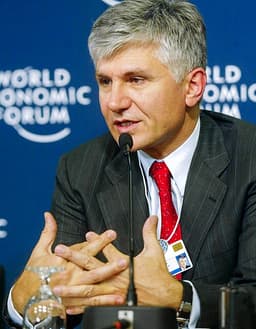
Zoran Đinđic
Politician · Modern
52.6Total
Basic Information
Born
1950
1952
Died
—
—
Era
Modern
Modern
Nationality
India
Serbia
Occupation
Politician
Politician
Civilization
Indian
Western
Score Comparison
Military (10%)
16.3
50.0
Political (20%)
53.8
60.0
Influence (20%)
51.8
58.0
Legacy (20%)
45.8
45.8
Leadership (15%)
78.0
55.3
Strategy (15%)
42.1
43.8
TOTAL
50.0
52.6
Neiphiu Rio — Complete Timeline
2003 AD
Became Chief Minister of NagalandPolitical Action◆ Major
Neiphiu Rio was sworn in as Chief Minister of Nagaland for the first time, leading a Democratic Alliance of Nagaland (DAN) government. He succeeded S. C. Jamir.
Chief MinisterNagalandDAN
Impact: regionalconstructive
Advocated for Naga political solutionPolitical Action
Rio consistently pushed for a peaceful resolution to the Naga insurgency, engaging with the central government and Naga groups. His efforts contributed to the ongoing peace process.
Peace ProcessNagalandInsurgency
Impact: regionalconstructive
2017 AD
Formed Nationalist Democratic Progressive PartyPolitical Action◆ Major
Rio founded the Nationalist Democratic Progressive Party (NDPP) after a split from the Naga People's Front. The party later allied with the BJP to form the government in Nagaland.
NDPPNagalandPolitical Party
Impact: regionalconstructive
2018 AD
Won 2018 Nagaland Assembly electionPolitical Action◆ Major
Rio led the NDPP-BJP alliance to victory in the Nagaland assembly election, winning 30 of 60 seats. He became chief minister for a fourth term, continuing his long tenure.
ElectionNagalandNDPP
Impact: regionalconstructive
Zoran Đinđic — Complete Timeline
2000 AD
Overthrow of Slobodan MiloševićPolitical Action◆ Major
Đinđić played a key role in the Bulldozer Revolution on October 5, 2000, which forced Slobodan Milošević to resign after disputed elections. The peaceful uprising ended Milošević's 13-year rule and paved the way for democratic reforms in Serbia.
RevolutionDemocracySerbia
Impact: nationalconstructive
2001 AD
Extradition of Slobodan Milošević to ICTYPolitical Action◆ Major
Đinđić's government extradited former President Slobodan Milošević to the International Criminal Tribunal for the former Yugoslavia on June 28, 2001. This controversial move was crucial for Serbia's reintegration into the international community but sparked political crisis.
ExtraditionWar CrimesICTY
Impact: globalconstructive
Election as Prime Minister of SerbiaPolitical Action◆ Major
Đinđić became Prime Minister of Serbia on January 25, 2001, after leading the Democratic Opposition of Serbia (DOS) to victory in the 2000 elections. He pursued pro-Western reforms, including economic liberalization, anti-corruption measures, and EU integration.
ElectionReformSerbia
Impact: nationalconstructive
2003 AD
Assassination in BelgradePolitical Action◆ Major
Zoran Đinđić was assassinated on March 12, 2003, by a sniper in Belgrade. The assassination was orchestrated by the Zemun Clan, a criminal group linked to the security services. His death was a major blow to Serbia's democratic reforms and EU integration efforts.
AssassinationDemocracySerbia
Impact: nationaltragic
Expert Analysis
Origins
Neiphiu Rio was born on November 11, 1950, in Tuophema, Nagaland, India. He came from a modest Naga family and studied at St. Joseph's College, Darjeeling, and later at Delhi University. His early career was in teaching before entering politics. Zoran Đinđić was born on August 1, 1952, in Bosanski Šamac, Bosnia and Herzegovina (then Yugoslavia). He studied philosophy at the University of Belgrade and later earned a doctorate at the University of Konstanz, Germany. His exposure to Western democratic ideas shaped his worldview.
Rise to Power
Rio entered state politics in the 1970s, winning a seat in the Nagaland Legislative Assembly in 1977. He held various ministerial positions before becoming Chief Minister in 2003, leading a coalition government. His rise was marked by navigating factional Naga politics. Đinđić co-founded the Democratic Party in 1989 and led protests against Slobodan Milošević. He was a key figure in the Bulldozer Revolution of October 5, 2000, which forced Milošević to resign. He became Prime Minister of Serbia on January 25, 2001, after his coalition won elections.
Leadership & Governance
Rio's leadership focused on stability and development in Nagaland, a region affected by insurgency. He pursued peace talks with Naga groups and allied with the BJP at the national level to secure resources. His governance style was consensus-driven, scoring 53.8 in political skill. Đinđić pursued radical reforms: extraditing Milošević to the ICTY on June 28, 2001, and implementing economic liberalization. His leadership scored 55.3, but his confrontational style alienated nationalists and criminals.
Triumph & Tragedy
Rio's triumphs include winning four terms as Chief Minister (2003, 2008, 2013, 2018) and forming the NDPP in 2017, which stabilized his political base. His failure was the inability to resolve the Naga political issue fully, scoring 16.3 in military influence. Đinđić's triumph was the overthrow of Milošević and Serbia's reintegration into Europe. His tragedy was his assassination on March 12, 2003, by the Zemun Clan, halting reforms. He scored 50.0 in military due to his role in democratization.
Character & Destiny
Rio is seen as a pragmatic survivor, adapting to shifting alliances. His high leadership score (78.0) reflects his ability to maintain power in a volatile region. Đinđić was idealistic and bold, willing to take risks for democracy. His assassination underscores the dangers of confronting entrenched interests. Historians note his strategy score of 43.8, indicating overreach.
Legacy
Rio's legacy is as a stabilizing force in Nagaland, with his NDPP party continuing to govern. He scored 45.8 in legacy, tied with Đinđić. Đinđić's legacy is as a martyr for Serbian democracy; his reforms set the stage for EU integration, though his assassination showed the fragility of change. His total score of 52.6 edges Rio's 50.0, reflecting broader impact.
Conclusion
Zoran Đinđić had greater impact. While Rio maintained stability in a small Indian state, Đinđić transformed Serbia's political landscape and challenged authoritarianism. His actions reverberated beyond borders, despite his short tenure. Rio's score of 50.0 is respectable, but Đinđić's 52.6 reflects deeper systemic change. Đinđić's legacy, though cut short, reshaped a nation.
Rankings
🥇
Zoran ĐinđicLeader
Mil: 50.0Pol: 60.0Inf: 58.0
52.6
🥈
Neiphiu Rio
Mil: 16.3Pol: 53.8Inf: 51.8
50.0
+2.6 behind
How This Comparison Works
Algorithm
Each figure is scored on 6 dimensions (0—100 scale) based on structured historical data: Military (10%), Political (20%), Influence (20%), Legacy (20%), Leadership (15%), Strategy (15%). The weighted total produces the final ranking.
Data Sources
Scores are computed from structured sub-indicators in the database. Scale factors adjust for era (Ancient ×0.85, Modern ×1.0) and civilization size (Eastern ×1.05, Other ×0.80) to account for differences in population and military scale.
Maximum 3 Figures
Comparisons are limited to 2—3 figures to ensure readability and statistical meaningfulness.
Error Margins
±5 points per dimension — Sub-scores are derived from historical records with inherent uncertainty. Two figures within 5 points on a dimension should be considered roughly equivalent in that area.
Total Score Accuracy
±3 points overall — The weighted combination of 6 dimensions produces a total score with approximately ±3 points of uncertainty. Differences of less than 3 points are not statistically significant— the figures are effectively tied.
Known Limitations
- Historical records are incomplete and uneven across civilizations
- Figures from oral-tradition societies may be underrepresented
- Occupation labels can misclassify multi-role figures
- Scores measure capability and impact, not moral character
- Quantitative scoring is a comparison tool, not absolute truth
Capability Radar
Military (10%) — Battles & Warfare
Battles
21
31
Win Rate
27
31
Expansion
29
32
Political (20%) — Governance & Reform
Reform
55
65
Diplomacy
70
55
Economy
50
60
Influence (20%) — Cultural & Global Reach
Cultural
30
40
Global
20
40
Legacy (20%) — Historical Impact
Historical
35
45
Longevity
40
30
Leadership (15%) — Power & Stability
Tenure
85
30
Stability
60
20
Strategy (15%) — Tactics & Innovation
Strategy
29
39
Tactics
36
42
Reform
37
45
Similar Comparisons
Comments & Discussion
No comments yet. Be the first to share your thoughts!