Loading...
Jiang Zemin vs Zoran Đinđic
Jiang Zemin leads by 6.0 pts · 2 figures compared
…
Jiang Zemin
Politician · Modern
58.6Total
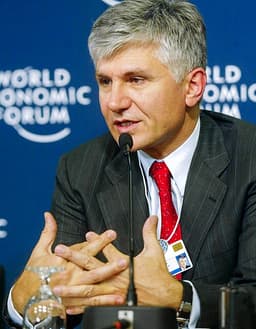
Zoran Đinđic
Politician · Modern
52.6Total
Basic Information
Born
1926
1952
Died
—
—
Era
Modern
Modern
Nationality
China
Serbia
Occupation
Politician
Politician
Civilization
Eastern
Western
Score Comparison
Military (10%)
10.7
50.0
Political (20%)
82.0
60.0
Influence (20%)
65.0
58.0
Legacy (20%)
55.0
45.8
Leadership (15%)
78.0
55.3
Strategy (15%)
35.1
43.8
TOTAL
58.6
52.6
Jiang Zemin — Complete Timeline
1989 AD
Appointed General Secretary of the Communist PartyPolitical Action◆ Major
Jiang Zemin succeeded Zhao Ziyang as General Secretary after the Tiananmen Square crackdown. He consolidated power and led China through a period of rapid economic growth.
Party LeadershipPost-Tiananmen
Impact: national
2000 AD
Promoted the 'Three Represents' TheoryPolitical Action◆ Major
Jiang Zemin introduced the 'Three Represents' theory, which allowed private entrepreneurs to join the Communist Party. This ideological shift accommodated China's market economy reforms.
IdeologyEconomic Reform
Impact: nationalconstructive
2001 AD
Oversaw China's Entry into the WTOPolitical Action
Under Jiang Zemin's leadership, China joined the World Trade Organization. This integration accelerated economic growth and opened Chinese markets to global trade.
WTOGlobalization
Impact: globalconstructive
Shanghai Cooperation Organization FoundedPolitical Action◆ Major
Jiang Zemin was instrumental in founding the Shanghai Cooperation Organization with Russia and Central Asian states. The SCO focused on security cooperation and counterterrorism.
DiplomacySecurity
Impact: regionalconstructive
Zoran Đinđic — Complete Timeline
2000 AD
Overthrow of Slobodan MiloševićPolitical Action◆ Major
Đinđić played a key role in the Bulldozer Revolution on October 5, 2000, which forced Slobodan Milošević to resign after disputed elections. The peaceful uprising ended Milošević's 13-year rule and paved the way for democratic reforms in Serbia.
RevolutionDemocracySerbia
Impact: nationalconstructive
2001 AD
Extradition of Slobodan Milošević to ICTYPolitical Action◆ Major
Đinđić's government extradited former President Slobodan Milošević to the International Criminal Tribunal for the former Yugoslavia on June 28, 2001. This controversial move was crucial for Serbia's reintegration into the international community but sparked political crisis.
ExtraditionWar CrimesICTY
Impact: globalconstructive
Election as Prime Minister of SerbiaPolitical Action◆ Major
Đinđić became Prime Minister of Serbia on January 25, 2001, after leading the Democratic Opposition of Serbia (DOS) to victory in the 2000 elections. He pursued pro-Western reforms, including economic liberalization, anti-corruption measures, and EU integration.
ElectionReformSerbia
Impact: nationalconstructive
2003 AD
Assassination in BelgradePolitical Action◆ Major
Zoran Đinđić was assassinated on March 12, 2003, by a sniper in Belgrade. The assassination was orchestrated by the Zemun Clan, a criminal group linked to the security services. His death was a major blow to Serbia's democratic reforms and EU integration efforts.
AssassinationDemocracySerbia
Impact: nationaltragic
Expert Analysis
Origins
Jiang Zemin was born on August 17, 1926, in Yangzhou, Jiangsu Province, China. He studied electrical engineering at Shanghai Jiao Tong University, graduating in 1947. His early career included work in the Soviet Union and leadership roles in the automotive industry. He joined the Chinese Communist Party in 1946, rising through the ranks in Shanghai and Beijing.
Zoran Đinđić was born on August 1, 1952, in Bosanski Šamac, Bosnia and Herzegovina (then Yugoslavia). He studied philosophy at the University of Belgrade and later earned a doctorate in philosophy from the University of Konstanz, Germany, under Jürgen Habermas. His academic background shaped his democratic and reformist ideals. He became a dissident under the Milošević regime.
Rise to Power
Jiang Zemin's rise began with his appointment as mayor of Shanghai in 1985. He gained prominence for handling the 1989 Tiananmen Square protests with a firm hand, which led to his appointment as General Secretary of the Communist Party in June 1989. He later became President in 1993, consolidating power by balancing factions within the party. His political score of 82.0 reflects his ability to navigate China's complex political landscape.
Zoran Đinđić rose to prominence as a leader of the Democratic Party in Serbia. He was a key figure in the Bulldozer Revolution of October 5, 2000, which forced Slobodan Milošević to resign after disputed elections. Đinđić's coalition, the Democratic Opposition of Serbia (DOS), won parliamentary elections in December 2000, and he became Prime Minister on January 25, 2001. His leadership score of 55.3 indicates his effectiveness in orchestrating the regime change.
Leadership & Governance
Jiang Zemin's leadership focused on economic reform and opening China to global markets. He oversaw China's entry into the World Trade Organization (WTO) in 2001, a move that accelerated economic growth. He also promoted the 'Three Represents' theory, which expanded the party's base to include private entrepreneurs. His strategy score of 35.1 suggests a cautious approach, but his political acumen was high at 82.0.
Zoran Đinđić pursued pro-Western reforms, including economic liberalization and the fight against organized crime. His most controversial decision was the extradition of Slobodan Milošević to the International Criminal Tribunal for the former Yugoslavia (ICTY) on June 28, 2001. This action alienated nationalists but was crucial for Serbia's reintegration into Europe. His political score of 60.0 reflects his mixed success in a turbulent environment.
Triumph & Tragedy
Jiang Zemin's greatest success was China's WTO accession, which boosted trade and foreign investment. He also founded the Shanghai Cooperation Organization (SCO) in 2001, enhancing security cooperation with Central Asia. However, his legacy is tarnished by the 1989 Tiananmen Square crackdown, which he oversaw as Shanghai mayor, though his direct involvement is debated. His legacy score of 55.0 reflects these mixed assessments.
Zoran Đinđić's triumph was the overthrow of Milošević and the subsequent democratic reforms. He successfully extradited Milošević, a key step toward international justice. His tragedy was his assassination on March 12, 2003, orchestrated by the Zemun Clan, a criminal group linked to the former regime. The assassination cut short his reforms and plunged Serbia into political uncertainty. His legacy score of 45.8 indicates the incomplete nature of his work.
Character & Destiny
Jiang Zemin was known for his pragmatic and adaptable character. He skillfully balanced conservative and reformist factions, ensuring his political survival. His decision to introduce the Three Represents showed ideological flexibility. His destiny was to guide China through a period of rapid change, leaving a mixed legacy of economic growth and political repression.
Zoran Đinđić was a visionary and resolute leader, willing to take risks for his beliefs. His extradition of Milošević demonstrated commitment to the rule of law, but it made him enemies. His assassination was a direct result of his anti-corruption and anti-crime efforts. His character of bold reform led to both his achievements and his tragic end.
Legacy
Jiang Zemin's legacy is visible in China's continued economic rise and its integration into global institutions. The Three Represents theory remains part of the party's ideology, and the SCO persists as a regional body. However, his political legacy is overshadowed by the Tiananmen Square events. His overall score of 58.6 reflects a significant but controversial impact.
Zoran Đinđić is remembered as a martyr for democracy in Serbia. His government's reforms laid the groundwork for Serbia's eventual EU candidate status, but his assassination stalled progress. His influence score of 58.0 indicates his lasting symbolic importance, though practical achievements were limited by his short tenure.
Conclusion
Jiang Zemin had a greater impact on global history, his political score of 82.0 far exceeding Đinđić's 60.0. While Đinđić's reforms were crucial for Serbia, Jiang Zemin's decisions affected billions and reshaped the global economy. His leadership in China's WTO entry and the Three Represents theory had enduring consequences. Đinđić's bravery is undeniable, but his legacy is localized and incomplete. Therefore, Jiang Zemin's influence and legacy are more substantial.
Rankings
🥇
Jiang ZeminLeader
Mil: 10.7Pol: 82.0Inf: 65.0
58.6
🥈
Zoran Đinđic
Mil: 50.0Pol: 60.0Inf: 58.0
52.6
+6.0 behind
How This Comparison Works
Algorithm
Each figure is scored on 6 dimensions (0—100 scale) based on structured historical data: Military (10%), Political (20%), Influence (20%), Legacy (20%), Leadership (15%), Strategy (15%). The weighted total produces the final ranking.
Data Sources
Scores are computed from structured sub-indicators in the database. Scale factors adjust for era (Ancient ×0.85, Modern ×1.0) and civilization size (Eastern ×1.05, Other ×0.80) to account for differences in population and military scale.
Maximum 3 Figures
Comparisons are limited to 2—3 figures to ensure readability and statistical meaningfulness.
Error Margins
±5 points per dimension — Sub-scores are derived from historical records with inherent uncertainty. Two figures within 5 points on a dimension should be considered roughly equivalent in that area.
Total Score Accuracy
±3 points overall — The weighted combination of 6 dimensions produces a total score with approximately ±3 points of uncertainty. Differences of less than 3 points are not statistically significant— the figures are effectively tied.
Known Limitations
- Historical records are incomplete and uneven across civilizations
- Figures from oral-tradition societies may be underrepresented
- Occupation labels can misclassify multi-role figures
- Scores measure capability and impact, not moral character
- Quantitative scoring is a comparison tool, not absolute truth
Capability Radar
Military (10%) — Battles & Warfare
Battles
16
31
Win Rate
18
31
Expansion
21
32
Political (20%) — Governance & Reform
Reform
85
65
Diplomacy
80
55
Economy
90
60
Influence (20%) — Cultural & Global Reach
Cultural
60
40
Global
75
40
Legacy (20%) — Historical Impact
Historical
70
45
Longevity
65
30
Leadership (15%) — Power & Stability
Tenure
75
30
Stability
85
20
Strategy (15%) — Tactics & Innovation
Strategy
23
39
Tactics
27
42
Reform
28
45
Similar Comparisons
Comments & Discussion
No comments yet. Be the first to share your thoughts!