Loading...
Lee Teng-hui vs Zoran Đinđic
Lee Teng-hui leads by 4.0 pts · 2 figures compared
…
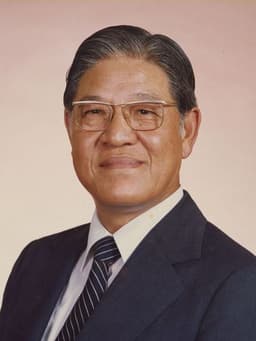
Lee Teng-hui
Politician · Modern
56.6Total
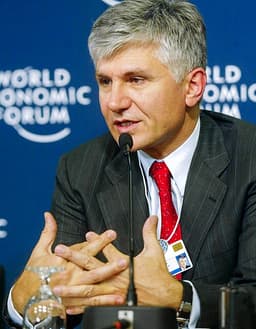
Zoran Đinđic
Politician · Modern
52.6Total
Basic Information
Born
1923
1952
Died
—
—
Era
Modern
Modern
Nationality
China
Serbia
Occupation
Politician
Politician
Civilization
Eastern
Western
Score Comparison
Military (10%)
14.3
50.0
Political (20%)
78.0
60.0
Influence (20%)
55.0
58.0
Legacy (20%)
58.0
45.8
Leadership (15%)
78.0
55.3
Strategy (15%)
35.3
43.8
TOTAL
56.6
52.6
Lee Teng-hui — Complete Timeline
1987 AD
End of martial law and democratizationPolitical Action◆ Major
As president, Lee Teng-hui oversaw the lifting of martial law in Taiwan, ending 38 years of military rule. This allowed for the formation of opposition parties and expanded political freedoms.
Martial LawDemocratization
Impact: nationalprogressive
1996 AD
First direct presidential electionPolitical Action◆ Major
Lee Teng-hui won Taiwan's first direct presidential election, a landmark in the island's democratization. China conducted missile tests near Taiwan during the campaign to intimidate voters.
ElectionDemocratization
Impact: nationalprogressive
1999 AD
Special state-to-state relations statementPolitical Action◆ Major
Lee described cross-strait relations as 'special state-to-state relations,' implying Taiwan's separate sovereignty. This statement angered China and heightened tensions across the Taiwan Strait.
Cross-Strait RelationsSovereignty
Impact: regionaldestructive
Zoran Đinđic — Complete Timeline
2000 AD
Overthrow of Slobodan MiloševićPolitical Action◆ Major
Đinđić played a key role in the Bulldozer Revolution on October 5, 2000, which forced Slobodan Milošević to resign after disputed elections. The peaceful uprising ended Milošević's 13-year rule and paved the way for democratic reforms in Serbia.
RevolutionDemocracySerbia
Impact: nationalconstructive
2001 AD
Extradition of Slobodan Milošević to ICTYPolitical Action◆ Major
Đinđić's government extradited former President Slobodan Milošević to the International Criminal Tribunal for the former Yugoslavia on June 28, 2001. This controversial move was crucial for Serbia's reintegration into the international community but sparked political crisis.
ExtraditionWar CrimesICTY
Impact: globalconstructive
Election as Prime Minister of SerbiaPolitical Action◆ Major
Đinđić became Prime Minister of Serbia on January 25, 2001, after leading the Democratic Opposition of Serbia (DOS) to victory in the 2000 elections. He pursued pro-Western reforms, including economic liberalization, anti-corruption measures, and EU integration.
ElectionReformSerbia
Impact: nationalconstructive
2003 AD
Assassination in BelgradePolitical Action◆ Major
Zoran Đinđić was assassinated on March 12, 2003, by a sniper in Belgrade. The assassination was orchestrated by the Zemun Clan, a criminal group linked to the security services. His death was a major blow to Serbia's democratic reforms and EU integration efforts.
AssassinationDemocracySerbia
Impact: nationaltragic
Expert Analysis
Origins
Lee Teng-hui was born in 1923 in Taiwan, then under Japanese rule. He studied agricultural economics at Kyoto University and later at Cornell University, earning a Ph.D. His early career included work in agriculture and academia. Zoran Đinđic was born in 1952 in Bosanski Šamac, Yugoslavia (now Bosnia). He studied philosophy at the University of Belgrade and later at the University of Konstanz, earning a doctorate. His intellectual background shaped his democratic ideals.
Rise to Power
Lee rose through the Kuomintang (KMT) ranks, becoming mayor of Taipei in 1978 and governor of Taiwan Province in 1981. He was chosen as vice president in 1984 and succeeded Chiang Ching-kuo as president in 1988 upon Chiang's death. Đinđic emerged as a key opposition figure against Slobodan Milošević. He co-founded the Democratic Party in 1989 and later led the Democratic Opposition of Serbia (DOS). His role in the Bulldozer Revolution of October 5, 2000, forced Milošević to resign. Đinđic became prime minister on January 25, 2001.
Leadership & Governance
Lee’s leadership focused on democratization and Taiwanization. He lifted martial law in 1987 (as president, overseeing the process) and allowed opposition parties. In 1996, he won Taiwan’s first direct presidential election. His “special state-to-state relations” statement in 1999 redefined cross-strait relations, provoking China. Đinđic pursued reform and European integration. He extradited Milošević to the ICTY on June 28, 2001, a move that alienated nationalists. He also fought organized crime and corruption, but faced opposition from remnants of the old regime. Lee scored 78.0 in political leadership, while Đinđic scored 60.0.
Triumph & Tragedy
Lee’s greatest triumph was overseeing Taiwan’s transition to democracy. His tragedy was the rising tensions with China, including missile tests during the 1996 election. Đinđic’s triumph was overthrowing Milošević and beginning Serbia’s democratic transition. His tragedy was his assassination on March 12, 2003, by the Zemun Clan, a criminal group linked to security forces. His death set back reforms.
Character & Destiny
Lee was a pragmatic technocrat, patient and strategic. He advanced reform within the KMT structure. Đinđic was a bold, confrontational reformer, willing to take risks. His decisiveness made him enemies, leading to his assassination. Lee’s character allowed him to complete his terms; Đinđic’s led to a violent end.
Legacy
Lee’s legacy is the consolidation of democracy in Taiwan and a distinct Taiwanese identity. He scored 55.0 in influence and 58.0 in legacy. Đinđic is remembered as a martyr for democracy, but his reforms were incomplete. He scored 58.0 in influence and 45.8 in legacy. Lee’s impact was greater as his changes proved durable.
Conclusion
Lee Teng-hui had a greater impact, with a total score of 56.6 vs Đinđic’s 52.6. Lee’s democratization of Taiwan was more comprehensive and lasting, while Đinđic’s reforms were cut short. Lee’s political score of 78.0 outpaces Đinđic’s 60.0, reflecting his more successful implementation of democratic change. Despite Đinđic’s courageous stand against Milošević, Lee’s legacy is more enduring.
Rankings
🥇
Lee Teng-huiLeader
Mil: 14.3Pol: 78.0Inf: 55.0
56.6
🥈
Zoran Đinđic
Mil: 50.0Pol: 60.0Inf: 58.0
52.6
+4.0 behind
How This Comparison Works
Algorithm
Each figure is scored on 6 dimensions (0—100 scale) based on structured historical data: Military (10%), Political (20%), Influence (20%), Legacy (20%), Leadership (15%), Strategy (15%). The weighted total produces the final ranking.
Data Sources
Scores are computed from structured sub-indicators in the database. Scale factors adjust for era (Ancient ×0.85, Modern ×1.0) and civilization size (Eastern ×1.05, Other ×0.80) to account for differences in population and military scale.
Maximum 3 Figures
Comparisons are limited to 2—3 figures to ensure readability and statistical meaningfulness.
Error Margins
±5 points per dimension — Sub-scores are derived from historical records with inherent uncertainty. Two figures within 5 points on a dimension should be considered roughly equivalent in that area.
Total Score Accuracy
±3 points overall — The weighted combination of 6 dimensions produces a total score with approximately ±3 points of uncertainty. Differences of less than 3 points are not statistically significant— the figures are effectively tied.
Known Limitations
- Historical records are incomplete and uneven across civilizations
- Figures from oral-tradition societies may be underrepresented
- Occupation labels can misclassify multi-role figures
- Scores measure capability and impact, not moral character
- Quantitative scoring is a comparison tool, not absolute truth
Capability Radar
Military (10%) — Battles & Warfare
Battles
16
31
Win Rate
15
31
Expansion
20
32
Political (20%) — Governance & Reform
Reform
85
65
Diplomacy
70
55
Economy
75
60
Influence (20%) — Cultural & Global Reach
Cultural
60
40
Global
60
40
Legacy (20%) — Historical Impact
Historical
70
45
Longevity
55
30
Leadership (15%) — Power & Stability
Tenure
75
30
Stability
65
20
Strategy (15%) — Tactics & Innovation
Strategy
22
39
Tactics
25
42
Reform
30
45
Similar Comparisons
Comments & Discussion
No comments yet. Be the first to share your thoughts!