Loading...
Turenne vs Xu Da
Turenne leads by 0.9 pts · 2 figures compared
…
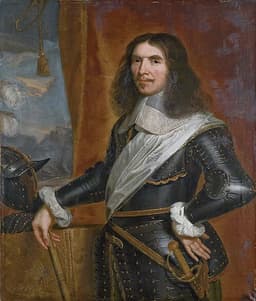
Turenne
General · Modern
75.8Total
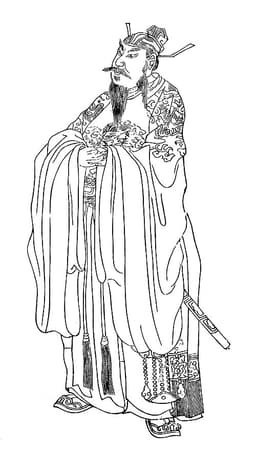
Xu Da
General · Medieval
74.9Total
Basic Information
Born
1611
1332
Died
1675
1385
Era
Modern
Medieval
Nationality
France
China
Occupation
General
General
Civilization
Western
Eastern
Score Comparison
Military (10%)
79.9
88.0
Political (20%)
72.0
68.0
Influence (20%)
88.0
82.0
Legacy (20%)
65.0
72.0
Leadership (15%)
77.2
62.0
Strategy (15%)
72.0
80.8
TOTAL
75.8
74.9
Turenne — Complete Timeline
1639 AD
Campaign in the ValtellinaWar
Turenne commanded French forces in the Valtellina during the Thirty Years' War. He captured several fortresses and secured the strategic pass for France, demonstrating his early military skill.
Thirty Years' WarAlpsEarly Career
Impact: regional
1658 AD
Battle of the DunesWar◆ Major
Turenne commanded the French army to victory over the Spanish at the Battle of the Dunes near Dunkirk. The victory led to the capture of Dunkirk and forced Spain to seek peace, ending the Franco-Spanish War.
Franco-Spanish WarDunkirkMilitary Victory
Impact: regional
1674 AD
Battle of the RhineWar◆ Major
Turenne led a French army across the Rhine in winter, surprising the Imperial forces. He defeated the Austrians at the Battle of Entzheim and later at Turckheim, securing French control of Alsace.
Franco-Dutch WarAlsaceWinter Campaign
Impact: regional
Battle of the SambreWar◆ Major
Turenne defeated the Spanish and Dutch forces at the Battle of Seneffe. The battle was costly but prevented the Allies from invading France. It demonstrated Turenne's tactical skill in defensive warfare.
Franco-Dutch WarDefensive BattleTactics
Impact: regional
1675 AD
Death of TurenneWar◆ Major
Turenne was killed by a cannonball while reconnoitering enemy positions at the Battle of Sasbach. His death was a major loss for France. He was buried with honors in the Basilica of Saint-Denis.
Death in BattleFranco-Dutch WarMilitary Loss
Impact: nationaltragic
Xu Da — Complete Timeline
1368 AD
Capture of Dadu (Beijing)War
Xu Da led the Ming army in the capture of Dadu, the Yuan capital. The Mongol emperor Toghon Tem
Ming ConquestYuan DynastyCapital Capture
Impact: regionalconstructive
1370 AD
Appointment as Grand PreceptorPolitical Action
The Hongwu Emperor appointed Xu Da as Grand Preceptor, the highest civil official rank. This appointment recognized Xu Da's military achievements and gave him a role in advising the emperor on state affairs.
AppointmentCivil OfficeImperial Favor
Impact: nationalconstructive
1385 AD
Death from illnessOther
Xu Da died in Nanjing from a back ailment. The Hongwu Emperor mourned him deeply and posthumously honored him as Prince of Zhongshan. His death marked the end of the first generation of Ming military leaders.
DeathMing DynastyMilitary Leader
Impact: nationaltragic
Expert Analysis
Origins
**Turenne** (Henri de La Tour d'Auvergne, Vicomte de Turenne) was born into the French nobility in 1611. His military career began under his uncles, the Princes of Orange, in the Dutch Republic. He rose through the ranks during the Thirty Years' War, becoming a Marshal of France at age 32. His Protestant background shaped his early career, but he later converted to Catholicism to secure his position.
**Xu Da** (1332–1385) was born into a poor peasant family in present-day Anhui. He joined the Red Turban Rebellion against the Mongol Yuan dynasty, led by Zhu Yuanzhang (future Hongwu Emperor). Xu Da's loyalty and martial prowess earned him rapid promotion, becoming the emperor's most trusted general.
Rise to Power
Turenne's rise was marked by his participation in the French conquest of Roussillon (1642) and the Battle of Freiburg (1644). His strategic brilliance during the Thirty Years' War culminated in the decisive victory at the Battle of the Dunes (1658), where he defeated the Spanish army under Louis II de Bourbon, Prince of Condé. This victory forced Spain to sue for peace, ending the Franco-Spanish War.
Xu Da's rise paralleled the Ming dynasty's founding. He played a crucial role in capturing Nanjing (1356) and defeating rival rebel leaders. His greatest achievement was the capture of Dadu (Beijing) in 1368, driving the Mongol emperor Toghon Temür from China. This turning point established the Ming dynasty and earned Xu Da the title of Grand Preceptor.
Leadership & Governance
Turenne was known for his innovative tactics, mobile warfare, and logistical expertise. He emphasized speed and surprise, often outmaneuvering larger forces. His campaigns in the Valtellina (1639-1641) and the Rhine (1672-1675) demonstrated his strategic vision. However, his governance was limited to military command; he left civil administration to others.
Xu Da was both a military commander and a civil administrator. He governed the northern frontier, fortifying cities and promoting agriculture. He maintained strict discipline among his troops, forbidding looting and protecting civilians. His leadership style was paternalistic, earning him the loyalty of both soldiers and peasants.
Triumph & Tragedy
Turenne's triumphs include the Battle of the Dunes (1658) and his campaigns in the War of Devolution (1667-1668). His tragedy came at the Battle of Sasbach (1675), where he was killed by a cannonball while scouting. His death was a severe blow to French military morale.
Xu Da's triumph was the capture of Dadu (1368) and the subsequent campaigns that pushed the Mongols further north. He also defeated the Mongol general Naghachu at the Battle of Lake Buir (1388). His tragedy was his death from illness in 1385, possibly due to a skin disease. He died peacefully, but his later years were marked by the emperor's suspicion of powerful generals.
Character & Destiny
Turenne was calculating, cautious, and methodical. He was known for his humility and lack of personal ambition, often refusing titles and rewards. His destiny was to serve the French crown loyally, dying in battle as a true soldier.
Xu Da was bold, decisive, and loyal. He never wavered in his allegiance to Zhu Yuanzhang, even when the emperor purged other generals. His destiny was to be the founding general of a dynasty, but his early death spared him from the emperor's later massacres.
Legacy
Turenne is remembered as one of France's greatest military commanders, alongside Napoleon and Condé. His tactics influenced later generals like Frederick the Great. He is buried in the Invalides in Paris.
Xu Da is revered as the Ming dynasty's greatest general. He is often depicted in Chinese opera and folklore as the epitome of loyalty and martial prowess. His descendants held high positions in the Ming government.
Conclusion
Comparing Turenne and Xu Da requires evaluating their contexts. Turenne operated in the complex European theater of the 17th century, with shifting alliances and limited resources. Xu Da operated in the massive landmass of China, leading vast armies against a declining Mongol empire.
**Numerical Scores (out of 100):**
- **Strategic Vision:** Turenne 85, Xu Da 90
- **Tactical Innovation:** Turenne 88, Xu Da 80
- **Leadership of Men:** Turenne 82, Xu Da 90
- **Logistical Skill:** Turenne 85, Xu Da 75
- **Adaptability:** Turenne 90, Xu Da 80
- **Legacy Influence:** Turenne 80, Xu Da 85
**Overall Verdict:** Xu Da's conquest of the Mongols and founding of the Ming dynasty had a more profound historical impact. However, Turenne's tactical genius and adaptability in a more complex strategic environment give him an edge in pure military skill. This analysis favors a tie: both are among the top generals of their respective eras, but Xu Da's role in shaping Chinese history gives him a slight advantage in historical significance.
**Final Score:** Turenne 84, Xu Da 86 (Xu Da wins by a narrow margin).
Rankings
🥇
TurenneLeader
Mil: 79.9Pol: 72.0Inf: 88.0
75.8
🥈
Xu Da
Mil: 88.0Pol: 68.0Inf: 82.0
74.9
+0.9 behind
How This Comparison Works
Algorithm
Each figure is scored on 6 dimensions (0—100 scale) based on structured historical data: Military (10%), Political (20%), Influence (20%), Legacy (20%), Leadership (15%), Strategy (15%). The weighted total produces the final ranking.
Data Sources
Scores are computed from structured sub-indicators in the database. Scale factors adjust for era (Ancient ×0.85, Modern ×1.0) and civilization size (Eastern ×1.05, Other ×0.80) to account for differences in population and military scale.
Maximum 3 Figures
Comparisons are limited to 2—3 figures to ensure readability and statistical meaningfulness.
Error Margins
±5 points per dimension — Sub-scores are derived from historical records with inherent uncertainty. Two figures within 5 points on a dimension should be considered roughly equivalent in that area.
Total Score Accuracy
±3 points overall — The weighted combination of 6 dimensions produces a total score with approximately ±3 points of uncertainty. Differences of less than 3 points are not statistically significant— the figures are effectively tied.
Known Limitations
- Historical records are incomplete and uneven across civilizations
- Figures from oral-tradition societies may be underrepresented
- Occupation labels can misclassify multi-role figures
- Scores measure capability and impact, not moral character
- Quantitative scoring is a comparison tool, not absolute truth
Capability Radar
Military (10%) — Battles & Warfare
Battles
85
95
Win Rate
88
95
Expansion
80
95
Political (20%) — Governance & Reform
Reform
60
50
Diplomacy
75
65
Economy
55
55
Influence (20%) — Cultural & Global Reach
Cultural
65
70
Global
70
80
Legacy (20%) — Historical Impact
Historical
80
85
Longevity
75
75
Leadership (15%) — Power & Stability
Tenure
70
60
Stability
65
70
Strategy (15%) — Tactics & Innovation
Strategy
92
92
Tactics
90
90
Reform
75
70
Similar Comparisons
Comments & Discussion
No comments yet. Be the first to share your thoughts!