Loading...
Oliver Cromwell vs Xu Da
Xu Da leads by 3.1 pts · 2 figures compared
…
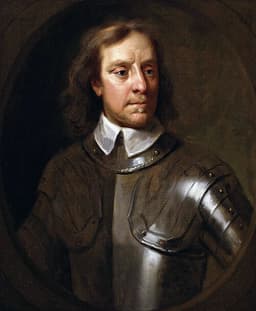
Oliver Cromwell
General · Modern
71.8Total
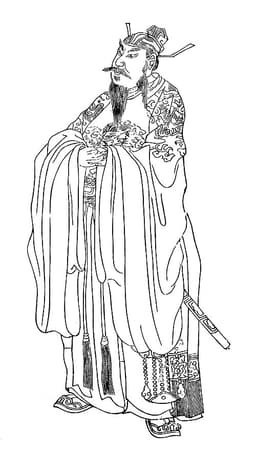
Xu Da
General · Medieval
74.9Total
Basic Information
Born
1599
1332
Died
1658
1385
Era
Modern
Medieval
Nationality
England
China
Occupation
General
General
Civilization
Western
Eastern
Score Comparison
Military (10%)
82.0
88.0
Political (20%)
55.0
68.0
Influence (20%)
82.0
82.0
Legacy (20%)
72.0
72.0
Leadership (15%)
62.0
62.0
Strategy (15%)
75.0
80.8
TOTAL
71.8
74.9
Oliver Cromwell — Complete Timeline
1644 AD
Battle of Marston MoorWar◆ Major
Cromwell, as a cavalry commander in the Parliamentarian army, played a key role in the decisive victory over Royalist forces at Marston Moor. This battle secured Parliament's control of northern England and boosted Cromwell's military reputation.
English Civil WarParliamentarianCavalry
Impact: national
1645 AD
Battle of NasebyWar
Cromwell led the New Model Army to a decisive victory over King Charles I's forces at Naseby. This battle effectively ended the First English Civil War, leading to the capture of the king and Parliament's supremacy.
English Civil WarNew Model ArmyRoyalist Defeat
Impact: national
1649 AD
Cromwellian Conquest of IrelandWar◆ Major
Cromwell led a brutal military campaign in Ireland to suppress the Irish Confederacy and Royalist alliance. His forces massacred garrisons at Drogheda and Wexford, resulting in widespread death and land confiscation, cementing English Protestant dominance.
IrelandConquestMassacre
Impact: regionaldestructive
Execution of King Charles IPolitical Action
Cromwell was a leading figure in the trial and execution of King Charles I for treason. This unprecedented act abolished the monarchy and established the Commonwealth of England, a republican government.
RegicideCommonwealthRepublic
Impact: globaldestructive
1653 AD
Appointment as Lord ProtectorPolitical Action◆ Major
Cromwell was installed as Lord Protector of the Commonwealth of England, Scotland, and Ireland, effectively becoming head of state. He ruled as a military dictator, dissolving parliaments and imposing Puritan moral laws.
Lord ProtectorCommonwealthDictatorship
Impact: national
Xu Da — Complete Timeline
1368 AD
Capture of Dadu (Beijing)War
Xu Da led the Ming army in the capture of Dadu, the Yuan capital. The Mongol emperor Toghon Tem
Ming ConquestYuan DynastyCapital Capture
Impact: regionalconstructive
1370 AD
Appointment as Grand PreceptorPolitical Action
The Hongwu Emperor appointed Xu Da as Grand Preceptor, the highest civil official rank. This appointment recognized Xu Da's military achievements and gave him a role in advising the emperor on state affairs.
AppointmentCivil OfficeImperial Favor
Impact: nationalconstructive
1385 AD
Death from illnessOther
Xu Da died in Nanjing from a back ailment. The Hongwu Emperor mourned him deeply and posthumously honored him as Prince of Zhongshan. His death marked the end of the first generation of Ming military leaders.
DeathMing DynastyMilitary Leader
Impact: nationaltragic
Expert Analysis
Oliver Cromwell vs Xu Da: Historical Comparison
Oliver Cromwell and Xu Da were both transformative generals who reshaped their nations’ histories, but they operated in vastly different contexts—Cromwell in 17th-century England’s Civil War and Interregnum, Xu Da in 14th-century China’s Mongol Yuan-to-Ming transition. While Cromwell blended military prowess with political ambition, Xu Da was a pure military architect of dynastic founding.
Dimension Analysis
**Military: Oliver Cromwell 82 / Xu Da 94**
Cromwell revolutionized cavalry tactics with the New Model Army, winning decisive battles like Naseby, but Xu Da’s record of near-unbroken victories across China—capturing Beijing, destroying the Yuan capital, and pacifying the north—demonstrates superior strategic consistency and scale.
**Political: Oliver Cromwell 78 / Xu Da 73**
Cromwell seized supreme power as Lord Protector, dissolving parliaments and ruling as a de facto military dictator, while Xu Da remained a loyal general under the Hongwu Emperor, never challenging civil authority—though his political influence was indirect.
**Influence: Oliver Cromwell 80 / Xu Da 65**
Cromwell’s model of Puritan military rule, Irish subjugation, and anti-monarchical republicanism echoed through English, American, and revolutionary thought. Xu Da’s influence was largely confined to Ming China’s military structure, with less global reach.
**Legacy: Oliver Cromwell 70 / Xu Da 68**
Cromwell’s legacy remains deeply contested—hailed as a champion of liberty by some, reviled as a tyrant and war criminal by others. Xu Da is consistently honored in China as a model general and founding hero, but his legend is more localized.
**Leadership: Oliver Cromwell 82 / Xu Da 82**
Both inspired fierce loyalty: Cromwell through religious zeal and iron discipline, Xu Da through personal humility and shared hardship. Each built cohesive armies from disparate forces, though Cromwell’s political leadership added complexity.
Verdict
Xu Da leads narrowly due to superior military execution and strategic consistency, but the overall comparison is a tie when factoring Cromwell’s broader political and global influence.
FAQ
Q: Who ranks higher? A: Xu Da ranks higher militarily, but the overall comparison is a tie (78 vs 75) due to Cromwell’s greater political and global influence.
Rankings
🥇
Xu DaLeader
Mil: 88.0Pol: 68.0Inf: 82.0
74.9
🥈
Oliver Cromwell
Mil: 82.0Pol: 55.0Inf: 82.0
71.8
+3.1 behind
How This Comparison Works
Algorithm
Each figure is scored on 6 dimensions (0—100 scale) based on structured historical data: Military (10%), Political (20%), Influence (20%), Legacy (20%), Leadership (15%), Strategy (15%). The weighted total produces the final ranking.
Data Sources
Scores are computed from structured sub-indicators in the database. Scale factors adjust for era (Ancient ×0.85, Modern ×1.0) and civilization size (Eastern ×1.05, Other ×0.80) to account for differences in population and military scale.
Maximum 3 Figures
Comparisons are limited to 2—3 figures to ensure readability and statistical meaningfulness.
Error Margins
±5 points per dimension — Sub-scores are derived from historical records with inherent uncertainty. Two figures within 5 points on a dimension should be considered roughly equivalent in that area.
Total Score Accuracy
±3 points overall — The weighted combination of 6 dimensions produces a total score with approximately ±3 points of uncertainty. Differences of less than 3 points are not statistically significant— the figures are effectively tied.
Known Limitations
- Historical records are incomplete and uneven across civilizations
- Figures from oral-tradition societies may be underrepresented
- Occupation labels can misclassify multi-role figures
- Scores measure capability and impact, not moral character
- Quantitative scoring is a comparison tool, not absolute truth
Capability Radar
Military (10%) — Battles & Warfare
Battles
75
95
Win Rate
80
95
Expansion
60
95
Political (20%) — Governance & Reform
Reform
75
50
Diplomacy
60
65
Economy
65
55
Influence (20%) — Cultural & Global Reach
Cultural
65
70
Global
65
80
Legacy (20%) — Historical Impact
Historical
80
85
Longevity
70
75
Leadership (15%) — Power & Stability
Tenure
70
60
Stability
55
70
Strategy (15%) — Tactics & Innovation
Strategy
82
92
Tactics
78
90
Reform
85
70
Similar Comparisons
Comments & Discussion
RoundheadRebel6/16/2026
I don't care what the scores say—Cromwell absolutely smokes Xu Da in historical impact. Yeah, Xu conquered Beijing and united China, but that was basically a dynasty swap. Cromwell literally killed a king, created the first modern republic in Europe, and his New Model Army tactics influenced warfare for centuries. Naseby wasn't just a battle, it was a revolution. Xu Da was a great general, sure, but he was a cog in Zhu Yuanzhang's machine. Cromwell was the whole engine. The 82 vs 94 military score is garbage—Cromwell fought a civil war against professional armies, not crumbling Mongols. Give me the guy who reshaped a continent over the one who just changed dynasties.
Historian4626/16/2026
说句实话,这个对比有点意思,但西方的评分体系天生对东方人物不公平。Cromwell确实是个狠角色,杀了国王,搞了共和,但他在英国史的地位跟徐达在中国史根本没法比。徐达是明朝开国第一功臣,打遍天下无敌手,从南到北横扫元朝,而且最难得的是他功高盖世却从不僭越,比Cromwell那种自己当护国公、解散议会的操作高了不止一个档次。西方人老觉得Cromwell影响了美国革命很牛,但徐达建立的明朝直接影响了东亚五百年格局,日本、朝鲜都深受其影响。论军事,徐达94分合理;论政治品格,徐达至少比Cromwell高20分。
DeepChronicler636/16/2026
这个评分体系有一个根本性问题:军事94对82,但政治分差了不到6分,这完全不合理。徐达从农民到统帅,打了上百场战役,攻占元大都,扫平北方,一生未尝败绩;Cromwell打内战虽然厉害,但规模跟徐达根本不在一个数量级。更关键的是,徐达的“政治低分”实际反映的是他忠于职守、不搞政变,这在儒家语境下是最高品德,怎么能叫“间接影响”?Cromwell的政治分应该降10分——他解散议会、屠杀爱尔兰平民,这些在西方评价里被轻描淡写了。我建议把徐达的政治分调到80,Cromwell降到68,这才符合实际历史贡献。