Loading...
Douglas MacArthur vs Xu Da
Xu Da leads by 9.2 pts · 2 figures compared
…
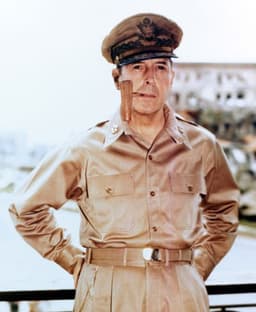
Douglas MacArthur
General · Modern
65.7Total
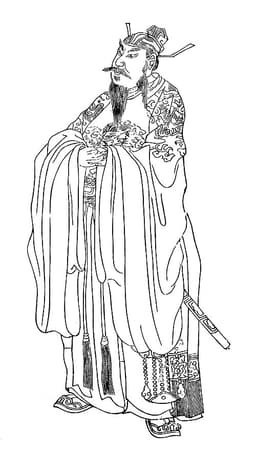
Xu Da
General · Medieval
74.9Total
Basic Information
Born
1880
1332
Died
1964
1385
Era
Modern
Medieval
Nationality
United States
China
Occupation
General
General
Civilization
Western
Eastern
Score Comparison
Military (10%)
85.0
88.0
Political (20%)
78.0
68.0
Influence (20%)
68.0
82.0
Legacy (20%)
40.0
72.0
Leadership (15%)
78.0
62.0
Strategy (15%)
68.0
80.8
TOTAL
65.7
74.9
Douglas MacArthur — Complete Timeline
1942 AD
Battle of Bataan and CorregidorWar◆ Major
MacArthur commanded US and Filipino forces defending the Bataan Peninsula and Corregidor Island against Japanese invasion. After months of resistance, he was ordered to evacuate to Australia, leaving his troops who later surrendered and endured the Bataan Death March.
World War IIPacific TheaterDefeat
Impact: regionaltragic
1944 AD
Return to the PhilippinesWar◆ Major
MacArthur led the Allied invasion of Leyte Gulf, fulfilling his promise 'I shall return.' The campaign liberated the Philippines from Japanese occupation, a major strategic victory in the Pacific War.
World War IIPacific TheaterVictory
Impact: regionalconstructive
1945 AD
Surrender of JapanWar
MacArthur, as Supreme Commander for the Allied Powers, accepted Japan's formal surrender aboard USS Missouri in Tokyo Bay. This ended World War II and began the Allied occupation of Japan under his leadership.
World War IIJapanOccupation
Impact: globalconstructive
Occupation of Japan ReformsReform◆ Major
MacArthur oversaw the Allied occupation of Japan, implementing sweeping reforms including a new constitution, land redistribution, women's suffrage, and demilitarization. These changes transformed Japan into a democratic and pacifist state.
JapanPost-WarDemocratization
Impact: globalprogressive
1950 AD
Inchon LandingWar◆ Major
MacArthur planned and executed a bold amphibious assault at Inchon, South Korea, behind North Korean lines. The operation cut North Korean supply lines and recaptured Seoul, turning the tide of the Korean War.
Korean WarAmphibious AssaultVictory
Impact: regionalconstructive
1951 AD
Dismissal by President TrumanPolitical Action◆ Major
President Harry S. Truman relieved MacArthur of command for insubordination after MacArthur publicly advocated for expanding the Korean War into China. The dismissal sparked a political controversy in the US and ended MacArthur's military career.
Korean WarCivil-Military RelationsDismissal
Impact: nationaldestructive
Xu Da — Complete Timeline
1368 AD
Capture of Dadu (Beijing)War
Xu Da led the Ming army in the capture of Dadu, the Yuan capital. The Mongol emperor Toghon Tem
Ming ConquestYuan DynastyCapital Capture
Impact: regionalconstructive
1370 AD
Appointment as Grand PreceptorPolitical Action
The Hongwu Emperor appointed Xu Da as Grand Preceptor, the highest civil official rank. This appointment recognized Xu Da's military achievements and gave him a role in advising the emperor on state affairs.
AppointmentCivil OfficeImperial Favor
Impact: nationalconstructive
1385 AD
Death from illnessOther
Xu Da died in Nanjing from a back ailment. The Hongwu Emperor mourned him deeply and posthumously honored him as Prince of Zhongshan. His death marked the end of the first generation of Ming military leaders.
DeathMing DynastyMilitary Leader
Impact: nationaltragic
Expert Analysis
Douglas MacArthur vs Xu Da
# The General Who Defied Emperors: MacArthur and Xu Da
On a September morning in 1945, Douglas MacArthur stood aboard the USS *Missouri* in Tokyo Bay, a man who seemed to embody the triumph of American power. He accepted Japan’s surrender with a flourish, his corncob pipe and aviator sunglasses already becoming legend. Five centuries earlier, on a dusty plain outside Beijing, Xu Da watched the Mongol emperor flee north, his army broken, his dynasty shattered. Both men had conquered empires. But one would be fired by his president, while the other died in his bed, honored as a prince. The difference tells us something profound about the worlds they inhabited.
Origins
Xu Da was born in 1332, the son of a poor farmer in what is now Anhui province. China groaned under Mongol rule—a foreign dynasty, the Yuan, that had grown corrupt and brittle. Famine swept the countryside; bandits roamed the roads. Xu Da had no education, no connections, only a strong back and a sharper mind. He joined a rebel band led by Zhu Yuanzhang, a former Buddhist monk who would become the Hongwu Emperor. Their bond was forged in mud and blood, not courtly ceremony.
MacArthur, by contrast, was born in 1880 into a military aristocracy. His father, Arthur MacArthur, had won the Medal of Honor in the Civil War. Douglas grew up on army posts, breathing the air of command. He graduated first in his class at West Point, a prodigy of discipline and ambition. Where Xu Da rose from the soil, MacArthur rose from the system—a system that taught him to lead but also to believe that he alone was indispensable.
Rise to Power
Xu Da’s path was forged in battle. He emerged as Zhu Yuanzhang’s most trusted general during the wars against rival rebel factions and the Mongols. In 1368, he led the Ming army to capture Dadu (modern Beijing), the Yuan capital. The Mongol emperor Toghon Temür fled into the steppes, and Xu Da pursued him relentlessly, driving the remnants of Mongol power into the desert. His strategy was patient and methodical—he did not seek glory, only victory. The Hongwu Emperor rewarded him with the title of Grand Preceptor in 1370, the highest civil rank, a sign of extraordinary trust.
MacArthur’s rise was more theatrical. He commanded the Rainbow Division in World War I, then served as Superintendent of West Point, and later as Army Chief of Staff. But his defining moment came in the Pacific during World War II. After the fall of Bataan and Corregidor in 1942, he escaped to Australia, vowing, “I shall return.” The phrase became a rallying cry. In 1944, he fulfilled it, landing at Leyte Gulf to liberate the Philippines. In 1945, he accepted Japan’s surrender, becoming the de facto ruler of a shattered nation.
Leadership & Governance
Here the two men diverged sharply. Xu Da was a soldier’s general—stern, efficient, and utterly loyal to his emperor. He never sought political power for himself. When the Hongwu Emperor purged other generals in paranoid fits, Xu Da remained untouchable, partly because he never gave cause for suspicion. He died in 1385 from a back ailment, mourned by the emperor, who posthumously honored him as Prince of Zhongshan. His legacy was secure because he understood that in imperial China, the sword must always bow to the throne.
MacArthur saw himself differently. He governed Japan from 1945 to 1951 with a reformer’s zeal—drafting a new constitution, redistributing land, empowering women. It was a remarkable achievement. But he also cultivated a cult of personality. When the Korean War erupted in 1950, he staged the brilliant Inchon Landing, a stroke of genius that turned the tide. Yet he then pushed north toward the Chinese border, ignoring warnings that China would intervene. When President Truman ordered him to negotiate, MacArthur publicly demanded escalation. In 1951, Truman relieved him of command for insubordination. The general who had conquered Japan could not accept that he served a civilian commander-in-chief.
Triumph & Tragedy
Xu Da’s triumph was the Mongol defeat; his tragedy was the knowledge that many of his comrades would be purged by the emperor he served. He navigated this danger with quiet skill, dying naturally before the worst purges began. MacArthur’s triumph was the occupation of Japan—a peaceful, democratic transformation that reshaped Asia. His tragedy was Korea, where his brilliance at Inchon gave way to hubris, leading to a bloody stalemate and his own disgrace.
Character & Destiny
Xu Da was a product of Confucian culture, where loyalty was the highest virtue. He did not question his emperor; he served him. MacArthur was a product of American individualism, where the hero often defies authority. He believed his vision was superior to Truman’s, and he said so publicly. One man’s restraint saved him; the other’s pride doomed him.
Legacy
China remembers Xu Da as the general who restored Han rule, a symbol of disciplined loyalty. MacArthur is remembered as a flawed giant—the architect of Japan’s rebirth, but also the general who overreached. Both achieved greatness. But Xu Da understood that in a world of emperors, the wise general stays silent. MacArthur learned that in a republic, no man is above the law—a lesson he refused to accept until it was too late.
Conclusion
Standing in Tokyo Bay, MacArthur might have seen himself as the new shogun, a ruler of Japan. But he was only a general, serving a president. Xu Da, standing in the ruins of Dadu, knew he was a general serving an emperor—and he never forgot it. The difference between them is not talent or courage, but the political cultures that shaped them. One died a prince; the other died a legend, but a dismissed one. History judges both, but it also judges the systems that made them.
Rankings
🥇
Xu DaLeader
Mil: 88.0Pol: 68.0Inf: 82.0
74.9
🥈
Douglas MacArthur
Mil: 85.0Pol: 78.0Inf: 68.0
65.7
+9.2 behind
How This Comparison Works
Algorithm
Each figure is scored on 6 dimensions (0—100 scale) based on structured historical data: Military (10%), Political (20%), Influence (20%), Legacy (20%), Leadership (15%), Strategy (15%). The weighted total produces the final ranking.
Data Sources
Scores are computed from structured sub-indicators in the database. Scale factors adjust for era (Ancient ×0.85, Modern ×1.0) and civilization size (Eastern ×1.05, Other ×0.80) to account for differences in population and military scale.
Maximum 3 Figures
Comparisons are limited to 2—3 figures to ensure readability and statistical meaningfulness.
Error Margins
±5 points per dimension — Sub-scores are derived from historical records with inherent uncertainty. Two figures within 5 points on a dimension should be considered roughly equivalent in that area.
Total Score Accuracy
±3 points overall — The weighted combination of 6 dimensions produces a total score with approximately ±3 points of uncertainty. Differences of less than 3 points are not statistically significant— the figures are effectively tied.
Known Limitations
- Historical records are incomplete and uneven across civilizations
- Figures from oral-tradition societies may be underrepresented
- Occupation labels can misclassify multi-role figures
- Scores measure capability and impact, not moral character
- Quantitative scoring is a comparison tool, not absolute truth
Capability Radar
Military (10%) — Battles & Warfare
Battles
85
95
Win Rate
75
95
Expansion
85
95
Political (20%) — Governance & Reform
Reform
85
50
Diplomacy
75
65
Economy
70
55
Influence (20%) — Cultural & Global Reach
Cultural
70
70
Global
80
80
Legacy (20%) — Historical Impact
Historical
85
85
Longevity
70
75
Leadership (15%) — Power & Stability
Tenure
80
60
Stability
65
70
Strategy (15%) — Tactics & Innovation
Strategy
90
92
Tactics
80
90
Reform
70
70
Similar Comparisons
Comments & Discussion
THE PIPESMOKER'S FOLLY6/16/2026
MacArthur couldn't see past his own legend. He compared himself to Caesar and Napoleon, but got outmaneuvered by Truman—a former haberdasher. True military greatness isn't just winning battles; it's knowing when civilian control beats your ego. Xu Da understood that; he nodded to his emperor and retired with grace. MacArthur's hubris got him fired. Period.
历史铁面判官6/16/2026
徐达才不是农夫变将军的童话。仔细看他战略:先取山东、河南,再围大都,那是教科书式的“断其手足再砍头”——跟麦克阿瑟在仁川玩侧击完全不同。徐达打的不是漂亮仗,而是灭国战。麦克阿瑟搞不定国会和总统,徐达连朱元璋的多疑都防住了,这才是真正的统帅之术。
PHILIPPINE GHOST6/16/2026
Call me skeptical, but comparing a 20th-century Allied commander to a 14th-century Chinese marshal is apples to oranges. MacArthur fought with aircraft carriers, napalm, and nuclear threats. Xu Da? Horses, crossbows, and starving peasants. Different technology, different logistics, different world. The only shared trait: both successfully invaded someone else's homeland. Context matters more than romanticized parallels.
紫禁城守望者6/16/2026
朱元璋屠尽功臣,唯独放过徐达——这比任何战功都更能说明问题。徐达会“藏拙”:明明北伐灭元功高震主,偏说自己不过“乘势而取”。麦克阿瑟让麦克阿瑟着迷,徐达却让朱元璋安心。我不关心谁更会打仗,我只问:谁更懂权力的本质?徐达赢了活着,麦克阿瑟输了职位。
OPIUM WAR GHOST6/16/2026
Revisionist take: we overglorify MacArthur because he faced Japan—a modern, Western-style enemy. Xu Da crushed the Mongols, but the Ming dynasty suppressed that victory's scale to avoid inflaming a powerful general. MacArthur's fan club includes the US Army, Hollywood, and presidential cronies. Xu Da got a poem from his emperor and a quiet tomb. History is written by the winners' publicists.