Loading...
Shaka Zulu vs Xu Da
Xu Da leads by 4.7 pts · 2 figures compared
…
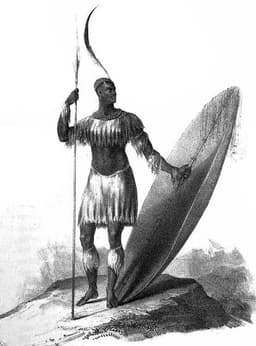
Shaka Zulu
General · Modern
70.2Total
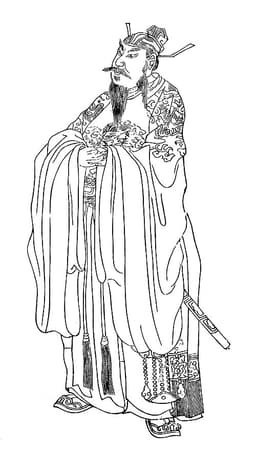
Xu Da
General · Medieval
74.9Total
Basic Information
Born
1787
1332
Died
1828
1385
Era
Modern
Medieval
Nationality
Zulu Kingdom
China
Occupation
General
General
Civilization
Other
Eastern
Score Comparison
Military (10%)
80.0
88.0
Political (20%)
72.0
68.0
Influence (20%)
68.0
82.0
Legacy (20%)
68.0
72.0
Leadership (15%)
62.0
62.0
Strategy (15%)
80.8
80.8
TOTAL
70.2
74.9
Shaka Zulu — Complete Timeline
1816 AD
Introduction of the iklwa and horns of the buffalo formationReform
Shaka introduced the iklwa, a short stabbing spear, and the 'horns of the buffalo' tactical formation to the Zulu army. These innovations replaced the traditional throwing assegai and allowed for close-quarters combat, significantly increasing the Zulu's military effectiveness and enabling rapid conquest.
Military InnovationTacticsZulu Warfare
Impact: regional
1819 AD
Conquest of the Ndwandwe KingdomWar◆ Major
Shaka's Zulu army defeated the Ndwandwe kingdom at the Battle of Gqokli Hill, a decisive victory that eliminated a major rival. This conquest allowed Shaka to consolidate control over a large territory in present-day KwaZulu-Natal, marking the rise of the Zulu as a dominant regional power.
ConquestZulu ExpansionNdwandwe
Impact: regional
1828 AD
Assassination of ShakaPolitical Action◆ Major
Shaka was assassinated by his half-brothers Dingane and Mhlangana, with the support of his aunt Mkabayi. The coup ended his reign of terror and expansionist wars, leading to a period of instability and the eventual rise of Dingane as king.
AssassinationSuccession CrisisZulu Kingdom
Impact: regionaltragic
Xu Da — Complete Timeline
1368 AD
Capture of Dadu (Beijing)War
Xu Da led the Ming army in the capture of Dadu, the Yuan capital. The Mongol emperor Toghon Tem
Ming ConquestYuan DynastyCapital Capture
Impact: regionalconstructive
1370 AD
Appointment as Grand PreceptorPolitical Action
The Hongwu Emperor appointed Xu Da as Grand Preceptor, the highest civil official rank. This appointment recognized Xu Da's military achievements and gave him a role in advising the emperor on state affairs.
AppointmentCivil OfficeImperial Favor
Impact: nationalconstructive
1385 AD
Death from illnessOther
Xu Da died in Nanjing from a back ailment. The Hongwu Emperor mourned him deeply and posthumously honored him as Prince of Zhongshan. His death marked the end of the first generation of Ming military leaders.
DeathMing DynastyMilitary Leader
Impact: nationaltragic
Expert Analysis
Shaka Zulu vs Xu Da
# The Conqueror and the Builder: Shaka Zulu and Xu Da
On a dusty hill in southern Africa in 1819, a warrior king watched his young nation nearly bleed to death. Across the world, four and a half centuries earlier, a Chinese general stood before the gates of the world’s greatest capital, knowing that his victory would reshape history. Both men were military titans. Both unified fractured lands. But one built an empire that crumbled within a decade of his death, while the other helped found a dynasty that ruled for nearly three centuries. Why did their paths diverge so sharply?
Origins
Shaka kaSenzangakhona was born in 1787, the illegitimate son of a minor Zulu chieftain. His childhood was marked by rejection and exile. His father sent him and his mother Nandi away, forcing them to seek refuge among rival clans. This harsh upbringing forged in Shaka a ruthless determination and a deep contempt for the old order. He grew up in a world of small, quarreling chiefdoms, where warfare was ritualistic and casualties were few.
Xu Da was born in 1332 into a poor farming family in what is now Anhui province. China was then under Mongol rule, a foreign dynasty that had grown corrupt and brittle. Xu Da spent his youth tilling fields, but when famine and rebellion swept the land, he joined a Red Turban uprising. There he met Zhu Yuanzhang, a former monk who would become the Hongwu Emperor. From the start, Xu Da’s loyalty was not to a clan or a kingdom, but to a man and a cause.
Rise to Power
Shaka’s rise was swift and brutal. In 1816, he seized the Zulu chieftainship with the help of Dingiswayo, a powerful neighboring leader. Once in power, he immediately began transforming his small tribe into a war machine. He introduced the *iklwa*, a short stabbing spear that forced warriors to fight at close range, and the “horns of the buffalo” formation, where flanking units would encircle enemies. At the Battle of Gqokli Hill in 1819, his army defeated the far larger Ndwandwe kingdom. It was a turning point: the Zulu ceased to be a minor clan and became a rising empire.
Xu Da’s path was different. He rose not through a personal revolution but through a structured military campaign. By 1368, he had become the chief general of the Ming rebel forces. That year, he led the army to capture Dadu (modern Beijing), the Yuan Mongol capital. The Mongol emperor Toghon Temür fled north, and the Yuan dynasty collapsed. Xu Da did not claim power for himself; he delivered the city to his master, Zhu Yuanzhang, who declared himself emperor of the new Ming dynasty.
Leadership & Governance
Shaka ruled through fear and innovation. He drilled his armies relentlessly, punished failure with death, and created a centralized state where every young man served in the military. His political wisdom was limited: he relied on personal authority rather than institutions. He never appointed a capable successor or built a bureaucracy to sustain his conquests. When his mother died in 1827, he ordered a massive, destructive mourning period that caused famine and resentment.
Xu Da governed through discipline and humility. As a general, he was known for his strategic brilliance: he outmaneuvered Mongol cavalry, secured supply lines, and avoided unnecessary bloodshed. At the Battle of Lake Buir in 1388, he decisively crushed the Northern Yuan remnants, ending the Mongol threat. Politically, he was cautious. The Hongwu Emperor appointed him Grand Preceptor in 1370, the highest civil rank, but Xu Da never overstepped. He understood that in a new dynasty, loyalty was more valuable than ambition.
Triumph & Tragedy
Shaka’s greatest triumph was the unification of dozens of tribes into the Zulu nation. His greatest tragedy was his inability to secure that nation. In 1828, his half-brothers Dingane and Mhlangana, backed by his aunt Mkabayi, assassinated him. The empire he built with blood and iron was immediately thrown into chaos. Within years, it fractured and weakened.
Xu Da’s triumph was the Ming conquest of China, one of history’s great military achievements. His tragedy was quieter: he died in 1385 from a back ailment, mourned deeply by the emperor who posthumously honored him as a prince. He never saw the full flowering of the dynasty he helped found, but he left behind a stable realm.
Character & Destiny
Shaka was a force of nature—brilliant, paranoid, and ultimately self-destructive. His personality shaped every decision: he trusted no one, killed potential rivals, and centralized power so completely that his empire could not survive without him. He was a conqueror, not a builder.
Xu Da was a servant of a larger vision. He subordinated his ego to the Hongwu Emperor and the Ming project. He understood that lasting power requires institutions, not just victories. His humility was not weakness; it was wisdom. As a Chinese proverb says, “The tree that does not bend with the wind will break.”
Legacy
Shaka is remembered today as a symbol of African resistance and military genius. His tactics influenced generations of warriors, and his name echoes in Zulu identity. But his legacy is also one of bloodshed: the *mfecane*—the forced migrations and wars that followed his rise—cost countless lives.
Xu Da is remembered as the founder of the Ming dynasty’s military strength. His conquests ended Mongol rule in China and restored Han Chinese governance. Though less famous globally, his impact was more enduring: the Ming dynasty lasted from 1368 to 1644, a span of 276 years.
Conclusion
Shaka and Xu Da both remade their worlds through war. Yet one built a kingdom that collapsed within a generation, while the other built a dynasty that lasted centuries. The difference was not talent or courage—both had those in abundance. It was vision. Shaka saw only conquest; Xu Da saw statecraft. One ruled by fear; the other by loyalty. In the end, the greatest generals are not those who win battles, but those who build what lasts.
Rankings
🥇
Xu DaLeader
Mil: 88.0Pol: 68.0Inf: 82.0
74.9
🥈
Shaka Zulu
Mil: 80.0Pol: 72.0Inf: 68.0
70.2
+4.7 behind
How This Comparison Works
Algorithm
Each figure is scored on 6 dimensions (0—100 scale) based on structured historical data: Military (10%), Political (20%), Influence (20%), Legacy (20%), Leadership (15%), Strategy (15%). The weighted total produces the final ranking.
Data Sources
Scores are computed from structured sub-indicators in the database. Scale factors adjust for era (Ancient ×0.85, Modern ×1.0) and civilization size (Eastern ×1.05, Other ×0.80) to account for differences in population and military scale.
Maximum 3 Figures
Comparisons are limited to 2—3 figures to ensure readability and statistical meaningfulness.
Error Margins
±5 points per dimension — Sub-scores are derived from historical records with inherent uncertainty. Two figures within 5 points on a dimension should be considered roughly equivalent in that area.
Total Score Accuracy
±3 points overall — The weighted combination of 6 dimensions produces a total score with approximately ±3 points of uncertainty. Differences of less than 3 points are not statistically significant— the figures are effectively tied.
Known Limitations
- Historical records are incomplete and uneven across civilizations
- Figures from oral-tradition societies may be underrepresented
- Occupation labels can misclassify multi-role figures
- Scores measure capability and impact, not moral character
- Quantitative scoring is a comparison tool, not absolute truth
Capability Radar
Military (10%) — Battles & Warfare
Battles
85
95
Win Rate
90
95
Expansion
88
95
Political (20%) — Governance & Reform
Reform
85
50
Diplomacy
60
65
Economy
65
55
Influence (20%) — Cultural & Global Reach
Cultural
80
70
Global
70
80
Legacy (20%) — Historical Impact
Historical
85
85
Longevity
75
75
Leadership (15%) — Power & Stability
Tenure
70
60
Stability
55
70
Strategy (15%) — Tactics & Innovation
Strategy
90
92
Tactics
95
90
Reform
98
70
Similar Comparisons
Comments & Discussion
Bulletproof Biko6/16/2026
The real tragedy of Shaka isn't his brutality—it's his strategic emptiness. Sure, he revolutionized the iklwa short stabbing spear and the bull horn formation, but what was the plan after conquest? A military state with zero administrative framework. Xu Da understood empire means governance: land surveys, tax systems, civil service pipelines. Shaka left a power vacuum masked by regimental discipline. That's why China outlasted the Zulu kingdom by centuries. Tactics win battles; bureaucracy wins
李元璋的铁拳6/16/2026
说徐达是"建设者"太天真了。看看他实际做了什么——屠城!1368年攻占元大都后,他默许火烧宫城,故意纵容士兵劫掠。更别提他追剿北元残部时的焦土政策,草原上几十万人饿死。朱重八暴政的每个毛孔都渗透着血,他不过是给这个屠夫当军靴擦得锃亮的刽子手。把这种人和重建部落联盟的沙卡比?笑话。
Shield-Cracker Shan6/16/2026
Here's what the romanticizers miss: Shaka's military revolution wasn't genius—it was desperation. The Zulu had no horses, no gunpowder, no ironworking tradition worth squat. His "innovations" like age-regiment conscription and close-quarters fighting were just cheap hacks to overcome material poverty. Compare to Xu Da commanding artillery sieges and naval blockades on the Yangtze. One man adapted to abundance; the other made a virtue of scarcity. Don't confuse survival tactics with strategic bri
蒙古克星老徐6/16/2026
数据会说话:徐达指挥的鄱阳湖之战,投入战船超过2000艘,兵力约40万,这是当时世界上最大规模的水战。而沙卡最高光的时刻——1818年对抗恩德万德韦人,所谓的"决战"参战人数不到3万。徐达面对的是装备火药武器、有骑兵优势的蒙古精锐;沙卡的对手主要拿着投掷标枪的部落民兵。对手档次差了三个量级,还好意思放在一起比?徐达的规模碾压沙卡的所有战役总和。
Dong-fang Strategist6/16/2026
What the comparison gets right but understates: Xu Da was fighting for a long-term political entity, not personal aggrandizement. Shaka ruled alone; Xu Da had Zhu Yuanzhang constantly checking his ambition. The Hongwu Emperor explicitly warned him "power without boundaries invites ruin." Xu Da retired wealth, died in bed, and his daughter married the emperor's son. Shaka's power was entirely self-referential—no institutions, no succession plan, just fear. That's not a conqueror versus a builder;