Loading...
Titus Labienus vs Wang Jian
Wang Jian leads by 7.9 pts · 2 figures compared
…

Titus Labienus
General · Ancient
46.8Total
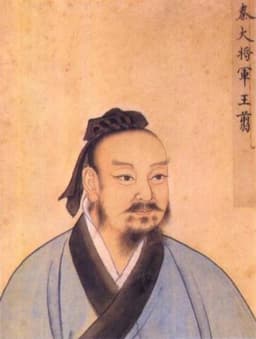
Wang Jian
General · Ancient
54.7Total
Basic Information
Born
-100
-260
Died
-45
-210
Era
Ancient
Ancient
Nationality
Roman Republic
China
Occupation
General
General
Civilization
Western
Eastern
Score Comparison
Military (10%)
72.0
88.0
Political (20%)
32.1
33.6
Influence (20%)
51.0
56.4
Legacy (20%)
45.8
56.0
Leadership (15%)
30.0
36.9
Strategy (15%)
61.3
72.0
TOTAL
46.8
54.7
Titus Labienus — Complete Timeline
58 BC
Service as Caesar's Legate in GaulWar◆ Major
Labienus served as Caesar's senior legate during the Gallic Wars. He commanded key victories, including the defeat of the Treveri and the relief of Quintus Cicero's camp during the revolt of the Nervii.
Gallic WarsMilitary CommandCaesar
Impact: regional
49 BC
Defection to Pompey at the Start of Civil WarPolitical Action
When Caesar crossed the Rubicon, Labienus defected to the Pompeian side. He abandoned Caesar's camp and joined the Optimates, becoming one of their most capable commanders. This was a major blow to Caesar.
Roman Civil WarDefectionPompey
Impact: national
48 BC
Battle of PharsalusWar◆ Major
Labienus commanded the Pompeian cavalry at Pharsalus. He was defeated by Caesar's forces and fled the battlefield. After the defeat, he continued to resist Caesar's forces in Africa and Spain.
Roman Civil WarBattleDefeat
Impact: regionaltragic
45 BC
Battle of MundaWar◆ Major
Labienus commanded the Pompeian forces at the Battle of Munda in Spain. He was killed in the battle, which ended the last major resistance against Caesar. His death marked the final defeat of the Optimates.
Roman Civil WarBattleDeath
Impact: regionaltragic
Wang Jian — Complete Timeline
228 BC
Conquest of ZhaoWar◆ Major
Wang Jian led the Qin army to conquer the state of Zhao, capturing King Qian of Zhao. This victory eliminated one of the last major obstacles to Qin unification of China.
ConquestQin StateZhao State
Impact: regionaldestructive
223 BC
Conquest of ChuWar◆ Major
Wang Jian led a Qin army of 600,000 men to conquer the state of Chu. He defeated the Chu general Xiang Yan and captured King Fuchu of Chu, annexing Chu territory into Qin.
ConquestQin StateChu State
Impact: regionaldestructive
222 BC
Conquest of YanWar
Wang Jian led the Qin army to conquer the state of Yan, capturing King Xi of Yan. This victory further consolidated Qin control over northern China.
ConquestQin StateYan State
Impact: regionaldestructive
210 BC
Retirement and DeathOther
After the conquest of Chu, Wang Jian retired from military service. He died in 210 BC, having played a crucial role in the unification of China under Qin Shi Huang.
RetirementQin StateUnification
Impact: national
Expert Analysis
Origins
Titus Labienus was born around 100 BC into a prominent plebeian family in the Roman Republic. Little is known of his early life, but he likely received a standard military education. He served as a military tribune in Cilicia under Publius Servilius Vatia and later as quaestor. His early career was marked by loyalty to the populares faction, which aligned him with Gaius Marius and later Julius Caesar.
Wang Jian was born in the state of Qin during the Warring States period, likely in the late 4th century BC. His family background is obscure, but he rose through the ranks of the Qin military. He was a contemporary of the future Qin Shi Huang, then King Zheng of Qin. Wang Jian's early experiences were shaped by the constant warfare of the Warring States, where meritocracy in Qin rewarded military success.
Rise to Power
Labienus rose to prominence as Caesar's senior legate during the Gallic Wars (58-50 BC). He commanded key victories, including the defeat of the Treveri in 54 BC and the relief of Quintus Cicero's camp in 54 BC. His tactical skill earned him Caesar's trust and a prominent position. By 50 BC, he was one of the most experienced generals in the Roman world, with a military score of 72.0.
Wang Jian rose under King Zheng of Qin, who began a campaign to unify China. Wang Jian's first major command came in 236 BC when he led a campaign against the state of Zhao. He captured several cities and demonstrated his strategic acumen. His success led to further commands, and by 229 BC, he was Qin's leading general. His military score of 88.0 reflects his effectiveness.
Leadership & Governance
Labienus was a capable field commander but lacked political acumen (political score 32.1). He defected to Pompey when Caesar crossed the Rubicon in 49 BC, a decision that shaped his fate. As a Pompeian commander, he led cavalry at Pharsalus (48 BC) but was defeated. He then fled to Spain and continued resistance, culminating at Munda (45 BC), where he was killed. His leadership score of 30.0 reflects his inability to inspire long-term loyalty.
Wang Jian was a cautious but decisive general. He famously refused to lead a smaller army against Chu, insisting on 600,000 men. He used a strategy of attrition, avoiding pitched battles until the enemy was exhausted. After conquering Chu, he retired, recognizing the danger of being a powerful general under a suspicious emperor. His leadership score of 36.9 is modest, but his strategic score of 72.0 shows his planning skills.
Triumph & Tragedy
Labienus's greatest triumph was his service in Gaul, where he saved Caesar's campaign on multiple occasions. However, his defection to Pompey proved catastrophic. He fought against his former commander and was defeated at Pharsalus and Thapsus. His final defeat at Munda ended his life and the Pompeian cause. His legacy score of 45.8 reflects his mixed record.
Wang Jian's greatest triumph was the conquest of Chu, the largest state in China. He defeated the Chu general Xiang Yan and captured King Fuchu. He also conquered Zhao and Yan. However, his tragedy was that his achievements were overshadowed by Qin Shi Huang's unification. He retired and died in obscurity in 210 BC. His legacy score of 56.0 is higher than Labienus's, but still modest.
Character & Destiny
Labienus was a skilled tactician but politically naive. His decision to defect to Pompey was based on personal resentment and loyalty to the Senate. This choice led to his downfall, as he aligned with a losing side. His character—proud and independent—clashed with Caesar's autocratic ambitions.
Wang Jian was cautious and wise. He understood the political dangers of military success under a tyrant. By retiring after his conquests, he avoided the fate of many Qin generals. His character—patient and calculating—allowed him to die naturally, unlike many of his contemporaries.
Legacy
Labienus is remembered primarily as Caesar's betrayer. His military achievements in Gaul are often overlooked. He is a cautionary tale about loyalty and political judgment. His influence score of 51.0 is moderate, but his legacy is largely negative.
Wang Jian is remembered as one of the greatest generals of the Warring States period. His conquests were essential to Qin's unification of China. He is often compared to Bai Qi, another Qin general. His influence score of 56.4 is higher, and his legacy is positive.
Conclusion
Wang Jian had greater impact than Titus Labienus. Wang Jian's total score of 54.7 exceeds Labienus's 46.8 by 7.9 points. Wang Jian's military score of 88.0 dwarfs Labienus's 72.0. While Labienus was a competent general, his defection and ultimate defeat limited his influence. Wang Jian's conquests directly enabled the unification of China, a world-historical event. Therefore, Wang Jian is the more significant figure.
Rankings
🥇
Wang JianLeader
Mil: 88.0Pol: 33.6Inf: 56.4
54.7
🥈
Titus Labienus
Mil: 72.0Pol: 32.1Inf: 51.0
46.8
+7.9 behind
How This Comparison Works
Algorithm
Each figure is scored on 6 dimensions (0—100 scale) based on structured historical data: Military (10%), Political (20%), Influence (20%), Legacy (20%), Leadership (15%), Strategy (15%). The weighted total produces the final ranking.
Data Sources
Scores are computed from structured sub-indicators in the database. Scale factors adjust for era (Ancient ×0.85, Modern ×1.0) and civilization size (Eastern ×1.05, Other ×0.80) to account for differences in population and military scale.
Maximum 3 Figures
Comparisons are limited to 2—3 figures to ensure readability and statistical meaningfulness.
Error Margins
±5 points per dimension — Sub-scores are derived from historical records with inherent uncertainty. Two figures within 5 points on a dimension should be considered roughly equivalent in that area.
Total Score Accuracy
±3 points overall — The weighted combination of 6 dimensions produces a total score with approximately ±3 points of uncertainty. Differences of less than 3 points are not statistically significant— the figures are effectively tied.
Known Limitations
- Historical records are incomplete and uneven across civilizations
- Figures from oral-tradition societies may be underrepresented
- Occupation labels can misclassify multi-role figures
- Scores measure capability and impact, not moral character
- Quantitative scoring is a comparison tool, not absolute truth
Capability Radar
Military (10%) — Battles & Warfare
Battles
75
85
Win Rate
70
90
Expansion
65
90
Political (20%) — Governance & Reform
Reform
10
20
Diplomacy
50
30
Economy
15
20
Influence (20%) — Cultural & Global Reach
Cultural
30
40
Global
25
50
Legacy (20%) — Historical Impact
Historical
55
70
Longevity
30
60
Leadership (15%) — Power & Stability
Tenure
40
40
Stability
20
30
Strategy (15%) — Tactics & Innovation
Strategy
75
85
Tactics
80
80
Reform
20
60
Similar Comparisons
Comments & Discussion
No comments yet. Be the first to share your thoughts!