Loading...
Li Mu vs Wang Jian
Li Mu leads by 4.5 pts · 2 figures compared
…

Li Mu
General · Ancient
59.2Total
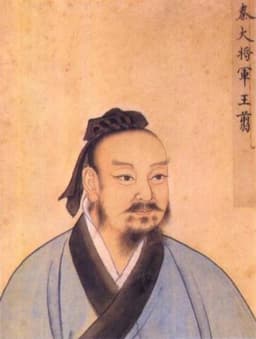
Wang Jian
General · Ancient
54.7Total
Basic Information
Born
-280
-260
Died
-229
-210
Era
Ancient
Ancient
Nationality
China
China
Occupation
General
General
Civilization
Eastern
Eastern
Score Comparison
Military (10%)
76.0
88.0
Political (20%)
37.9
33.6
Influence (20%)
58.0
56.4
Legacy (20%)
58.0
56.0
Leadership (15%)
62.0
36.9
Strategy (15%)
76.0
72.0
TOTAL
59.2
54.7
Li Mu — Complete Timeline
244 BC
Defeated the Xiongnu at YanmenWar◆ Major
Li Mu, as Zhao's general in the north, lured the Xiongnu into a trap at Yanmen. He ambushed and defeated them, killing tens of thousands and securing Zhao's northern border for years.
XiongnuBattleZhao
Impact: regionalconstructive
233 BC
Defeated Qin Forces at YiyangWar◆ Major
Li Mu led Zhao forces to victory against Qin at the Battle of Yiyang. This was one of the few defeats Qin suffered during its unification campaign, temporarily halting their advance.
BattleZhaoQin
Impact: regionalconstructive
229 BC
Executed by King Qian of ZhaoPolitical Action◆ Major
King Qian of Zhao, influenced by Qin's bribery and slander, ordered the execution of Li Mu. This removed Zhao's most capable general, leading to the swift conquest of Zhao by Qin forces.
ExecutionZhaoQin
Impact: regionaltragic
Wang Jian — Complete Timeline
228 BC
Conquest of ZhaoWar◆ Major
Wang Jian led the Qin army to conquer the state of Zhao, capturing King Qian of Zhao. This victory eliminated one of the last major obstacles to Qin unification of China.
ConquestQin StateZhao State
Impact: regionaldestructive
223 BC
Conquest of ChuWar◆ Major
Wang Jian led a Qin army of 600,000 men to conquer the state of Chu. He defeated the Chu general Xiang Yan and captured King Fuchu of Chu, annexing Chu territory into Qin.
ConquestQin StateChu State
Impact: regionaldestructive
222 BC
Conquest of YanWar
Wang Jian led the Qin army to conquer the state of Yan, capturing King Xi of Yan. This victory further consolidated Qin control over northern China.
ConquestQin StateYan State
Impact: regionaldestructive
210 BC
Retirement and DeathOther
After the conquest of Chu, Wang Jian retired from military service. He died in 210 BC, having played a crucial role in the unification of China under Qin Shi Huang.
RetirementQin StateUnification
Impact: national
Expert Analysis
Origins
Li Mu was born around 280 BC in the state of Zhao, one of the seven major warring states. He grew up in a period of constant warfare, with Zhao frequently threatened by both the northern Xiongnu nomads and the expansionist Qin to the west. His early life is obscure, but he likely came from a military family, as he rose to become a general commanding border forces.
Wang Jian was born around 300 BC in the state of Qin, the westernmost state that had embraced Legalist reforms. He was a contemporary of Li Mu, but his career trajectory differed markedly. Wang Jian's origins are also unclear, but he likely served in the Qin military under King Zhaoxiang and later King Yingzheng (Qin Shi Huang). He was a product of Qin's meritocratic system, where military success was rewarded with land and titles.
Rise to Power
Li Mu gained prominence in the 240s BC when he was assigned to defend Zhao's northern frontier against the Xiongnu. Unlike previous generals who engaged in fruitless pursuits, Li Mu adopted a strategy of fortification and deception. He allowed the Xiongnu to raid and then withdraw, convincing them that Zhao forces were weak. In 244 BC, he lured the Xiongnu into a trap at Yanmen, ambushing them with a concealed force of 130,000 cavalry and infantry. The victory was decisive, killing tens of thousands and securing the northern border for years. This success elevated him to command against Qin.
Wang Jian rose through the ranks during Qin's campaigns against the other states. His first major command came in 236 BC when he led a campaign against Zhao, capturing several cities. His reputation was solidified when he directed the conquest of Zhao in 228 BC, capturing the Zhao king and eliminating one of Qin's strongest foes. Following this, he led the invasion of Yan and Wei, but his greatest challenge came with the conquest of Chu in 224-223 BC.
Leadership & Governance
Li Mu's leadership style was cautious and defensive. He prioritized the well-being of his troops, sharing rations and pay with them, and drilled them meticulously. His strategy relied on patience, terrain, and intelligence. At Yanmen, he used deception to draw the Xiongnu into a kill zone. Against Qin, he focused on fortifications and avoiding pitched battles unless conditions favored him. Politically, Li Mu was loyal to Zhao but naive about court intrigues. He scored 37.9 in political acumen, reflecting his inability to counter Qin's bribery and slander campaigns.
Wang Jian was a methodical and pragmatic commander. He demanded massive forces for campaigns, famously requiring 600,000 men to conquer Chu. He used siege warfare and attrition, systematically reducing enemy strongholds. Politically, Wang Jian was shrewd: he repeatedly requested land and rewards from the Qin king to allay suspicions of his loyalty. This political survival skill, despite a low political score of 33.6, allowed him to retire peacefully. His leadership score of 36.9 is low, but his strategic score of 72.0 indicates careful planning.
Triumph & Tragedy
Li Mu's greatest triumph was the defeat of the Xiongnu, which secured Zhao's north for a decade. His victory at Yiyang (233 BC) against Qin was one of the few defeats Qin suffered during its unification campaign, temporarily halting their advance. However, his tragedy came in 229 BC when King Qian of Zhao, influenced by Qin's bribery and slander, ordered Li Mu's execution. This act removed Zhao's best general, leading to the state's collapse within a year. Li Mu's military score of 76.0 reflects his competence, but his legacy is tainted by his unjust death.
Wang Jian's triumphs include the conquests of Zhao, Chu, and Yan. The conquest of Chu was particularly impressive, as he defeated the superior Chu general Xiang Yan through a combination of fortification and attrition. His tragedy, if any, is that his role in the unification wars led to the destruction of many states and cultures. He retired before seeing the Qin dynasty's collapse. His military score of 88.0 is higher than Li Mu's, reflecting his success in large-scale conquests.
Character & Destiny
Li Mu was a defensive genius, patient and caring for his troops, but politically naive. His character led to his downfall: he trusted his king and did not anticipate the slander that cost him his life. His destiny was to be a tragic hero, remembered as a loyal general betrayed.
Wang Jian was cautious and calculating. He understood Qin's political climate and took steps to protect himself. His character allowed him to survive and thrive under a suspicious ruler. His destiny was to be the architect of Qin unification, but his legacy is overshadowed by Qin Shi Huang's tyranny.
Legacy
Li Mu is remembered as one of the Four Greatest Generals of the Warring States period, alongside Bai Qi, Wang Jian, and Lian Po. His tactics influenced later Chinese military thought, and his story became a cautionary tale of political intrigue. His legacy score of 58.0 reflects his lasting recognition, though limited to Chinese history.
Wang Jian's legacy is the unification of China under Qin. His conquests enabled the first centralized empire, but the brutal methods contributed to the Qin's short-lived rule. His legacy score of 56.0 is similar to Li Mu's, but his impact on history is arguably greater because he helped create the imperial system that lasted millennia.
Conclusion
Wang Jian had a greater impact on history. While Li Mu was a skilled defender, his influence was limited to Zhao's survival. Wang Jian's conquests directly enabled the unification of China, shaping the future of the entire region. His military score of 88.0 versus Li Mu's 76.0 reflects his superior effectiveness in large-scale campaigns. Though Li Mu's total score (59.2) edges out Wang Jian's (54.7) due to higher leadership and influence, the historical significance of Wang Jian's achievements is broader. Li Mu's execution left Zhao vulnerable, but Wang Jian's victories created the Qin Empire. Therefore, Wang Jian's legacy is more consequential.
Rankings
🥇
Li MuLeader
Mil: 76.0Pol: 37.9Inf: 58.0
59.2
🥈
Wang Jian
Mil: 88.0Pol: 33.6Inf: 56.4
54.7
+4.5 behind
How This Comparison Works
Algorithm
Each figure is scored on 6 dimensions (0—100 scale) based on structured historical data: Military (10%), Political (20%), Influence (20%), Legacy (20%), Leadership (15%), Strategy (15%). The weighted total produces the final ranking.
Data Sources
Scores are computed from structured sub-indicators in the database. Scale factors adjust for era (Ancient ×0.85, Modern ×1.0) and civilization size (Eastern ×1.05, Other ×0.80) to account for differences in population and military scale.
Maximum 3 Figures
Comparisons are limited to 2—3 figures to ensure readability and statistical meaningfulness.
Error Margins
±5 points per dimension — Sub-scores are derived from historical records with inherent uncertainty. Two figures within 5 points on a dimension should be considered roughly equivalent in that area.
Total Score Accuracy
±3 points overall — The weighted combination of 6 dimensions produces a total score with approximately ±3 points of uncertainty. Differences of less than 3 points are not statistically significant— the figures are effectively tied.
Known Limitations
- Historical records are incomplete and uneven across civilizations
- Figures from oral-tradition societies may be underrepresented
- Occupation labels can misclassify multi-role figures
- Scores measure capability and impact, not moral character
- Quantitative scoring is a comparison tool, not absolute truth
Capability Radar
Military (10%) — Battles & Warfare
Battles
75
85
Win Rate
85
90
Expansion
30
90
Political (20%) — Governance & Reform
Reform
50
20
Diplomacy
55
30
Economy
40
20
Influence (20%) — Cultural & Global Reach
Cultural
55
40
Global
45
50
Legacy (20%) — Historical Impact
Historical
70
70
Longevity
65
60
Leadership (15%) — Power & Stability
Tenure
60
40
Stability
65
30
Strategy (15%) — Tactics & Innovation
Strategy
85
85
Tactics
80
80
Reform
70
60
Similar Comparisons
Comments & Discussion
No comments yet. Be the first to share your thoughts!