Loading...
Pausanias of Sparta vs Wang Jian
Wang Jian leads by 5.1 pts · 2 figures compared
…
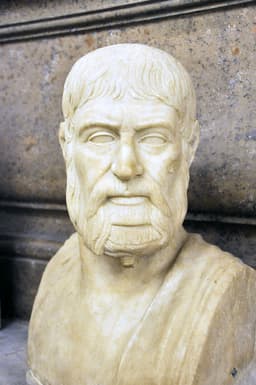
Pausanias of Sparta
General · Ancient
49.6Total
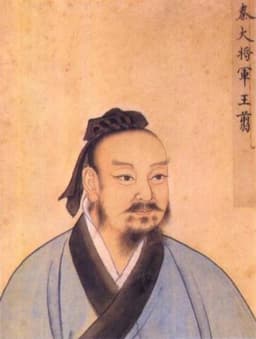
Wang Jian
General · Ancient
54.7Total
Basic Information
Born
-460
-260
Died
-395
-210
Era
Ancient
Ancient
Nationality
Sparta
China
Occupation
General
General
Civilization
Western
Eastern
Score Comparison
Military (10%)
67.3
88.0
Political (20%)
32.1
33.6
Influence (20%)
53.3
56.4
Legacy (20%)
48.3
56.0
Leadership (15%)
43.8
36.9
Strategy (15%)
61.3
72.0
TOTAL
49.6
54.7
Pausanias of Sparta — Complete Timeline
479 BC
Battle of PlataeaWar
Pausanias, as regent for the young king Pleistarchus, commanded the combined Greek forces against the Persian army under Mardonius. He won a decisive victory, destroying the Persian invasion force and ending the Greco-Persian Wars on the mainland.
Greco-Persian WarsBattleVictory
Impact: global
478 BC
Siege of ByzantiumWar◆ Major
Pausanias led a Greek fleet to capture Byzantium from the Persians. During the siege, his arrogant behavior and alleged negotiations with the Persian king led to accusations of medism (collaboration with Persia), causing his recall to Sparta.
Greco-Persian WarsSiegeMedism
Impact: regional
477 BC
Accusation of Medism and RecallPolitical Action◆ Major
Pausanias was recalled to Sparta and tried for medism. He was acquitted but his reputation was damaged. The allies, disgusted by his behavior, transferred leadership of the Hellenic League to Athens, leading to the formation of the Delian League.
Spartan PoliticsTrialDelian League
Impact: regionaldestructive
395 BC
Death by StarvationPolitical Action◆ Major
Pausanias was suspected of plotting with the helots and the Persians. He took refuge in the temple of Athena of the Brazen House. The ephors walled him in, and he was starved to death, just before his mother was to bring him out.
Spartan PoliticsExecutionTreason
Impact: nationaltragic
Wang Jian — Complete Timeline
228 BC
Conquest of ZhaoWar◆ Major
Wang Jian led the Qin army to conquer the state of Zhao, capturing King Qian of Zhao. This victory eliminated one of the last major obstacles to Qin unification of China.
ConquestQin StateZhao State
Impact: regionaldestructive
223 BC
Conquest of ChuWar◆ Major
Wang Jian led a Qin army of 600,000 men to conquer the state of Chu. He defeated the Chu general Xiang Yan and captured King Fuchu of Chu, annexing Chu territory into Qin.
ConquestQin StateChu State
Impact: regionaldestructive
222 BC
Conquest of YanWar
Wang Jian led the Qin army to conquer the state of Yan, capturing King Xi of Yan. This victory further consolidated Qin control over northern China.
ConquestQin StateYan State
Impact: regionaldestructive
210 BC
Retirement and DeathOther
After the conquest of Chu, Wang Jian retired from military service. He died in 210 BC, having played a crucial role in the unification of China under Qin Shi Huang.
RetirementQin StateUnification
Impact: national
Expert Analysis
Origins
Pausanias of Sparta was born around 510 BC, a member of the Agiad royal family. His father, King Cleombrotus, died in 480 BC, leaving Pausanias as regent for his young son, King Pleistarchus. He grew up in the militaristic society of Sparta, where discipline and warfare were paramount. His early life was shaped by the ongoing Greco-Persian Wars, particularly the invasion of Xerxes in 480-479 BC.
Wang Jian was born in the state of Qin during the Warring States period, likely in the late 4th century BC. His exact birth year is unknown, but he served under King Ying Zheng (later Qin Shi Huang). He came from a military family and rose through the ranks of the Qin army, which was known for its strict Legalist reforms and meritocratic promotions. His early experiences included campaigns against neighboring states.
Rise to Power
Pausanias's rise came abruptly. After the Greek victory at Salamis in 480 BC, the Persian general Mardonius remained in Greece. In 479 BC, Pausanias was appointed commander of the Greek coalition forces. At the Battle of Plataea, he led approximately 40,000 Greek hoplites against Mardonius's 70,000-120,000 Persians. The Greeks won a decisive victory, killing Mardonius and ending the Persian invasion. This victory made Pausanias the most powerful man in Greece.
Wang Jian's rise was gradual. He first appears in historical records as a general under King Ying Zheng. He led the conquest of Zhao in 228 BC, capturing King Qian. This victory eliminated a major rival. He then advised the king on the conquest of Chu, but the king initially rejected his plan, leading to a failed campaign. In 224 BC, Wang Jian was recalled and given command of 600,000 men. He conquered Chu in 223 BC, capturing King Fuchu. These victories made him instrumental in Qin's unification.
Leadership & Governance
Pausanias's leadership was autocratic and arrogant. After Plataea, he dedicated a tripod to Delphi with a boastful inscription, offending the allies. He later captured Byzantium in 478 BC but behaved like a tyrant, adopting Persian customs and alienating the Greeks. The allies transferred command to Athens, ending Spartan hegemony. Pausanias's governance was ineffective; he was recalled to Sparta and tried for medism (collaboration with Persians).
Wang Jian was a cautious and pragmatic commander. He insisted on overwhelming force, as seen in the Chu campaign where he demanded 600,000 troops. He used psychological warfare and avoided risky engagements. After conquests, he integrated territories into Qin's centralized administration. His governance was efficient but ruthless, implementing Legalist policies that suppressed local elites. He scored 36.9 in Leadership, reflecting his focus on strategy over personal charisma.
Triumph & Tragedy
Pausanias's triumph was Plataea, where his tactical skill destroyed the Persian army, securing Greek freedom. He scored 67.3 in Military. However, his arrogance led to tragedy. He was accused of plotting with helots and Persians, and in 470 BC, he took refuge in a temple. The ephors walled him in, and he starved to death. His legacy was tarnished by accusations of treason.
Wang Jian's triumphs were the conquests of Zhao, Chu, and Yan, which eliminated the last major obstacles to Qin unification. He scored 88.0 in Military. His tragedy was his role in the brutal unification, which caused massive casualties. After his victories, he retired, avoiding the purges that killed other Qin officials. He died in 210 BC, having seen the unification he helped achieve.
Character & Destiny
Pausanias was proud and ambitious, but his character led to his downfall. He sought personal glory over collective good, alienating allies. His medism accusations stemmed from his admiration of Persian luxury. His destiny was a lonely death, contrasting with his earlier glory. Historians like Thucydides (1.128-134) describe his fall as a cautionary tale of hubris.
Wang Jian was cautious and shrewd. He understood when to retire, avoiding the fate of many Qin officials. He scored 72.0 in Strategy, reflecting his long-term planning. His character was pragmatic, prioritizing victory over honor. He accepted the Legalist system and served the emperor faithfully. His destiny was to die naturally, one of the few Qin generals to do so.
Legacy
Pausanias's legacy is mixed. He is remembered for Plataea, but his failure to lead the Greek coalition led to the rise of Athens. He contributed to the Spartan reputation for military prowess but also to their reputation for arrogance. His military score of 67.3 reflects his single great victory. His legacy score is 48.3, as his impact was limited by his disgrace.
Wang Jian's legacy is profound. He is one of the key architects of Chinese unification, which shaped Chinese history for millennia. His campaigns are studied in military history. His score of 88.0 in Military reflects his consistent success. His legacy score is 56.0, as he is less famous than the emperor he served. However, his role in ending the Warring States period is undeniable.
Conclusion
Wang Jian had greater impact. He unified China under the Qin, a feat that shaped the world's most populous civilization. Pausanias won a crucial battle but failed to capitalize, leading to Spartan decline. Wang Jian's total score of 54.7 exceeds Pausanias's 49.6, with a 5.1 gap. While Pausanias's Plataea was a turning point, Wang Jian's conquests created an empire that lasted in concept for over two millennia. The evidence supports Wang Jian as the more significant figure.
Rankings
🥇
Wang JianLeader
Mil: 88.0Pol: 33.6Inf: 56.4
54.7
🥈
Pausanias of Sparta
Mil: 67.3Pol: 32.1Inf: 53.3
49.6
+5.1 behind
How This Comparison Works
Algorithm
Each figure is scored on 6 dimensions (0—100 scale) based on structured historical data: Military (10%), Political (20%), Influence (20%), Legacy (20%), Leadership (15%), Strategy (15%). The weighted total produces the final ranking.
Data Sources
Scores are computed from structured sub-indicators in the database. Scale factors adjust for era (Ancient ×0.85, Modern ×1.0) and civilization size (Eastern ×1.05, Other ×0.80) to account for differences in population and military scale.
Maximum 3 Figures
Comparisons are limited to 2—3 figures to ensure readability and statistical meaningfulness.
Error Margins
±5 points per dimension — Sub-scores are derived from historical records with inherent uncertainty. Two figures within 5 points on a dimension should be considered roughly equivalent in that area.
Total Score Accuracy
±3 points overall — The weighted combination of 6 dimensions produces a total score with approximately ±3 points of uncertainty. Differences of less than 3 points are not statistically significant— the figures are effectively tied.
Known Limitations
- Historical records are incomplete and uneven across civilizations
- Figures from oral-tradition societies may be underrepresented
- Occupation labels can misclassify multi-role figures
- Scores measure capability and impact, not moral character
- Quantitative scoring is a comparison tool, not absolute truth
Capability Radar
Military (10%) — Battles & Warfare
Battles
65
85
Win Rate
70
90
Expansion
30
90
Political (20%) — Governance & Reform
Reform
15
20
Diplomacy
40
30
Economy
20
20
Influence (20%) — Cultural & Global Reach
Cultural
40
40
Global
30
50
Legacy (20%) — Historical Impact
Historical
55
70
Longevity
45
60
Leadership (15%) — Power & Stability
Tenure
55
40
Stability
25
30
Strategy (15%) — Tactics & Innovation
Strategy
80
85
Tactics
75
80
Reform
20
60
Similar Comparisons
Comments & Discussion
No comments yet. Be the first to share your thoughts!