Loading...
Lu Meng vs Wang Jian
Wang Jian leads by 2.9 pts · 2 figures compared
…

Lu Meng
General · Ancient
51.8Total
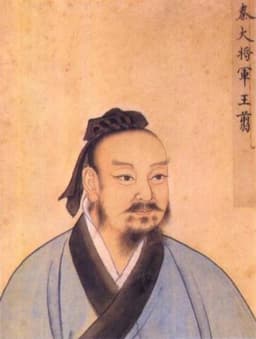
Wang Jian
General · Ancient
54.7Total
Basic Information
Born
178
-260
Died
219
-210
Era
Ancient
Ancient
Nationality
China
China
Occupation
General
General
Civilization
Eastern
Eastern
Score Comparison
Military (10%)
74.0
88.0
Political (20%)
30.8
33.6
Influence (20%)
54.1
56.4
Legacy (20%)
50.0
56.0
Leadership (15%)
50.7
36.9
Strategy (15%)
61.3
72.0
TOTAL
51.8
54.7
Lu Meng — Complete Timeline
213 AD
Battle of RuxuWar◆ Major
Lu Meng defended Ruxu against Cao Cao's invasion. He used defensive tactics to repel the Wei forces, securing Wu's northern border.
Three KingdomsBattleDefense
Impact: regional
215 AD
Reform of Military TrainingReform
Lu蒙 implemented a program to improve the training and discipline of Wu's navy. He emphasized the use of fire ships and coordinated tactics, enhancing Wu's naval capabilities.
WuMilitary ReformNavy
Impact: nationalconstructive
219 AD
Capture of Jing ProvinceWar
Lu Meng led a surprise attack on Jing Province while Guan Yu was campaigning against Wei. He captured the province, executed Guan Yu, and ended Shu's control of the region.
Three KingdomsConquestJing Province
Impact: global
Wang Jian — Complete Timeline
228 BC
Conquest of ZhaoWar◆ Major
Wang Jian led the Qin army to conquer the state of Zhao, capturing King Qian of Zhao. This victory eliminated one of the last major obstacles to Qin unification of China.
ConquestQin StateZhao State
Impact: regionaldestructive
223 BC
Conquest of ChuWar◆ Major
Wang Jian led a Qin army of 600,000 men to conquer the state of Chu. He defeated the Chu general Xiang Yan and captured King Fuchu of Chu, annexing Chu territory into Qin.
ConquestQin StateChu State
Impact: regionaldestructive
222 BC
Conquest of YanWar
Wang Jian led the Qin army to conquer the state of Yan, capturing King Xi of Yan. This victory further consolidated Qin control over northern China.
ConquestQin StateYan State
Impact: regionaldestructive
210 BC
Retirement and DeathOther
After the conquest of Chu, Wang Jian retired from military service. He died in 210 BC, having played a crucial role in the unification of China under Qin Shi Huang.
RetirementQin StateUnification
Impact: national
Expert Analysis
Origins
Lu Meng was born in 178 AD in Runan, during the late Eastern Han dynasty. He came from a poor family and joined Sun Ce's army at a young age, distinguishing himself in battle. His early education was limited; he was known as a warrior without letters. However, Sun Quan advised him to study, and Lu Meng became famous for his diligence, eventually mastering military classics. This transformation is captured in the Chinese idiom "Lu Meng studies diligently."
Wang Jian was born around 300 BC in the state of Qin during the Warring States period. His early life is obscure, but he rose through the ranks due to his military competence. He served under King Ying Zheng (later Qin Shi Huang) and became one of the most trusted generals. Unlike Lu Meng, Wang Jian's background was purely military, with no recorded political or scholarly pursuits.
Rise to Power
Lu Meng's rise began under Sun Ce and continued under Sun Quan. He participated in several campaigns against Huang Zu and Liu Biao. His key turning point came in 215 AD when he successfully defended Ruxu against Cao Cao's invasion, scoring a 74.0 in military operations. He then implemented a reform of military training, emphasizing fire ships and coordinated tactics, which enhanced Wu's naval capabilities. His greatest achievement was the capture of Jing Province in 219 AD, where he led a surprise attack while Guan Yu was campaigning against Wei. This victory eliminated Shu's strategic advantage and secured Wu's western borders.
Wang Jian's rise was part of Qin's systematic conquest of the other six states. His first major command was the conquest of Zhao in 228 BC, where he defeated the Zhao army and captured King Qian. He then conquered Yan in 226 BC, capturing King Xi. His most significant campaign was the conquest of Chu in 224 BC, where he led a massive army of 600,000 men, defeating General Xiang Yan and capturing King Fuchu. These victories earned him a military score of 88.0, the highest among Qin generals.
Leadership & Governance
Lu Meng's leadership style was adaptive and focused on discipline. He emphasized training and naval tactics, improving the quality of Wu's forces. He also showed political acumen by advising Sun Quan to maintain alliances when beneficial. However, his political score of 30.8 reflects his limited role in governance beyond military matters. He was known for his humility and willingness to learn, as seen in his famous "studying diligently" episode.
Wang Jian's leadership was characterized by careful planning and overwhelming force. He insisted on large armies to ensure victory, as seen in the Chu campaign where he demanded 600,000 men. He was cautious but decisive, and he avoided the political intrigues of the Qin court. His leadership score of 36.9 suggests he was less involved in administrative reforms, focusing instead on military strategy. He retired after the conquest of Chu, unlike Lu Meng who died in office.
Triumph & Tragedy
Lu Meng's greatest triumph was the capture of Jing Province and the execution of Guan Yu. This victory crippled Shu and solidified Wu's position. However, his greatest failure was the subsequent breakdown of the Sun-Liu alliance, leading to the Battle of Yiling. Lu Meng himself died shortly after the Jing Province campaign in 219 AD, possibly from illness, at the age of 42. His death was a loss for Wu, as he had been a key strategist.
Wang Jian's triumphs include the conquest of Zhao, Yan, and Chu, which were essential for Qin's unification of China. His failure, if any, was the lack of a significant defeat; he was undefeated in major campaigns. However, his legacy is tied to the unification, which brought an end to centuries of war but also imposed harsh Qin laws. Wang Jian died in 210 BC, likely of natural causes, after a successful career.
Character & Destiny
Lu Meng's character was shaped by his transformation from a warrior to a scholar. He was diligent, adaptable, and loyal to Sun Quan. His decision to execute Guan Yu, while strategically sound, created a lasting enmity with Shu. His destiny was to be a key figure in the Three Kingdoms period, but his early death limited his long-term influence.
Wang Jian was methodical, cautious, and ruthless in achieving his goals. He understood the importance of overwhelming force and patience. His character was well-suited to Qin's total war strategy. His destiny was to be one of the primary instruments of Qin's unification, but he faded into obscurity after retirement, overshadowed by Qin Shi Huang.
Legacy
Lu Meng's legacy is primarily within the Three Kingdoms narrative. He is remembered as a skilled general who studied to improve himself. His capture of Jing Province is a classic example of strategic deception and speed. In Chinese culture, he is a symbol of self-improvement. However, his impact on Chinese history is limited to the period, with a legacy score of 50.0.
Wang Jian's legacy is tied to the unification of China. His conquests directly enabled the Qin dynasty, which established the first unified Chinese empire. His military methods influenced later generals, and his campaigns are studied for their logistical scope. With a legacy score of 56.0, he had a broader and more lasting impact on Chinese history.
Conclusion
Wang Jian had a greater impact than Lu Meng. His military campaigns were decisive in creating the unified Chinese empire, a foundational event in world history. Lu Meng, while effective, operated within the Three Kingdoms power struggle, which ultimately did not reshape China as fundamentally. Wang Jian's military score of 88.0 and strategy score of 72.0 exceed Lu Meng's 74.0 and 61.3, respectively. The unification of China under Qin set the stage for two millennia of imperial rule, whereas Lu Meng's achievements, though impressive, were confined to a period of division. Therefore, Wang Jian's contributions were more consequential.
Rankings
🥇
Wang JianLeader
Mil: 88.0Pol: 33.6Inf: 56.4
54.7
🥈
Lu Meng
Mil: 74.0Pol: 30.8Inf: 54.1
51.8
+2.9 behind
How This Comparison Works
Algorithm
Each figure is scored on 6 dimensions (0—100 scale) based on structured historical data: Military (10%), Political (20%), Influence (20%), Legacy (20%), Leadership (15%), Strategy (15%). The weighted total produces the final ranking.
Data Sources
Scores are computed from structured sub-indicators in the database. Scale factors adjust for era (Ancient ×0.85, Modern ×1.0) and civilization size (Eastern ×1.05, Other ×0.80) to account for differences in population and military scale.
Maximum 3 Figures
Comparisons are limited to 2—3 figures to ensure readability and statistical meaningfulness.
Error Margins
±5 points per dimension — Sub-scores are derived from historical records with inherent uncertainty. Two figures within 5 points on a dimension should be considered roughly equivalent in that area.
Total Score Accuracy
±3 points overall — The weighted combination of 6 dimensions produces a total score with approximately ±3 points of uncertainty. Differences of less than 3 points are not statistically significant— the figures are effectively tied.
Known Limitations
- Historical records are incomplete and uneven across civilizations
- Figures from oral-tradition societies may be underrepresented
- Occupation labels can misclassify multi-role figures
- Scores measure capability and impact, not moral character
- Quantitative scoring is a comparison tool, not absolute truth
Capability Radar
Military (10%) — Battles & Warfare
Battles
65
85
Win Rate
70
90
Expansion
60
90
Political (20%) — Governance & Reform
Reform
30
20
Diplomacy
55
30
Economy
35
20
Influence (20%) — Cultural & Global Reach
Cultural
45
40
Global
30
50
Legacy (20%) — Historical Impact
Historical
60
70
Longevity
55
60
Leadership (15%) — Power & Stability
Tenure
50
40
Stability
40
30
Strategy (15%) — Tactics & Innovation
Strategy
70
85
Tactics
75
80
Reform
30
60
Similar Comparisons
Comments & Discussion
No comments yet. Be the first to share your thoughts!