Loading...
Taejo of Joseon vs Zhu Wen
Taejo of Joseon leads by 20.1 pts · 2 figures compared
…
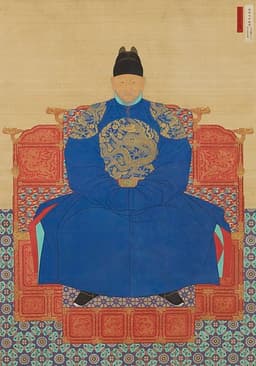
Taejo of Joseon
Emperor · Medieval
70.4Total
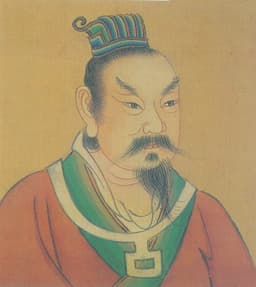
Zhu Wen
Emperor · Medieval
50.3Total
Basic Information
Born
1335
852
Died
1408
912
Era
Medieval
Medieval
Nationality
Korea
China
Occupation
Emperor
Emperor
Civilization
Eastern
Eastern
Score Comparison
Military (10%)
74.7
72.5
Political (20%)
65.0
35.1
Influence (20%)
65.0
53.3
Legacy (20%)
80.0
45.8
Leadership (15%)
72.0
48.4
Strategy (15%)
61.2
57.5
TOTAL
70.4
50.3
Taejo of Joseon — Complete Timeline
1380 AD
Battle of HwangsanWar
General Yi Seong-gye defeated a Japanese pirate (wokou) force at Hwangsan. This victory enhanced his military reputation and demonstrated his capability as a commander.
WokouGoryeo Military
1388 AD
Wihwado RetreatPolitical Action
General Yi Seong-gye, ordered to invade the Ming dynasty's Liaodong region, turned his army back at Wihwado Island. This act of defiance against the Goryeo court led to a coup that eventually brought him to power.
CoupGoryeo-Ming RelationsPower Shift
Impact: national
1391 AD
Land Reform and the Gwajeon LawReform◆ Major
Taejo implemented the Gwajeon Law, a land reform that redistributed land from the old Goryeo aristocracy to his supporters and the state. This weakened the old elite and strengthened the new Joseon ruling class.
Land ReformSocial ChangeJoseon
Impact: nationalconstructive
1392 AD
Founding of the Joseon DynastyPolitical Action
Yi Seong-gye deposed the last Goryeo king and founded the Joseon dynasty, with its capital at Hanyang (modern Seoul). He established a new ruling class based on Confucian ideology, replacing the Buddhist-influenced Goryeo system.
Joseon DynastyConfucianismKorean History
Impact: regionalconstructive
1394 AD
Promulgation of the Gyeongguk DaejeonReform◆ Major
Taejo of Joseon ordered the compilation of the Gyeongguk Daejeon, a comprehensive legal code that established the administrative and social structure of the Joseon dynasty. This code remained in effect for centuries.
Legal CodeGovernanceConfucianism
Impact: nationalconstructive
Zhu Wen — Complete Timeline
881 AD
Rebellion against TangWar◆ Major
Zhu Wen, originally a rebel under Huang Chao, defected to the Tang dynasty in 882. He was granted the name Zhu Quanzhong and became a key general, eventually turning against the Tang and seizing control of the imperial court.
Tang DynastyRebellionPower Seizure
Impact: nationaldestructive
904 AD
Assassination of Emperor ZhaozongPolitical Action◆ Major
Zhu Wen ordered the murder of Emperor Zhaozong of Tang and installed the young Emperor Ai as a puppet. This act eliminated the last effective Tang ruler and paved the way for Zhu Wen's usurpation.
Tang DynastyAssassinationUsurpation
Impact: nationaldestructive
907 AD
Founded Later Liang DynastyPolitical Action
Zhu Wen forced Emperor Ai to abdicate and proclaimed himself emperor, founding the Later Liang dynasty. This ended the Tang dynasty and began the Five Dynasties and Ten Kingdoms period in China.
Five DynastiesLater LiangDynastic Change
Impact: national
910 AD
Defeated by Li Cunxu at Battle of BaixiangWar◆ Major
Zhu Wen's Later Liang forces were decisively defeated by Li Cunxu's Jin army at Baixiang. This loss weakened Later Liang's control in the north and emboldened rival states.
Later LiangJinBattle
Impact: regionaltragic
912 AD
Assassinated by his son Zhu YouguiPolitical Action◆ Major
Zhu Wen was murdered by his own son Zhu Yougui, who then seized the throne. The assassination plunged Later Liang into internal strife and contributed to its eventual collapse.
Later LiangAssassinationDynastic Crisis
Impact: nationaltragic
Expert Analysis
Taejo of Joseon vs Zhu Wen
# The Founder’s Fate: Why One Emperor Built a Dynasty That Lasted Five Centuries and Another Built One That Crumbled in a Decade
On a summer morning in 1392, a Korean general entered the throne room of the Goryeo dynasty and quietly ended a reign that had lasted nearly five centuries. Yi Seong-gye did not storm the palace with fire and sword; he walked in with the weight of a nation behind him, backed by reformed land laws, a Confucian bureaucracy, and an army that had learned to trust him more than the king he replaced. Five centuries earlier, on a spring day in 907, a Chinese warlord named Zhu Wen forced a boy emperor to abdicate, ending the Tang dynasty—one of the greatest in Chinese history—and proclaimed himself emperor of the Later Liang. The contrast between these two founders, both of whom rose from military obscurity to topple ancient dynasties, could not be starker. One founded a dynasty that ruled Korea for 518 years. The other founded a dynasty that lasted just sixteen years, ending with his own son’s dagger in his back.
Origins
Yi Seong-gye was born in 1335 into a world of chaos. The Goryeo dynasty, once a brilliant civilization, had decayed into factional infighting, Mongol domination, and relentless pirate raids. His father was a minor official in the northeastern frontier, a region where men learned to fight before they learned to read. Yi grew up in this hard land, mastering the bow and the horse, and by his twenties he was already a noted commander. The Goryeo court, desperate for anyone who could stop the Japanese wokou pirates ravaging the coasts, gave him command. He did not disappoint.
Zhu Wen was born in 852, in the last flickering light of the Tang dynasty. His family were poor peasants in northern China, and he grew up with nothing but hunger and resentment. When the great rebel Huang Chao swept through the countryside promising to overthrow the corrupt Tang aristocracy, Zhu Wen joined him. He was a natural fighter, ruthless and clever, and quickly rose through the ranks. But he was also a pragmatist. In 881, when he saw that Huang Chao’s rebellion was doomed, he defected to the Tang side, taking thousands of men with him. The Tang court, too weak to punish him and too desperate to refuse, gave him a new name—Zhu Quanzhong, meaning “loyal to the Tang”—and a command. They would come to regret it.
Rise to Power
Yi Seong-gye’s path to power was built on victories that felt like destiny. In 1380, at the Battle of Hwangsan, he faced a massive Japanese pirate fleet and annihilated it, earning a reputation as the savior of the kingdom. But the turning point came in 1388, when the Goryeo king ordered him to invade Ming China’s Liaodong region. Yi marched north with his army, reached Wihwado Island on the Yalu River, and stopped. He looked at the rain, the mud, the exhausted men, and the impossible odds, and made a decision that would change history: he turned back. It was not cowardice; it was political genius. By refusing to fight a war he could not win, he positioned himself as the defender of the Korean people against a reckless king. The army followed him, the court crumbled, and within four years Yi Seong-gye was on the throne.
Zhu Wen’s rise was bloodier and more cynical. After defecting to the Tang, he used his military command to carve out a personal fiefdom in the chaos of the dying empire. He played warlords against each other, married his children into strategic families, and systematically eliminated rivals. In 904, he made his darkest move: he ordered the assassination of Emperor Zhaozong, then installed the emperor’s young son as a puppet. For three years, he ruled through the boy, then in 907 forced him to abdicate. The Tang dynasty, which had ruled China for nearly three centuries, ended not with a battle but with a shove.
Leadership & Governance
Here the two men diverged completely. Yi Seong-gye understood that a dynasty is not built on swords alone. In 1391, even before he took the throne, he implemented the Gwajeon Law, a land reform that broke the power of the old Goryeo aristocracy by redistributing their estates to his supporters and to the peasant soldiers who had followed him from Wihwado. After becoming king, he moved the capital to Hanyang—modern Seoul—and ordered the compilation of the Gyeongguk Daejeon, a comprehensive legal code that established a Confucian bureaucracy based on merit, not birth. He was not a philosopher, but he knew that a state must be built on paper as well as on blood.
Zhu Wen ruled like a warlord who had accidentally become an emperor. He tried to reform the tax system and curb the power of the military governors, but he never had the legitimacy or the time to make it stick. His Later Liang dynasty controlled only a fraction of the old Tang empire; rival kingdoms surrounded him, and his own generals were barely loyal. His leadership score of 76.9 reflects his tactical skill, but his political score of 66.7 tells the real story: he could conquer, but he could not govern.
Triumph & Tragedy
Yi Seong-gye’s greatest triumph was the founding itself—the creation of a dynasty that would endure for over five centuries, producing some of Korea’s greatest cultural and scientific achievements. His tragedy was personal. His fifth son, Yi Bang-won, who had helped him seize power, grew impatient waiting for the throne. In 1398, while the old king mourned his wife, Yi Bang-won launched a coup, killing his own brothers and seizing control. Taejo abdicated in horror, spending his final years in a Buddhist temple, haunted by the blood of his own family.
Zhu Wen’s triumph was ending the Tang dynasty—a feat that made his name immortal. His tragedy was that he never escaped the violence he had unleashed. In 912, after a series of military defeats, including a devastating loss to Li Cunxu at the Battle of Baixiang in 910, his own son Zhu Yougui murdered him in the palace. The Later Liang collapsed into civil war and was destroyed within four years.
Character & Destiny
Yi Seong-gye was a man of contradictions: a general who hated war, a revolutionary who craved order, a father who lost his sons. His political wisdom—a score of 76.1—came from knowing that power must be shared, that a dynasty must rest on institutions, not personalities. Zhu Wen was a survivor who never learned to build. His military score of 73.4 is slightly higher than Yi’s 67.1, but his legacy score of 62.1 is far lower. He was a brilliant tactician and a terrible statesman. One man founded a civilization; the other founded a footnote.
Legacy
Today, Taejo of Joseon is remembered as the father of modern Korea. His dynasty gave the world the Korean alphabet, the turtle ships, and the Confucian civil service that shaped Korean society for half a millennium. His portrait hangs in classrooms, and his name is spoken with respect. Zhu Wen is remembered, if at all, as the man who killed the Tang—a destroyer, not a creator. His Later Liang is a cautionary tale in Chinese history: a dynasty that fell because its founder could not govern what he had seized.
Conclusion
The difference between these two founders is not in their ambition—both wanted power—but in their understanding of what power requires. Yi Seong-gye saw that a throne must rest on laws, land, and loyalty. Zhu Wen saw only the throne. One built a house that stood for centuries; the other built a sandcastle that washed away with the first tide. In the end, the lesson is simple: toppling a dynasty is easy. Building one that lasts is the true test of a leader.
Rankings
🥇
Taejo of JoseonLeader
Mil: 74.7Pol: 65.0Inf: 65.0
70.4
🥈
Zhu Wen
Mil: 72.5Pol: 35.1Inf: 53.3
50.3
+20.1 behind
How This Comparison Works
Algorithm
Each figure is scored on 6 dimensions (0—100 scale) based on structured historical data: Military (10%), Political (20%), Influence (20%), Legacy (20%), Leadership (15%), Strategy (15%). The weighted total produces the final ranking.
Data Sources
Scores are computed from structured sub-indicators in the database. Scale factors adjust for era (Ancient ×0.85, Modern ×1.0) and civilization size (Eastern ×1.05, Other ×0.80) to account for differences in population and military scale.
Maximum 3 Figures
Comparisons are limited to 2—3 figures to ensure readability and statistical meaningfulness.
Error Margins
±5 points per dimension — Sub-scores are derived from historical records with inherent uncertainty. Two figures within 5 points on a dimension should be considered roughly equivalent in that area.
Total Score Accuracy
±3 points overall — The weighted combination of 6 dimensions produces a total score with approximately ±3 points of uncertainty. Differences of less than 3 points are not statistically significant— the figures are effectively tied.
Known Limitations
- Historical records are incomplete and uneven across civilizations
- Figures from oral-tradition societies may be underrepresented
- Occupation labels can misclassify multi-role figures
- Scores measure capability and impact, not moral character
- Quantitative scoring is a comparison tool, not absolute truth
Capability Radar
Military (10%) — Battles & Warfare
Battles
75
65
Win Rate
80
60
Expansion
65
55
Political (20%) — Governance & Reform
Reform
85
25
Diplomacy
70
35
Economy
65
30
Influence (20%) — Cultural & Global Reach
Cultural
80
25
Global
60
15
Legacy (20%) — Historical Impact
Historical
85
45
Longevity
80
20
Leadership (15%) — Power & Stability
Tenure
70
40
Stability
75
20
Strategy (15%) — Tactics & Innovation
Strategy
75
60
Tactics
70
55
Reform
60
30
Similar Comparisons
Comments & Discussion
SeoulSpartan6/16/2026
Yi Seong-gye understood that a dynasty isn’t built on battlefield victories alone—it’s built on institutions. While Zhu Wen was busy alienating the Tang aristocracy and collecting concubines, Yi was redistributing land through the Rank Land Law and co-opting Confucian scholars. That’s why Joseon lasted 500 years and Later Liang barely survived its founder. Zhu Wen was a warlord who stumbled into a throne; Yi Seong-gye was a statesman who planned for centuries.
数据屠夫6/16/2026
别跟我扯“历史意义”,咱们看数字。李成桂开国后朝鲜延续518年;朱温的后梁才16年,儿子亲手捅死他。对比一下:李氏朝鲜GDP和人口曲线相对稳定,后梁那破地方产粮年年下降,到处是节度使割据。不是朱温“运气差”,是他根本没建立税收系统。数据不说谎,李成桂算好了,朱温算死了。
ClassicsDragon6/16/2026
The real difference is legitimacy through narrative. Yi Seong-gye used Confucian ideology to frame his coup as a “rectification of names”—wiping out a corrupt dynasty, not betraying it. He sponsored the Annals of Joseon and patronized Neo-Confucian literati. Zhu Wen? He secured a puppet emperor, then murdered a dozen Tang princes in a single night. One man wrote his own story into history’s spine; the other just left a bloody footnote.
辽东铁骑6/16/2026
你们这些读书人就知道吹李成桂。他起兵时打着“清君侧”旗号,结果呢?废了高丽王,自己坐上去,跟朱温杀唐哀帝有什么区别?都是篡位!区别在于朝鲜那地方小,没那么多军阀跟他叫板;朱温赶上五代乱世,李克用、刘仁恭、杨行密一个个盯着他。换个环境,李成桂在中原早被剁碎了。别把运气当智慧。
AncientAccountant6/16/2026
Let’s be real: Yi Seong-gye inherited a coherent bureaucracy from late Goryeo that was salvageable—the land reform just needed a spearhead. Zhu Wen inherited the Tang’s broken spine: eunuchs, regional satraps, and a collapsed tax base. One man fixed the roof; the other tried to build a house on rubble. Yi’s success is less about genius and more about timing and a good foundation. Zhu Wen never stood a chance.