Loading...
Pachacuti vs Taejo of Joseon
Taejo of Joseon leads by 1.0 pts · 2 figures compared
…
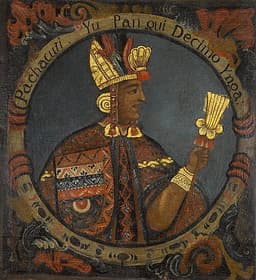
Pachacuti
Emperor · Medieval
69.4Total
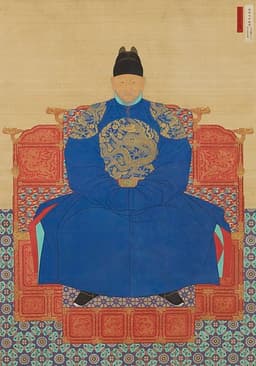
Taejo of Joseon
Emperor · Medieval
70.4Total
Basic Information
Born
1418
1335
Died
1472
1408
Era
Medieval
Medieval
Nationality
Inca Empire
Korea
Occupation
Emperor
Emperor
Civilization
Other
Eastern
Score Comparison
Military (10%)
78.5
74.7
Political (20%)
58.1
65.0
Influence (20%)
65.0
65.0
Legacy (20%)
72.0
80.0
Leadership (15%)
78.0
72.0
Strategy (15%)
69.2
61.2
TOTAL
69.4
70.4
Pachacuti — Complete Timeline
1438 AD
Conquest of the Chanka KingdomWar
Pachacuti led the Inca army to defeat the Chanka, a powerful rival, in a decisive battle near Cusco. This victory secured his position as Sapa Inca and initiated a period of rapid expansion, transforming the Inca from a small kingdom into a vast empire.
ConquestInca ExpansionChanka
Impact: regional
1440 AD
Reconstruction of CuscoCultural◆ Major
Pachacuti rebuilt Cusco as the imperial capital, designing it in the shape of a puma and constructing massive stone structures like Sacsayhuam
Urban PlanningArchitectureInca Empire
Impact: regionalconstructive
1450 AD
Initiation of Machu Picchu's ConstructionCultural◆ Major
Pachacuti ordered the construction of Machu Picchu, a royal estate and ceremonial site high in the Andes. The complex featured sophisticated dry-stone masonry and terraced agriculture, serving as a symbol of Inca engineering and a retreat for the emperor.
ArchitectureRoyal EstateInca Engineering
Impact: regionalconstructive
Taejo of Joseon — Complete Timeline
1380 AD
Battle of HwangsanWar
General Yi Seong-gye defeated a Japanese pirate (wokou) force at Hwangsan. This victory enhanced his military reputation and demonstrated his capability as a commander.
WokouGoryeo Military
1388 AD
Wihwado RetreatPolitical Action
General Yi Seong-gye, ordered to invade the Ming dynasty's Liaodong region, turned his army back at Wihwado Island. This act of defiance against the Goryeo court led to a coup that eventually brought him to power.
CoupGoryeo-Ming RelationsPower Shift
Impact: national
1391 AD
Land Reform and the Gwajeon LawReform◆ Major
Taejo implemented the Gwajeon Law, a land reform that redistributed land from the old Goryeo aristocracy to his supporters and the state. This weakened the old elite and strengthened the new Joseon ruling class.
Land ReformSocial ChangeJoseon
Impact: nationalconstructive
1392 AD
Founding of the Joseon DynastyPolitical Action
Yi Seong-gye deposed the last Goryeo king and founded the Joseon dynasty, with its capital at Hanyang (modern Seoul). He established a new ruling class based on Confucian ideology, replacing the Buddhist-influenced Goryeo system.
Joseon DynastyConfucianismKorean History
Impact: regionalconstructive
1394 AD
Promulgation of the Gyeongguk DaejeonReform◆ Major
Taejo of Joseon ordered the compilation of the Gyeongguk Daejeon, a comprehensive legal code that established the administrative and social structure of the Joseon dynasty. This code remained in effect for centuries.
Legal CodeGovernanceConfucianism
Impact: nationalconstructive
Expert Analysis
Pachacuti vs Taejo of Joseon
# The Mountain and the Peninsula
In the high Andes, a man stands on a ridge at 8,000 feet, watching his army crush a rival kingdom. On the Korean peninsula, another man halts his troops at a river crossing, refusing to invade a neighboring empire. One will build an empire of stone and sky; the other will build a dynasty of ink and law. Pachacuti and Taejo of Joseon never knew each other existed, yet their parallel rises to power—separated by decades and oceans—offer a profound study in how geography, culture, and character forge different kinds of greatness.
Origins
Pachacuti was born in 1418 into the ruling family of the Inca, a small kingdom in the Cusco valley of modern-day Peru. The Andes were a world of vertical extremes: steep terraces, narrow passes, and a sky that seemed close enough to touch. The Inca were not yet an empire; they were one among many warring tribes, constantly threatened by the Chanka, a powerful rival from the west. Pachacuti grew up in a culture that worshipped the sun, built with stone, and measured power in the number of conquered valleys.
Taejo of Joseon, born Yi Seong-gye in 1335, came of age in a different world entirely. Korea was a peninsula squeezed between the great Chinese empires and the sea—a land of rice paddies, Confucian scholars, and a long tradition of centralized rule under the Goryeo dynasty. But by the late 14th century, Goryeo was rotting from within: corrupt aristocrats, foreign invasions, and a Mongol shadow that still lingered. Yi Seong-gye was a military man, a general who had spent his youth fighting Jurchen tribes and Japanese pirates. His world was one of borders, alliances, and the constant pressure of civilizations larger than his own.
Rise to Power
Pachacuti’s rise came through a single, desperate battle. In 1438, the Chanka attacked Cusco. The Inca king, Viracocha, fled with his chosen heir, leaving the city to fall. But Pachacuti, then a prince of about twenty, refused to run. He rallied what soldiers remained and met the Chanka on the plain outside the city. The chroniclers say he fought with a fury that seemed supernatural, that the very stones of the earth rose to aid him. He won. That victory was the turning point. He deposed his father, took the throne, and never looked back. The name he chose—Pachacuti—means “earth-shaker” or “world-changer.” It was not an exaggeration.
Taejo’s rise was more deliberate, more political. In 1388, the Goryeo king ordered him to invade the Ming dynasty’s Liaodong territory. It was a suicidal mission: China was a giant, and Korea was exhausted. Yi Seong-gye marched his army north, reached the Yalu River at Wihwado Island, and stopped. He turned his troops around. This was not a battlefield victory but a political masterstroke. By refusing to invade, he exposed the king’s folly, won the support of Confucian scholars and reform-minded officials, and positioned himself as a patriot who put Korea’s survival above royal orders. In 1392, he deposed the last Goryeo king and founded the Joseon dynasty. He was fifty-seven years old—older, wiser, and far more calculating than the young Andean conqueror.
Leadership & Governance
Pachacuti governed as a conqueror. He did not merely defeat enemies; he absorbed them. He imposed the Inca language, religion, and administrative system on conquered peoples, but he also allowed local chiefs to retain power if they swore loyalty. He built a network of roads and storehouses that tied the empire together, and he rebuilt Cusco in the shape of a puma—a city of massive stone walls that still stand. In 1450, he ordered the construction of Machu Picchu, a royal estate perched on a mountain ridge, a symbol of his power and his people’s engineering genius. His rule was personal, charismatic, and absolute. He was the Sapa Inca, the “Unique Inca,” the son of the sun.
Taejo governed as a reformer. His power came not from divine blood but from a coalition of military men and Confucian scholars who wanted to rebuild Korea from the ground up. In 1391, he enacted the Gwajeon Law, a land reform that broke the power of the old Goryeo aristocracy by redistributing land to his supporters and to farmers who paid taxes. In 1394, he ordered the compilation of the Gyeongguk Daejeon, a legal code that established a centralized bureaucracy, a civil service exam system, and a Confucian moral order. He moved the capital to Hanyang (modern Seoul), a city designed on geomantic principles—a capital of philosophy, not just power.
Triumph & Tragedy
Pachacuti’s greatest triumph was the empire itself. By his death in 1472, he had transformed a small kingdom into a domain stretching from modern Ecuador to Chile—the largest empire in pre-Columbian America. But his tragedy was that he built on sand. He left no written language, no durable political institutions beyond his own will. Within sixty years of his death, a handful of Spanish adventurers would destroy the Inca Empire. The stones remained, but the world they represented vanished.
Taejo’s triumph was the Joseon dynasty, which would rule Korea for over five centuries—until 1910. His tragedy was more personal. He had eight sons, and the succession was brutal. He abdicated in 1398 after a bloody struggle between his sons, one of whom killed his own brother to secure the throne. Taejo spent his final years in a monastery, watching his creation survive through violence he could not control.
Character & Destiny
Pachacuti was a man of action, a warrior who believed in his own divinity. He saw the world as something to be conquered and reshaped. His decisions were bold, his ambition limitless. But that same ambition created a brittle empire—one that depended entirely on his strength.
Taejo was a man of calculation, a general who knew when to fight and when to retreat. He saw the world as something to be governed and ordered. His decisions were patient, his vision institutional. He built a system that could outlast him, even if his own family could not.
Legacy
Pachacuti’s legacy is etched in stone: Machu Picchu, Sacsayhuamán, the roads that still wind through the Andes. He is remembered as the “Napoleon of the Andes,” a figure of mythic power. But his empire died with him, in spirit if not immediately.
Taejo’s legacy is etched in law and culture: the Joseon dynasty, the Korean alphabet (Hangul, created by his descendant Sejong the Great), a Confucian tradition that shaped Korea for centuries. He is remembered as a founder, a reformer, a man who gave Korea its enduring shape.
Conclusion
Standing at Pachacuti’s Machu Picchu, you feel the weight of stone and sky. Standing in Seoul’s Gyeongbokgung Palace, you feel the weight of time and order. One man built for eternity; the other built for centuries. Which is greater? Perhaps the question is wrong. Pachacuti and Taejo each faced the challenges of their worlds—one of vertical conquest, the other of horizontal consolidation. Their differences are not failures but adaptations. And in their stories, we see the two great currents of history: the flash of empire and the slow burn of civilization.
Rankings
🥇
Taejo of JoseonLeader
Mil: 74.7Pol: 65.0Inf: 65.0
70.4
🥈
Pachacuti
Mil: 78.5Pol: 58.1Inf: 65.0
69.4
+1.0 behind
How This Comparison Works
Algorithm
Each figure is scored on 6 dimensions (0—100 scale) based on structured historical data: Military (10%), Political (20%), Influence (20%), Legacy (20%), Leadership (15%), Strategy (15%). The weighted total produces the final ranking.
Data Sources
Scores are computed from structured sub-indicators in the database. Scale factors adjust for era (Ancient ×0.85, Modern ×1.0) and civilization size (Eastern ×1.05, Other ×0.80) to account for differences in population and military scale.
Maximum 3 Figures
Comparisons are limited to 2—3 figures to ensure readability and statistical meaningfulness.
Error Margins
±5 points per dimension — Sub-scores are derived from historical records with inherent uncertainty. Two figures within 5 points on a dimension should be considered roughly equivalent in that area.
Total Score Accuracy
±3 points overall — The weighted combination of 6 dimensions produces a total score with approximately ±3 points of uncertainty. Differences of less than 3 points are not statistically significant— the figures are effectively tied.
Known Limitations
- Historical records are incomplete and uneven across civilizations
- Figures from oral-tradition societies may be underrepresented
- Occupation labels can misclassify multi-role figures
- Scores measure capability and impact, not moral character
- Quantitative scoring is a comparison tool, not absolute truth
Capability Radar
Military (10%) — Battles & Warfare
Battles
85
75
Win Rate
90
80
Expansion
90
65
Political (20%) — Governance & Reform
Reform
92
85
Diplomacy
75
70
Economy
80
65
Influence (20%) — Cultural & Global Reach
Cultural
85
80
Global
65
60
Legacy (20%) — Historical Impact
Historical
80
85
Longevity
70
80
Leadership (15%) — Power & Stability
Tenure
85
70
Stability
82
75
Strategy (15%) — Tactics & Innovation
Strategy
88
75
Tactics
80
70
Reform
85
60
Similar Comparisons
Comments & Discussion
MountainSage6/16/2026
As a military historian, Pachacuti's siege of Sacsayhuamán with slingers and stone fortresses is pure genius – he turned vertical warfare into an art form. Taejo's *Hwaseong* fortress? Cute, but it’s a copy-paste of Chinese wall tech. Andean rock didn’t need Confucian manuals; it forged a real empire of blood and granite. Korea got a bureaucrat with a bow.
KoryoDefender6/16/2026
我不同意。Taejo 的 "wihwado retreat" 不是懦弱,而是战略克制。他拒绝北伐明朝,保全了半岛和平,这比 Pachacuti 的血腥扩张聪明百倍。Pachacuti 在安第斯山搞人祭攫取权力,而 Taejo 用科举制度稳定朝堂。数据表明,Joseon 延续了五百年,而印加帝国被西班牙人几年就灭了。谁的遗产更持久?
ClassicsQuill6/16/2026
As a classics scholar, I’d wager on Pachacuti’s "Tawantinsuyu" – a poetic name meaning "four regions," like a cosmic map. Taejo’s "Joseon" just echoes ancient *Gojoseon*–a safe, scholarly rebrand. Pachacuti’s Quipu records encoded conquests in knots; Taejo’s *Joseon Wangjo Sillok* are tedious bureaucratic logs. Give me the sung poem over the dull annals any day.
HistoryBard6/16/2026
比较两者,我觉得地形塑造了性格。Pachacuti 在 8000 英尺山头指挥,视野开阔,所以野心扩张;Taejo 面对长江水险,本能谨慎,所以保守治国。但别忽略一点:印加没有车轮,却靠石路网络统治;朝鲜有儒家官僚,却靠纸张和礼仪。两个领导人都抓住了时代的工具,但 Pachacuti 更像一个建设者,而 Taejo 更像一个管理员。
RevisionistRover6/16/2026
Hold up—Pachacuti’s empire was a coercive cult built on mummy worship and forced labor; Taejo’s Joseon had basic land reforms and *gwageo* exams. The Andean "glory" is romanticized colonial nostalgia. Pachacuti sacrificed thousands to the Inti for PR stunts; Taejo purged aristocrats but established the *Jingbirok*–a tech registry for defense. Data shows Goryeo’s collapse was chaotic, but Joseon’s bureaucracy outlasted anything Cusco ever built.