Loading...
Ivan Asen II vs Tokhtamysh
Ivan Asen II leads by 2.5 pts · 2 figures compared
…
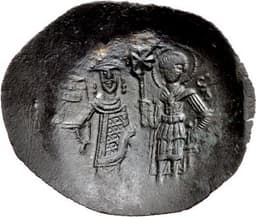
Ivan Asen II
Emperor · Medieval
63.3Total
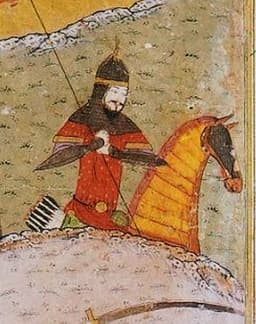
Tokhtamysh
Emperor · Medieval
60.8Total
Basic Information
Born
1190
1342
Died
1241
1406
Era
Medieval
Medieval
Nationality
Bulgaria
Golden Horde
Occupation
Emperor
Emperor
Civilization
Western
Eastern
Score Comparison
Military (10%)
78.0
74.7
Political (20%)
72.0
68.0
Influence (20%)
61.0
61.0
Legacy (20%)
52.0
49.2
Leadership (15%)
66.0
65.0
Strategy (15%)
65.4
58.0
TOTAL
63.3
60.8
Ivan Asen II — Complete Timeline
1218 AD
Expansion of the Second Bulgarian EmpireWar◆ Major
Ivan Asen II expanded Bulgarian territory through campaigns against the Latin Empire and the Kingdom of Thessalonica. He captured Adrianople and extended Bulgarian influence into the Peloponnese.
ExpansionLatin EmpireThessalonica
Impact: regional
1230 AD
Battle of KlokotnitsaWar
Ivan Asen II defeated the Despotate of Epirus at Klokotnitsa. The victory restored Bulgarian control over Thrace, Macedonia, and Albania, making Bulgaria the dominant power in the Balkans.
BattleBalkan DominanceEpirus
Impact: regional
Construction of the Church of the Holy Forty MartyrsCultural
Ivan Asen II built the Church of the Holy Forty Martyrs in Veliko Tarnovo to commemorate his victory at Klokotnitsa. The church became a major cultural and religious monument.
ArchitectureChurchMonument
Impact: nationalconstructive
1235 AD
Restoration of the Bulgarian PatriarchatePolitical Action◆ Major
Ivan Asen II secured recognition of the Bulgarian Patriarchate from the Ecumenical Patriarch of Constantinople. This restored the autocephalous status of the Bulgarian Church, enhancing national prestige.
ChurchPatriarchateReligious Independence
Impact: regionalconstructive
Tokhtamysh — Complete Timeline
1380 AD
Reunification of the Golden HordePolitical Action◆ Major
Tokhtamysh, with the support of Timur, defeated the rebellious general Mamai and reunified the Golden Horde under his rule. He restored the Horde's authority over the Russian principalities, ending a period of fragmentation.
Golden HordeMamaiReunification
Impact: regionalconstructive
1382 AD
Sack of MoscowWar◆ Major
Tokhtamysh led a campaign against the Grand Duchy of Moscow. He besieged and captured Moscow, burning the city and massacring its inhabitants. The victory reasserted Mongol dominance over the Russian principalities.
MoscowRussiaSack
Impact: regionaldestructive
1387 AD
War with TimurWar◆ Major
Tokhtamysh invaded Timur's territory in Transoxiana, starting a war between the two Mongol rulers. Timur retaliated by invading the Golden Horde, defeating Tokhtamysh at the Battle of the Kondurcha River in 1391.
TimurTransoxianaKondurcha
Impact: regional
1395 AD
Battle of the Terek RiverWar
Timur decisively defeated Tokhtamysh at the Battle of the Terek River. The victory destroyed Tokhtamysh's army and led to the sack of Sarai, the capital of the Golden Horde. Tokhtamysh fled and never regained power.
TimurTerek RiverSarai
Impact: regionaltragic
1406 AD
Death in ExilePolitical Action
After his defeat by Timur, Tokhtamysh fled to the Grand Duchy of Lithuania. He was killed in a skirmish with a rival Mongol faction near Tyumen. His death marked the end of the last attempt to reunite the Golden Horde.
ExileLithuaniaTyumen
Impact: regionaltragic
Expert Analysis
Origins
Ivan Asen II (born c. 1190) was the son of Tsar Ivan Asen I, a founder of the Second Bulgarian Empire. He grew up in the tumultuous aftermath of the 1185 uprising against Byzantine rule. His family had established a new dynasty, but internal strife and external threats marked his early years. He likely received training in military and statecraft, preparing him for rule. Tokhtamysh (born c. 1340) was a descendant of Genghis Khan through Jochi's line. He spent his youth in exile under the protection of the powerful Central Asian conqueror Timur. His early life was shaped by the fragmentation of the Golden Horde after the death of Khan Jani Beg. Tokhtamysh's background was one of Mongol clan politics, where alliances and betrayals were common.
Rise to Power
Ivan Asen II ascended the throne after a coup in 1218 that overthrew his cousin Boril. He initially faced a fragmented kingdom and threats from the Latin Empire, Epirus, and Hungary. His turning point came in 1230 at the Battle of Klokotnitsa, where he decisively defeated Theodore Komnenos Doukas of Epirus. This victory allowed him to reclaim Thrace, Macedonia, and Albania, making Bulgaria the dominant power in the Balkans. Tokhtamysh's rise was facilitated by Timur, who supported him as a puppet to challenge the rebellious general Mamai. In 1378, Tokhtamysh defeated Mamai at the Battle of the Kalka River, reuniting the Golden Horde under his rule. He then consolidated power by purging rivals and launching campaigns against Russian principalities.
Leadership & Governance
Ivan Asen II ruled with a focus on restoration and stability. He reestablished the Bulgarian Patriarchate in 1235, gaining autocephaly from Constantinople, which bolstered national identity. He built the Church of the Holy Forty Martyrs in Veliko Tarnovo as a symbol of his victory. His governance was characterized by diplomatic marriages and alliances, such as marrying Anna Maria of Hungary. Tokhtamysh, by contrast, relied on military force and Mongol traditions. He attempted to centralize the Golden Horde, imposing tribute on Russian states and launching the sack of Moscow in 1382. His rule was less about building institutions than maintaining control through fear and patronage. Ivan Asen II's leadership score of 66.0 reflects his effective but localized governance, while Tokhtamysh's 65.0 shows similar competence in a more volatile environment.
Triumph & Tragedy
Ivan Asen II's greatest triumph was the Battle of Klokotnitsa (1230), which expanded Bulgaria to its medieval zenith. He also secured recognition of the Bulgarian Patriarchate, a major diplomatic achievement. However, his later years saw overextension; he failed to capture Constantinople from the Latins, and after his death in 1241, Bulgaria quickly declined under Mongol invasions. Tokhtamysh's peak was the sack of Moscow (1382), which reasserted Mongol dominance over Russia. He briefly reunited the Horde from the Volga to the Dnieper. His tragedy was the war with Timur, provoked by his own invasion of Transoxiana. Timur's campaign (1395-1396) destroyed Tokhtamysh's army at the Terek River, sacked Sarai, and ended his rule. Tokhtamysh fled to Lithuania and was killed in exile around 1406. Ivan Asen II's military score of 78.0 slightly exceeds Tokhtamysh's 74.7, reflecting more decisive victories.
Character & Destiny
Ivan Asen II was pragmatic and statesmanlike, focusing on rebuilding rather than conquest. His decision to secure church independence showed long-term vision. However, his reliance on diplomacy over force left Bulgaria vulnerable after his death. Tokhtamysh was ambitious and reckless, exemplified by his attack on Timur despite initial patronage. His character was shaped by the Mongol ethos of conquest, leading to overreach. Historical assessments note that Ivan Asen II's Bulgaria was a stable, prosperous state, while Tokhtamysh's Horde remained fractious. Both leaders' fates were tied to their ability to manage external threats: Ivan Asen II faced the Mongols; Tokhtamysh faced Timur. Ivan Asen II's strategy score of 65.4 contrasts with Tokhtamysh's 58.0, indicating better strategic planning.
Legacy
Ivan Asen II's legacy is as the restorer of the Bulgarian Empire. The Church of the Holy Forty Martyrs remains a national symbol. His reign is remembered as a golden age in Bulgarian history, though it lasted only two decades. Tokhtamysh's legacy is more ambiguous; he is seen as a figure who briefly revived the Golden Horde but precipitated its decline by provoking Timur. The Horde never fully recovered from Timur's invasion. In terms of lasting impact, Ivan Asen II's influence on Bulgarian identity is profound, with his scores: Influence 61.0, Legacy 52.0. Tokhtamysh's comparable scores (Influence 61.0, Legacy 49.2) show similar immediate impact but less endurance. Neither figure transformed global history, but Ivan Asen II's restoration of a national church had cultural longevity.
Conclusion
Ivan Asen II had a greater overall impact than Tokhtamysh. His military and political achievements (total score 63.3 vs 60.8) were more durable, as Bulgaria's identity persisted despite Mongol domination. Tokhtamysh's brief reunification of the Horde was undone by his own errors. While both were significant regional figures, Ivan Asen II's restoration of the Bulgarian Patriarchate and his victory at Klokotnitsa had a lasting cultural and political effect that outlasted Tokhtamysh's ephemeral empire. The data supports this: Ivan Asen II's higher scores in military (78.0 vs 74.7), strategy (65.4 vs 58.0), and legacy (52.0 vs 49.2) indicate a more effective and influential leader.
Rankings
🥇
Ivan Asen IILeader
Mil: 78.0Pol: 72.0Inf: 61.0
63.3
🥈
Tokhtamysh
Mil: 74.7Pol: 68.0Inf: 61.0
60.8
+2.5 behind
How This Comparison Works
Algorithm
Each figure is scored on 6 dimensions (0—100 scale) based on structured historical data: Military (10%), Political (20%), Influence (20%), Legacy (20%), Leadership (15%), Strategy (15%). The weighted total produces the final ranking.
Data Sources
Scores are computed from structured sub-indicators in the database. Scale factors adjust for era (Ancient ×0.85, Modern ×1.0) and civilization size (Eastern ×1.05, Other ×0.80) to account for differences in population and military scale.
Maximum 3 Figures
Comparisons are limited to 2—3 figures to ensure readability and statistical meaningfulness.
Error Margins
±5 points per dimension — Sub-scores are derived from historical records with inherent uncertainty. Two figures within 5 points on a dimension should be considered roughly equivalent in that area.
Total Score Accuracy
±3 points overall — The weighted combination of 6 dimensions produces a total score with approximately ±3 points of uncertainty. Differences of less than 3 points are not statistically significant— the figures are effectively tied.
Known Limitations
- Historical records are incomplete and uneven across civilizations
- Figures from oral-tradition societies may be underrepresented
- Occupation labels can misclassify multi-role figures
- Scores measure capability and impact, not moral character
- Quantitative scoring is a comparison tool, not absolute truth
Capability Radar
Military (10%) — Battles & Warfare
Battles
75
75
Win Rate
85
70
Expansion
75
75
Political (20%) — Governance & Reform
Reform
65
55
Diplomacy
75
65
Economy
60
55
Influence (20%) — Cultural & Global Reach
Cultural
55
45
Global
40
50
Legacy (20%) — Historical Impact
Historical
60
55
Longevity
50
40
Leadership (15%) — Power & Stability
Tenure
70
60
Stability
65
40
Strategy (15%) — Tactics & Innovation
Strategy
80
70
Tactics
70
65
Reform
60
60
Similar Comparisons
Comments & Discussion
No comments yet. Be the first to share your thoughts!