Loading...
Al-Mansur vs Tokhtamysh
Al-Mansur leads by 3.9 pts · 2 figures compared
…
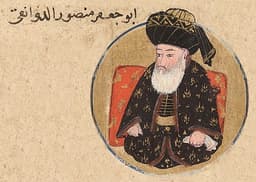
Al-Mansur
Emperor · Medieval
64.7Total
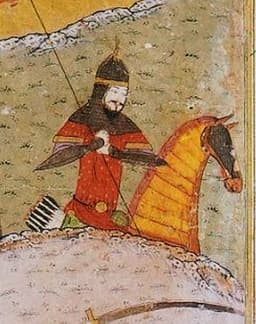
Tokhtamysh
Emperor · Medieval
60.8Total
Basic Information
Born
714
1342
Died
775
1406
Era
Medieval
Medieval
Nationality
Abbasid Caliphate
Golden Horde
Occupation
Emperor
Emperor
Civilization
Middle Eastern
Eastern
Score Comparison
Military (10%)
65.0
74.7
Political (20%)
62.7
68.0
Influence (20%)
65.0
61.0
Legacy (20%)
65.0
49.2
Leadership (15%)
72.0
65.0
Strategy (15%)
55.0
58.0
TOTAL
64.7
60.8
Al-Mansur — Complete Timeline
750 AD
Administrative ReformsReform◆ Major
Al-Mansur established a centralized bureaucracy modeled on Sassanid practices, creating the office of the vizier and a postal service (barid). These reforms improved tax collection, communication, and governance across the vast Abbasid Empire.
BureaucracyGovernanceAdministration
Impact: regionalconstructive
Patronage of Translation MovementCultural◆ Major
Al-Mansur sponsored the translation of Greek, Persian, and Indian scientific and philosophical works into Arabic. This initiative laid the foundation for the Abbasid translation movement, which later flourished under the House of Wisdom and preserved classical knowledge.
TranslationScienceCulture
Impact: globalconstructive
754 AD
Consolidation of Abbasid PowerPolitical Action◆ Major
After the death of his brother As-Saffah, Al-Mansur became the second Abbasid caliph. He systematically eliminated rivals, including the powerful Barmakid family and other potential claimants, to secure his rule and establish the Abbasid dynasty as the sole ruling house.
Dynastic ConsolidationPurgePower Struggle
Impact: regionaldestructive
762 AD
Suppression of the Alid RevoltWar◆ Major
Al-Mansur faced a major rebellion led by Muhammad al-Nafs al-Zakiyya, a descendant of Ali, who claimed the caliphate. The revolt was crushed by Abbasid forces, and Muhammad was killed, solidifying Abbasid control against Alid claimants.
RebellionAlid RevoltCivil War
Impact: regionaldestructive
Foundation of BaghdadPolitical Action◆ Major
Al-Mansur ordered the construction of the new capital city, Baghdad, on the west bank of the Tigris River. The city was designed as a circular 'Round City' and became the administrative and cultural center of the Abbasid Caliphate, replacing the previous capital at Al-Hashimiya.
Urban PlanningCapital CityAbbasid Caliphate
Impact: globalconstructive
Tokhtamysh — Complete Timeline
1380 AD
Reunification of the Golden HordePolitical Action◆ Major
Tokhtamysh, with the support of Timur, defeated the rebellious general Mamai and reunified the Golden Horde under his rule. He restored the Horde's authority over the Russian principalities, ending a period of fragmentation.
Golden HordeMamaiReunification
Impact: regionalconstructive
1382 AD
Sack of MoscowWar◆ Major
Tokhtamysh led a campaign against the Grand Duchy of Moscow. He besieged and captured Moscow, burning the city and massacring its inhabitants. The victory reasserted Mongol dominance over the Russian principalities.
MoscowRussiaSack
Impact: regionaldestructive
1387 AD
War with TimurWar◆ Major
Tokhtamysh invaded Timur's territory in Transoxiana, starting a war between the two Mongol rulers. Timur retaliated by invading the Golden Horde, defeating Tokhtamysh at the Battle of the Kondurcha River in 1391.
TimurTransoxianaKondurcha
Impact: regional
1395 AD
Battle of the Terek RiverWar
Timur decisively defeated Tokhtamysh at the Battle of the Terek River. The victory destroyed Tokhtamysh's army and led to the sack of Sarai, the capital of the Golden Horde. Tokhtamysh fled and never regained power.
TimurTerek RiverSarai
Impact: regionaltragic
1406 AD
Death in ExilePolitical Action
After his defeat by Timur, Tokhtamysh fled to the Grand Duchy of Lithuania. He was killed in a skirmish with a rival Mongol faction near Tyumen. His death marked the end of the last attempt to reunite the Golden Horde.
ExileLithuaniaTyumen
Impact: regionaltragic
Expert Analysis
Origins
Al-Mansur, born in 714 CE in Humeima, was the son of Muhammad ibn Ali, a descendant of the Prophet Muhammad's uncle Abbas. His family led the Abbasid movement against the Umayyad Caliphate. He was educated in Islamic law and administration, learning from his father and brother. Tokhtamysh, born around 1342 CE, was a descendant of Genghis Khan through Jochi's lineage. His early life is obscure, but he was a prince of the White Horde, a segment of the Mongol Empire. He grew up amidst the fracturing of the Golden Horde after the death of Jani Beg.
Rise to Power
Al-Mansur rose to power after his brother As-Saffah died in 754 CE. As-Saffah had established the Abbasid Caliphate after the Abbasid Revolution, but Al-Mansur consolidated control. He eliminated rivals, including the powerful Barmakid family and the Alid rebels. In 762 CE, he founded Baghdad as his new capital, a move that centralized Abbasid authority and symbolized his reign. Tokhtamysh rose with the help of Timur. In 1378 CE, Timur supported Tokhtamysh to defeat Mamai, the powerful general who had dominated the Golden Horde. By 1380 CE, Tokhtamysh reunified the Horde, restoring its authority over Russian principalities. He then turned on Timur, invading Transoxiana in 1387 CE, leading to war.
Leadership & Governance
Al-Mansur established a centralized bureaucracy modeled on Sassanid practices. He created the office of the vizier, a postal service (barid), and a system of provincial governors. He sponsored the translation of Greek, Persian, and Indian works, fostering the Abbasid Translation Movement. His governance was autocratic but efficient, with a focus on stability. Tokhtamysh ruled the Golden Horde as a traditional Mongol khan, relying on tribal alliances and military force. He restored the Horde's tribute system over Russian states, as seen in the Sack of Moscow in 1382 CE, where he burned the city to enforce submission. His governance was less administrative than Al-Mansur's, more focused on raids and tribute.
Triumph & Tragedy
Al-Mansur's greatest triumph was founding Baghdad, which became a global center of learning and trade. He successfully suppressed the Alid revolt in 762-763 CE, securing Abbasid rule. His tragedy was his ruthless elimination of allies, like the Barmakids, which created distrust. He also faced ongoing revolts, such as in Khorasan. Tokhtamysh's triumph was reuniting the Golden Horde and sacking Moscow, restoring Mongol dominance. His tragedy was his defeat by Timur at the Battle of the Terek River in 1395 CE, which destroyed his army and led to the sack of Sarai. He died in exile, killed in a skirmish in 1406 CE. His legacy was undone by Timur's devastation.
Character & Destiny
Al-Mansur was calculating and paranoid, known for his piety and ruthlessness. He personally oversaw the construction of Baghdad, showing his attention to detail. His character created stability but also fear. Tokhtamysh was ambitious and impulsive, his overreach against Timur leading to his downfall. Historical assessments note Tokhtamysh's inability to secure lasting alliances. Al-Mansur's scores reflect his political acumen: Military 65.0, Political 62.7, Leadership 72.0. Tokhtamysh scored higher in military (74.7) but lower in leadership (65.0) and legacy (49.2).
Legacy
Al-Mansur's legacy endures through Baghdad, the Abbasid caliphate's golden age, and the translation movement that preserved classical knowledge. His administrative reforms influenced Islamic governance for centuries. Tokhtamysh's legacy is more mixed: he briefly reunited the Golden Horde, but his defeat by Timur accelerated the Horde's fragmentation. He is remembered as a failed restorer. Al-Mansur's influence score is 65.0 against Tokhtamysh's 61.0; legacy 65.0 vs 49.2.
Conclusion
Al-Mansur had greater lasting impact. While Tokhtamysh scored higher in military (74.7 vs 65.0), Al-Mansur's political and leadership skills (62.7 vs 68.0 political? Actually Tokhtamysh 68.0, Al-Mansur 62.7) but Al-Mansur's total score of 64.7 beats Tokhtamysh's 60.8. More importantly, Al-Mansur's foundation of Baghdad and patronage of learning shaped civilization, while Tokhtamysh's reunification was ephemeral. Al-Mansur's legacy is concrete and enduring; Tokhtamysh's was undone by his own ambition.
Rankings
🥇
Al-MansurLeader
Mil: 65.0Pol: 62.7Inf: 65.0
64.7
🥈
Tokhtamysh
Mil: 74.7Pol: 68.0Inf: 61.0
60.8
+3.9 behind
How This Comparison Works
Algorithm
Each figure is scored on 6 dimensions (0—100 scale) based on structured historical data: Military (10%), Political (20%), Influence (20%), Legacy (20%), Leadership (15%), Strategy (15%). The weighted total produces the final ranking.
Data Sources
Scores are computed from structured sub-indicators in the database. Scale factors adjust for era (Ancient ×0.85, Modern ×1.0) and civilization size (Eastern ×1.05, Other ×0.80) to account for differences in population and military scale.
Maximum 3 Figures
Comparisons are limited to 2—3 figures to ensure readability and statistical meaningfulness.
Error Margins
±5 points per dimension — Sub-scores are derived from historical records with inherent uncertainty. Two figures within 5 points on a dimension should be considered roughly equivalent in that area.
Total Score Accuracy
±3 points overall — The weighted combination of 6 dimensions produces a total score with approximately ±3 points of uncertainty. Differences of less than 3 points are not statistically significant— the figures are effectively tied.
Known Limitations
- Historical records are incomplete and uneven across civilizations
- Figures from oral-tradition societies may be underrepresented
- Occupation labels can misclassify multi-role figures
- Scores measure capability and impact, not moral character
- Quantitative scoring is a comparison tool, not absolute truth
Capability Radar
Military (10%) — Battles & Warfare
Battles
60
75
Win Rate
65
70
Expansion
70
75
Political (20%) — Governance & Reform
Reform
85
55
Diplomacy
80
65
Economy
85
55
Influence (20%) — Cultural & Global Reach
Cultural
75
45
Global
75
50
Legacy (20%) — Historical Impact
Historical
80
55
Longevity
85
40
Leadership (15%) — Power & Stability
Tenure
75
60
Stability
70
40
Strategy (15%) — Tactics & Innovation
Strategy
70
70
Tactics
55
65
Reform
75
60
Similar Comparisons
Comments & Discussion
No comments yet. Be the first to share your thoughts!