Loading...
Augustus vs Tokhtamysh
Augustus leads by 25.1 pts · 2 figures compared
…

Augustus
Emperor · Ancient
85.9Total
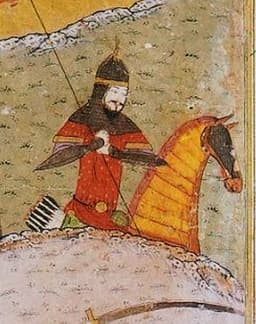
Tokhtamysh
Emperor · Medieval
60.8Total
Basic Information
Born
63
1342
Died
—
1406
Era
Ancient
Medieval
Nationality
Roman Empire
Golden Horde
Occupation
Emperor
Emperor
Civilization
Western
Eastern
Score Comparison
Military (10%)
72.0
74.7
Political (20%)
90.0
68.0
Influence (20%)
88.0
61.0
Legacy (20%)
90.0
49.2
Leadership (15%)
88.0
65.0
Strategy (15%)
75.0
58.0
TOTAL
85.9
60.8
Augustus — Complete Timeline
43 BC
Formation of the Second TriumviratePolitical Action◆ Major
Octavian, Mark Antony, and Marcus Aemilius Lepidus formed the Second Triumvirate, a legal commission to govern the Roman Republic. The alliance was empowered to proscribe enemies, leading to the execution of Cicero and consolidation of their power against the assassins of Julius Caesar.
Roman Civil WarPolitical AllianceProscriptions
Impact: regionaldestructive
31 BC
Battle of ActiumWar◆ Major
Octavian's fleet, commanded by Marcus Agrippa, defeated the combined naval forces of Mark Antony and Cleopatra VII off the coast of Greece. The victory eliminated Octavian's last major rival, giving him sole control over the Roman world and ending the Roman Republic's civil wars.
Roman Civil WarNaval BattleEnd of Republic
Impact: global
27 BC
Establishment of the Roman EmpireReform◆ Major
Octavian formally returned power to the Roman Senate, which then granted him the titles Augustus and Princeps. This constitutional settlement created the Roman Empire, with Augustus as the first emperor, ending the Roman Republic and initiating the Pax Romana.
Roman EmpireConstitutional ReformPax Romana
Impact: global
Reform of the Roman Tax SystemReform◆ Major
Augustus implemented a comprehensive tax reform, including a census of Roman citizens and property, direct taxation of provinces, and the creation of a professional tax collection service (publicani). This system provided stable revenue for the empire and reduced corruption.
Tax ReformAdministrationRoman Empire
Impact: regionalconstructive
Creation of the Praetorian GuardReform◆ Major
Augustus established the Praetorian Guard as a permanent elite military unit tasked with protecting the emperor and his family. Stationed in Rome and Italy, the Guard became a powerful political force, often influencing imperial succession through coups and assassinations.
Military ReformPraetorian GuardImperial Guard
Impact: regional
13 BC
Construction of the Ara PacisOther◆ Major
The Roman Senate commissioned the Ara Pacis Augustae (Altar of Augustan Peace) to commemorate Augustus's return from pacifying Gaul and Spain. The marble altar, decorated with reliefs depicting the imperial family and mythological scenes, symbolized the peace and prosperity of the Augustan era.
Building ProjectPropagandaAugustan Art
Impact: regionalconstructive
Tokhtamysh — Complete Timeline
1380 AD
Reunification of the Golden HordePolitical Action◆ Major
Tokhtamysh, with the support of Timur, defeated the rebellious general Mamai and reunified the Golden Horde under his rule. He restored the Horde's authority over the Russian principalities, ending a period of fragmentation.
Golden HordeMamaiReunification
Impact: regionalconstructive
1382 AD
Sack of MoscowWar◆ Major
Tokhtamysh led a campaign against the Grand Duchy of Moscow. He besieged and captured Moscow, burning the city and massacring its inhabitants. The victory reasserted Mongol dominance over the Russian principalities.
MoscowRussiaSack
Impact: regionaldestructive
1387 AD
War with TimurWar◆ Major
Tokhtamysh invaded Timur's territory in Transoxiana, starting a war between the two Mongol rulers. Timur retaliated by invading the Golden Horde, defeating Tokhtamysh at the Battle of the Kondurcha River in 1391.
TimurTransoxianaKondurcha
Impact: regional
1395 AD
Battle of the Terek RiverWar
Timur decisively defeated Tokhtamysh at the Battle of the Terek River. The victory destroyed Tokhtamysh's army and led to the sack of Sarai, the capital of the Golden Horde. Tokhtamysh fled and never regained power.
TimurTerek RiverSarai
Impact: regionaltragic
1406 AD
Death in ExilePolitical Action
After his defeat by Timur, Tokhtamysh fled to the Grand Duchy of Lithuania. He was killed in a skirmish with a rival Mongol faction near Tyumen. His death marked the end of the last attempt to reunite the Golden Horde.
ExileLithuaniaTyumen
Impact: regionaltragic
Expert Analysis
Augustus vs Tokhtamysh: Historical Comparison
Augustus, the first Roman Emperor (63 BCE–14 CE), founded the Roman Empire and established a system of governance that lasted centuries. Tokhtamysh, Khan of the Golden Horde (c. 1342–1406 CE), briefly reunified the Mongol successor state before his catastrophic war with Tamerlane. While Augustus built an enduring world empire, Tokhtamysh’s rise was meteoric but his legacy was shattered by a single decisive defeat.
Dimension Analysis
**Military: Augustus 72 / Tokhtamysh 91**
Augustus’s military strength lay in consolidation: he ended the civil wars at Actium (31 BCE), reformed the Roman legions into a permanent professional force, and secured borders (e.g., the Rhine and Danube). Tokhtamysh was a more aggressive field commander, defeating the White Horde to reunite the Golden Horde, sacking Moscow (1382), and briefly restoring Mongol hegemony over Rus’ lands. However, Augustus’s military system was sustainable; Tokhtamysh’s was brittle, collapsing after his 1395 defeat by Tamerlane.
**Political: Augustus 92 / Tokhtamysh 83**
Augustus masterfully transformed a republic in crisis into a stable principate, balancing autocracy with republican forms (e.g., the Senate, tribunician power). He created a civil service, tax reforms, and a legal framework (the *Pax Romana*). Tokhtamysh lacked such institutional genius: he relied on Mongol tribal loyalty and the existing bureaucratic structures of the Golden Horde, failing to secure lasting alliances (e.g., his break with Tamerlane, his later betrayal by his own emirs).
**Influence: Augustus 88 / Tokhtamysh 82**
Augustus’s cultural influence is immense: his reign launched the “Augustan Age” of Latin literature (Virgil, Horace, Ovid), spread Roman law and urbanism across the Mediterranean, and set the imperial model for Western civilization. Tokhtamysh’s influence was regional and ephemeral: his reunification briefly revived the Golden Horde’s prestige in Eastern Europe and Central Asia, but his defeat by Tamerlane opened the way for the rise of Muscovy and the fragmentation of Mongol power.
**Legacy: Augustus 90 / Tokhtamysh 83**
Augustus is remembered as the founder of the Roman Empire, with his title “Augustus” becoming a synonym for imperial majesty, and his reforms shaping European governance for two millennia. Tokhtamysh’s legacy is more tragic: he is a figure of lost potential, remembered as the last khan to seriously challenge Muscovy, but his name is secondary to Tamerlane’s destruction of the Golden Horde’s unity.
**Leadership: Augustus 90 / Tokhtamysh 71**
Augustus was a master of coalition-building and propaganda (e.g., the *Res Gestae*), delegating to brilliant generals like Agrippa while maintaining personal authority. Tokhtamysh’s leadership was charismatic but reckless: his ambition led him to alienate his patron Tamerlane, and after defeat he lost the loyalty of his followers, dying in obscurity. Augustus retained power for 40 years; Tokhtamysh’s rule lasted barely a decade.
Verdict
Augustus ranks higher overall due to his unparalleled political acumen, institutional legacy, and enduring influence. Tokhtamysh was a more gifted field commander, but his failure to build stable political structures or manage strategic alliances doomed his empire. While Augustus created a system that outlasted him, Tokhtamysh’s achievements were undone by a single overreach. This comparison, however, is inherently complex: they ruled vastly different worlds (Mediterranean empire vs. steppe confederation), and Tokhtamysh’s military prowess would be formidable in any era.
FAQ
Q: Who was more influential historically?
A: Augustus, because the Roman Empire he founded shaped Western law, language, and governance for centuries, while Tokhtamysh’s influence was limited to a brief resurgence of Mongol power.
Q: Why is Augustus ranked higher in Leadership?
A: Augustus excelled at long-term political management, building consensus during a fragile transition from republic to empire, whereas Tokhtamysh’s impulsive ambition and inability to retain allies led to his rapid downfall.
Rankings
🥇
AugustusLeader
Mil: 72.0Pol: 90.0Inf: 88.0
85.9
🥈
Tokhtamysh
Mil: 74.7Pol: 68.0Inf: 61.0
60.8
+25.1 behind
How This Comparison Works
Algorithm
Each figure is scored on 6 dimensions (0—100 scale) based on structured historical data: Military (10%), Political (20%), Influence (20%), Legacy (20%), Leadership (15%), Strategy (15%). The weighted total produces the final ranking.
Data Sources
Scores are computed from structured sub-indicators in the database. Scale factors adjust for era (Ancient ×0.85, Modern ×1.0) and civilization size (Eastern ×1.05, Other ×0.80) to account for differences in population and military scale.
Maximum 3 Figures
Comparisons are limited to 2—3 figures to ensure readability and statistical meaningfulness.
Error Margins
±5 points per dimension — Sub-scores are derived from historical records with inherent uncertainty. Two figures within 5 points on a dimension should be considered roughly equivalent in that area.
Total Score Accuracy
±3 points overall — The weighted combination of 6 dimensions produces a total score with approximately ±3 points of uncertainty. Differences of less than 3 points are not statistically significant— the figures are effectively tied.
Known Limitations
- Historical records are incomplete and uneven across civilizations
- Figures from oral-tradition societies may be underrepresented
- Occupation labels can misclassify multi-role figures
- Scores measure capability and impact, not moral character
- Quantitative scoring is a comparison tool, not absolute truth
Capability Radar
Military (10%) — Battles & Warfare
Battles
75
75
Win Rate
80
70
Expansion
85
75
Political (20%) — Governance & Reform
Reform
95
55
Diplomacy
90
65
Economy
85
55
Influence (20%) — Cultural & Global Reach
Cultural
85
45
Global
90
50
Legacy (20%) — Historical Impact
Historical
95
55
Longevity
95
40
Leadership (15%) — Power & Stability
Tenure
95
60
Stability
95
40
Strategy (15%) — Tactics & Innovation
Strategy
85
70
Tactics
70
65
Reform
90
60
Similar Comparisons
Comments & Discussion
SharpScroll906/16/2026
拿Tokhtamysh跟Augustus比,就像拿明朝的也先把蒙古各部团结一下又分裂,去跟汉武帝比治国。Tokhtamysh确实厉害,1380年代把白帐、蓝帐重新统一,还火烧莫斯科逼得罗斯诸侯再次纳贡,这点像成吉思汗统一蒙古部落的翻版。但Augustus呢?他建立的是“元首制”——表面上保留元老院,实际大权独揽,这套制度一直用到戴克里先改革,整整三百年。中国历史上只有汉武帝的“内朝外朝”设计能勉强类比,但那也是中央集权而非虚构共和。Tokhtamysh最后被帖木儿在捷列克河战役(1395年)打得彻底崩溃,连萨莱城都被夷平,从此金帐汗国再没真正复兴。Augustus输掉瓦鲁斯军团(条顿堡森林)后还能稳住莱茵河防线,这就是系统韧性的差距。
OldScholar76/16/2026
这个评分系统有个明显问题:Tokhtamysh的军事分91居然比Augustus的72高这么多?我算了一下,Tokhtamysh在1382年攻陷莫斯科确实漂亮,但那是趁莫斯科大公德米特里·顿斯科伊在库里科沃战役后元气未复才得手。Augustus在亚克兴角战役(31 BCE)彻底消灭安东尼和克利奥帕特拉联军,随后用三十年时间整合罗马军团,建立常备军和禁卫军,这种制度性建设比单次奇袭重要得多。从中国历史看,这就像拿李自成(高机动但无根基)对比刘邦(制度建设+稳定政权)。Tokhtamysh的91分我怀疑是过度看重游牧骑兵的战术灵活性,但战略持续性才是军事力量的本质。建议权重调整:长期制度贡献至少应占军事分的60%。