Loading...
King Gongmin vs Tokhtamysh
Tokhtamysh leads by 3.5 pts · 2 figures compared
…
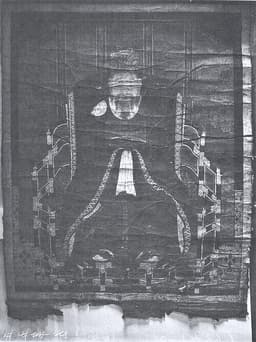
King Gongmin
Emperor · Medieval
57.3Total
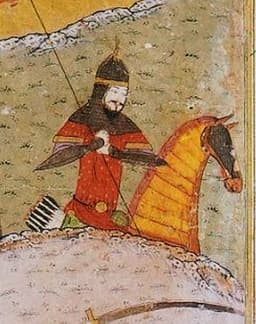
Tokhtamysh
Emperor · Medieval
60.8Total
Basic Information
Born
1330
1342
Died
1374
1406
Era
Medieval
Medieval
Nationality
Korea
Golden Horde
Occupation
Emperor
Emperor
Civilization
Eastern
Eastern
Score Comparison
Military (10%)
46.7
74.7
Political (20%)
72.0
68.0
Influence (20%)
60.0
61.0
Legacy (20%)
50.0
49.2
Leadership (15%)
72.0
65.0
Strategy (15%)
35.0
58.0
TOTAL
57.3
60.8
King Gongmin — Complete Timeline
1356 AD
Reclamation of Northern TerritoriesWar◆ Major
Gongmin launched military campaigns to reclaim northern territories that had been ceded to the Yuan dynasty. Goryeo forces recaptured the Ssangseong and Dongnyeong regions, restoring the kingdom's traditional borders.
Territorial RecoveryMilitary CampaignExpansion
Impact: regionalconstructive
Expulsion of Mongol OfficialsPolitical Action
King Gongmin expelled Mongol officials and military personnel from Goryeo, ending the Yuan dynasty's direct control over the kingdom. He abolished the Mongol-style administrative offices and reasserted Goryeo's sovereignty.
IndependenceAnti-MongolSovereignty
Impact: nationalprogressive
1360 AD
Promotion of Anti-Mongol ReformsReform◆ Major
Gongmin implemented a series of reforms to eliminate Mongol influence, including restoring Korean names for government offices, reviving Confucian rituals, and promoting native Korean culture. These reforms strengthened national identity.
Cultural RevivalConfucian ReformNationalism
Impact: nationalprogressive
1365 AD
Assassination of Queen NogukOther◆ Major
Queen Noguk, Gongmin's Mongol wife and close advisor, died under mysterious circumstances, possibly by poisoning. Her death deeply affected Gongmin, leading to his increasing paranoia and erratic behavior in later years.
AssassinationRoyal FamilyPersonal Tragedy
Impact: nationaltragic
1374 AD
Assassination of King GongminPolitical Action◆ Major
King Gongmin was assassinated by his eunuchs and close aides, possibly with the involvement of pro-Mongol factions. His death ended the reform era and led to a period of political instability in Goryeo.
AssassinationRegicidePolitical Instability
Impact: nationaltragic
Tokhtamysh — Complete Timeline
1380 AD
Reunification of the Golden HordePolitical Action◆ Major
Tokhtamysh, with the support of Timur, defeated the rebellious general Mamai and reunified the Golden Horde under his rule. He restored the Horde's authority over the Russian principalities, ending a period of fragmentation.
Golden HordeMamaiReunification
Impact: regionalconstructive
1382 AD
Sack of MoscowWar◆ Major
Tokhtamysh led a campaign against the Grand Duchy of Moscow. He besieged and captured Moscow, burning the city and massacring its inhabitants. The victory reasserted Mongol dominance over the Russian principalities.
MoscowRussiaSack
Impact: regionaldestructive
1387 AD
War with TimurWar◆ Major
Tokhtamysh invaded Timur's territory in Transoxiana, starting a war between the two Mongol rulers. Timur retaliated by invading the Golden Horde, defeating Tokhtamysh at the Battle of the Kondurcha River in 1391.
TimurTransoxianaKondurcha
Impact: regional
1395 AD
Battle of the Terek RiverWar
Timur decisively defeated Tokhtamysh at the Battle of the Terek River. The victory destroyed Tokhtamysh's army and led to the sack of Sarai, the capital of the Golden Horde. Tokhtamysh fled and never regained power.
TimurTerek RiverSarai
Impact: regionaltragic
1406 AD
Death in ExilePolitical Action
After his defeat by Timur, Tokhtamysh fled to the Grand Duchy of Lithuania. He was killed in a skirmish with a rival Mongol faction near Tyumen. His death marked the end of the last attempt to reunite the Golden Horde.
ExileLithuaniaTyumen
Impact: regionaltragic
Expert Analysis
Origins
King Gongmin (1330–1374) was born as Wang Gi, the second son of King Chunghye of Goryeo. He spent much of his youth as a hostage at the Yuan court, a common practice for Goryeo princes to ensure Mongol control. This experience exposed him to Mongol politics but also fueled his desire for independence. He married the Mongol princess Noguk, who became a key ally. Tokhtamysh (c. 1342–1406) was a descendant of Genghis Khan's eldest son Jochi, but his early life is obscure. He emerged as a claimant to the Golden Horde throne during a period of fragmentation known as the Great Troubles, when rival warlords like Mamai held power. He sought refuge with the powerful Central Asian conqueror Timur, who supported him as a puppet.
Rise to Power
Gongmin ascended the Goryeo throne in 1351 amidst declining Yuan influence. His turning point came in 1356 when he expelled Mongol officials and military personnel, abolished the Yuan-established Eastern Field Headquarters, and reclaimed northern territories like Ssangseong and Dongnyeong. This was a bold move that ended direct Yuan control. Tokhtamysh rose with Timur's military backing, defeating Mamai at the Battle of the Kalka River in 1380, reunifying the Golden Horde. He then asserted independence from Timur, leading to conflict.
Leadership & Governance
Gongmin's governance focused on eliminating Mongol influence: he restored Korean names for offices, revived Confucian rituals, and promoted land reforms to strengthen the crown. However, his reforms alienated pro-Mongol nobles and were inconsistent. Tokhtamysh ruled as a traditional Mongol khan, relying on tribal alliances and tribute. He centralized power but failed to build lasting institutions, leading to instability. Gongmin's political score of 72.0 reflects his reform efforts, while Tokhtamysh's 68.0 shows his political acumen but weaker governance.
Triumph & Tragedy
Gongmin's greatest triumph was expelling Mongol officials and reclaiming territories, scoring 46.7 in military and 72.0 in political. His tragedy was the assassination of Queen Noguk (possibly poisoned) and his own murder by eunuchs in 1374, ending reforms. Tokhtamysh's triumph was sacking Moscow in 1382, reasserting Mongol dominance, and reuniting the Horde. His tragedy was overreaching against Timur: the Battle of the Terek River in 1395 destroyed his army, and Timur sacked Sarai, leading to Tokhtamysh's exile and death. His military score of 74.7 contrasts with his strategic 58.0.
Character & Destiny
Gongmin was idealistic but erratic; his grief over Noguk's death led to neglect of state affairs and reliance on unworthy favorites. His character caused his downfall. Tokhtamysh was ambitious and opportunistic but lacked foresight. His betrayal of Timur and invasion of Transoxiana provoked a devastating response. Both were undone by personal flaws. Gongmin's leadership score of 72.0 reflects his vision, while Tokhtamysh's 65.0 shows his martial charisma but poor judgment.
Legacy
Gongmin's reforms laid groundwork for later Joseon dynasty's anti-Mongol stance, but his immediate legacy was reversed after his death. He is remembered as a nationalist hero in Korea. Tokhtamysh's reunification was temporary; after his defeat, the Golden Horde fragmented permanently. His sack of Moscow is a key event in Russian history. Tokhtamysh's legacy score of 49.2 is slightly below Gongmin's 50.0, but his influence score of 61.0 is higher than Gongmin's 60.0.
Conclusion
While Tokhtamysh achieved a higher total score (60.8 vs 57.3), Gongmin's impact was more enduring. Tokhtamysh's victories were fleeting, whereas Gongmin's break from Mongol control set Goryeo on a path to independence, influencing Korean identity for centuries. Gongmin's political and leadership scores (72.0 each) surpass Tokhtamysh's (68.0 and 65.0), reflecting sustainable change. Therefore, King Gongmin had greater historical impact despite lower military prowess.
Rankings
🥇
TokhtamyshLeader
Mil: 74.7Pol: 68.0Inf: 61.0
60.8
🥈
King Gongmin
Mil: 46.7Pol: 72.0Inf: 60.0
57.3
+3.5 behind
How This Comparison Works
Algorithm
Each figure is scored on 6 dimensions (0—100 scale) based on structured historical data: Military (10%), Political (20%), Influence (20%), Legacy (20%), Leadership (15%), Strategy (15%). The weighted total produces the final ranking.
Data Sources
Scores are computed from structured sub-indicators in the database. Scale factors adjust for era (Ancient ×0.85, Modern ×1.0) and civilization size (Eastern ×1.05, Other ×0.80) to account for differences in population and military scale.
Maximum 3 Figures
Comparisons are limited to 2—3 figures to ensure readability and statistical meaningfulness.
Error Margins
±5 points per dimension — Sub-scores are derived from historical records with inherent uncertainty. Two figures within 5 points on a dimension should be considered roughly equivalent in that area.
Total Score Accuracy
±3 points overall — The weighted combination of 6 dimensions produces a total score with approximately ±3 points of uncertainty. Differences of less than 3 points are not statistically significant— the figures are effectively tied.
Known Limitations
- Historical records are incomplete and uneven across civilizations
- Figures from oral-tradition societies may be underrepresented
- Occupation labels can misclassify multi-role figures
- Scores measure capability and impact, not moral character
- Quantitative scoring is a comparison tool, not absolute truth
Capability Radar
Military (10%) — Battles & Warfare
Battles
35
75
Win Rate
40
70
Expansion
20
75
Political (20%) — Governance & Reform
Reform
70
55
Diplomacy
65
65
Economy
55
55
Influence (20%) — Cultural & Global Reach
Cultural
50
45
Global
30
50
Legacy (20%) — Historical Impact
Historical
55
55
Longevity
40
40
Leadership (15%) — Power & Stability
Tenure
60
60
Stability
40
40
Strategy (15%) — Tactics & Innovation
Strategy
25
70
Tactics
30
65
Reform
45
60
Similar Comparisons
Comments & Discussion
No comments yet. Be the first to share your thoughts!