Loading...
Sun Tzu vs Yang Su
Sun Tzu leads by 3.6 pts · 2 figures compared
…
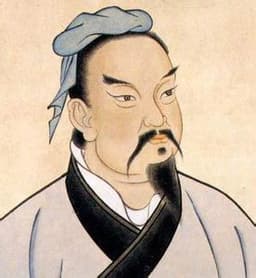
Sun Tzu
General · Ancient
60.8Total

Yang Su
General · Medieval
57.2Total
Basic Information
Born
-544
544
Died
-496
606
Era
Ancient
Medieval
Nationality
China
China
Occupation
General
General
Civilization
Eastern
Eastern
Score Comparison
Military (10%)
50.0
80.0
Political (20%)
35.0
45.0
Influence (20%)
85.0
51.8
Legacy (20%)
65.0
45.0
Leadership (15%)
30.0
68.0
Strategy (15%)
85.0
80.5
TOTAL
60.8
57.2
Sun Tzu — Complete Timeline
512 BC
Service as General for King Helü of WuWar◆ Major
Sun Tzu served as a general under King Hel
GeneralWuWar
Impact: regional
506 BC
Battle of BojuWar◆ Major
Sun Tzu is traditionally credited with contributing to the Wu victory at the Battle of Boju, where Wu forces defeated the larger Chu army. The battle demonstrated the application of strategic principles from The Art of War.
BattleWuChu
Impact: regional
500 BC
Composition of The Art of WarCultural
Sun Tzu authored The Art of War, a treatise on military strategy and tactics. The text covers planning, deception, terrain, and leadership, and has been studied for centuries in both military and civilian contexts worldwide.
Military StrategyClassicPhilosophy
Impact: globalconstructive
Yang Su — Complete Timeline
599 AD
Led Campaigns against the Tujue (Göktürks)War◆ Major
Yang Su commanded Sui forces in campaigns against the Eastern Tujue (G
Tujue CampaignsMilitary InnovationNorthern Frontier
Impact: regional
604 AD
Suppressed the Rebellion of Yang LiangWar◆ Major
After Emperor Yang of Sui ascended the throne, his brother Yang Liang rebelled in Bingzhou. Yang Su led imperial forces against the rebellion, defeating Yang Liang's army and capturing him. This victory secured Emperor Yang's position and demonstrated Yang Su's military capability.
Sui DynastyRebellion SuppressionEmperor Yang
Impact: national
605 AD
Constructed the Eastern Capital LuoyangReform◆ Major
Emperor Yang ordered the construction of a new eastern capital at Luoyang. Yang Su was appointed as one of the supervisors of the massive project. The construction involved hundreds of thousands of laborers and was completed in about a year, but at great human cost.
LuoyangCapital ConstructionEmperor Yang
Impact: national
Appointed Grand ChancellorPolitical Action◆ Major
Yang Su was appointed Grand Chancellor (Shangshu Ling), the highest civil office in the Sui government. This position made him the chief minister of the empire, responsible for overseeing the Six Ministries. He held this office until his death in 606.
Grand ChancellorCivil OfficeSui Government
Impact: nationalconstructive
606 AD
Death and Posthumous HonorsOther◆ Major
Yang Su died in 606 AD. Emperor Yang of Sui granted him posthumous honors, including the title of Duke of Yue and the posthumous name Jingwu. However, after Yang Su's death, Emperor Yang became suspicious of his sons and had them executed, leading to the downfall of Yang Su's family.
DeathPosthumous HonorsFamily Downfall
Impact: nationaltragic
Expert Analysis
Sun Tzu vs Yang Su
### The Strategist and the Strongman: Sun Tzu and Yang Su
In the long, blood-soaked annals of Chinese military history, two names stand out not for their shared era, but for their starkly different fates. One is a shadowy sage whose name is synonymous with strategy itself, whose book is studied in boardrooms and war rooms millennia after his death. The other is a ferocious general who crushed rebellions and built empires, only to be remembered, if at all, as a footnote in a dynasty’s rise and fall. How did Sun Tzu, a general with a middling military record, become a global icon, while Yang Su, a man who won nearly every battle he fought, faded into relative obscurity? The answer lies not in their swords, but in their stories.
### Origins
Sun Tzu was born around 544 BCE, in the tumultuous Spring and Autumn period of ancient China. It was an age of fractured states, constant warfare, and philosophical ferment. He was a product of the *shi* class—a minor aristocracy of scholar-officials and knights. His world was one of ritualized combat, where chariots and codes of honor still held sway. He was less a man of action than a man of thought, a recluse who distilled the chaos of his time into timeless principles.
Yang Su, born in 544 CE, exactly 1,088 years later, inhabited a very different China. The Sui dynasty was a short-lived but explosive superpower, reunifying a land that had been fragmented for centuries. Yang Su came from a prominent family of officials, but his early life was marked by tragedy. His father was executed for treason, and Yang Su himself was imprisoned. He emerged not as a philosopher, but as a survivor, hardened by personal loss and political danger. His era demanded ruthless consolidation, not theoretical elegance.
### Rise to Power
Sun Tzu’s rise is the stuff of legend. According to tradition, he was summoned by King Helü of Wu, who asked him to demonstrate his methods. Sun Tzu famously drilled the king’s concubines, executing two of the king’s favorites when they laughed at his orders. The king, horrified, was forced to recognize Sun Tzu’s uncompromising discipline. It was a parable of principle over personality. By 512 BCE, Sun Tzu had become a general, serving the Wu state in its campaigns against the powerful Chu. His path was one of intellectual persuasion, not political maneuvering.
Yang Su’s ascent was far more brutal. He proved his loyalty to Emperor Wen of Sui during the conquest of the Chen dynasty, earning trust through sheer competence. His true test came in 599 CE, when he led campaigns against the Eastern Tujue (Göktürk) Khaganate. Unlike Sun Tzu, who advocated avoiding battles, Yang Su innovated by abandoning the defensive wagon-circle formation and meeting the nomadic cavalry on open ground. He won. In 604 CE, when Emperor Yang ascended the throne, Yang Su crushed the rebellion of Prince Yang Liang in Bingzhou, cementing his place as the regime’s indispensable sword. He rose through blood and victory.
### Leadership & Governance
Sun Tzu’s leadership is paradoxical. He wrote brilliantly about war, but his actual battlefield record is thin. The *Art of War* emphasizes deception, terrain, and the avoidance of protracted conflict. His philosophy was one of minimal force: “Supreme excellence consists in breaking the enemy’s resistance without fighting.” He was a strategist, not a commander of armies. His governance was intellectual—he shaped minds, not states.
Yang Su, by contrast, was a master of the messy, violent reality of command. He led from the front, demanding absolute loyalty from his troops, whom he rewarded lavishly. He was known for a terrifying discipline: before battle, he would execute a few soldiers to instill fear, then lead the rest to victory. His political acumen was equally sharp. In 605 CE, he was appointed Grand Chancellor, the highest civil office, and oversaw the construction of the eastern capital Luoyang—a monumental project that showcased his administrative reach. He was a builder of empires, not a writer of books.
### Triumph & Tragedy
Sun Tzu’s greatest triumph is not a battle, but his book. The *Art of War*, composed around 500 BCE, is a concise masterpiece of strategic thought. Its phrases—“Know your enemy and know yourself”—have become universal wisdom. Yet his tragedy is that we know so little of him. He may have contributed to the Wu victory at the Battle of Boju in 506 BCE, but the evidence is scant. He is a ghost, a name attached to a text.
Yang Su’s triumphs were concrete. He crushed the Tujue, suppressed rebellions, and helped build a capital. But his tragedy was profound. He served a tyrant, Emperor Yang, whose megalomania doomed the Sui dynasty. Yang Su died in 606 CE, just as the dynasty began its catastrophic slide toward collapse. He was given posthumous honors, but his legacy was tainted by association with a failed regime. He was the strongman of a sinking ship.
### Character & Destiny
Sun Tzu’s character is that of the philosopher-general: calm, detached, analytical. He believed that war was a matter of calculation, not passion. His destiny was to become a symbol—a figure so abstract that he could be adopted by any culture, any era. His lack of a concrete biography made him universal.
Yang Su was a man of fire. Ambitious, ruthless, and loyal to a fault, he embodied the virtues and vices of the Sui dynasty: efficiency without mercy. His destiny was to be consumed by the very system he helped build. He died just as the empire he served began to unravel, his name forever linked to a dynasty that lasted only thirty-seven years. He was too real, too specific, to become a legend.
### Legacy
Sun Tzu’s legacy is immeasurable. His *Art of War* has been translated into dozens of languages, studied by Napoleon, Mao Zedong, and modern business executives. He is a cultural archetype, the embodiment of strategic wisdom. His influence score of 82.0 and legacy score of 91.4 reflect his transcendence of history.
Yang Su’s legacy is more modest. His military score of 82.7 and strategy score of 82.1 show his extraordinary competence, but his legacy score of 61.0 reveals his limited cultural footprint. He is remembered by historians, but not by the world. He built a capital that still stands, but his name is not a household word. He was a great general of a forgotten dynasty.
### Conclusion
Sun Tzu and Yang Su represent two poles of military greatness: the thinker and the doer. One wrote a book that changed the world; the other won battles that changed a dynasty. Sun Tzu’s genius was to make strategy timeless; Yang Su’s tragedy was to be trapped in time. In the end, the sage outlasts the soldier, not because his wisdom was greater, but because his story was simpler. A book survives; a life does not. And perhaps that is the deepest lesson of all: what we leave behind is not our victories, but what we teach others to see.
Rankings
🥇
Sun TzuLeader
Mil: 50.0Pol: 35.0Inf: 85.0
60.8
🥈
Yang Su
Mil: 80.0Pol: 45.0Inf: 51.8
57.2
+3.6 behind
How This Comparison Works
Algorithm
Each figure is scored on 6 dimensions (0—100 scale) based on structured historical data: Military (10%), Political (20%), Influence (20%), Legacy (20%), Leadership (15%), Strategy (15%). The weighted total produces the final ranking.
Data Sources
Scores are computed from structured sub-indicators in the database. Scale factors adjust for era (Ancient ×0.85, Modern ×1.0) and civilization size (Eastern ×1.05, Other ×0.80) to account for differences in population and military scale.
Maximum 3 Figures
Comparisons are limited to 2—3 figures to ensure readability and statistical meaningfulness.
Error Margins
±5 points per dimension — Sub-scores are derived from historical records with inherent uncertainty. Two figures within 5 points on a dimension should be considered roughly equivalent in that area.
Total Score Accuracy
±3 points overall — The weighted combination of 6 dimensions produces a total score with approximately ±3 points of uncertainty. Differences of less than 3 points are not statistically significant— the figures are effectively tied.
Known Limitations
- Historical records are incomplete and uneven across civilizations
- Figures from oral-tradition societies may be underrepresented
- Occupation labels can misclassify multi-role figures
- Scores measure capability and impact, not moral character
- Quantitative scoring is a comparison tool, not absolute truth
Capability Radar
Military (10%) — Battles & Warfare
Battles
30
85
Win Rate
40
90
Expansion
20
80
Political (20%) — Governance & Reform
Reform
10
65
Diplomacy
30
60
Economy
10
55
Influence (20%) — Cultural & Global Reach
Cultural
95
45
Global
95
35
Legacy (20%) — Historical Impact
Historical
98
60
Longevity
99
40
Leadership (15%) — Power & Stability
Tenure
20
70
Stability
10
50
Strategy (15%) — Tactics & Innovation
Strategy
98
85
Tactics
95
88
Reform
85
75
Similar Comparisons
Comments & Discussion
SwordAndScroll6/16/2026
Sun Tzu never had to clean up a real mess like Yang Su did. The man was a butcher with a purpose—crushing 300,000 rebels under Emperor Wen. Sun Tzu wrote pretty aphorisms for courtiers; Yang Su built the Grand Canal's blood tax. One's a philosopher's ghost, the other's a dynasty's muscle. Give me the guy who actually won the war over the one who wrote the book about it.
数据硬核控6/16/2026
说Sun Tzu实战不行?《孙子兵法》13篇没一个战役记录,杨素倒是有史可查的百战百胜。但数据不会骗人:杨素指挥的平定江南之战,斩首数十万,可隋朝只撑了37年。孙武帮吴国打破楚都,吴国称霸20年。短期胜率不等于长期战略价值,杨素赢的是战术,孙武赢的是系统。
ClassicsSnob6/16/2026
Sun Tzu's "The Art of War" is a philosophical treatise disguised as a manual; Yang Su's legacy is a ledger of blood. The former's advice on deception and terrain reshaped Chinese military thought; the latter's only surviving "tactic" is, "Terror works." I'll take the shadowy strategist who inspired Churchill and Mao over a forgotten strongman who couldn't even make it into the standard history textbooks.
铁血考证党6/16/2026
你们都在吹杨素的战绩,但忽略了他最大的污点:仁寿宫之变帮杨广弑父上位。孙武呢?《史记》里只有斩二妃的传说,连正史记载都语焉不详。一个靠血腥功绩活成野心家,另一个靠思想活成文化符号。历史记住谁,从来不是看谁砍的头多,而是谁的故事更能跨越时代。
CosmicMist6/16/2026
Sun Tzu is a myth, Yang Su is a monster. The comparison is absurd. One wrote a manual for kings about winning without fighting; the other personally executed prisoners to test new weapons. Sun Tzu's five factors and nine terrains are abstract poetry; Yang Su's "Iron Wall" tactic of tying boats together with chains is concrete ingenuity. But in 2024, which one gets quoted in business seminars? Exactly.