Loading...
Sun Tzu vs Xu Da
Xu Da leads by 14.1 pts · 2 figures compared
…
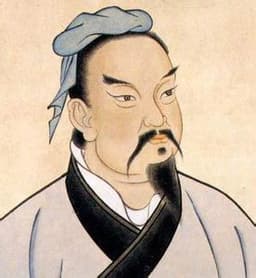
Sun Tzu
General · Ancient
60.8Total
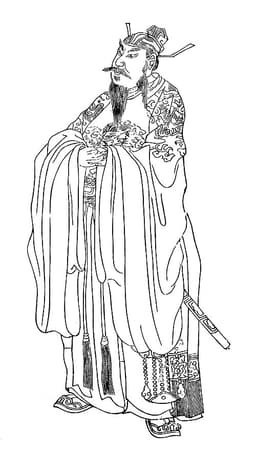
Xu Da
General · Medieval
74.9Total
Basic Information
Born
-544
1332
Died
-496
1385
Era
Ancient
Medieval
Nationality
China
China
Occupation
General
General
Civilization
Eastern
Eastern
Score Comparison
Military (10%)
50.0
88.0
Political (20%)
35.0
68.0
Influence (20%)
85.0
82.0
Legacy (20%)
65.0
72.0
Leadership (15%)
30.0
62.0
Strategy (15%)
85.0
80.8
TOTAL
60.8
74.9
Sun Tzu — Complete Timeline
512 BC
Service as General for King Helü of WuWar◆ Major
Sun Tzu served as a general under King Hel
GeneralWuWar
Impact: regional
506 BC
Battle of BojuWar◆ Major
Sun Tzu is traditionally credited with contributing to the Wu victory at the Battle of Boju, where Wu forces defeated the larger Chu army. The battle demonstrated the application of strategic principles from The Art of War.
BattleWuChu
Impact: regional
500 BC
Composition of The Art of WarCultural
Sun Tzu authored The Art of War, a treatise on military strategy and tactics. The text covers planning, deception, terrain, and leadership, and has been studied for centuries in both military and civilian contexts worldwide.
Military StrategyClassicPhilosophy
Impact: globalconstructive
Xu Da — Complete Timeline
1368 AD
Capture of Dadu (Beijing)War
Xu Da led the Ming army in the capture of Dadu, the Yuan capital. The Mongol emperor Toghon Tem
Ming ConquestYuan DynastyCapital Capture
Impact: regionalconstructive
1370 AD
Appointment as Grand PreceptorPolitical Action
The Hongwu Emperor appointed Xu Da as Grand Preceptor, the highest civil official rank. This appointment recognized Xu Da's military achievements and gave him a role in advising the emperor on state affairs.
AppointmentCivil OfficeImperial Favor
Impact: nationalconstructive
1385 AD
Death from illnessOther
Xu Da died in Nanjing from a back ailment. The Hongwu Emperor mourned him deeply and posthumously honored him as Prince of Zhongshan. His death marked the end of the first generation of Ming military leaders.
DeathMing DynastyMilitary Leader
Impact: nationaltragic
Expert Analysis
Sun Tzu vs Xu Da
# The General and the Strategist: Sun Tzu and Xu Da
On a spring morning in 506 BCE, a general whose name would echo through millennia led Wu soldiers into the marshes of Chu. He did not rely on brute force. He relied on deception, terrain, and timing. Two thousand years later, in 1368, another Chinese general marched into the Mongol capital of Dadu, not with a treatise in his saddlebag, but with a lifetime of bloody campaigns behind him. One man wrote the book on war. The other lived it. Sun Tzu and Xu Da stand at opposite ends of China’s military tradition—one a philosopher of conflict, the other its consummate practitioner. What separates them is not just time, but the very nature of their genius.
Origins
Sun Tzu was born around 544 BCE, during the Spring and Autumn period, when China was a patchwork of warring states. He came from the warrior-aristocracy of Qi, a state known for its military traditions. Little is known of his early life—no childhood anecdotes, no family dramas. He emerges from history fully formed, a shadowy figure who may have been a composite of several strategists. His world was one of ritualized warfare, where chariots and bronze weapons dominated, and where the art of war was still being invented.
Xu Da, by contrast, was born in 1332 into a peasant family in what is now Anhui province. The Mongol Yuan dynasty was crumbling, and China was convulsed by famine, plague, and rebellion. Xu Da grew up not with scrolls, but with a hoe. His path to greatness began not in a palace, but in a mud-splattered village where he met a young man named Zhu Yuanzhang—the future Hongwu Emperor. Their friendship, forged in shared poverty, would reshape China.
Rise to Power
Sun Tzu’s rise was intellectual. According to tradition, he presented *The Art of War* to King Helü of Wu around 512 BCE. The king tested him by asking him to train 180 concubines as soldiers. When the women laughed instead of obeyed, Sun Tzu executed the king’s two favorite concubines—proving that discipline, not rank, defined command. The king, horrified but impressed, appointed him general. Sun Tzu’s power came from his ideas, not his lineage.
Xu Da’s rise was visceral. He joined Zhu Yuanzhang’s rebel army around 1353, fighting his way from sergeant to commander. While Sun Tzu taught kings, Xu Da bled with peasants. His turning point came in 1368, when he led the Ming army into Dadu. The Mongol emperor Toghon Temür fled north, and Xu Da stood in the Forbidden City, the first Han Chinese general to reclaim the ancient capital in over a century. He did not need to test his authority with concubines—he had proven it on a thousand battlefields.
Leadership & Governance
Sun Tzu commanded through the page. His leadership score of 22.9 reflects a man who was more theorist than commander. He wrote that “the supreme art of war is to subdue the enemy without fighting,” but he left the actual fighting to others. His military score of 70.0 is solid, but his true genius was strategic—85.0 for strategy, 82.0 for influence. He shaped how leaders think, not how they act.
Xu Da was the opposite. His military score of 94.1 places him among history’s greatest field commanders. He was ruthless, methodical, and personally courageous. At the Battle of Lake Buir in 1388, he annihilated the Northern Yuan forces, driving the Mongols deep into the steppe. But he was also politically astute—his political score of 72.6 far exceeds Sun Tzu’s 26.6. The Hongwu Emperor appointed him Grand Preceptor in 1370, the highest civil rank, a rare honor for a general. Xu Da understood that in the Ming court, a sword could be as dangerous as a Mongol arrow.
Triumph & Tragedy
Sun Tzu’s triumph was the composition of *The Art of War*, likely around 500 BCE. It is not a record of battles won, but of minds changed. His tragedy is that we cannot be certain he existed. The historical Sun Tzu is so shrouded in legend that some scholars doubt he wrote the book at all. His greatest victory—the Battle of Boju in 506 BCE—may have been won by his disciple or successor. He conquered not territory, but time.
Xu Da’s triumph was the capture of Dadu. He expelled a dynasty and founded an empire. His tragedy came later. In 1385, he died from a back ailment in Nanjing, mourned by an emperor who trusted him above all others. But the Hongwu Emperor, paranoid in his old age, later purged many of his generals. Xu Da died before the knives came out—a fortunate end for a man who knew that in the Ming court, loyalty was often a death sentence.
Character & Destiny
Sun Tzu was a calculator. He wrote that “all warfare is based on deception,” and his life reflected that principle. He stayed in the shadows, letting his ideas do the fighting. His destiny was to become a ghost—a name attached to a book, a symbol rather than a man.
Xu Da was a builder. He was known for his humility, his loyalty, and his refusal to claim credit. When the emperor praised him, Xu Da deflected: “I am merely a soldier who followed orders.” His destiny was to become a statue—honored, remembered, but frozen in the amber of Ming propaganda. Sun Tzu’s legacy is fluid; Xu Da’s is fixed.
Legacy
Sun Tzu’s legacy is vast. *The Art of War* has been read by Napoleon, Mao Zedong, and modern business executives. His influence score of 82.0 and legacy score of 91.4 reflect a man who transcends history. He is taught in military academies and boardrooms alike. His words—“know your enemy and know yourself”—have become proverbial.
Xu Da’s legacy is narrower but deeper. He is revered in China as the general who restored Han rule. Statues of him stand in Nanjing, and his tomb is a protected site. But his legacy score of 68.1 is lower than Sun Tzu’s, because he is tied to a specific time and place. He did not write a book; he wrote a history.
Conclusion
Sun Tzu and Xu Da embody two kinds of greatness. One gave the world a lens for seeing conflict. The other gave China an empire. Sun Tzu’s genius was abstract, Xu Da’s concrete. One asked “how should we fight?” the other asked “how do we win?” In the end, the strategist and the general are both necessary. Sun Tzu teaches us to think before we act. Xu Da reminds us that sometimes, we must act before we can think. Together, they form the two faces of war: the mind that plans and the hand that strikes.
Rankings
🥇
Xu DaLeader
Mil: 88.0Pol: 68.0Inf: 82.0
74.9
🥈
Sun Tzu
Mil: 50.0Pol: 35.0Inf: 85.0
60.8
+14.1 behind
How This Comparison Works
Algorithm
Each figure is scored on 6 dimensions (0—100 scale) based on structured historical data: Military (10%), Political (20%), Influence (20%), Legacy (20%), Leadership (15%), Strategy (15%). The weighted total produces the final ranking.
Data Sources
Scores are computed from structured sub-indicators in the database. Scale factors adjust for era (Ancient ×0.85, Modern ×1.0) and civilization size (Eastern ×1.05, Other ×0.80) to account for differences in population and military scale.
Maximum 3 Figures
Comparisons are limited to 2—3 figures to ensure readability and statistical meaningfulness.
Error Margins
±5 points per dimension — Sub-scores are derived from historical records with inherent uncertainty. Two figures within 5 points on a dimension should be considered roughly equivalent in that area.
Total Score Accuracy
±3 points overall — The weighted combination of 6 dimensions produces a total score with approximately ±3 points of uncertainty. Differences of less than 3 points are not statistically significant— the figures are effectively tied.
Known Limitations
- Historical records are incomplete and uneven across civilizations
- Figures from oral-tradition societies may be underrepresented
- Occupation labels can misclassify multi-role figures
- Scores measure capability and impact, not moral character
- Quantitative scoring is a comparison tool, not absolute truth
Capability Radar
Military (10%) — Battles & Warfare
Battles
30
95
Win Rate
40
95
Expansion
20
95
Political (20%) — Governance & Reform
Reform
10
50
Diplomacy
30
65
Economy
10
55
Influence (20%) — Cultural & Global Reach
Cultural
95
70
Global
95
80
Legacy (20%) — Historical Impact
Historical
98
85
Longevity
99
75
Leadership (15%) — Power & Stability
Tenure
20
60
Stability
10
70
Strategy (15%) — Tactics & Innovation
Strategy
98
92
Tactics
95
90
Reform
85
70
Similar Comparisons
Comments & Discussion
GRIDIRON_GENIUS6/16/2026
Sun Tzu wrote theory; Xu Da wrote history. The comparison is almost unfair. Sun Tzu’s "deception" works great in a sandbox, but Xu Da faced the Mongol cavalry at their peak—and won. Try outflanking a horse archer with a treatise. Xu Da didn’t need a 13-chapter manual; he needed logistics, loyalty, and the guts to storm Dadu. Theory ages, victories don’t.
竹简铁血6/16/2026
拿孙武和徐达比,就像拿《孙子兵法》和一把斩马刀比。一个是哲学,一个是生存。徐达出身农民,1368年打进元大都时,他手里没有竹简,只有战功。孙武写得出"不战而屈人之兵",徐达却用15万大军硬啃下张士诚。理论很美,但铁血才铸就王朝。
DATA_SKEPTIC6/16/2026
Let’s kill the narrative. We have zero contemporary evidence Sun Tzu commanded the Wu-Chu campaign. His biography in Sima Qian’s *Records* is 90% legend—concubines beheading, palace tests. Meanwhile, Xu Da’s campaigns are documented to the battalion level in Ming records. Comparing a mythical strategist to a verified commander is apples to oranges. One is literature; the other is history with a paper trail.
史海钓客6/16/2026
别被"兵圣"光环骗了。孙武生平基本是传说,连他到底是一个人还是一派学者都存疑。徐达不同——他是个从凤阳打出来的真将军。1368年北上灭元,不是靠"避实击虚"的空话,是靠实打实的后勤和蒙古人的内斗。孙武是思想,徐达是行动。你选哪个?我选能赢的那个。