Loading...
Skanderbeg vs Xiong Tingbi
Skanderbeg leads by 15.0 pts · 2 figures compared
…
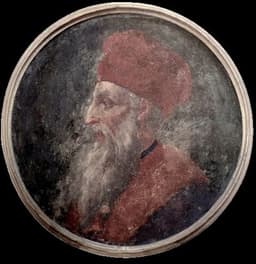
Skanderbeg
General · Medieval
62.7Total

Xiong Tingbi
General · Medieval
47.7Total
Basic Information
Born
1405
1569
Died
1468
1625
Era
Medieval
Medieval
Nationality
Albania
China
Occupation
General
General
Civilization
Western
Eastern
Score Comparison
Military (10%)
80.0
47.5
Political (20%)
61.3
40.8
Influence (20%)
56.7
47.9
Legacy (20%)
52.0
42.5
Leadership (15%)
72.0
54.2
Strategy (15%)
75.0
61.3
TOTAL
62.7
47.7
Skanderbeg — Complete Timeline
1444 AD
Battle of TorviollWar
Skanderbeg led a small Albanian force against a larger Ottoman army under Ali Pasha at Torvioll. The Albanian victory marked the beginning of Skanderbeg's rebellion against Ottoman rule and established his reputation as a military commander.
RebellionOttoman EmpireAlbania
Impact: regional
League of LezhëPolitical Action◆ Major
Skanderbeg convened a council of Albanian noblemen at Lezh
AllianceAlbanian UnityVenice
Impact: regionalconstructive
1450 AD
Siege of Krujë (First)War◆ Major
Sultan Murad II personally led a large Ottoman army to besiege the fortress of Kruj
SiegeKrujëMurad II
Impact: regional
1457 AD
Battle of AlbulenaWar◆ Major
Skanderbeg defeated a large Ottoman army commanded by Isak Bey and Hamza Kastrioti at Albulena. The victory crushed an Ottoman attempt to invade Albania and resulted in the capture of Hamza, Skanderbeg's nephew who had defected to the Ottomans.
BattleHamza KastriotiOttoman Defeat
Impact: regional
1466 AD
Siege of Krujë (Second)War
Sultan Mehmed II led a massive Ottoman army to besiege Kruj
SiegeMehmed IIPapal States
Impact: regional
1468 AD
Death at LezhëOther◆ Major
Skanderbeg died of natural causes in Lezh
DeathOttoman ConquestNational Hero
Impact: regionaltragic
Xiong Tingbi — Complete Timeline
1619 AD
Appointment as Military Commissioner of LiaodongPolitical Action◆ Major
Xiong Tingbi was appointed as the military commissioner of Liaodong after the Ming defeat at the Battle of Sarhu. He was tasked with reorganizing defenses against the rising Later Jin dynasty under Nurhaci.
Military CommandLiaodongMing Dynasty
Impact: regionalconstructive
1620 AD
Implementation of the 'Fortress Defense' StrategyReform◆ Major
Xiong Tingbi proposed and began implementing a defensive strategy of building fortified garrisons along the Liao River to contain Nurhaci's advances. This approach aimed to avoid open battles and conserve Ming resources.
Military StrategyFortificationsMing Defense
Impact: regionalconstructive
1621 AD
Conflict with Wang HuazhenPolitical Action
Xiong Tingbi clashed with the eunuch Wang Huazhen over military policy, with Wang advocating for aggressive offensives. The political infighting undermined Xiong's authority and led to his removal from command in 1622.
Political ConflictEunuch PowerMing Court
Impact: regionaldestructive
1625 AD
Arrest and ExecutionPolitical Action◆ Major
Xiong Tingbi was arrested on charges of corruption and military incompetence, largely due to political enemies at court. He was executed by the Ming government, a decision that demoralized the Liaodong defense and weakened resistance to the Manchus.
ExecutionPolitical PurgeMing Dynasty
Impact: nationaltragic
Expert Analysis
Origins
Skanderbeg (born 1405) was born Gjergj Kastrioti in the Albanian principality of Kastrioti. His father, Gjon Kastrioti, was a local lord who submitted to the Ottoman Empire. As a hostage, Skanderbeg was educated at the Ottoman court, converting to Islam and serving as a military commander. He gained intimate knowledge of Ottoman military tactics. Xiong Tingbi (born 1569) was a Ming Chinese official from a scholarly family. He passed the imperial examinations and rose through the civil bureaucracy. His background was administrative rather than military, which shaped his cautious approach to warfare.
Rise to Power
Skanderbeg's rise began in 1443 when he deserted the Ottoman army during the Battle of Niš, seizing the fortress of Krujë and reclaiming his Christian faith. He rallied Albanian nobles at the League of Lezhë in 1444, creating a unified front. His victory at the Battle of Torvioll in 1444, where his smaller force defeated Ali Pasha's larger army, established his reputation. Xiong Tingbi rose after the Ming defeat at the Battle of Sarhu in 1619. Appointed Military Commissioner of Liaodong, he proposed a defensive strategy of fortified garrisons. His plan was initially approved, but political rivals, including the eunuch Wang Huazhen, undermined him.
Leadership & Governance
Skanderbeg led by personal example, often fighting at the front. He maintained unity among fractious Albanian nobles through diplomacy and military success. His governance focused on defense, building fortifications and coordinating guerrilla tactics. Skanderbeg's leadership score of 72.0 reflects his ability to inspire loyalty. Xiong Tingbi's leadership score of 54.2 indicates weaker command. He favored a defensive 'Fortress Defense' strategy, building forts along the Liao River. However, his cautious approach clashed with aggressive court factions. His political score of 40.8 shows his failure to navigate Ming court intrigues, leading to his arrest.
Triumph & Tragedy
Skanderbeg's greatest triumph was the First Siege of Krujë in 1450, where his garrison repelled Sultan Murad II personally. The victory secured Albanian independence for another two decades. His victory at the Battle of Albulena in 1457 crushed an Ottoman invasion and eliminated internal dissent. However, his death in 1468 from illness left Albania leaderless; within a decade, Ottoman forces overran the region. Xiong Tingbi's initial success was reorganizing Liaodong's defenses, slowing Nurhaci's advances. But his tragedy was his execution in 1625 on false corruption charges. His defensive strategy was abandoned by successors, leading to Ming defeats. His military score of 47.5 reflects limited battlefield success.
Character & Destiny
Skanderbeg was decisive and charismatic, using his Ottoman military experience to counter Ottoman tactics. His character united a fractured nation, but his reliance on personal leadership meant resistance crumbled after his death. Xiong Tingbi was cautious and methodical, but politically naive. He alienated influential court factions by prioritizing defense over offense. His fate was sealed by the eunuch Wang Huazhen, who accused him of corruption. Skanderbeg's total score of 62.7 versus Xiong's 47.7 highlights the gap in effectiveness.
Legacy
Skanderbeg is celebrated as Albania's national hero, symbolizing resistance against the Ottomans. His legacy score of 52.0 reflects enduring cultural impact. His tactics influenced later Balkan resistance. Xiong Tingbi's legacy score of 42.5 is lower; he is remembered as a tragic figure whose sound strategy was undermined by court politics. His fortress defense concept was later adopted by Ming generals, but too late.
Conclusion
Skanderbeg had a greater impact. Despite similar strategic challenges, Skanderbeg's military score of 80.0 and leadership of 72.0 far exceed Xiong's 47.5 and 54.2. Skanderbeg's successful resistance for 25 years against a stronger empire demonstrates superior execution. Xiong's failure to implement his strategy due to political infighting shows that even sound plans require political acumen. Skanderbeg's legacy as a national liberator endures, while Xiong is a footnote. The data supports Skanderbeg as the more effective commander and leader.
Rankings
🥇
SkanderbegLeader
Mil: 80.0Pol: 61.3Inf: 56.7
62.7
🥈
Xiong Tingbi
Mil: 47.5Pol: 40.8Inf: 47.9
47.7
+15.0 behind
How This Comparison Works
Algorithm
Each figure is scored on 6 dimensions (0—100 scale) based on structured historical data: Military (10%), Political (20%), Influence (20%), Legacy (20%), Leadership (15%), Strategy (15%). The weighted total produces the final ranking.
Data Sources
Scores are computed from structured sub-indicators in the database. Scale factors adjust for era (Ancient ×0.85, Modern ×1.0) and civilization size (Eastern ×1.05, Other ×0.80) to account for differences in population and military scale.
Maximum 3 Figures
Comparisons are limited to 2—3 figures to ensure readability and statistical meaningfulness.
Error Margins
±5 points per dimension — Sub-scores are derived from historical records with inherent uncertainty. Two figures within 5 points on a dimension should be considered roughly equivalent in that area.
Total Score Accuracy
±3 points overall — The weighted combination of 6 dimensions produces a total score with approximately ±3 points of uncertainty. Differences of less than 3 points are not statistically significant— the figures are effectively tied.
Known Limitations
- Historical records are incomplete and uneven across civilizations
- Figures from oral-tradition societies may be underrepresented
- Occupation labels can misclassify multi-role figures
- Scores measure capability and impact, not moral character
- Quantitative scoring is a comparison tool, not absolute truth
Capability Radar
Military (10%) — Battles & Warfare
Battles
75
55
Win Rate
85
40
Expansion
40
30
Political (20%) — Governance & Reform
Reform
50
40
Diplomacy
70
50
Economy
40
35
Influence (20%) — Cultural & Global Reach
Cultural
70
30
Global
55
25
Legacy (20%) — Historical Impact
Historical
75
45
Longevity
70
40
Leadership (15%) — Power & Stability
Tenure
65
45
Stability
55
30
Strategy (15%) — Tactics & Innovation
Strategy
75
65
Tactics
80
60
Reform
60
50
Similar Comparisons
Comments & Discussion
No comments yet. Be the first to share your thoughts!