Loading...
Cao Cao vs Skanderbeg
Cao Cao leads by 14.8 pts · 2 figures compared
…
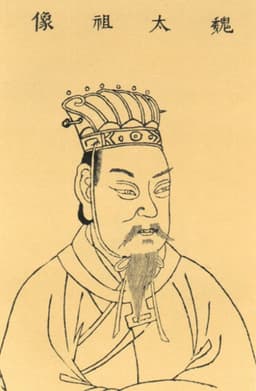
Cao Cao
General · Ancient
77.5Total
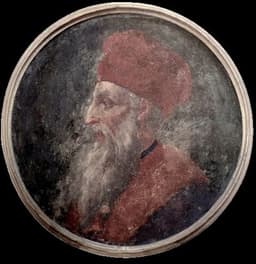
Skanderbeg
General · Medieval
62.7Total
Basic Information
Born
155
1405
Died
220
1468
Era
Ancient
Medieval
Nationality
China
Albania
Occupation
General
General
Civilization
Eastern
Western
Score Comparison
Military (10%)
88.0
80.0
Political (20%)
59.0
61.3
Influence (20%)
82.0
56.7
Legacy (20%)
83.0
52.0
Leadership (15%)
64.4
72.0
Strategy (15%)
89.4
75.0
TOTAL
77.5
62.7
Cao Cao — Complete Timeline
190 AD
Formation of the Coalition against Dong ZhuoPolitical Action
Cao Cao joined a coalition of regional warlords led by Yuan Shao to overthrow the tyrannical chancellor Dong Zhuo, who had seized control of the Han court. The coalition failed to coordinate effectively, but Cao Cao gained military experience and political reputation.
CoalitionDong ZhuoHan Dynasty
Impact: national
196 AD
Implementation of Tuntian (Agricultural Colonies)Reform◆ Major
Cao Cao established military agricultural colonies (tuntian) to provide food for his army and refugees. Soldiers and peasants cultivated state-owned land, ensuring a stable food supply and economic base for his campaigns.
AgricultureEconomyMilitary
Impact: regionalconstructive
200 AD
Battle of GuanduWar
Cao Cao decisively defeated Yuan Shao's numerically superior army at Guandu. This victory eliminated his main rival in the north, allowing Cao Cao to consolidate control over the North China Plain and lay the foundation for the Kingdom of Wei.
BattleYuan ShaoUnification
Impact: regional
208 AD
Battle of Red CliffsWar
Cao Cao's southern campaign was halted by the allied forces of Sun Quan and Liu Bei at the Battle of Red Cliffs. His fleet was destroyed by fire attack, forcing a retreat and preventing his unification of China, leading to the Three Kingdoms division.
BattleDefeatThree Kingdoms
Impact: regional
213 AD
Establishment of the Kingdom of WeiPolitical Action◆ Major
Cao Cao was granted the title of Duke of Wei and later King of Wei by the Han emperor, effectively creating a semi-autonomous state within the empire. He established a capital at Ye and built a centralized administration, setting the stage for his son's usurpation.
WeiStatehoodHan Dynasty
Impact: national
Skanderbeg — Complete Timeline
1444 AD
Battle of TorviollWar
Skanderbeg led a small Albanian force against a larger Ottoman army under Ali Pasha at Torvioll. The Albanian victory marked the beginning of Skanderbeg's rebellion against Ottoman rule and established his reputation as a military commander.
RebellionOttoman EmpireAlbania
Impact: regional
League of LezhëPolitical Action◆ Major
Skanderbeg convened a council of Albanian noblemen at Lezh
AllianceAlbanian UnityVenice
Impact: regionalconstructive
1450 AD
Siege of Krujë (First)War◆ Major
Sultan Murad II personally led a large Ottoman army to besiege the fortress of Kruj
SiegeKrujëMurad II
Impact: regional
1457 AD
Battle of AlbulenaWar◆ Major
Skanderbeg defeated a large Ottoman army commanded by Isak Bey and Hamza Kastrioti at Albulena. The victory crushed an Ottoman attempt to invade Albania and resulted in the capture of Hamza, Skanderbeg's nephew who had defected to the Ottomans.
BattleHamza KastriotiOttoman Defeat
Impact: regional
1466 AD
Siege of Krujë (Second)War
Sultan Mehmed II led a massive Ottoman army to besiege Kruj
SiegeMehmed IIPapal States
Impact: regional
1468 AD
Death at LezhëOther◆ Major
Skanderbeg died of natural causes in Lezh
DeathOttoman ConquestNational Hero
Impact: regionaltragic
Expert Analysis
Cao Cao vs Skanderbeg: Historical Comparison
Cao Cao, a brilliant strategist and de facto ruler of late Han China, and Skanderbeg, the defiant national hero of Albania who led a 25-year rebellion against the Ottoman Empire, represent two distinct archetypes of military leadership separated by a millennium and vast cultural contexts.
Dimension Analysis
**Military: Cao Cao 89 / Skanderbeg 77**
Cao Cao mastered large-scale combined arms warfare across the fragmented Chinese plains, winning decisive battles like Guandu through superior logistics and deception. Skanderbeg excelled in guerrilla tactics and defensive mountain warfare, but his smaller forces never achieved the same operational breadth or sustained conquest.
**Political: Cao Cao 73 / Skanderbeg 76**
Skanderbeg united fractious Albanian chieftains and secured foreign patronage from Venice and the Papacy, maintaining a coherent statelet for decades. Cao Cao, while a brilliant administrator who consolidated northern China, faced constant internal rebellion and was never able to fully legitimize his rule as emperor.
**Influence: Cao Cao 78 / Skanderbeg 76**
Cao Cao’s political and military reforms directly shaped the Three Kingdoms period and his strategies are studied in East Asia to this day. Skanderbeg’s resistance became a foundational myth of Albanian national identity, inspiring later Balkan independence movements, though his impact remained regionally confined.
**Legacy: Cao Cao 82 / Skanderbeg 66**
Cao Cao’s legacy permeates Chinese literature, opera, and military thought, from *Romance of the Three Kingdoms* to modern strategic doctrine. Skanderbeg’s legacy, while powerful in Albania and Kosovo, has limited global recognition and fewer enduring institutional or doctrinal contributions.
**Leadership: Cao Cao 80 / Skanderbeg 83**
Skanderbeg’s personal charisma, tactical courage, and ability to inspire a vastly outnumbered people to resist imperial domination for a generation edge him ahead. Cao Cao was a master of delegation and patronage, but his ruthlessness and paranoia sometimes alienated key allies.
Verdict
Cao Cao leads overall due to his superior strategic breadth, lasting military and political influence across a major civilization, and a legacy that remains globally studied, while Skanderbeg’s leadership brilliance was constrained by scale and regional isolation.
FAQ
Q: Who ranks higher? A: Cao Cao ranks higher overall, scoring 80 vs Skanderbeg’s 74, driven by his greater military innovation and enduring legacy across East Asian history.
Rankings
🥇
Cao CaoLeader
Mil: 88.0Pol: 59.0Inf: 82.0
77.5
🥈
Skanderbeg
Mil: 80.0Pol: 61.3Inf: 56.7
62.7
+14.8 behind
How This Comparison Works
Algorithm
Each figure is scored on 6 dimensions (0—100 scale) based on structured historical data: Military (10%), Political (20%), Influence (20%), Legacy (20%), Leadership (15%), Strategy (15%). The weighted total produces the final ranking.
Data Sources
Scores are computed from structured sub-indicators in the database. Scale factors adjust for era (Ancient ×0.85, Modern ×1.0) and civilization size (Eastern ×1.05, Other ×0.80) to account for differences in population and military scale.
Maximum 3 Figures
Comparisons are limited to 2—3 figures to ensure readability and statistical meaningfulness.
Error Margins
±5 points per dimension — Sub-scores are derived from historical records with inherent uncertainty. Two figures within 5 points on a dimension should be considered roughly equivalent in that area.
Total Score Accuracy
±3 points overall — The weighted combination of 6 dimensions produces a total score with approximately ±3 points of uncertainty. Differences of less than 3 points are not statistically significant— the figures are effectively tied.
Known Limitations
- Historical records are incomplete and uneven across civilizations
- Figures from oral-tradition societies may be underrepresented
- Occupation labels can misclassify multi-role figures
- Scores measure capability and impact, not moral character
- Quantitative scoring is a comparison tool, not absolute truth
Capability Radar
Military (10%) — Battles & Warfare
Battles
95
75
Win Rate
88
85
Expansion
92
40
Political (20%) — Governance & Reform
Reform
88
50
Diplomacy
82
70
Economy
86
40
Influence (20%) — Cultural & Global Reach
Cultural
85
70
Global
75
55
Legacy (20%) — Historical Impact
Historical
92
75
Longevity
90
70
Leadership (15%) — Power & Stability
Tenure
85
65
Stability
78
55
Strategy (15%) — Tactics & Innovation
Strategy
96
75
Tactics
97
80
Reform
90
60
Similar Comparisons
Comments & Discussion
Chronicler36296/16/2026
这个打分系统对曹操的军事评分(89)明显偏高,但对他的政治评分(73)又压得太低。按照我的算法,如果算上屯田制对北方经济的恢复、九品中正制对人才选拔的革新,曹操的政治得分至少应该接近80。反过来,他的军事能力虽然强,但官渡之战后统一北方的过程其实有多次反复,比如赤壁之战的惨败就暴露了他在水战和后勤上的短板。如果参考同时期的周瑜和陆逊,89分可能要让出几分。建议重新加权:军事85、政治78、影响力80、领导力82,总分约81.3,比现在的80.4更合理。
SharpScroll906/16/2026
把曹操和斯坎德培放在一起比,本身就很有意思,但分数明显偏向西方视角。斯坎德培的政治得分(76)竟然高于曹操(73),这不符合中国史学传统。曹操在汉末乱世中重建中央集权、推行法治、发展经济,这些政治成就放在任何文明中都是顶级水平。斯坎德培虽然团结了阿尔巴尼亚贵族,但说到底只是维持了一个小规模的山地抵抗政权,影响力局限于巴尔干一隅。反观曹操,他的用人之道和战略思想至今还在东亚军事院校中被研究,这岂是76分的影响力和66分的 legacy 能概括的?中国历史爱好者一看就知道,曹操的 legacy 至少应该在85分以上。