Loading...
Shaka Zulu vs Skanderbeg
Shaka Zulu leads by 7.5 pts · 2 figures compared
…
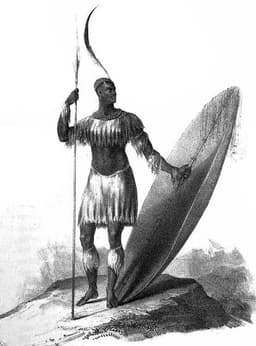
Shaka Zulu
General · Modern
70.2Total
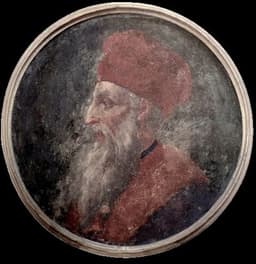
Skanderbeg
General · Medieval
62.7Total
Basic Information
Born
1787
1405
Died
1828
1468
Era
Modern
Medieval
Nationality
Zulu Kingdom
Albania
Occupation
General
General
Civilization
Other
Western
Score Comparison
Military (10%)
80.0
80.0
Political (20%)
72.0
61.3
Influence (20%)
68.0
56.7
Legacy (20%)
68.0
52.0
Leadership (15%)
62.0
72.0
Strategy (15%)
80.8
75.0
TOTAL
70.2
62.7
Shaka Zulu — Complete Timeline
1816 AD
Introduction of the iklwa and horns of the buffalo formationReform
Shaka introduced the iklwa, a short stabbing spear, and the 'horns of the buffalo' tactical formation to the Zulu army. These innovations replaced the traditional throwing assegai and allowed for close-quarters combat, significantly increasing the Zulu's military effectiveness and enabling rapid conquest.
Military InnovationTacticsZulu Warfare
Impact: regional
1819 AD
Conquest of the Ndwandwe KingdomWar◆ Major
Shaka's Zulu army defeated the Ndwandwe kingdom at the Battle of Gqokli Hill, a decisive victory that eliminated a major rival. This conquest allowed Shaka to consolidate control over a large territory in present-day KwaZulu-Natal, marking the rise of the Zulu as a dominant regional power.
ConquestZulu ExpansionNdwandwe
Impact: regional
1828 AD
Assassination of ShakaPolitical Action◆ Major
Shaka was assassinated by his half-brothers Dingane and Mhlangana, with the support of his aunt Mkabayi. The coup ended his reign of terror and expansionist wars, leading to a period of instability and the eventual rise of Dingane as king.
AssassinationSuccession CrisisZulu Kingdom
Impact: regionaltragic
Skanderbeg — Complete Timeline
1444 AD
Battle of TorviollWar
Skanderbeg led a small Albanian force against a larger Ottoman army under Ali Pasha at Torvioll. The Albanian victory marked the beginning of Skanderbeg's rebellion against Ottoman rule and established his reputation as a military commander.
RebellionOttoman EmpireAlbania
Impact: regional
League of LezhëPolitical Action◆ Major
Skanderbeg convened a council of Albanian noblemen at Lezh
AllianceAlbanian UnityVenice
Impact: regionalconstructive
1450 AD
Siege of Krujë (First)War◆ Major
Sultan Murad II personally led a large Ottoman army to besiege the fortress of Kruj
SiegeKrujëMurad II
Impact: regional
1457 AD
Battle of AlbulenaWar◆ Major
Skanderbeg defeated a large Ottoman army commanded by Isak Bey and Hamza Kastrioti at Albulena. The victory crushed an Ottoman attempt to invade Albania and resulted in the capture of Hamza, Skanderbeg's nephew who had defected to the Ottomans.
BattleHamza KastriotiOttoman Defeat
Impact: regional
1466 AD
Siege of Krujë (Second)War
Sultan Mehmed II led a massive Ottoman army to besiege Kruj
SiegeMehmed IIPapal States
Impact: regional
1468 AD
Death at LezhëOther◆ Major
Skanderbeg died of natural causes in Lezh
DeathOttoman ConquestNational Hero
Impact: regionaltragic
Expert Analysis
Shaka Zulu vs Skanderbeg
# The Two Edges of Resistance
On a hillside in southeastern Africa, in September 1828, a king lay bleeding from a dozen stab wounds, murdered by his own brothers. Four centuries earlier and half a world away, in the Venetian-controlled city of Lezhë, an Albanian prince died quietly in his bed, his body wasted by fever, his people still free. Shaka Zulu and Skanderbeg—both military geniuses, both unifiers of fragmented peoples, both defenders against overwhelming empires—ended their lives in radically different ways. One was destroyed from within; the other, from without. The question is not merely what they achieved, but why their fates diverged so completely.
Origins
Shaka was born an outcast. The illegitimate son of a minor Zulu chief, Senzangakhona, he grew up in exile among the rival Mthethwa clan, where he learned the brutal realities of tribal warfare. His childhood was marked by humiliation and hardship—his mother Nandi was cast aside, and young Shaka endured the taunts of other boys. This forged in him a relentless drive for power and a deep suspicion of those close to him.
Skanderbeg, by contrast, was born into privilege—but privilege with a razor's edge. As a boy, Gjergj Kastrioti was sent as a hostage to the Ottoman court, where he was trained as a janissary, converted to Islam, and given the name Iskander. He fought for the sultan in Anatolia and the Balkans, learning Ottoman military tactics from the inside. When he finally deserted in 1443, he brought not only knowledge but also a deep understanding of his enemy's mind.
Rise to Power
Shaka's ascent was violent and swift. After his father's death in 1816, he seized the Zulu chieftainship with the help of the Mthethwa king Dingiswayo. Within months, he had abolished the traditional throwing spears and introduced the *iklwa*—a short, broad-bladed stabbing spear that forced warriors to fight hand-to-hand. He also reorganized the army by age regiments and drilled his men relentlessly. By 1819, at the Battle of Gqokli Hill, his forces defeated the powerful Ndwandwe kingdom, a victory that eliminated his last major rival and opened the way for Zulu expansion.
Skanderbeg's rise was more diplomatic. In 1444, he gathered the Albanian noblemen at Lezhë and convinced them to set aside their feuds and unite against the Ottomans. The League of Lezhë was a fragile coalition, held together by Skanderbeg's personal authority and his proven military ability. At the Battle of Torvioll that same year, he ambushed a larger Ottoman army under Ali Pasha, using a feigned retreat to draw the Turks into a trap. It was a classic commander's victory—not brute force, but cunning.
Leadership & Governance
Shaka ruled through terror and transformation. He centralized power, abolished clan loyalties, and turned the Zulu army into a permanent, disciplined fighting force. His "horns of the buffalo" formation—encircling the enemy with fast-moving flanking units while the "chest" pinned them in place—was revolutionary for its time. But his governance was cruel: he executed thousands for minor offenses, forced celibacy on his warriors, and drove entire tribes from their lands in the *mfecane*—the violent upheaval that depopulated much of southern Africa.
Skanderbeg led through persuasion and example. He fought alongside his men, shared their hardships, and maintained the loyalty of fractious nobles through a mixture of marriage alliances, rewards, and occasional force. His strategy was defensive and guerrilla-like: he avoided open battles unless conditions favored him, used the mountainous terrain of Albania to neutralize Ottoman numerical superiority, and relied on fortified strongholds like Krujë. The First Siege of Krujë in 1450, where Sultan Murad II himself led the assault, ended in Ottoman withdrawal after months of stalemate.
Triumph & Tragedy
Shaka's greatest triumph was the creation of the Zulu Empire itself—a unified nation of perhaps 250,000 people, stretching from the Indian Ocean to the Drakensberg mountains. His tragedy was his own paranoia. After his mother Nandi died in 1827, Shaka descended into madness, ordering mass executions and banning agriculture for a year. His cruelty alienated even his closest supporters. In 1828, his half-brothers Dingane and Mhlangana, backed by his aunt Mkabayi, stabbed him to death in his royal kraal. The empire he built survived, but his dynasty was forever stained by fratricide.
Skanderbeg's greatest triumph was the Second Siege of Krujë in 1466-1467, when Sultan Mehmed II—the conqueror of Constantinople—laid siege with a massive army. The fortress held, and Skanderbeg's counterattacks forced the Ottomans to withdraw. His tragedy was that he never saw the final outcome. He died of natural causes in 1468, and within a decade, the League of Lezhë collapsed. Albania fell to the Ottomans for nearly five centuries. Yet Skanderbeg died free, his reputation intact, his people's resistance remembered.
Character & Destiny
Shaka's personality was shaped by rejection and insecurity. He trusted no one, loved power more than people, and destroyed anyone who might challenge him. This made him effective in conquest but disastrous in governance. He could build an empire but could not sustain it.
Skanderbeg's character was shaped by betrayal and redemption. He had served the Ottomans, then rejected them. He knew the value of loyalty because he had once lacked it. He built alliances not through fear but through shared purpose. This made him a unifier—but also a man whose coalition depended entirely on his personal presence. When he died, the unity died with him.
Legacy
Shaka is remembered as both a national hero and a symbol of terror. In modern South Africa, he is celebrated as a Zulu icon, but historians debate the human cost of his reign. His military innovations influenced African warfare for generations, and his story has been romanticized in novels and films. Yet his assassination reflects a fundamental truth: empires built on fear often collapse from within.
Skanderbeg is revered as the national hero of Albania, his name synonymous with resistance. His helmet and sword are national treasures. He is one of the few medieval commanders who never lost a major battle against the Ottomans. But his legacy is also one of incompleteness—he bought time, but could not buy freedom.
Conclusion
Two warriors, two worlds. Shaka built an empire from nothing and was destroyed by those he trusted. Skanderbeg held an empire at bay and died with his honor intact. The difference was not in their genius—both were among the finest military minds of their ages. It was in their humanity. Shaka ruled by fear; Skanderbeg ruled by respect. One created a nation that outlived him; the other created a memory that outlasted his nation. In the end, the most enduring weapon a leader can wield is not the *iklwa* or the ambush—but the loyalty of those who follow him.
Rankings
🥇
Shaka ZuluLeader
Mil: 80.0Pol: 72.0Inf: 68.0
70.2
🥈
Skanderbeg
Mil: 80.0Pol: 61.3Inf: 56.7
62.7
+7.5 behind
How This Comparison Works
Algorithm
Each figure is scored on 6 dimensions (0—100 scale) based on structured historical data: Military (10%), Political (20%), Influence (20%), Legacy (20%), Leadership (15%), Strategy (15%). The weighted total produces the final ranking.
Data Sources
Scores are computed from structured sub-indicators in the database. Scale factors adjust for era (Ancient ×0.85, Modern ×1.0) and civilization size (Eastern ×1.05, Other ×0.80) to account for differences in population and military scale.
Maximum 3 Figures
Comparisons are limited to 2—3 figures to ensure readability and statistical meaningfulness.
Error Margins
±5 points per dimension — Sub-scores are derived from historical records with inherent uncertainty. Two figures within 5 points on a dimension should be considered roughly equivalent in that area.
Total Score Accuracy
±3 points overall — The weighted combination of 6 dimensions produces a total score with approximately ±3 points of uncertainty. Differences of less than 3 points are not statistically significant— the figures are effectively tied.
Known Limitations
- Historical records are incomplete and uneven across civilizations
- Figures from oral-tradition societies may be underrepresented
- Occupation labels can misclassify multi-role figures
- Scores measure capability and impact, not moral character
- Quantitative scoring is a comparison tool, not absolute truth
Capability Radar
Military (10%) — Battles & Warfare
Battles
85
75
Win Rate
90
85
Expansion
88
40
Political (20%) — Governance & Reform
Reform
85
50
Diplomacy
60
70
Economy
65
40
Influence (20%) — Cultural & Global Reach
Cultural
80
70
Global
70
55
Legacy (20%) — Historical Impact
Historical
85
75
Longevity
75
70
Leadership (15%) — Power & Stability
Tenure
70
65
Stability
55
55
Strategy (15%) — Tactics & Innovation
Strategy
90
75
Tactics
95
80
Reform
98
60
Similar Comparisons
Comments & Discussion
SHIELD-BREAKER6/16/2026
Calling this a fair comparison is like comparing a wildfire to a surgical strike. Shaka's military revolution was fundamentally about logistics and demographics: he forced young men into celibate regiments (izinsizwa) until age 40, creating a standing army that could campaign year-round. Skanderbeg's "army" was never more than 15,000 men, and he won by knowing exactly when to retreat into mountain fortresses. Peak Shaka fielded 50,000. Peak Skanderbeg ran guerilla ops. Apples and pufferfish.
易卜拉欣之眼6/16/2026
把沙卡和斯坎德培放一起比,就像是拿铁锤和手术刀比较。斯坎德培1450年克鲁亚保卫战能赢,不是靠战术天才,而是靠威尼斯人借钱、那不勒斯运粮、匈牙利分兵——他就是个杠杆先生。沙卡呢?靠的是一根刺棍和二十年的草根恐惧统治。两人都用过"焦土战术",但沙卡是为了饿死敌人,斯坎德培是为了饿死自己人。结果?一个被亲兄弟捅死,一个在病床上等死。脸谱化英雄最无聊。
FORMATIONS-FIRST6/16/2026
The real divergence isn't about tactics—it's about succession. Shaka's military reforms created a hyper-centralized killing machine utterly dependent on his personal authority. When he died, the Zulu nation fractured into civil war because his ibutho system had no mechanism for peaceful transition. Skanderbeg's League of Lezhë was a loose feudal coalition; when he died in 1468, his son Gabriel failed to hold it together, but the *idea* of Albanian resistance survived. Shaka built a weapon, Skand
三洲骑兵6/16/2026
数据控:沙卡二十年统一了几百个部落,人口从不足十万膨胀到二十五万;斯坎德培二十五年只控制科索沃南部和阿尔巴尼亚北部,面积不超过两万平方公里。谁更"伟大"?那得看你的尺子。但有一点很清楚:斯坎德培的敌人奥斯曼帝国是当时全球最好的战争机器,沙卡面对的是拿着火枪的布尔人和英国红衫军——两种完全不同的文明对决。把这两个人放在"抗敌英雄"框里,本身就是殖民史观的后遗症。
SPEAR-THROWER6/16/2026
Let's talk about their actual weapons. Skanderbeg used the Ottoman sabre and knew how to counter Ottoman tactics because he'd been a janissary commander in Anatolia. Shaka revolutionized the iklwa short stabbing spear and the isihlangu cowhide shield, forcing close-quarters battle that negated throwing spears. One man adapted existing technology, the other invented a new paradigm. And yet