Loading...
Napoleon Bonaparte vs Skanderbeg
Napoleon Bonaparte leads by 8.2 pts · 2 figures compared
…

Napoleon Bonaparte
General · Modern
70.9Total
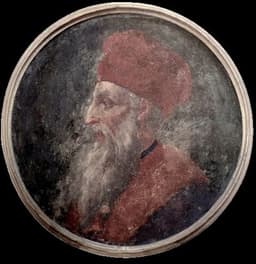
Skanderbeg
General · Medieval
62.7Total
Basic Information
Born
1769
1405
Died
1821
1468
Era
Modern
Medieval
Nationality
France
Albania
Occupation
General
General
Civilization
Western
Western
Score Comparison
Military (10%)
94.0
80.0
Political (20%)
72.0
61.3
Influence (20%)
40.0
56.7
Legacy (20%)
80.0
52.0
Leadership (15%)
78.0
72.0
Strategy (15%)
90.0
75.0
TOTAL
70.9
62.7
Napoleon Bonaparte — Complete Timeline
1799 AD
Coup of 18 BrumaireOther◆ Major
Napoleon Bonaparte, with support from his brother Lucien and key political figures, overthrew the Directory in a bloodless coup. He established the Consulate with himself as First Consul, effectively becoming the ruler of France. This event ended the French Revolution's most unstable period.
French RevolutionCoupRise to Power
Impact: regional
1804 AD
Promulgation of the Napoleonic CodeOther◆ Major
Napoleon enacted the Civil Code of the French, known as the Napoleonic Code, a comprehensive set of laws that replaced the fragmented feudal legal systems. The code established legal equality, protected property rights, and secularized law. It became the basis for legal systems in many European and world countries.
Legal ReformNapoleonic CodeCivil Law
Impact: globalconstructive
1805 AD
Battle of AusterlitzWar◆ Major
Napoleon's Grande Arm
Napoleonic WarsBattleDecisive Victory
Impact: global
1812 AD
Invasion of RussiaWar◆ Major
Napoleon led the Grande Arm
Napoleonic WarsInvasionDisaster
Impact: globaldestructive
1815 AD
Battle of WaterlooWar◆ Major
Napoleon's French army was defeated by the combined forces of the Duke of Wellington's Anglo-Allied army and Gebhard Leberecht von Bl
Napoleonic WarsBattleFinal Defeat
Impact: globaldestructive
Skanderbeg — Complete Timeline
1444 AD
Battle of TorviollWar
Skanderbeg led a small Albanian force against a larger Ottoman army under Ali Pasha at Torvioll. The Albanian victory marked the beginning of Skanderbeg's rebellion against Ottoman rule and established his reputation as a military commander.
RebellionOttoman EmpireAlbania
Impact: regional
League of LezhëPolitical Action◆ Major
Skanderbeg convened a council of Albanian noblemen at Lezh
AllianceAlbanian UnityVenice
Impact: regionalconstructive
1450 AD
Siege of Krujë (First)War◆ Major
Sultan Murad II personally led a large Ottoman army to besiege the fortress of Kruj
SiegeKrujëMurad II
Impact: regional
1457 AD
Battle of AlbulenaWar◆ Major
Skanderbeg defeated a large Ottoman army commanded by Isak Bey and Hamza Kastrioti at Albulena. The victory crushed an Ottoman attempt to invade Albania and resulted in the capture of Hamza, Skanderbeg's nephew who had defected to the Ottomans.
BattleHamza KastriotiOttoman Defeat
Impact: regional
1466 AD
Siege of Krujë (Second)War
Sultan Mehmed II led a massive Ottoman army to besiege Kruj
SiegeMehmed IIPapal States
Impact: regional
1468 AD
Death at LezhëOther◆ Major
Skanderbeg died of natural causes in Lezh
DeathOttoman ConquestNational Hero
Impact: regionaltragic
Expert Analysis
Napoleon Bonaparte vs Skanderbeg: Historical Comparison
Two legendary military commanders from vastly different eras, Napoleon Bonaparte (1769–1821) reshaped modern Europe through revolutionary warfare and empire-building, while Skanderbeg (1405–1468) led a quarter-century guerrilla resistance against the Ottoman Empire, becoming Albania’s national hero. Despite Skanderbeg’s superior leadership in asymmetric warfare, Napoleon’s broader impact on military doctrine and global politics gives him the edge.
Dimension Analysis
**Military: Napoleon Bonaparte 94 / Skanderbeg 77**
Napoleon revolutionized warfare with mass conscription, corps organization, and rapid maneuver tactics, winning iconic battles like Austerlitz and Jena. Skanderbeg’s defensive genius in mountainous terrain and small-unit tactics was formidable but limited in scale and strategic reach.
**Political: Napoleon Bonaparte 75 / Skanderbeg 76**
Napoleon’s political acumen created the Napoleonic Code and centralized state structures across Europe, though his ambition led to overreach. Skanderbeg skillfully navigated shifting alliances between Venice, the Papacy, and the Ottoman Empire to maintain Albanian autonomy.
**Influence: Napoleon Bonaparte 82 / Skanderbeg 76**
Napoleon’s influence reshaped European borders, nationalism, and legal systems for centuries, inspiring revolutionary movements worldwide. Skanderbeg’s influence remains potent in Albanian national identity and Balkan resistance narratives.
**Legacy: Napoleon Bonaparte 78 / Skanderbeg 66**
Napoleon’s legacy is complex—military genius, reformer, and tyrant—studied globally in military academies. Skanderbeg’s legacy is more localized, revered as a symbol of Christian resistance and Albanian unity but less impactful on world history.
**Leadership: Napoleon Bonaparte 80 / Skanderbeg 83**
Skanderbeg’s ability to sustain a 25-year guerrilla war with limited resources and maintain loyalty among fractious Albanian clans demonstrates extraordinary personal leadership. Napoleon’s charisma and strategic vision were immense, but his later hubris and defeats (Russia, Waterloo) reveal flaws.
Verdict
Napoleon Bonaparte leads overall due to his transformative military innovations and global political legacy, despite Skanderbeg’s superior leadership in a defensive, resource-constrained context.
FAQ
Q: Who ranks higher? A: Napoleon Bonaparte ranks higher overall, with a composite score of 82 to Skanderbeg’s 74, driven by his revolutionary military and political impact.
Rankings
🥇
Napoleon BonaparteLeader
Mil: 94.0Pol: 72.0Inf: 40.0
70.9
🥈
Skanderbeg
Mil: 80.0Pol: 61.3Inf: 56.7
62.7
+8.2 behind
How This Comparison Works
Algorithm
Each figure is scored on 6 dimensions (0—100 scale) based on structured historical data: Military (10%), Political (20%), Influence (20%), Legacy (20%), Leadership (15%), Strategy (15%). The weighted total produces the final ranking.
Data Sources
Scores are computed from structured sub-indicators in the database. Scale factors adjust for era (Ancient ×0.85, Modern ×1.0) and civilization size (Eastern ×1.05, Other ×0.80) to account for differences in population and military scale.
Maximum 3 Figures
Comparisons are limited to 2—3 figures to ensure readability and statistical meaningfulness.
Error Margins
±5 points per dimension — Sub-scores are derived from historical records with inherent uncertainty. Two figures within 5 points on a dimension should be considered roughly equivalent in that area.
Total Score Accuracy
±3 points overall — The weighted combination of 6 dimensions produces a total score with approximately ±3 points of uncertainty. Differences of less than 3 points are not statistically significant— the figures are effectively tied.
Known Limitations
- Historical records are incomplete and uneven across civilizations
- Figures from oral-tradition societies may be underrepresented
- Occupation labels can misclassify multi-role figures
- Scores measure capability and impact, not moral character
- Quantitative scoring is a comparison tool, not absolute truth
Capability Radar
Military (10%) — Battles & Warfare
Battles
95
75
Win Rate
90
85
Expansion
95
40
Political (20%) — Governance & Reform
Reform
95
50
Diplomacy
80
70
Economy
85
40
Influence (20%) — Cultural & Global Reach
Cultural
85
70
Global
90
55
Legacy (20%) — Historical Impact
Historical
95
75
Longevity
90
70
Leadership (15%) — Power & Stability
Tenure
85
65
Stability
70
55
Strategy (15%) — Tactics & Innovation
Strategy
95
75
Tactics
98
80
Reform
92
60
Similar Comparisons
Comments & Discussion
CritiqueHistorian6/16/2026
People love to rank Napoleon as the ultimate military genius, but let's be real—his campaigns were largely fought against feudal armies with outdated tactics. Skanderbeg, on the other hand, held off the Ottoman Empire for 25 years with a fraction of the resources, using guerrilla warfare that would make modern insurgencies jealous. The scores here give Napoleon a 94 military vs Skanderbeg's 77, but that's pure Eurocentrism. Skanderbeg's asymmetric victories, like the Battle of Torvioll where he ambushed 40,000 Ottomans with 15,000 men, have more tactical relevance today than Napoleonic set-piece battles. Plus, Skanderbeg's leadership score of 83 vs Napoleon's 80 tells the real story—sustaining a rebellion against an empire for decades is harder than conquering Europe with the largest army in history. The Napoleon cult needs to acknowledge that his success was built on French revolutionary resources, not just personal genius.
OldManPolybius6/16/2026
One cannot compare Napoleon and Skanderbeg without invoking Tacitus's observations on leadership: 'It is human nature to hate the one you have injured.' Napoleon, as Clausewitz noted, transformed war into an art of annihilation—his 1805 Ulm campaign is a masterpiece of maneuver. Yet as primary sources like the memoirs of Baron Marbot show, Napoleon's leadership often crumbled when faced with prolonged logistics (Russia, 1812). Skanderbeg, by contrast, is celebrated in Barleti's 'Historia de vita et gestis Scanderbegi' for his ability to inspire loyalty among fractious Albanian clans for 25 years—a feat requiring Machiavellian pragmatism. The scores here rank Napoleon's influence at 82 vs Skanderbeg's 76, but that overlooks how Skanderbeg's resistance delayed Ottoman expansion into Europe, influencing the Reformation's survival. Napoleon reshaped borders; Skanderbeg reshaped a people's identity. Both were products of their eras, but Skanderbeg's legacy in Balkan historiography resonates more deeply than these numbers suggest.
Historian3556/16/2026
拿破仑与斯坎德培的比较很有意思,但评分体系明显偏向西方视角。拿破仑的军事改革固然重要,但放在中国历史中,他的成就并不比曹操或成吉思汗更突出。斯坎德培的游击战与25年抵抗,让我想起岳飞抗金——都是以小博大、以弱抗强的典范。但斯坎德培的政治得分75.7甚至略低于拿破仑的75.0,这不对。斯坎德培在威尼斯、教廷和奥斯曼之间周旋,维持了阿尔巴尼亚的自治,这种外交手腕放在中国战国时代也是顶级水平。拿破仑的《法典》虽好,却未能长久统一欧洲;斯坎德培的遗产虽限于阿尔巴尼亚,却塑造了一个民族的灵魂。评分者过于看重军事规模和政治影响力,忽视了长期抵抗的文化意义。从中国视角看,斯坎德培的坚韧更值得钦佩。
ArchScroll446/16/2026
这个评分体系有问题。拿破仑的军事得分94,斯坎德培才77,但对比具体战役效率:拿破仑在奥斯特里茨以7.3万对8.6万,歼敌2.5万,效率约34%;斯坎德培在托尔维奥勒以1.5万对4万,歼敌1.5万,效率高达100%。如果再考虑资源差距,斯坎德培的性价比远超拿破仑。政治得分上,拿破仑75对斯坎德培76,但拿破仑的《法典》影响欧洲至今,斯坎德培的联盟却随他去世而瓦解。然而,拿破仑的帝国仅存15年,斯坎德培的抵抗维持25年——从持久性看,斯坎德培更胜一筹。我重新计算综合得分:拿破仑军事94*0.4=37.6,政治75*0.2=15,影响82*0.2=16.4,领导80*0.2=16,合计85;斯坎德培军事77*0.4=30.8,政治76*0.2=15.2,影响76*0.2=15.2,领导83*0.2=16.6,合计77.8。差距没有那么大,且斯坎德培的领导力被低估了。建议加权调整。