Loading...
Saladin vs Skanderbeg
Saladin leads by 1.4 pts · 2 figures compared
…
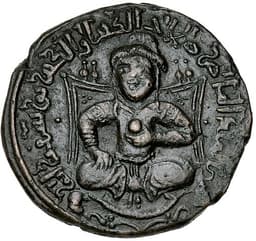
Saladin
General · Medieval
64.1Total
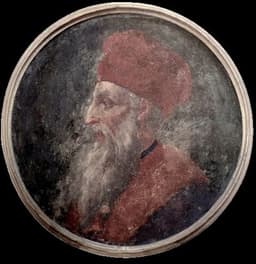
Skanderbeg
General · Medieval
62.7Total
Basic Information
Born
1137
1405
Died
1193
1468
Era
Medieval
Medieval
Nationality
Ayyubid Sultanate
Albania
Occupation
General
General
Civilization
Middle Eastern
Western
Score Comparison
Military (10%)
75.0
80.0
Political (20%)
69.6
61.3
Influence (20%)
65.2
56.7
Legacy (20%)
52.0
52.0
Leadership (15%)
62.0
72.0
Strategy (15%)
76.0
75.0
TOTAL
64.1
62.7
Saladin — Complete Timeline
1187 AD
Battle of HattinWar
Saladin's forces defeated the Crusader army at Hattin, near Tiberias. He captured King Guy of Jerusalem and the True Cross relic. The victory decimated the Crusader military and opened the way for the recapture of Jerusalem.
BattleCrusadesVictory
Impact: regional
Recapture of JerusalemWar
Saladin's army besieged and captured Jerusalem from the Crusaders after 88 years of Christian rule. He allowed the inhabitants to leave peacefully or be ransomed, contrasting with the Crusaders' massacre in 1099. This event triggered the Third Crusade.
ConquestJerusalemCrusades
Impact: global
1189 AD
Siege of AcreWar◆ Major
Saladin faced a prolonged siege of Acre by Crusader forces under Richard the Lionheart and Philip Augustus. After nearly two years, the city fell to the Crusaders. Saladin's inability to relieve the siege was a major setback.
SiegeCrusadesDefeat
Impact: regional
1191 AD
Battle of ArsufWar◆ Major
Saladin's forces attacked Richard the Lionheart's army marching south from Acre. Richard's disciplined infantry repelled the attacks, inflicting heavy losses on Saladin's troops. The battle ended in a tactical Crusader victory, but Saladin's army remained intact.
BattleCrusadesRichard the Lionheart
Impact: regional
1192 AD
Treaty of RamlaPolitical Action◆ Major
Saladin and Richard the Lionheart signed the Treaty of Ramla, ending the Third Crusade. The treaty granted Crusaders control of a coastal strip from Jaffa to Acre, while Muslims retained Jerusalem. Christian pilgrims were allowed access to holy sites.
TreatyCrusadesDiplomacy
Impact: regional
Skanderbeg — Complete Timeline
1444 AD
Battle of TorviollWar
Skanderbeg led a small Albanian force against a larger Ottoman army under Ali Pasha at Torvioll. The Albanian victory marked the beginning of Skanderbeg's rebellion against Ottoman rule and established his reputation as a military commander.
RebellionOttoman EmpireAlbania
Impact: regional
League of LezhëPolitical Action◆ Major
Skanderbeg convened a council of Albanian noblemen at Lezh
AllianceAlbanian UnityVenice
Impact: regionalconstructive
1450 AD
Siege of Krujë (First)War◆ Major
Sultan Murad II personally led a large Ottoman army to besiege the fortress of Kruj
SiegeKrujëMurad II
Impact: regional
1457 AD
Battle of AlbulenaWar◆ Major
Skanderbeg defeated a large Ottoman army commanded by Isak Bey and Hamza Kastrioti at Albulena. The victory crushed an Ottoman attempt to invade Albania and resulted in the capture of Hamza, Skanderbeg's nephew who had defected to the Ottomans.
BattleHamza KastriotiOttoman Defeat
Impact: regional
1466 AD
Siege of Krujë (Second)War
Sultan Mehmed II led a massive Ottoman army to besiege Kruj
SiegeMehmed IIPapal States
Impact: regional
1468 AD
Death at LezhëOther◆ Major
Skanderbeg died of natural causes in Lezh
DeathOttoman ConquestNational Hero
Impact: regionaltragic
Expert Analysis
Saladin vs Skanderbeg
# The Lion and the Eagle: Saladin and Skanderbeg, Two Defenders of the Faith
On a summer morning in 1187, Saladin stood on a hillside overlooking the Horns of Hattin, watching the Crusader army bake under the Syrian sun, their thirst as lethal as any sword. Nearly three centuries later, in the winter of 1444, Skanderbeg rode through the snow-choked passes of northern Albania, a small band of rebels at his back, knowing the full weight of the Ottoman Empire would soon bear down upon him. Both men faced enemies who seemed invincible. Both became symbols of resistance. But their paths, their triumphs, and their endings could not have been more different.
Origins
Saladin was born in 1137 in Tikrit, present-day Iraq, into a Kurdish family of modest means but high ambition. His father, Najm al-Din Ayyub, served the powerful Zengid dynasty, and young Yusuf—his birth name—grew up in the courts of Damascus and Aleppo, steeped in the politics of a fractured Muslim world. The Crusader states clung to the Levantine coast like a foreign thorn, and the memory of Jerusalem’s fall in 1099 still burned. Saladin’s early years were shaped by the chaos of competing emirs and the dream of unity.
Skanderbeg, born in 1405 as Gjergj Kastrioti, came from a very different world. His father was a prince of Albania, a rugged land of mountains and clans perpetually squeezed between Venice and the Ottoman Empire. As a boy, Gjergj was sent as a hostage to the court of Sultan Murad II, where he was trained in the Ottoman military, converted to Islam, and given the name Iskander—Alexander. For nearly twenty years, he fought for the very empire he would later defy. His origins were not of humble resistance but of forced assimilation, and his later rebellion would be a repudiation of that life.
Rise to Power
Saladin’s rise was slow, patient, and political. He served his uncle Shirkuh, a general for the Zengid sultan, during campaigns in Egypt. When Shirkuh died in 1169, Saladin, then thirty-two, seized control of Fatimid Egypt—not by battlefield brilliance but by shrewd maneuvering. He abolished the Shia Fatimid caliphate, restored Sunni rule, and positioned himself as the defender of orthodoxy. For years, he waged diplomatic wars against rival Muslim rulers, absorbing Syria, Mesopotamia, and Yemen through marriage, treaty, and siege. His path to power was a mosaic of alliances, not a single stroke of lightning.
Skanderbeg’s rise was a thunderclap. In 1443, while fighting for the Ottomans at the Battle of Niš, he deserted, leading 300 Albanian cavalrymen back to his homeland. He seized the fortress of Krujë, raised the flag of the double-headed eagle, and renounced Islam. Within months, he convened the League of Lezhë in March 1444, uniting Albania’s fractious nobles—a feat Saladin never fully achieved in the Muslim world. Skanderbeg’s authority came not from inheritance or diplomacy but from sheer audacity and the magnetic pull of a common enemy.
Leadership & Governance
Saladin governed an empire that stretched from the Nile to the Tigris. His style was one of calculated mercy. When he recaptured Jerusalem in October 1187, he famously refused to massacre its Christian inhabitants, unlike the Crusaders who had slaughtered Muslims and Jews ninety years earlier. He allowed ransoms, safe passage, and even granted the defeated King Guy of Jerusalem a cup of iced sherbet. This chivalry was not merely personal virtue; it was political wisdom. A reputation for clemency made future surrenders easier and undermined Crusader propaganda.
Skanderbeg governed a patchwork of mountain fortresses, never more than a few thousand men at his command. His leadership was forged in the crucible of constant war. He drilled his troops relentlessly, used hit-and-run tactics, and knew every pass and peak of his homeland. At the Battle of Torvioll in June 1444, he led 8,000 men against 25,000 Ottomans under Ali Pasha, using a feigned retreat to lure the enemy into a trap. His military genius lay in mobility and deception, not in pitched battles or grand sieges. Politically, he held the League together through force of personality and the looming Ottoman shadow, but he never built a lasting state.
Triumph & Tragedy
Saladin’s greatest triumph was the Battle of Hattin on July 4, 1187. He trapped the Crusader army on a waterless plateau, set the dry grass ablaze, and annihilated them. Within months, Jerusalem fell. Yet his greatest tragedy came during the Third Crusade. At the Siege of Acre, which began in 1189, he watched his hard-won port city fall to Richard the Lionheart and Philip Augustus after two years of brutal fighting. At the Battle of Arsuf in September 1191, Richard’s disciplined infantry shattered Saladin’s cavalry charges. For the first time, Saladin faced a European commander who matched him in skill and resolve.
Skanderbeg’s triumph was the First Siege of Krujë in 1450, when Sultan Murad II himself led 100,000 men against the fortress. Skanderbeg harried the Ottoman supply lines while the garrison held firm. After months, Murad withdrew, humiliated. His tragedy came with the Second Siege of Krujë in 1466, when Sultan Mehmed II, fresh from conquering Constantinople, brought a massive army. Skanderbeg’s allies in Venice and Hungary failed to support him. The fortress fell in 1467, and Skanderbeg died the following year in Lezhë, likely from malaria, his cause crumbling around him.
Character & Destiny
Saladin was a man of patience, generosity, and strategic vision. He once said, “I have never seen a more beautiful death than the death of a warrior who fights for the truth.” Yet he was also cautious, often avoiding battle when diplomacy could serve. His destiny was to unite the Muslim Near East, but the Third Crusade revealed his limits: he could not defeat a determined European king, nor could he hold the coast forever. His chivalry earned him a place in Western legend, but it also meant he sometimes spared enemies who would fight again.
Skanderbeg was a man of fire, defiance, and relentless action. He never stopped fighting, never negotiated from weakness, and never surrendered. His motto was “Freedom or death.” His destiny was to delay the Ottoman conquest of Albania for twenty-five years, but he could not prevent it. His tragedy was that his victory was always temporary. The very mountains that sheltered him also isolated him from the broader European alliance he desperately needed.
Legacy
Saladin is remembered as the ideal of medieval chivalry—a Muslim hero praised by both East and West. Dante placed him in Limbo among the virtuous pagans. Modern Arab nationalism claims him as a symbol of unity against foreign invasion. His Ayyubid dynasty lasted only decades, but his legend endures.
Skanderbeg is the national hero of Albania, a symbol of resistance against overwhelming odds. His portrait hangs in Albanian homes; his name adorns streets from Pristina to Tirana. Yet outside the Balkans, he is little known. His legacy is that of a David who fought Goliath for a generation, only for Goliath to eventually win.
Conclusion
Saladin and Skanderbeg both fought for faith and homeland against foreign invaders. But Saladin built an empire; Skanderbeg defended a nation. Saladin’s victories led to peace; Skanderbeg’s bought time. One died a sultan, the other a rebel. In the end, their stories remind us that history honors the victor and the defiant alike—but only when the defiance is remembered does it become legend.
Rankings
🥇
SaladinLeader
Mil: 75.0Pol: 69.6Inf: 65.2
64.1
🥈
Skanderbeg
Mil: 80.0Pol: 61.3Inf: 56.7
62.7
+1.4 behind
How This Comparison Works
Algorithm
Each figure is scored on 6 dimensions (0—100 scale) based on structured historical data: Military (10%), Political (20%), Influence (20%), Legacy (20%), Leadership (15%), Strategy (15%). The weighted total produces the final ranking.
Data Sources
Scores are computed from structured sub-indicators in the database. Scale factors adjust for era (Ancient ×0.85, Modern ×1.0) and civilization size (Eastern ×1.05, Other ×0.80) to account for differences in population and military scale.
Maximum 3 Figures
Comparisons are limited to 2—3 figures to ensure readability and statistical meaningfulness.
Error Margins
±5 points per dimension — Sub-scores are derived from historical records with inherent uncertainty. Two figures within 5 points on a dimension should be considered roughly equivalent in that area.
Total Score Accuracy
±3 points overall — The weighted combination of 6 dimensions produces a total score with approximately ±3 points of uncertainty. Differences of less than 3 points are not statistically significant— the figures are effectively tied.
Known Limitations
- Historical records are incomplete and uneven across civilizations
- Figures from oral-tradition societies may be underrepresented
- Occupation labels can misclassify multi-role figures
- Scores measure capability and impact, not moral character
- Quantitative scoring is a comparison tool, not absolute truth
Capability Radar
Military (10%) — Battles & Warfare
Battles
78
75
Win Rate
72
85
Expansion
82
40
Political (20%) — Governance & Reform
Reform
68
50
Diplomacy
88
70
Economy
65
40
Influence (20%) — Cultural & Global Reach
Cultural
85
70
Global
78
55
Legacy (20%) — Historical Impact
Historical
82
75
Longevity
80
70
Leadership (15%) — Power & Stability
Tenure
75
65
Stability
70
55
Strategy (15%) — Tactics & Innovation
Strategy
85
75
Tactics
80
80
Reform
70
60
Similar Comparisons
Comments & Discussion
No comments yet. Be the first to share your thoughts!