Loading...
Skanderbeg vs Sun Tzu
Skanderbeg leads by 1.9 pts · 2 figures compared
…
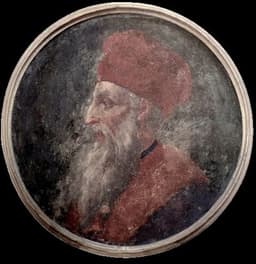
Skanderbeg
General · Medieval
62.7Total
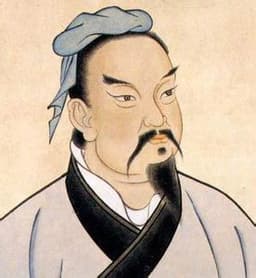
Sun Tzu
General · Ancient
60.8Total
Basic Information
Born
1405
-544
Died
1468
-496
Era
Medieval
Ancient
Nationality
Albania
China
Occupation
General
General
Civilization
Western
Eastern
Score Comparison
Military (10%)
80.0
50.0
Political (20%)
61.3
35.0
Influence (20%)
56.7
85.0
Legacy (20%)
52.0
65.0
Leadership (15%)
72.0
30.0
Strategy (15%)
75.0
85.0
TOTAL
62.7
60.8
Skanderbeg — Complete Timeline
1444 AD
Battle of TorviollWar
Skanderbeg led a small Albanian force against a larger Ottoman army under Ali Pasha at Torvioll. The Albanian victory marked the beginning of Skanderbeg's rebellion against Ottoman rule and established his reputation as a military commander.
RebellionOttoman EmpireAlbania
Impact: regional
League of LezhëPolitical Action◆ Major
Skanderbeg convened a council of Albanian noblemen at Lezh
AllianceAlbanian UnityVenice
Impact: regionalconstructive
1450 AD
Siege of Krujë (First)War◆ Major
Sultan Murad II personally led a large Ottoman army to besiege the fortress of Kruj
SiegeKrujëMurad II
Impact: regional
1457 AD
Battle of AlbulenaWar◆ Major
Skanderbeg defeated a large Ottoman army commanded by Isak Bey and Hamza Kastrioti at Albulena. The victory crushed an Ottoman attempt to invade Albania and resulted in the capture of Hamza, Skanderbeg's nephew who had defected to the Ottomans.
BattleHamza KastriotiOttoman Defeat
Impact: regional
1466 AD
Siege of Krujë (Second)War
Sultan Mehmed II led a massive Ottoman army to besiege Kruj
SiegeMehmed IIPapal States
Impact: regional
1468 AD
Death at LezhëOther◆ Major
Skanderbeg died of natural causes in Lezh
DeathOttoman ConquestNational Hero
Impact: regionaltragic
Sun Tzu — Complete Timeline
512 BC
Service as General for King Helü of WuWar◆ Major
Sun Tzu served as a general under King Hel
GeneralWuWar
Impact: regional
506 BC
Battle of BojuWar◆ Major
Sun Tzu is traditionally credited with contributing to the Wu victory at the Battle of Boju, where Wu forces defeated the larger Chu army. The battle demonstrated the application of strategic principles from The Art of War.
BattleWuChu
Impact: regional
500 BC
Composition of The Art of WarCultural
Sun Tzu authored The Art of War, a treatise on military strategy and tactics. The text covers planning, deception, terrain, and leadership, and has been studied for centuries in both military and civilian contexts worldwide.
Military StrategyClassicPhilosophy
Impact: globalconstructive
Expert Analysis
Sun Tzu vs Skanderbeg
# The Strategist and the Knight: Why Sun Tzu and Skanderbeg Built Different Kinds of Greatness
On a spring morning in 506 BCE, somewhere in the marshes of eastern China, a general named Sun Tzu watched his army move through fog as if it were a single organism. Half a world away and two thousand years later, in the summer of 1444, another commander—Skanderbeg—led a ragged band of Albanian mountaineers down a hillside at Torvioll, charging into an Ottoman force three times its size. Both men won their battles. But the paths they walked to victory, and the worlds they left behind, could not have been more different. Why did one become a philosopher of war, and the other a martyr for a nation that would not exist for another four centuries?
Origins
Sun Tzu was born into the chaos of China's Spring and Autumn period, around 544 BCE, when a dozen feudal states clawed at each other for supremacy. He was likely a minor aristocrat from the state of Qi, a land of scholars and soldiers. His world was one of ritualized warfare, bronze chariots, and codes of honor that were already cracking under the pressure of total war. The question that haunted his era was not *how* to fight, but *how to win without destroying yourself*.
Skanderbeg entered history in 1405, in a very different kind of chaos. Born Gjergj Kastrioti to an Albanian noble family, he was taken as a hostage by the Ottoman Sultan Murad II, raised in the imperial court, trained as a Janissary, and given the name "Skanderbeg"—a Turkified echo of Alexander the Great. For twenty years, he fought for the empire that had stolen his childhood. He knew Ottoman tactics because he had learned them from the inside. When he finally deserted in 1443, he carried not just a sword, but a burning knowledge of his enemy's mind.
The difference in their origins is already a clue: Sun Tzu was born into a world of competing equals, where victory meant outthinking your mirror. Skanderbeg was born into an empire that devoured nations, where victory meant surviving the impossible.
Rise to Power
Sun Tzu entered the historical stage through a story so perfect it might be legend. According to the *Records of the Grand Historian*, he was summoned by King Helü of Wu, who asked for a demonstration of his military methods. Sun Tzu divided the king's concubines into two companies, gave them commands, and when they laughed instead of obeyed, he executed the king's two favorite women. The king was horrified, but Sun Tzu explained: if the general's orders are not followed, the army is useless. The king, impressed by his ruthlessness, appointed him general. Whether literally true or not, the story captures something essential: Sun Tzu rose by proving he understood the psychology of command.
Skanderbeg's rise was more direct. In 1443, during a battle against the Hungarians, he deserted the Ottoman army with 300 Albanian horsemen, seized the fortress of Krujë by forging a letter from the sultan, and then raised the flag of the Kastrioti family. He was thirty-eight years old, a traitor to one empire and the hope of a people who had never been a nation. Within months, he convened the League of Lezhë—a council of Albanian nobles who agreed to unite against the Ottomans. It was a political miracle, born not from philosophy but from desperation.
Sun Tzu climbed the ladder of an established state. Skanderbeg had to build the ladder himself, from scratch, while the Ottomans tried to burn it down.
Leadership and Governance
Sun Tzu ruled through ideas. His *Art of War*, likely composed around 500 BCE, is not a memoir or a chronicle of battles. It is a system: thirteen chapters on planning, terrain, deception, and the moral factors that decide conflicts. "All warfare is based on deception," he wrote. "Appear weak when you are strong, and strong when you are weak." His genius was to abstract war into principles that could be applied anywhere, by anyone, against any enemy. He was less a general in the field than a strategist who taught generals how to think.
Skanderbeg ruled through presence. He fought in the front lines, slept in the same mud as his soldiers, and personally led charges that turned the tide of battles. At the Battle of Albulena in 1457, he crushed a massive Ottoman army commanded by his own treacherous nephew, Hamza Kastrioti, by feigning retreat and then springing a devastating ambush—a tactic Sun Tzu would have recognized. But Skanderbeg's leadership was not abstract. It was embodied, visceral, and dependent on his personal authority. When he died, the League of Lezhë disintegrated within months.
The difference is profound. Sun Tzu built a system that could outlast him. Skanderbeg built a movement that depended on him.
Triumph and Tragedy
Sun Tzu's greatest triumph was not a battle but a book. The Battle of Boju in 506 BCE, where Wu forces defeated the powerful state of Chu, is traditionally credited to his strategies. But the details are sparse, and some historians doubt he was even there. His real victory was creating a text so durable that two millennia later, Napoleon would study it, Mao Zedong would quote it, and American generals would carry it into the Gulf War.
Skanderbeg's greatest triumph was the First Siege of Krujë in 1450, when Sultan Murad II himself led 100,000 men against a fortress defended by a few thousand. Skanderbeg harassed the Ottoman supply lines, launched night raids, and held the sultan at bay for months until he withdrew—humiliated. It was a victory of sheer will against impossible odds.
But tragedy followed both men. Sun Tzu's later years are a mystery; he may have been executed, or died in obscurity. His philosophy was used by tyrants as well as strategists. Skanderbeg's tragedy was that his life's work died with him. In 1468, he succumbed to malaria in Lezhë. Within a decade, the Ottomans had overrun Albania. It would be 450 years before an independent Albanian state existed again.
Character and Destiny
Sun Tzu was a thinker who happened to be a soldier. His personality, as far as we can reconstruct it, was cool, analytical, and detached. He wrote about war the way a mathematician writes about equations. His decisions were driven by calculation, not passion. This allowed him to create a system that transcended his own time and place.
Skanderbeg was a soldier who happened to be a thinker. He was fierce, charismatic, and deeply emotional—a man who had been stolen from his family, forced to fight for his captors, and then chose to burn everything for freedom. His decisions were driven by loyalty, honor, and a rage that he channeled into strategy. This made him a hero to his people but limited his ability to build institutions.
Their different destinies flow from these different characters. Sun Tzu's legacy is a book that can be read by anyone, anywhere. Skanderbeg's legacy is a memory that kept a people alive through centuries of occupation.
Legacy
Sun Tzu is remembered as one of the most influential thinkers in human history. His *Art of War* is studied in military academies, business schools, and even sports locker rooms. His name is synonymous with strategic brilliance. He has become an abstraction, a symbol of cunning and foresight.
Skanderbeg is remembered as the national hero of Albania. His statue stands in every Albanian city. His helmet and sword are national treasures. He is not an abstraction but a living symbol of resistance. When Albanians speak of him, they speak of a father, a protector, a man who refused to kneel.
The difference in their legacies is not a matter of merit but of purpose. Sun Tzu wrote for the ages. Skanderbeg fought for a moment—and that moment became eternal.
Conclusion
Standing at the grave of Skanderbeg in Lezhë, you feel the weight of a struggle that never quite ended. Standing with a copy of *The Art of War* in your hands, you feel the weight of a mind that saw through the chaos of battle to the patterns beneath. One man gave his people a sword. The other gave humanity a mirror. Both were generals. Both were strategists. But they answered different questions: Sun Tzu asked *how to win*, and Skanderbeg asked *what is worth fighting for*. In the end, perhaps the second question is the harder one.
Rankings
🥇
SkanderbegLeader
Mil: 80.0Pol: 61.3Inf: 56.7
62.7
🥈
Sun Tzu
Mil: 50.0Pol: 35.0Inf: 85.0
60.8
+1.9 behind
How This Comparison Works
Algorithm
Each figure is scored on 6 dimensions (0—100 scale) based on structured historical data: Military (10%), Political (20%), Influence (20%), Legacy (20%), Leadership (15%), Strategy (15%). The weighted total produces the final ranking.
Data Sources
Scores are computed from structured sub-indicators in the database. Scale factors adjust for era (Ancient ×0.85, Modern ×1.0) and civilization size (Eastern ×1.05, Other ×0.80) to account for differences in population and military scale.
Maximum 3 Figures
Comparisons are limited to 2—3 figures to ensure readability and statistical meaningfulness.
Error Margins
±5 points per dimension — Sub-scores are derived from historical records with inherent uncertainty. Two figures within 5 points on a dimension should be considered roughly equivalent in that area.
Total Score Accuracy
±3 points overall — The weighted combination of 6 dimensions produces a total score with approximately ±3 points of uncertainty. Differences of less than 3 points are not statistically significant— the figures are effectively tied.
Known Limitations
- Historical records are incomplete and uneven across civilizations
- Figures from oral-tradition societies may be underrepresented
- Occupation labels can misclassify multi-role figures
- Scores measure capability and impact, not moral character
- Quantitative scoring is a comparison tool, not absolute truth
Capability Radar
Military (10%) — Battles & Warfare
Battles
75
30
Win Rate
85
40
Expansion
40
20
Political (20%) — Governance & Reform
Reform
50
10
Diplomacy
70
30
Economy
40
10
Influence (20%) — Cultural & Global Reach
Cultural
70
95
Global
55
95
Legacy (20%) — Historical Impact
Historical
75
98
Longevity
70
99
Leadership (15%) — Power & Stability
Tenure
65
20
Stability
55
10
Strategy (15%) — Tactics & Innovation
Strategy
75
98
Tactics
80
95
Reform
60
85
Similar Comparisons
Comments & Discussion
NicknameRedacted6/16/2026
Sun Tzu wins this comparison hands down. Skanderbeg was a brave guerrilla fighter, but he didn't write anything. His legacy is pure nationalism and myth. Meanwhile, Sun Tzu produced a manual still studied at West Point today. One man influenced millennia of military thought; the other just fought some cool battles in a small mountain region. Real impact vs. local legend - it's not even close.
铁血骑士6/16/2026
你完全搞反了。孙子是高明的理论家,但斯坎德培是一个在绝境中创造奇迹的实战大师。1444年托尔维奥战役,他的游击队砍翻了2.2万奥斯曼精锐,敌军伤亡率超过30%——这叫只会打"酷仗"?孙子的兵法再精妙,他指挥过这种1:3兵力还能全胜的硬仗吗?纸上谈兵vs血战到底。
ClassicsSkeptic6/16/2026
We can't even verify Sun Tzu existed as a real military commander. The earliest reliable references to him come centuries after his supposed death. Compare that to Skanderbeg, whose battles are documented by multiple European and Ottoman chronicles. I'm not saying Sun Tzu is fiction, but when we compare a probable composite legend to a documented historical figure, the "philosopher of war" label starts looking like creative branding.
历史考据侠6/16/2026
别把不同时代的人硬凑在一起比。孙子和斯坎德培隔了1900年,武器、军队组织、战争形态完全不同。孙子的世界是青铜战车和贵族战争,斯坎德培面对的是火药、火枪和奥斯曼帝国的建制军团。把《孙子兵法》用在15世纪的地形上就像用弓箭打加农炮一样荒唐——时代不同,打法不同,没有可比性。