Loading...
Sima Yi vs Totila
Totila leads by 1.1 pts · 2 figures compared
…
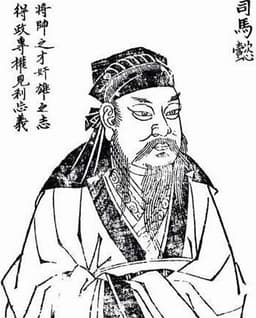
Sima Yi
General · Ancient
58.3Total

Totila
General · Ancient
59.4Total
Basic Information
Born
179
-516
Died
251
—
Era
Ancient
Ancient
Nationality
China
Ostrogothic Kingdom
Occupation
General
General
Civilization
Eastern
Western
Score Comparison
Military (10%)
75.0
75.0
Political (20%)
59.2
43.7
Influence (20%)
58.3
60.0
Legacy (20%)
40.0
54.0
Leadership (15%)
66.0
64.5
Strategy (15%)
74.4
72.0
TOTAL
58.3
59.4
Sima Yi — Complete Timeline
228 AD
Battle of JietingWar◆ Major
Sima Yi led the Cao Wei forces to defeat the Shu Han army at Jieting, forcing Zhuge Liang to retreat. This victory prevented Shu from capturing the Chang'an region and secured Wei's western border.
BattleCao WeiShu HanThree Kingdoms
Impact: regionalconstructive
231 AD
Defense of HefeiWar
Sima Yi successfully defended the city of Hefei against an Eastern Wu invasion led by Sun Quan. He repelled the Wu forces, maintaining Wei control over the Huai River region.
DefenseCao WeiEastern WuThree Kingdoms
Impact: regionalconstructive
249 AD
Coup at Gaoping TombsPolitical Action
Sima Yi staged a coup against the regent Cao Shuang at the Gaoping Tombs. He seized control of the Cao Wei government, executing Cao Shuang and his faction. This event gave the Sima clan effective control over Wei.
CoupCao WeiThree KingdomsPower Struggle
Impact: nationaldestructive
251 AD
Death and Posthumous HonorsOther◆ Major
Sima Yi died in 251 AD. His descendants later founded the Jin dynasty, fulfilling his ambition. He was posthumously honored as Emperor Xuan of Jin, though he never ruled as emperor himself.
DeathJin DynastyLegacy
Impact: national
Totila — Complete Timeline
543 AD
Reconquest of Southern ItalyWar◆ Major
Totila led a successful campaign to reconquer southern Italy from the Byzantines. He captured Naples and other key cities, using a combination of siege tactics and diplomacy. This nearly restored Ostrogothic control over the Italian peninsula.
Gothic WarReconquestOstrogothic Kingdom
Impact: regionalconstructive
546 AD
Capture of RomeWar◆ Major
Totila captured Rome after a long siege, exploiting a night attack. He initially planned to destroy the city but was persuaded to spare it. The capture demonstrated Ostrogothic military capability and weakened Byzantine control.
Siege of RomeGothic WarOstrogoths
Impact: regional
551 AD
Naval Victory at Sena GallicaWar◆ Major
Totila's Ostrogothic fleet was defeated by the Byzantine navy at the Battle of Sena Gallica. This loss cut off Ostrogothic supply lines and allowed the Byzantines to launch a final campaign under Narses, leading to Totila's downfall.
Naval BattleByzantine VictoryGothic War
Impact: regionaldestructive
552 AD
Battle of TaginaeWar
Totila led the Ostrogothic army against the Byzantine general Narses at Taginae in central Italy. The Ostrogoths were decisively defeated, and Totila was killed in the battle. This defeat marked the end of Ostrogothic resistance in Italy.
Gothic WarByzantine ReconquestDeath
Impact: regionaltragic
Expert Analysis
Origins
**Sima Yi** (179-251 AD) was born into a prominent Han dynasty family in what is now Henan province. His father, Sima Fang, served as a high-ranking official. Sima Yi received a classical Confucian education and began his career as a minor official under the warlord Cao Cao. He demonstrated administrative skill and strategic insight, gradually earning trust within the Cao Wei state.
**Totila** (died 552 AD) was born into the Ostrogothic nobility, possibly a relative of King Theodoric the Great. Little is known of his early life before he became king in 541 AD. He rose from obscurity during the Gothic War against the Byzantine Empire, taking command after the death of his uncle Ildibad. His early experiences likely involved military training and exposure to the complex politics of the Ostrogothic kingdom.
Rise to Power
Sima Yi's rise was gradual. He initially served as a strategist under Cao Cao, then under Cao Pi, who became the first emperor of Wei. During the reign of Cao Rui, Sima Yi was appointed to key military commands, successfully defending against Shu Han's northern campaigns. His decisive victory at the Battle of Jieting in 228 AD forced Zhuge Liang to retreat, cementing his reputation. After Cao Rui's death in 239, Sima Yi became co-regent for the young emperor Cao Fang alongside Cao Shuang. In 249 AD, he staged the coup at Gaoping Tombs, seizing power and executing Cao Shuang and his faction.
Totila became king of the Ostrogoths in 541 AD after his predecessor Ildibad was assassinated. At the time, the Byzantine general Belisarius had captured much of Italy. Totila quickly rebuilt the Gothic army and launched a counteroffensive. In 542, he defeated the Byzantines at the Battle of Faventia, then campaigned across southern Italy, capturing Naples in 543 after a siege. By 546, he captured Rome, demonstrating his military prowess. His rise was marked by a series of swift victories that reclaimed most of Italy.
Leadership & Governance
Sima Yi governed through strategic patience and political maneuvering. He consolidated power by appointing loyalists and eliminating rivals. His governance focused on maintaining stability within Wei while preparing for eventual Jin dynasty ascension. He implemented agricultural reforms and maintained a strong military but did not pursue major social changes. His leadership style was calculating and cautious, often outmaneuvering opponents through deception and timing. For example, he feigned illness to lull Cao Shuang into complacency before the coup.
Totila ruled with a more populist approach. He sought to win over the Roman population by treating prisoners humanely and protecting cities from destruction. He issued coins in his name and attempted to restore the Ostrogothic kingdom's legitimacy. He relied on speed and aggression in military campaigns, often using guerrilla tactics. However, his governance was strained by the ongoing war. He struggled to secure lasting alliances and faced internal dissent. His decision to spare Rome after capturing it showed strategic leniency, but his lack of administrative infrastructure limited his control.
Triumph & Tragedy
Sima Yi's greatest triumph was the coup at Gaoping Tombs, which allowed him to dominate Wei and set the stage for his descendants to found the Jin dynasty. He also achieved significant military victories, including the defense of Hefei against Wu in 233 AD. His greatest failure was his inability to fully conquer Shu Han, as his campaigns against Zhuge Liang ended in stalemate. Additionally, his usurpation created a precedent of military strongmen overthrowing emperors, contributing to political instability.
Totila's triumphs include recapturing most of Italy from the Byzantines between 541 and 549 AD, including Rome and Naples. He nearly drove the Byzantines out of Italy. His tragedy came at the Battle of Taginae in 552 AD, where he was decisively defeated by the Byzantine general Narses. Totila was killed in battle, and his kingdom collapsed shortly after. His failure to secure naval superiority also hindered his efforts, as the Byzantine navy controlled supply routes.
Character & Destiny
Sima Yi was patient, methodical, and ruthless. He carefully calculated risks and waited for opportunities. His character allowed him to outlast rivals and seize power without open rebellion. However, his ambition led to a legacy of usurpation. Historical assessments vary: Confucian historians criticized his disloyalty, while others praised his strategic genius.
Totila was bold, charismatic, and military-minded. He inspired loyalty among his troops and showed clemency toward enemies. But his impulsiveness and lack of political depth may have contributed to his downfall. He failed to secure a lasting peace or build a stable administration. His death on the battlefield sealed the fate of the Ostrogoths.
Legacy
Sima Yi's legacy is profound. His descendants founded the Jin dynasty, which unified China after the Three Kingdoms period. His strategies influenced later Chinese military thought. However, his usurpation is often viewed as a dark turn in Chinese history. He scored 40.0 in legacy, reflecting mixed perceptions.
Totila's legacy is that of a valiant but ultimately failed king. He is remembered as the last great Ostrogothic ruler. His campaigns are studied as examples of effective guerrilla warfare. His legacy score of 54.0 acknowledges his impact on the Gothic War and the eventual Byzantine reconquest.
Conclusion
While Totila achieved a higher total score (59.4 vs 58.3), Sima Yi's long-term impact is greater. Sima Yi's political maneuvering led to the Jin dynasty, which ruled China for over a century. Totila's victories were impressive but temporary; his kingdom fell soon after his death. Sima Yi's strategies and political legacy shaped Chinese history for generations, whereas Totila's influence was limited to the Gothic War. Therefore, Sima Yi had a greater overall impact.
Rankings
🥇
TotilaLeader
Mil: 75.0Pol: 43.7Inf: 60.0
59.4
🥈
Sima Yi
Mil: 75.0Pol: 59.2Inf: 58.3
58.3
+1.1 behind
How This Comparison Works
Algorithm
Each figure is scored on 6 dimensions (0—100 scale) based on structured historical data: Military (10%), Political (20%), Influence (20%), Legacy (20%), Leadership (15%), Strategy (15%). The weighted total produces the final ranking.
Data Sources
Scores are computed from structured sub-indicators in the database. Scale factors adjust for era (Ancient ×0.85, Modern ×1.0) and civilization size (Eastern ×1.05, Other ×0.80) to account for differences in population and military scale.
Maximum 3 Figures
Comparisons are limited to 2—3 figures to ensure readability and statistical meaningfulness.
Error Margins
±5 points per dimension — Sub-scores are derived from historical records with inherent uncertainty. Two figures within 5 points on a dimension should be considered roughly equivalent in that area.
Total Score Accuracy
±3 points overall — The weighted combination of 6 dimensions produces a total score with approximately ±3 points of uncertainty. Differences of less than 3 points are not statistically significant— the figures are effectively tied.
Known Limitations
- Historical records are incomplete and uneven across civilizations
- Figures from oral-tradition societies may be underrepresented
- Occupation labels can misclassify multi-role figures
- Scores measure capability and impact, not moral character
- Quantitative scoring is a comparison tool, not absolute truth
Capability Radar
Military (10%) — Battles & Warfare
Battles
78
75
Win Rate
75
80
Expansion
72
70
Political (20%) — Governance & Reform
Reform
65
55
Diplomacy
82
60
Economy
70
50
Influence (20%) — Cultural & Global Reach
Cultural
65
55
Global
55
45
Legacy (20%) — Historical Impact
Historical
80
65
Longevity
75
50
Leadership (15%) — Power & Stability
Tenure
80
65
Stability
75
45
Strategy (15%) — Tactics & Innovation
Strategy
85
80
Tactics
88
85
Reform
60
60
Similar Comparisons
Comments & Discussion
No comments yet. Be the first to share your thoughts!