Loading...
Shi Dakai vs Suchinda Kraprayoon
Shi Dakai leads by 22.5 pts · 2 figures compared
…
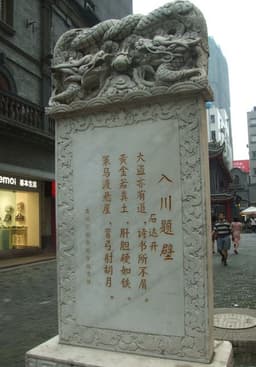
Shi Dakai
General · Modern
59.6Total
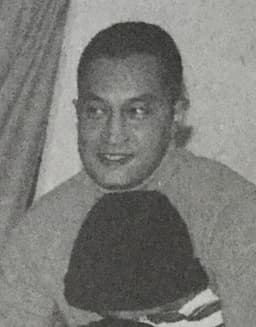
Suchinda Kraprayoon
General · Modern
37.1Total
Basic Information
Born
1831
1933
Died
1863
—
Era
Modern
Modern
Nationality
China
Thailand
Occupation
General
General
Civilization
Eastern
Eastern
Score Comparison
Military (10%)
76.0
10.2
Political (20%)
45.0
27.9
Influence (20%)
56.7
47.1
Legacy (20%)
54.0
37.5
Leadership (15%)
72.0
45.0
Strategy (15%)
68.1
39.6
TOTAL
59.6
37.1
Shi Dakai — Complete Timeline
1851 AD
Jintian UprisingWar◆ Major
Shi Dakai joined the Taiping Rebellion at its inception in Jintian, Guangxi. As a core leader, he helped organize the rebel forces and was appointed Wing King, becoming one of the key military commanders of the Taiping Heavenly Kingdom.
Taiping RebellionUprisingMilitary Command
Impact: national
1854 AD
Battle of XiangtanWar◆ Major
Shi Dakai led Taiping forces to a major victory at Xiangtan, Hunan, defeating Qing imperial troops. This battle secured Taiping control over key territories in the Yangtze River valley and demonstrated his military skill.
Taiping RebellionBattleVictory
Impact: regional
1856 AD
Tianjing IncidentPolitical Action
Shi Dakai returned to Tianjing (Nanjing) after the internal purge of the Eastern King Yang Xiuqing and the murder of the Northern King Wei Changhui. He condemned the violence and was forced to flee, leading to a split in Taiping leadership.
Taiping RebellionInternal ConflictPurge
Impact: nationaltragic
1858 AD
Campaign in Zhejiang and FujianWar
Shi Dakai led a separate Taiping army into Zhejiang and Fujian provinces, capturing several cities. This campaign expanded Taiping influence into southeastern China but also isolated his forces from the main Taiping base.
Taiping RebellionCampaignExpansion
Impact: regional
1863 AD
Battle of Baishui RiverWar◆ Major
Shi Dakai's army was trapped and defeated by Qing forces at the Baishui River in Sichuan. He was captured and executed shortly after, marking the end of his military career and a significant loss for the Taiping cause.
Taiping RebellionBattleDefeatDeath
Impact: nationaltragic
Suchinda Kraprayoon — Complete Timeline
1991 AD
Leadership of the 1991 Thai Coup d'ÉtatPolitical Action◆ Major
General Suchinda Kraprayoon led the National Peace Keeping Council in a bloodless coup that overthrew Prime Minister Chatichai Choonhavan. The coup was justified by claims of corruption and political instability, establishing a military junta.
CoupMilitary JuntaPower Seizure
Impact: nationaldestructive
1992 AD
Appointment as Prime MinisterPolitical Action◆ Major
After a general election, Suchinda was appointed Prime Minister despite not being an elected MP. His appointment sparked widespread protests, as it was seen as a continuation of military rule and a violation of democratic principles.
Prime MinisterControversyMilitary Rule
Impact: nationaldestructive
Black May 1992 Uprising and ResignationPolitical Action
Massive pro-democracy protests in Bangkok, led by Chamlong Srimuang, demanded Suchinda's resignation. The military crackdown resulted in dozens of deaths. King Bhumibol intervened, leading to Suchinda's resignation and the restoration of civilian government.
UprisingBlack MayResignation
Impact: nationaltragic
Expert Analysis
Shi Dakai vs Suchinda Kraprayoon
# The General and the Strongman
In the spring of 1863, on the banks of the Baishui River in Sichuan, a 32-year-old general named Shi Dakai watched his army being annihilated by Qing imperial forces. He would soon be led to the execution ground, his body sliced into pieces—a death reserved for the most dangerous rebels. Nearly 130 years later, in May 1992, another general, Suchinda Kraprayoon, stood in Bangkok, facing hundreds of thousands of protesters demanding his resignation. Unlike Shi Dakai, Suchinda would walk away alive, his political career finished but his life spared. What explains the chasm between these two fates? Both were generals in Eastern civilizations, both seized power through violence, yet one became a tragic hero and the other a cautionary footnote. The answer lies not in their individual brilliance, but in the eras that shaped them and the revolutions they chose to serve.
Origins
Shi Dakai was born in 1831 in Guangxi, southern China, into a Hakka family of modest wealth. The Qing Dynasty, then in its twilight, was cracking under the weight of corruption, opium wars, and peasant desperation. Shi Dakai grew up in a world where the old order was visibly dying, and young men with ambition could either cling to tradition or join the storm. He chose the storm. Suchinda Kraprayoon, born in 1933 in Bangkok, came of age in a very different world—a Thailand that had never been colonized, where the monarchy and military formed a stable partnership. The Cold War was the backdrop of his youth, and the military was the path to power, not rebellion. Where Shi Dakai’s world was a collapsing empire, Suchinda’s was a nation-state with a functioning bureaucracy. The difference in their origins is not just personal; it is structural.
Rise to Power
Shi Dakai entered history at the Jintian Uprising in 1851, when he joined the Taiping Rebellion at age 20. The Taiping Heavenly Kingdom was a messianic, quasi-Christian movement led by Hong Xiuquan, who claimed to be the brother of Jesus Christ. Shi Dakai rose quickly not because of family connections, but because he was a natural military commander. By 1854, at the Battle of Xiangtan, he crushed Qing forces, securing Hunan province and earning the title “Wing King.” His path was forged in fire and blood. Suchinda Kraprayoon’s rise was quieter. He climbed the ranks of the Thai military through loyalty and institutional maneuvering. In 1991, he led the National Peace Keeping Council in a bloodless coup against Prime Minister Chatichai Choonhavan, whom the military accused of corruption. There were no battles, no sieges—just a swift, efficient takeover. Shi Dakai fought for a kingdom of God on earth; Suchinda fought for the status quo.
Leadership & Governance
As a leader, Shi Dakai was a paradox. On the battlefield, he was brilliant—strategic, daring, and beloved by his troops. He understood logistics, terrain, and morale. But politically, he was naive. After the Tianjing Incident of 1856, when the Taiping leaders tore each other apart in a bloody purge, Shi Dakai tried to mediate. He failed. He then withdrew from the capital, leading his own army on a wandering campaign through Zhejiang and Fujian, never quite able to build a stable base. His military genius could not compensate for his lack of political vision. Suchinda, by contrast, was politically calculating. As prime minister in 1992, he tried to consolidate power by appointing himself defense minister and packing the government with allies. But he misread the public mood. When he cracked down on protesters during the Black May uprising, the violence backfired. King Bhumibol Adulyadej intervened, and Suchinda resigned. He was a competent strategist in a coup, but a clumsy politician in a democracy.
Triumph & Tragedy
Shi Dakai’s greatest moment was likely the Battle of Xiangtan, where he proved that a peasant army could defeat the empire’s best. His greatest tragedy was the Baishui River in 1863. Surrounded, outnumbered, and betrayed, he surrendered in a desperate attempt to spare his men. The Qing executed him anyway, and his army was slaughtered. Suchinda’s triumph was the 1991 coup itself—a clean, efficient seizure of power that seemed to promise stability. His tragedy was Black May, when tanks rolled into Bangkok streets and dozens died. The photographs of soldiers beating unarmed students became symbols of a regime that had lost all legitimacy. One general died a martyr; the other died a political ghost.
Character & Destiny
Shi Dakai was a man of conviction. He believed in the Taiping cause, even as it crumbled around him. His letters from prison show a man unbroken, still defiant. Suchinda was a man of ambition. He wanted power, but not at the cost of his life. When the king asked him to step down, he did. Shi Dakai’s character drove him to fight to the end; Suchinda’s drove him to negotiate. Their destinies were sealed by their choices, but also by their eras. In 19th-century China, rebellion was existential—you won everything or lost everything. In 20th-century Thailand, power was a game of institutions and alliances. Shi Dakai could not survive defeat; Suchinda could.
Legacy
Shi Dakai is remembered as a tragic hero in Chinese history—a brilliant general who served a doomed cause. His name appears in textbooks, novels, and folk songs. Suchinda Kraprayoon is remembered, if at all, as a symbol of military overreach. The 1997 Thai constitution, which strengthened democratic checks on the military, was a direct response to his rule. One legacy is romantic and enduring; the other is cautionary and fading.
Conclusion
What separates these two generals is not talent or courage, but the historical currents that carried them. Shi Dakai rode a tidal wave of revolution that promised to remake the world; Suchinda rode a riptide of reaction that sought only to preserve the old order. One drowned in glory; the other washed ashore, forgotten. Their stories remind us that generals are not just men with swords—they are prisoners of their time, and their fates are written not by their own hands alone, but by the age that shaped them.
Rankings
🥇
Shi DakaiLeader
Mil: 76.0Pol: 45.0Inf: 56.7
59.6
🥈
Suchinda Kraprayoon
Mil: 10.2Pol: 27.9Inf: 47.1
37.1
+22.5 behind
How This Comparison Works
Algorithm
Each figure is scored on 6 dimensions (0—100 scale) based on structured historical data: Military (10%), Political (20%), Influence (20%), Legacy (20%), Leadership (15%), Strategy (15%). The weighted total produces the final ranking.
Data Sources
Scores are computed from structured sub-indicators in the database. Scale factors adjust for era (Ancient ×0.85, Modern ×1.0) and civilization size (Eastern ×1.05, Other ×0.80) to account for differences in population and military scale.
Maximum 3 Figures
Comparisons are limited to 2—3 figures to ensure readability and statistical meaningfulness.
Error Margins
±5 points per dimension — Sub-scores are derived from historical records with inherent uncertainty. Two figures within 5 points on a dimension should be considered roughly equivalent in that area.
Total Score Accuracy
±3 points overall — The weighted combination of 6 dimensions produces a total score with approximately ±3 points of uncertainty. Differences of less than 3 points are not statistically significant— the figures are effectively tied.
Known Limitations
- Historical records are incomplete and uneven across civilizations
- Figures from oral-tradition societies may be underrepresented
- Occupation labels can misclassify multi-role figures
- Scores measure capability and impact, not moral character
- Quantitative scoring is a comparison tool, not absolute truth
Capability Radar
Military (10%) — Battles & Warfare
Battles
75
5
Win Rate
70
5
Expansion
75
5
Political (20%) — Governance & Reform
Reform
50
5
Diplomacy
45
10
Economy
40
5
Influence (20%) — Cultural & Global Reach
Cultural
55
5
Global
40
5
Legacy (20%) — Historical Impact
Historical
60
10
Longevity
45
5
Leadership (15%) — Power & Stability
Tenure
55
10
Stability
35
5
Strategy (15%) — Tactics & Innovation
Strategy
80
10
Tactics
85
10
Reform
60
5
Similar Comparisons
Comments & Discussion
CaptainHistory6/16/2026
Shi Dakai was a fool who threw his life away for a lost cause—the Taiping Rebellion was doomed from the start, and he knew it. In Sichuan in 1863, he could have fled west or negotiated with the Qing, but he chose martyrdom instead. Suchinda, on the other hand, was a pragmatic survivor; in 1992, when the Black May protests hit, he resigned and avoided bloodbath escalation because he knew power was temporary. Shi’s death was a romantic waste, not heroism. Give me Suchinda’s calculus any day: live
数据侦探6/16/2026
这个对比就是个伪命题——把1863年中国清朝的叛乱将领和1992年泰国政变军人放一起比,完全是时代错位。数据上,石达开失败时太平天国已近崩溃,他的33万军队在渡河时被清军偷袭减员八成,纯属战术灾难。而素金达在曼谷面对的是非暴力示威,他没有造成大规模屠杀,最终妥协。硬说“悲剧英雄”对“政治脚注”,就是忽略两个世纪的技术差距和权力结构差异。逻辑上根本不成立。
SinoClassics6/16/2026
石达开之死,是忠义的挽歌。他临刑前神色自若,作诗“我志未酬人亦苦”,这种气节在东亚文化里是顶级的——他不是打不过清军,而是选择以死全节。反观素金达,1992年面对抗议就退缩,毫无军人风骨。石达开31岁就懂得“宁为玉碎”,素金达59岁却只知权谋算计。论历史深度,石达开配享英烈祠,素金达只配当教科书的政变反面教材。两种命运,差的不是时代,是文化精神的分量。
TrenchWarrior6/16/2026
The real story here is about the "rule of law" vs. "the bullet". Shi Dakai was executed because the Qing regime had zero tolerance for rebellion—they literally carved him up in public as a deterrent. Suchinda got to retire because Thailand’s military junta already controlled the courts and media by 1992; he wasn’t about to be martyred. The difference isn’t heroism—it’s that Qing China still operated on raw imperial terror, while modern Thailand had learned to manage dissent through backroom deal
冷眼旁观者6/16/2026
别把石达开神化了——他加入太平天国就是造反头子,最后被凌迟处死,纯粹是政治博弈失败。清朝当时已经腐败透顶,但对付流寇是铁血手段。素金达在1992年泰国民主化浪潮中下台,