Loading...
Shi Dakai vs Soe Win
Shi Dakai leads by 17.9 pts · 2 figures compared
…
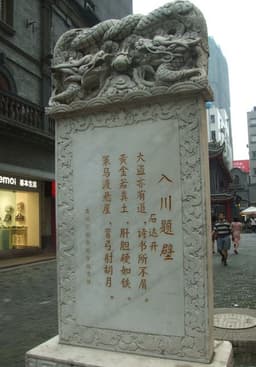
Shi Dakai
General · Modern
59.6Total
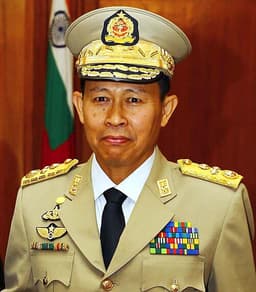
Soe Win
General · Modern
41.7Total
Basic Information
Born
1831
1947
Died
1863
—
Era
Modern
Modern
Nationality
China
Myanmar
Occupation
General
General
Civilization
Eastern
Eastern
Score Comparison
Military (10%)
76.0
25.9
Political (20%)
45.0
30.8
Influence (20%)
56.7
48.6
Legacy (20%)
54.0
40.0
Leadership (15%)
72.0
57.6
Strategy (15%)
68.1
36.8
TOTAL
59.6
41.7
Shi Dakai — Complete Timeline
1851 AD
Jintian UprisingWar◆ Major
Shi Dakai joined the Taiping Rebellion at its inception in Jintian, Guangxi. As a core leader, he helped organize the rebel forces and was appointed Wing King, becoming one of the key military commanders of the Taiping Heavenly Kingdom.
Taiping RebellionUprisingMilitary Command
Impact: national
1854 AD
Battle of XiangtanWar◆ Major
Shi Dakai led Taiping forces to a major victory at Xiangtan, Hunan, defeating Qing imperial troops. This battle secured Taiping control over key territories in the Yangtze River valley and demonstrated his military skill.
Taiping RebellionBattleVictory
Impact: regional
1856 AD
Tianjing IncidentPolitical Action
Shi Dakai returned to Tianjing (Nanjing) after the internal purge of the Eastern King Yang Xiuqing and the murder of the Northern King Wei Changhui. He condemned the violence and was forced to flee, leading to a split in Taiping leadership.
Taiping RebellionInternal ConflictPurge
Impact: nationaltragic
1858 AD
Campaign in Zhejiang and FujianWar
Shi Dakai led a separate Taiping army into Zhejiang and Fujian provinces, capturing several cities. This campaign expanded Taiping influence into southeastern China but also isolated his forces from the main Taiping base.
Taiping RebellionCampaignExpansion
Impact: regional
1863 AD
Battle of Baishui RiverWar◆ Major
Shi Dakai's army was trapped and defeated by Qing forces at the Baishui River in Sichuan. He was captured and executed shortly after, marking the end of his military career and a significant loss for the Taiping cause.
Taiping RebellionBattleDefeatDeath
Impact: nationaltragic
Soe Win — Complete Timeline
2004 AD
Appointed Prime Minister of MyanmarPolitical Action◆ Major
Soe Win was appointed Prime Minister of Myanmar by the State Peace and Development Council, succeeding Khin Nyunt. He served as a key figure in the military junta's government.
Military JuntaGovernment Appointment
Impact: national
2007 AD
Saffron Revolution CrackdownPolitical Action
As Prime Minister, Soe Win oversaw the military's violent suppression of the Saffron Revolution, a series of anti-government protests led by Buddhist monks. The crackdown resulted in numerous deaths, arrests, and international condemnation.
Saffron RevolutionHuman RightsRepression
Impact: nationaldestructive
Death in OfficeOther
Soe Win died in office on October 12, 2007, from leukemia. His death occurred shortly after the Saffron Revolution crackdown, and he was succeeded by Thein Sein.
DeathSuccession
Impact: national
Expert Analysis
Shi Dakai vs Soe Win
# The General's Two Paths: Shi Dakai and Soe Win
In the summer of 1863, on the banks of the Baishui River in Sichuan, a 32-year-old general knelt in the dust, his army destroyed, his dream of a heavenly kingdom in ruins. One hundred and forty-four years later and two thousand miles to the southwest, another general lay in a hospital bed in Yangon, dying of leukemia, his own dream of absolute control shattered by the peaceful defiance of Buddhist monks. Shi Dakai and Soe Win—two generals from Eastern civilizations, both men of war who rose to power through violence, yet whose fates could not have been more different. What drove one to become a legend of chivalry and the other a symbol of repression?
Origins
Shi Dakai was born in 1831 into a wealthy Hakka family in Guangxi, southern China. The Qing Dynasty was crumbling, weakened by opium wars with the West and internal decay. His father, a landowner, provided him with a classical Confucian education, but the young Shi was restless. He read military classics alongside poetry, trained in martial arts, and grew to manhood in a region simmering with ethnic resentment against the Manchu rulers. The Hakka people, marginalized and persecuted, formed the backbone of a revolutionary movement that would soon explode.
Soe Win entered the world in 1947, the year Myanmar gained independence from Britain. His Burma was a newborn nation already torn by ethnic conflict and civil war. Unlike Shi, he came from the ethnic Bamar majority, and his family background remains obscure—a blank that suggests a man who rose through institutional loyalty rather than family connections. He joined the military young, as Myanmar's army became the country's most powerful institution, absorbing the ambitions of thousands of young men who saw no other path to power.
Rise to Power
Shi Dakai's rise was meteoric and romantic. In 1851, at just twenty years old, he joined the Jintian Uprising, the opening act of the Taiping Rebellion. The rebellion's leader, Hong Xiuquan, claimed to be the younger brother of Jesus Christ, and his vision of a "Heavenly Kingdom of Great Peace" electrified millions of impoverished Chinese. Shi, with his education and charisma, quickly became one of the movement's core leaders. By 1854, at the Battle of Xiangtan, he had already proven himself a military genius, leading Taiping forces to a decisive victory over Qing imperial troops. His soldiers called him the "Wing King," and he moved through the battlefield like a bird of prey—swift, precise, deadly.
Soe Win's ascent was slow, bureaucratic, and bloodless. He climbed the ranks of the State Peace and Development Council, Myanmar's military junta, through decades of loyal service. In 2004, he was appointed Prime Minister, succeeding Khin Nyunt after a power struggle within the regime. There was no uprising, no battlefield glory—just the quiet maneuvering of a man who understood that in a military dictatorship, patience and ruthlessness were the only virtues that mattered.
Leadership & Governance
Shi Dakai governed through inspiration. He was known for his personal integrity, refusing to participate in the debauchery that corrupted other Taiping leaders. He paid his soldiers well, shared their hardships, and punished looting and rape with death. His campaigns in Zhejiang and Fujian in 1858 were models of military efficiency—he captured cities with minimal destruction, winning over local populations through fair treatment. But his political wisdom lagged behind his military brilliance. When the Tianjing Incident erupted in 1856—an internal purge that saw the Eastern King Yang Xiuqing murdered and the翼王's own family slaughtered—Shi returned to the capital not to seize power, but to plead for unity. His loyalty was his weakness.
Soe Win governed through fear. As Prime Minister, he was the enforcer of a regime that had crushed democracy movements for decades. His leadership style was cold, impersonal, and efficient. He did not inspire loyalty; he demanded obedience. The military apparatus he commanded was not an army of believers but a machine of control, and he operated it with the soulless precision of an accountant.
Triumph & Tragedy
Shi Dakai's greatest moment was also the seed of his destruction. In 1856, after the Tianjing Incident, he could have taken power. Instead, he chose loyalty to Hong Xiuquan, a man increasingly lost in religious delusion. This decision, born of a code of honor, doomed him. He left the capital to campaign independently, but his army was never strong enough to challenge the Qing alone. In 1863, at the Battle of Baishui River, he was trapped. Surrounded, outnumbered, and out of supplies, he surrendered on the promise that his men would be spared. The Qing executed him by slow slicing. His last act was one of tragic nobility—he offered his own life for his soldiers.
Soe Win's triumph was the suppression of the Saffron Revolution in 2007. Thousands of Buddhist monks, their saffron robes a symbol of peaceful resistance, marched through Yangon demanding democracy. Soe Win ordered the crackdown. Soldiers beat monks, fired into crowds, and sealed monasteries. The protests collapsed. But the world watched, and the regime's legitimacy crumbled. Soe Win died months later, his victory hollow, his name forever linked to the brutal silencing of prayer.
Character & Destiny
Shi Dakai's character was his destiny. He was a romantic in an age of brutality, a man of principle in a movement of fanatics. His military scores of 84.6 and strategy of 81.6 reflect a genuine genius for war, but his political score of 64.8 reveals a fatal naivety. He believed that honor could triumph over cynicism, that loyalty would be rewarded. It was not.
Soe Win's character was also his destiny, but of a different kind. His leadership score of 72.6 suggests competence, but his military score of 44.6 and strategy of 61.6 reveal a man who never commanded armies in battle—only police forces against civilians. He was a bureaucrat of violence, not a warrior. His legacy score of 56.0 reflects a life that added nothing to his nation but pain.
Legacy
Shi Dakai is remembered as the "chivalrous general" of Chinese history. Poems and folk tales celebrate his courage, his integrity, his tragic end. Even his enemies respected him. The Qing official who captured him reportedly wept at his execution. Today, his statues stand in museums, a symbol of what the Taiping Rebellion could have been—a movement of liberation, not fanaticism.
Soe Win is remembered, if at all, as the man who beat monks. In Myanmar, his name is spoken in whispers, if at all. The Saffron Revolution failed, but its spirit outlasted him. The democracy movement he tried to crush eventually achieved partial victory. His legacy is a cautionary tale about power without purpose.
Conclusion
Two generals, two civilizations, two centuries. Shi Dakai fought for a heavenly kingdom that never came; Soe Win fought to preserve an earthly prison that eventually cracked. One died with honor, the other with leukemia. But both were prisoners of their times—Shi of a dying dynasty and a mad prophet, Soe of a paranoid junta and a closed mind. History judges them not by their victories but by their choices. And the choice, in the end, was always the same: to serve something greater than oneself, or to serve only power. Shi Dakai chose greatness and lost everything. Soe Win chose power and gained nothing.
Rankings
🥇
Shi DakaiLeader
Mil: 76.0Pol: 45.0Inf: 56.7
59.6
🥈
Soe Win
Mil: 25.9Pol: 30.8Inf: 48.6
41.7
+17.9 behind
How This Comparison Works
Algorithm
Each figure is scored on 6 dimensions (0—100 scale) based on structured historical data: Military (10%), Political (20%), Influence (20%), Legacy (20%), Leadership (15%), Strategy (15%). The weighted total produces the final ranking.
Data Sources
Scores are computed from structured sub-indicators in the database. Scale factors adjust for era (Ancient ×0.85, Modern ×1.0) and civilization size (Eastern ×1.05, Other ×0.80) to account for differences in population and military scale.
Maximum 3 Figures
Comparisons are limited to 2—3 figures to ensure readability and statistical meaningfulness.
Error Margins
±5 points per dimension — Sub-scores are derived from historical records with inherent uncertainty. Two figures within 5 points on a dimension should be considered roughly equivalent in that area.
Total Score Accuracy
±3 points overall — The weighted combination of 6 dimensions produces a total score with approximately ±3 points of uncertainty. Differences of less than 3 points are not statistically significant— the figures are effectively tied.
Known Limitations
- Historical records are incomplete and uneven across civilizations
- Figures from oral-tradition societies may be underrepresented
- Occupation labels can misclassify multi-role figures
- Scores measure capability and impact, not moral character
- Quantitative scoring is a comparison tool, not absolute truth
Capability Radar
Military (10%) — Battles & Warfare
Battles
75
10
Win Rate
70
10
Expansion
75
10
Political (20%) — Governance & Reform
Reform
50
10
Diplomacy
45
10
Economy
40
10
Influence (20%) — Cultural & Global Reach
Cultural
55
10
Global
40
10
Legacy (20%) — Historical Impact
Historical
60
20
Longevity
45
10
Leadership (15%) — Power & Stability
Tenure
55
30
Stability
35
10
Strategy (15%) — Tactics & Innovation
Strategy
80
10
Tactics
85
10
Reform
60
10
Similar Comparisons
Comments & Discussion
Winged General6/16/2026
Shi Dakai was the Wing King, a romanticized figure who chose honorable surrender to save his men, while Soe Win was a cold-blooded junta enforcer. Shi's last stand at the Dadu River mirrors Leonidas at Thermopylae, but his trust in Qing promises proved fatally naive. History buffs can romanticize, but the blood on Soe Win’s hands from the Saffron Revolution is fresh and undeniable.
铁血书生6/16/2026
石达开是儒家理想主义的绝唱,即使兵败大渡河,他仍坚持"舍命全三军"的侠义之道,这在中国历史上极为罕见。而索温不过是军政府的暴力执行者,2007年镇压僧侣时连基本的人道底线都守不住。一个为信仰而死,一个为权力杀人,根本不在一个层次。
Constantinople's Shadow6/16/2026
The strategic chasm here is vast. Shi Dakai outmaneuvered Qing forces for years, using the Dadu River's terrain expertly until fate betrayed him, whereas Soe Win’s military legacy is a trail of scorched villages in Kayah State. Compare the tactical brilliance of Shi's feigned retreats at the Battle of Tongcheng to Soe Win's crude artillery bombardments in Karen strongholds—one is chess, the other is a sledgehammer.
数据猎人6/16/2026
别被浪漫传说蒙蔽了。石达开的"侠义"导致了大渡河战役的惨败,近万将士被屠杀,他本人被凌迟。反观索温,至少在1988至2007年间维持了缅甸军队的纪律和民族主义凝聚力。数据很残酷:石达开死后,太平天国迅速崩溃;而索温的政策,至少让缅甸保持了统一——哪怕是用铁拳。
Mandalay's Ghost6/16/2026
Revisionist truth: both were brutal enforcers of failed ideologies. Shi Dakai's "Heavenly Kingdom" was a Christian-flavored theocracy that massacred Manchu civilians, while Soe Win's "Burmese Way to Socialism" starved millions. The difference? Shi died with a poet's dignity, composing final verses; Soe Win rotted in a hospital, his legacy cursed by monks. In the end, one earns ballads, the other only obituaries.