Loading...
Salih Hulusi Pasha vs Tokugawa Hidetada
Tokugawa Hidetada leads by 18.2 pts · 2 figures compared
…

Salih Hulusi Pasha
General · Modern
36.5Total
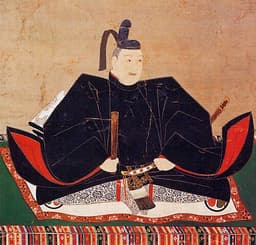
Tokugawa Hidetada
General · Modern
54.7Total
Basic Information
Born
1864
1579
Died
1939
1632
Era
Modern
Modern
Nationality
Ottoman Empire
Japan
Occupation
General
General
Civilization
Middle Eastern
Eastern
Score Comparison
Military (10%)
10.2
10.0
Political (20%)
35.1
60.0
Influence (20%)
47.1
56.7
Legacy (20%)
37.5
58.0
Leadership (15%)
43.8
78.0
Strategy (15%)
25.0
43.3
TOTAL
36.5
54.7
Salih Hulusi Pasha — Complete Timeline
1920 AD
Appointed Grand VizierPolitical Action◆ Major
Salih Hulusi Pasha was appointed Grand Vizier by Sultan Mehmed VI in March 1920. His tenure lasted only a few weeks as he was dismissed by the sultan for refusing to sign the Treaty of S
Grand VizierTreaty of SèvresDismissal
Impact: national
Dismissed by Sultan Mehmed VIPolitical Action◆ Major
Salih Hulusi Pasha was dismissed as Grand Vizier by Sultan Mehmed VI after only two weeks in office. The sultan objected to his refusal to sign the Treaty of S
DismissalTreaty of SèvresSultan
Impact: national
Retired from PoliticsPolitical Action
After his dismissal, Salih Hulusi Pasha retired from political life. He lived quietly in Istanbul during the Turkish War of Independence and the early years of the Republic, dying in 1939.
RetirementTurkish War of Independence
Impact: national
Tokugawa Hidetada — Complete Timeline
1614 AD
Siege of Osaka (Winter Campaign)War◆ Major
Tokugawa Hidetada, as shogun, led the Tokugawa forces in the winter campaign of the Siege of Osaka against Toyotomi Hideyori. The siege ended with a negotiated peace, but Hidetada's forces filled the castle's outer moats, weakening its defenses. This was a key step in eliminating the Toyotomi threat.
SiegeOsakaToyotomi
Impact: national
1615 AD
Siege of Osaka (Summer Campaign)War
Tokugawa Hidetada commanded the Tokugawa army in the summer campaign of the Siege of Osaka. The Tokugawa forces decisively defeated the Toyotomi army, leading to the destruction of Osaka Castle and the death of Toyotomi Hideyori. This ended the last major opposition to Tokugawa rule.
SiegeOsakaTokugawa Victory
Impact: national
Promulgation of the Buke Shohatto (Laws for the Military Houses)Reform◆ Major
Tokugawa Hidetada, with the retired shogun Ieyasu, issued the Buke Shohatto, a code of conduct for daimyo. It restricted castle construction, marriage alliances, and military power, and required daimyo to reside in Edo periodically (sankin kotai). This law consolidated Tokugawa control over the feudal lords.
Legal CodeDaimyo ControlEdo Period
Impact: nationalconstructive
1616 AD
Consolidation of the Bakufu SystemPolitical Action◆ Major
After Tokugawa Ieyasu's death in 1616, Tokugawa Hidetada assumed full authority as shogun. He strengthened the bakufu's administrative structure, appointed loyal fudai daimyo to key positions, and continued policies to centralize power. His reign solidified the Tokugawa shogunate's foundation for over 250 years.
GovernanceCentralizationEdo Period
Impact: nationalconstructive
Expert Analysis
Origins
Salih Hulusi Pasha was born around 1864 in Istanbul, Ottoman Empire. He came from a military family, his father being a naval officer. He graduated from the Ottoman Military Academy and served in various posts, including as a commander in the Balkan Wars. His background was typical of Ottoman officers of the late empire, shaped by the empire's decline and the Young Turk movement.
Tokugawa Hidetada was born in 1579, the third son of Tokugawa Ieyasu, the founder of the Tokugawa shogunate. His mother was Lady Tsukiyama. He was raised in the turbulent Sengoku period, witnessing his father's rise. He received rigorous training in martial arts and governance, preparing him for leadership in a unified Japan.
Rise to Power
Salih Hulusi Pasha's rise was rapid but brief. He served as Minister of War in 1919-1920 during the Allied occupation of Istanbul. In March 1920, Sultan Mehmed VI appointed him Grand Vizier, hoping to manage the rising Turkish nationalist movement. However, his tenure lasted only two weeks. He refused to sign the Treaty of Sèvres, which would have partitioned the empire, leading to his dismissal by the sultan on April 2, 1920.
Tokugawa Hidetada became shogun in 1605 after his father Ieyasu formally retired. Ieyasu retained real power, but Hidetada gradually assumed control. His major turning point was the Siege of Osaka (1614-1615), where he commanded the Tokugawa forces. In the winter campaign, he negotiated a truce; in the summer campaign, he decisively defeated the Toyotomi army, eliminating the last major opposition. He also issued the Buke Shohatto in 1615, a code for daimyo that solidified shogunate control.
Leadership & Governance
Salih Hulusi Pasha's leadership score of 43.8 reflects his brief tenure and inability to enact reforms. He attempted to resist the sultan's pressure to sign the Treaty of Sèvres, showing some political independence, but he lacked the power or time to implement any governance. His political score of 35.1 indicates limited influence.
Tokugawa Hidetada, with a leadership score of 78.0, consolidated the bakufu system. After Ieyasu's death in 1616, he fully controlled the shogunate. He appointed loyal officials, centralized administration, and enforced the Buke Shohatto, which restricted castle construction, daimyo marriages, and military alliances. He also controlled the imperial court by issuing the Kinchu narabini Kuge Shohatto, regulating court nobles. His governance ensured stability for over 250 years.
Triumph & Tragedy
Salih Hulusi Pasha's greatest success was his principled refusal to sign the Treaty of Sèvres, which preserved his honor in Turkish nationalist historiography. His failure was his inability to prevent the sultan's dismissal, leading to his political irrelevance. He died in 1939, largely forgotten.
Tokugawa Hidetada's triumph was the elimination of the Toyotomi clan at Osaka, securing Tokugawa hegemony. He also successfully transitioned power after Ieyasu, maintaining stability. His failure was his strained relationship with Ieyasu, who sometimes overruled him. His military score of 10.0 reflects that he relied on Ieyasu's strategies; his own command at Osaka was competent but not innovative.
Character & Destiny
Salih Hulusi Pasha was a principled but passive figure. He chose retirement over continued political struggle, accepting his fate. His character was shaped by loyalty to the sultan and empire, but he lacked the ambition to challenge the system. His destiny was to be a footnote in Ottoman history.
Tokugawa Hidetada was cautious and methodical, but also ambitious. He carefully built on Ieyasu's foundations, avoiding risks. His character was suited for consolidation, not conquest. Historical assessments view him as a capable administrator who solidified the shogunate, though overshadowed by his father.
Legacy
Salih Hulusi Pasha's legacy is minimal. He is remembered as the penultimate grand vizier and a symbol of the Ottoman government's weakness. His scores: Legacy 37.5, Influence 47.1. He had no lasting impact on systems or ideas.
Tokugawa Hidetada's legacy is substantial. He formalized the bakufu system that lasted until 1868. His Buke Shohatto became the foundation of daimyo control. He also established the tradition of retired shoguns wielding power, influencing future successions. His legacy score of 58.0 reflects this enduring impact.
Conclusion
Tokugawa Hidetada had a greater impact than Salih Hulusi Pasha, as shown by their total scores: 54.7 vs 36.5. Hidetada's consolidation of the Tokugawa shogunate created a stable political order that lasted over two centuries, while Hulusi Pasha's brief tenure had no lasting effect. Hidetada's leadership and political scores (78.0 and 60.0) far exceed Hulusi Pasha's (43.8 and 35.1). Even in military matters, Hidetada's decisive victory at Osaka outweighs Hulusi Pasha's lack of military achievement. Hidetada's legacy is structural and enduring, whereas Hulusi Pasha's is symbolic and fleeting. Thus, Tokugawa Hidetada is the more consequential figure.
Rankings
🥇
Tokugawa HidetadaLeader
Mil: 10.0Pol: 60.0Inf: 56.7
54.7
🥈
Salih Hulusi Pasha
Mil: 10.2Pol: 35.1Inf: 47.1
36.5
+18.2 behind
How This Comparison Works
Algorithm
Each figure is scored on 6 dimensions (0—100 scale) based on structured historical data: Military (10%), Political (20%), Influence (20%), Legacy (20%), Leadership (15%), Strategy (15%). The weighted total produces the final ranking.
Data Sources
Scores are computed from structured sub-indicators in the database. Scale factors adjust for era (Ancient ×0.85, Modern ×1.0) and civilization size (Eastern ×1.05, Other ×0.80) to account for differences in population and military scale.
Maximum 3 Figures
Comparisons are limited to 2—3 figures to ensure readability and statistical meaningfulness.
Error Margins
±5 points per dimension — Sub-scores are derived from historical records with inherent uncertainty. Two figures within 5 points on a dimension should be considered roughly equivalent in that area.
Total Score Accuracy
±3 points overall — The weighted combination of 6 dimensions produces a total score with approximately ±3 points of uncertainty. Differences of less than 3 points are not statistically significant— the figures are effectively tied.
Known Limitations
- Historical records are incomplete and uneven across civilizations
- Figures from oral-tradition societies may be underrepresented
- Occupation labels can misclassify multi-role figures
- Scores measure capability and impact, not moral character
- Quantitative scoring is a comparison tool, not absolute truth
Capability Radar
Military (10%) — Battles & Warfare
Battles
5
40
Win Rate
5
45
Expansion
5
25
Political (20%) — Governance & Reform
Reform
20
65
Diplomacy
25
60
Economy
15
55
Influence (20%) — Cultural & Global Reach
Cultural
5
50
Global
5
45
Legacy (20%) — Historical Impact
Historical
10
60
Longevity
5
55
Leadership (15%) — Power & Stability
Tenure
30
70
Stability
10
75
Strategy (15%) — Tactics & Innovation
Strategy
10
40
Tactics
10
35
Reform
15
30
Similar Comparisons
Comments & Discussion
No comments yet. Be the first to share your thoughts!