Loading...
Andre Massena vs Tokugawa Hidetada
Andre Massena leads by 4.7 pts · 2 figures compared
…

Andre Massena
General · Modern
59.4Total
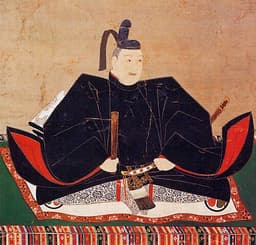
Tokugawa Hidetada
General · Modern
54.7Total
Basic Information
Born
1758
1579
Died
1817
1632
Era
Modern
Modern
Nationality
France
Japan
Occupation
General
General
Civilization
Western
Eastern
Score Comparison
Military (10%)
77.2
10.0
Political (20%)
68.0
60.0
Influence (20%)
56.7
56.7
Legacy (20%)
52.0
58.0
Leadership (15%)
48.8
78.0
Strategy (15%)
69.6
43.3
TOTAL
59.4
54.7
Andre Massena — Complete Timeline
1797 AD
Battle of RivoliWar◆ Major
Masséna commanded the French division that held the center against Austrian attacks. His timely counterattack broke the Austrian line, leading to a decisive French victory. This battle secured French control of northern Italy and forced Austria to sue for peace.
French Revolutionary WarsBattleItalian Campaign
Impact: regional
1799 AD
Battle of ZurichWar◆ Major
Masséna defeated a combined Russian-Austrian army under General Korsakov, preventing the Allies from invading France. He used aggressive tactics and interior lines to defeat a larger force. This victory saved the French Republic from collapse during the War of the Second Coalition.
French Revolutionary WarsBattleSwiss Campaign
Impact: regional
1800 AD
Siege of GenoaWar◆ Major
Masséna held Genoa against an Austrian siege for 60 days with his army starving. He surrendered only after exhausting all supplies, but his defense tied down Austrian forces, allowing Napoleon to win the Battle of Marengo. This sacrifice was crucial for Napoleon's Italian campaign.
Napoleonic WarsSiegeSacrifice
Impact: regional
1809 AD
Battle of Aspern-EsslingWar◆ Major
Masséna commanded the French II Corps in the first major defeat of Napoleon. He held the villages of Aspern and Essling against Austrian attacks, but the French were forced to retreat across the Danube. This was Napoleon's first personal defeat and a major setback.
Napoleonic WarsBattleDefeat
Impact: regional
Battle of WagramWar◆ Major
Masséna led the French left wing in the decisive victory over Austria. His corps suffered heavy casualties but held the line, allowing Napoleon to break the Austrian center. The victory led to the Treaty of Schönbrunn and ended the War of the Fifth Coalition.
Napoleonic WarsBattleDecisive Victory
Impact: regional
1810 AD
Invasion of Portugal (Peninsular War)War◆ Major
Masséna led the French invasion of Portugal with 65,000 men. He captured Ciudad Rodrigo and Almeida, but was stopped by Wellington's Lines of Torres Vedras. His army starved and retreated, losing 25,000 men. This failure marked the turning point in the Peninsular War.
Peninsular WarInvasionFailure
Impact: regionaldestructive
Tokugawa Hidetada — Complete Timeline
1614 AD
Siege of Osaka (Winter Campaign)War◆ Major
Tokugawa Hidetada, as shogun, led the Tokugawa forces in the winter campaign of the Siege of Osaka against Toyotomi Hideyori. The siege ended with a negotiated peace, but Hidetada's forces filled the castle's outer moats, weakening its defenses. This was a key step in eliminating the Toyotomi threat.
SiegeOsakaToyotomi
Impact: national
1615 AD
Siege of Osaka (Summer Campaign)War
Tokugawa Hidetada commanded the Tokugawa army in the summer campaign of the Siege of Osaka. The Tokugawa forces decisively defeated the Toyotomi army, leading to the destruction of Osaka Castle and the death of Toyotomi Hideyori. This ended the last major opposition to Tokugawa rule.
SiegeOsakaTokugawa Victory
Impact: national
Promulgation of the Buke Shohatto (Laws for the Military Houses)Reform◆ Major
Tokugawa Hidetada, with the retired shogun Ieyasu, issued the Buke Shohatto, a code of conduct for daimyo. It restricted castle construction, marriage alliances, and military power, and required daimyo to reside in Edo periodically (sankin kotai). This law consolidated Tokugawa control over the feudal lords.
Legal CodeDaimyo ControlEdo Period
Impact: nationalconstructive
1616 AD
Consolidation of the Bakufu SystemPolitical Action◆ Major
After Tokugawa Ieyasu's death in 1616, Tokugawa Hidetada assumed full authority as shogun. He strengthened the bakufu's administrative structure, appointed loyal fudai daimyo to key positions, and continued policies to centralize power. His reign solidified the Tokugawa shogunate's foundation for over 250 years.
GovernanceCentralizationEdo Period
Impact: nationalconstructive
Expert Analysis
Origins
Andre Massena was born in 1758 in Nice, then part of the Kingdom of Sardinia. Orphaned at age 11, he worked as a cabin boy and later enlisted in the French Royal Army in 1775. After leaving the army, he became a smuggler, a background that gave him resourcefulness and tactical cunning. He re-entered military service during the French Revolution, rising rapidly through the ranks due to his talent.
Tokugawa Hidetada was born in 1579, the third son of Tokugawa Ieyasu, the founder of the Tokugawa shogunate. His early life was shaped by the unification wars of Japan. He was designated heir after his older brother died, and he participated in his father's campaigns, including the decisive Battle of Sekigahara in 1600, where he commanded troops but arrived late, nearly causing a crisis. This event influenced his cautious and methodical approach later.
Rise to Power
Massena's rise was through military brilliance on the battlefield. He became a general in 1793 during the Siege of Toulon. His key turning point was the Battle of Rivoli in 1797, where his division held the center against Austrian attacks and launched a counterattack that broke the Austrian line, leading to a French victory. This earned him Napoleon's trust. He was promoted to Marshal of the Empire in 1804, one of the original 18 marshals. His finest hour came in 1799 at the Second Battle of Zurich, where he defeated a combined Russian-Austrian army and saved France from invasion.
Hidetada's rise was dynastic. He became shogun in 1605 when his father Ieyasu officially retired but retained power as Ōgosho (retired shogun). Hidetada initially ruled in Ieyasu's shadow. His turning point came after Ieyasu's death in 1616, when he assumed full authority. He consolidated power by enforcing the Buke Shohatto (Laws for the Military Houses) in 1615, which restricted daimyo's castle construction and marriage alliances. His greatest military achievement was the Siege of Osaka (1614-1615), where he commanded the Tokugawa forces that destroyed the Toyotomi clan, ending the last major opposition to Tokugawa rule.
Leadership & Governance
Massena's leadership was aggressive and inspirational on the battlefield. He was known for his tenacity and ability to hold positions under extreme conditions. At the Siege of Genoa in 1800, he held out for 60 days with a starving army, buying time for Napoleon to win at Marengo. However, his governance was weak; as a commander, he was often accused of corruption and looting. He failed to secure the loyalty of his troops through administrative skill, relying on personal bravery and tactical acumen.
Hidetada's leadership was bureaucratic and legalistic. As shogun, he focused on institutionalizing the Tokugawa rule. He codified laws for samurai and daimyo, centralized the bakufu's administration, and controlled the imperial court. His military leadership was less impressive; at the Battle of Sekigahara, his late arrival nearly cost the Tokugawa victory. He scored 78.0 in leadership compared to Massena's 48.8, reflecting his effective governance but cautious military command.
Triumph & Tragedy
Massena's greatest triumph was the Second Battle of Zurich (1799), where he defeated a larger Allied army and prevented an invasion of France. His tragedy came at the Battle of Aspern-Essling (1809), where he commanded the II Corps in Napoleon's first major defeat. He held his positions but suffered heavy casualties, and his inability to coordinate with other corps contributed to the loss. Later, he performed poorly in the Peninsular War, being defeated by Wellington at Fuentes de Oñoro in 1811, leading to his removal from command. His military score of 77.2 reflects his successes but also his later failures.
Hidetada's triumph was the consolidation of the Tokugawa shogunate. He successfully eliminated the Toyotomi threat at Osaka and implemented policies that maintained peace for over 250 years. His tragedy was his strained relationship with his father Ieyasu; his late arrival at Sekigahara led to public rebuke, and he was often sidelined during Ieyasu's lifetime. His political score of 60.0 reflects his effective but secondary role.
Character & Destiny
Massena was bold, resourceful, and independent. His smuggler background made him adept at logistics and deception. He was known for his greed, accumulating wealth through plunder, which damaged his reputation. His character led him to excel in desperate situations but fail in sustained campaigns requiring discipline. He died in 1817, largely forgotten except as one of Napoleon's marshals.
Hidetada was cautious, dutiful, and methodical. He lacked his father's strategic genius but was a competent administrator. His destiny was to be the consolidator, not the founder. He died in 1632, having ensured the stability of the Tokugawa regime. His legacy score of 58.0 reflects his role in establishing a long-lasting peace, though he is overshadowed by Ieyasu.
Legacy
Massena's legacy is as one of Napoleon's key marshals, particularly for his defensive campaigns. His tactics at Zurich and Genoa are studied in military academies. However, his overall influence is limited; he scored 56.7 in influence and 52.0 in legacy. He is remembered primarily by military historians.
Hidetada's legacy is more profound. He helped institutionalize the Tokugawa shogunate, which brought over 250 years of peace and isolation to Japan. The Buke Shohatto shaped samurai society, and his administrative reforms lasted until the Meiji Restoration. He scored 58.0 in legacy, reflecting his enduring impact on Japanese history.
Conclusion
While Massena had higher military prowess (77.2 vs Hidetada's 10.0), Hidetada's overall impact was greater due to his role in establishing a stable political system that endured for centuries. Massena's victories were tactical and short-lived, whereas Hidetada's consolidation of the bakufu shaped Japan's early modern period. Thus, Tokugawa Hidetada had a more significant historical impact, despite his lower total score of 54.7 compared to Massena's 59.4. The score gap of 4.7 points does not capture the breadth of Hidetada's legacy.
Rankings
🥇
Andre MassenaLeader
Mil: 77.2Pol: 68.0Inf: 56.7
59.4
🥈
Tokugawa Hidetada
Mil: 10.0Pol: 60.0Inf: 56.7
54.7
+4.7 behind
How This Comparison Works
Algorithm
Each figure is scored on 6 dimensions (0—100 scale) based on structured historical data: Military (10%), Political (20%), Influence (20%), Legacy (20%), Leadership (15%), Strategy (15%). The weighted total produces the final ranking.
Data Sources
Scores are computed from structured sub-indicators in the database. Scale factors adjust for era (Ancient ×0.85, Modern ×1.0) and civilization size (Eastern ×1.05, Other ×0.80) to account for differences in population and military scale.
Maximum 3 Figures
Comparisons are limited to 2—3 figures to ensure readability and statistical meaningfulness.
Error Margins
±5 points per dimension — Sub-scores are derived from historical records with inherent uncertainty. Two figures within 5 points on a dimension should be considered roughly equivalent in that area.
Total Score Accuracy
±3 points overall — The weighted combination of 6 dimensions produces a total score with approximately ±3 points of uncertainty. Differences of less than 3 points are not statistically significant— the figures are effectively tied.
Known Limitations
- Historical records are incomplete and uneven across civilizations
- Figures from oral-tradition societies may be underrepresented
- Occupation labels can misclassify multi-role figures
- Scores measure capability and impact, not moral character
- Quantitative scoring is a comparison tool, not absolute truth
Capability Radar
Military (10%) — Battles & Warfare
Battles
85
40
Win Rate
82
45
Expansion
75
25
Political (20%) — Governance & Reform
Reform
40
65
Diplomacy
50
60
Economy
45
55
Influence (20%) — Cultural & Global Reach
Cultural
60
50
Global
55
45
Legacy (20%) — Historical Impact
Historical
70
60
Longevity
55
55
Leadership (15%) — Power & Stability
Tenure
55
70
Stability
50
75
Strategy (15%) — Tactics & Innovation
Strategy
85
40
Tactics
88
35
Reform
60
30
Similar Comparisons
Comments & Discussion
No comments yet. Be the first to share your thoughts!