Loading...
Arthur Currie vs Tokugawa Hidetada
Tokugawa Hidetada leads by 1.2 pts · 2 figures compared
…

Arthur Currie
General · Modern
53.5Total
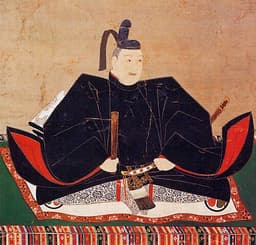
Tokugawa Hidetada
General · Modern
54.7Total
Basic Information
Born
1875
1579
Died
1933
1632
Era
Modern
Modern
Nationality
Canada
Japan
Occupation
General
General
Civilization
Western
Eastern
Score Comparison
Military (10%)
70.0
10.0
Political (20%)
32.2
60.0
Influence (20%)
58.3
56.7
Legacy (20%)
52.0
58.0
Leadership (15%)
43.8
78.0
Strategy (15%)
75.0
43.3
TOTAL
53.5
54.7
Arthur Currie — Complete Timeline
1917 AD
Battle of Vimy RidgeWar
Currie, as a major general, commanded the 1st Canadian Division at the Battle of Vimy Ridge. The Canadian Corps captured the ridge in a carefully planned assault using new tactics including creeping barrages and detailed maps. This victory became a symbol of Canadian national identity.
World War IWestern FrontCanada
Impact: nationalconstructive
Battle of PasschendaeleWar◆ Major
Currie commanded the Canadian Corps at the Battle of Passchendaele. He insisted on careful preparation and refused to attack until ready. The Canadians captured the ruined village on 6 November 1917, but at a cost of 15,654 casualties. Currie later called the battle 'murder'.
World War IWestern FrontAttrition
Impact: regionaltragic
1918 AD
Hundred Days OffensiveWar◆ Major
Currie led the Canadian Corps through the Hundred Days Offensive, including the battles of Amiens, Arras, and the Canal du Nord. The Canadian Corps advanced over 80 miles, captured 31,000 prisoners, and defeated 47 German divisions. This was the most successful Allied corps of the final campaign.
World War IWestern FrontVictory
Impact: globalconstructive
Tokugawa Hidetada — Complete Timeline
1614 AD
Siege of Osaka (Winter Campaign)War◆ Major
Tokugawa Hidetada, as shogun, led the Tokugawa forces in the winter campaign of the Siege of Osaka against Toyotomi Hideyori. The siege ended with a negotiated peace, but Hidetada's forces filled the castle's outer moats, weakening its defenses. This was a key step in eliminating the Toyotomi threat.
SiegeOsakaToyotomi
Impact: national
1615 AD
Siege of Osaka (Summer Campaign)War
Tokugawa Hidetada commanded the Tokugawa army in the summer campaign of the Siege of Osaka. The Tokugawa forces decisively defeated the Toyotomi army, leading to the destruction of Osaka Castle and the death of Toyotomi Hideyori. This ended the last major opposition to Tokugawa rule.
SiegeOsakaTokugawa Victory
Impact: national
Promulgation of the Buke Shohatto (Laws for the Military Houses)Reform◆ Major
Tokugawa Hidetada, with the retired shogun Ieyasu, issued the Buke Shohatto, a code of conduct for daimyo. It restricted castle construction, marriage alliances, and military power, and required daimyo to reside in Edo periodically (sankin kotai). This law consolidated Tokugawa control over the feudal lords.
Legal CodeDaimyo ControlEdo Period
Impact: nationalconstructive
1616 AD
Consolidation of the Bakufu SystemPolitical Action◆ Major
After Tokugawa Ieyasu's death in 1616, Tokugawa Hidetada assumed full authority as shogun. He strengthened the bakufu's administrative structure, appointed loyal fudai daimyo to key positions, and continued policies to centralize power. His reign solidified the Tokugawa shogunate's foundation for over 250 years.
GovernanceCentralizationEdo Period
Impact: nationalconstructive
Expert Analysis
Origins
Arthur Currie was born on December 5, 1875, in Napperton, Ontario, Canada, into a farming family. He worked as a schoolteacher and later as an insurance salesman before joining the Canadian militia. His early military career was modest, but he rose through the ranks due to his dedication and organizational skills. In contrast, Tokugawa Hidetada was born in 1579, the third son of Tokugawa Ieyasu, the founder of the Tokugawa shogunate. He was groomed for leadership from a young age, serving in campaigns alongside his father. Hidetada's early life was steeped in the politics and warfare of Japan's Sengoku period, giving him a strategic advantage in understanding statecraft.
Rise to Power
Currie's rise accelerated during World War I. He commanded the 1st Canadian Division at the Battle of Vimy Ridge in April 1917, a meticulously planned assault that succeeded where French and British attacks had failed. His insistence on detailed reconnaissance, artillery coordination, and thorough preparation earned him a reputation as a capable commander. By 1918, he led the Canadian Corps through the Hundred Days Offensive, achieving significant victories at Amiens, Arras, and the Canal du Nord. Hidetada's path to power was more direct: he became shogun in 1605 upon his father's retirement, though Ieyasu retained real authority until his death in 1616. Hidetada's key military action was the Siege of Osaka (1614-1615), where he commanded forces that destroyed the Toyotomi clan, cementing Tokugawa dominance. His political rise was intertwined with his father's strategy, but he later consolidated power through administrative reforms.
Leadership & Governance
Currie's leadership style emphasized preparation and care for his troops. He was known for opposing the British command's hasty attacks at Passchendaele in 1917, insisting on proper planning before committing his men. This approach minimized casualties but strained relations with superiors. His governance was limited to military command; he had no political role. Hidetada, as shogun, focused on institutionalizing the bakufu system. He issued the Buke Shohatto (Laws for the Military Houses) in 1615, restricting daimyo power, and implemented the sankin kotai (alternate attendance) system, which required daimyo to spend time in Edo. These measures centralized authority and ensured stability for over 250 years. Hidetada's political score of 60.0 reflects his effective governance, while Currie's political score of 32.2 indicates his lack of political influence.
Triumph & Tragedy
Currie's greatest triumph was the capture of Vimy Ridge, a symbol of Canadian national pride. His planning and execution resulted in a rare Allied victory in 1917. However, his insistence on preparation at Passchendaele delayed the attack but ultimately succeeded, though at a cost of 15,000 Canadian casualties. His greatest failure was the lack of recognition for his contributions; he was criticized after the war for high casualties and faced a libel suit. Hidetada's triumph was the final defeat of the Toyotomi at Osaka, eliminating the last major challenge to Tokugawa rule. He also successfully consolidated the bakufu, ensuring peace. His tragedy was the execution of his own brother, Matsudaira Tadateru, for suspected disloyalty, a harsh act that strained family relations. Hidetada's military score of 10.0 is low because his battlefield role was largely ceremonial; his strength was political.
Character & Destiny
Currie was methodical, cautious, and principled. His refusal to rush into battle without preparation saved lives but frustrated Allied commanders. His character led to his success at Vimy but also to post-war controversies. Hidetada was dutiful, strict, and politically astute. He followed his father's blueprint but added his own administrative innovations. His character ensured the stability of the Tokugawa regime but also contributed to its rigidity. Historians assess Currie as a competent corps commander, while Hidetada is seen as a consolidator rather than a founder. Their leadership scores reflect this: Currie scored 43.8, Hidetada 78.0.
Legacy
Currie's legacy is tied to Canada's emergence as a nation on the world stage. Vimy Ridge remains a symbol of Canadian identity. His emphasis on planning influenced modern military doctrine. Hidetada's legacy is the Tokugawa shogunate's long-lasting peace and the feudal system that shaped Japan until the Meiji Restoration. His Buke Shohatto and other laws endured for centuries. In terms of legacy scores, Currie scored 52.0, while Hidetada scored 58.0, reflecting the enduring impact of his political institutions.
Conclusion
Tokugawa Hidetada had a greater overall impact than Arthur Currie, as evidenced by his higher total score of 54.7 versus Currie's 53.5. While Currie's military achievements at Vimy Ridge were significant, they were confined to a single war and a specific national context. Hidetada's political consolidation created a stable system that lasted over 250 years, affecting millions of people across Japan. His influence on governance and feudal structure outweighed Currie's tactical innovations. The data supports the conclusion that Hidetada's legacy is more profound and enduring.
Rankings
🥇
Tokugawa HidetadaLeader
Mil: 10.0Pol: 60.0Inf: 56.7
54.7
🥈
Arthur Currie
Mil: 70.0Pol: 32.2Inf: 58.3
53.5
+1.2 behind
How This Comparison Works
Algorithm
Each figure is scored on 6 dimensions (0—100 scale) based on structured historical data: Military (10%), Political (20%), Influence (20%), Legacy (20%), Leadership (15%), Strategy (15%). The weighted total produces the final ranking.
Data Sources
Scores are computed from structured sub-indicators in the database. Scale factors adjust for era (Ancient ×0.85, Modern ×1.0) and civilization size (Eastern ×1.05, Other ×0.80) to account for differences in population and military scale.
Maximum 3 Figures
Comparisons are limited to 2—3 figures to ensure readability and statistical meaningfulness.
Error Margins
±5 points per dimension — Sub-scores are derived from historical records with inherent uncertainty. Two figures within 5 points on a dimension should be considered roughly equivalent in that area.
Total Score Accuracy
±3 points overall — The weighted combination of 6 dimensions produces a total score with approximately ±3 points of uncertainty. Differences of less than 3 points are not statistically significant— the figures are effectively tied.
Known Limitations
- Historical records are incomplete and uneven across civilizations
- Figures from oral-tradition societies may be underrepresented
- Occupation labels can misclassify multi-role figures
- Scores measure capability and impact, not moral character
- Quantitative scoring is a comparison tool, not absolute truth
Capability Radar
Military (10%) — Battles & Warfare
Battles
75
40
Win Rate
80
45
Expansion
10
25
Political (20%) — Governance & Reform
Reform
15
65
Diplomacy
25
60
Economy
10
55
Influence (20%) — Cultural & Global Reach
Cultural
55
50
Global
55
45
Legacy (20%) — Historical Impact
Historical
65
60
Longevity
60
55
Leadership (15%) — Power & Stability
Tenure
20
70
Stability
20
75
Strategy (15%) — Tactics & Innovation
Strategy
82
40
Tactics
85
35
Reform
78
30
Similar Comparisons
Comments & Discussion
No comments yet. Be the first to share your thoughts!