Loading...
Curtis LeMay vs Tokugawa Hidetada
Curtis LeMay leads by 7.2 pts · 2 figures compared
…

Curtis LeMay
General · Modern
61.9Total
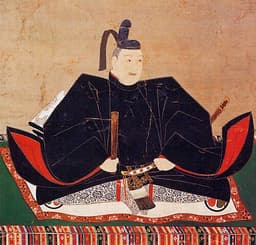
Tokugawa Hidetada
General · Modern
54.7Total
Basic Information
Born
1906
1579
Died
1990
1632
Era
Modern
Modern
Nationality
United States
Japan
Occupation
General
General
Civilization
Western
Eastern
Score Comparison
Military (10%)
78.5
10.0
Political (20%)
45.1
60.0
Influence (20%)
65.0
56.7
Legacy (20%)
55.0
58.0
Leadership (15%)
62.0
78.0
Strategy (15%)
80.3
43.3
TOTAL
61.9
54.7
Curtis LeMay — Complete Timeline
1942 AD
Assumed Command of the 305th Bombardment GroupOther◆ Major
LeMay took command of the 305th Bombardment Group in England in 1942. He implemented rigorous training and formation tactics that reduced bomber losses to German fighters, establishing his reputation as an innovative and demanding commander in the Eighth Air Force.
World War IIStrategic Bombing
Impact: national
1945 AD
Led the Firebombing of TokyoOther◆ Major
On March 9-10, 1945, LeMay ordered 334 B-29 bombers to conduct a low-altitude incendiary raid on Tokyo. The attack destroyed 16 square miles of the city, killed an estimated 100,000 civilians, and burned out over one million residents, marking a shift to area bombing of Japanese cities.
World War IIStrategic BombingCivilian Casualties
Impact: globaldestructive
1948 AD
Appointed Commander of Strategic Air CommandOther◆ Major
LeMay was appointed commander of the Strategic Air Command (SAC) in October 1948. He transformed SAC from a poorly organized force into a highly efficient nuclear deterrent, instituting rigorous training, 24-hour alert status, and a professional culture that defined Cold War air power.
Cold WarNuclear Deterrence
Impact: global
1961 AD
Became Chief of Staff of the United States Air ForceOther◆ Major
LeMay served as Chief of Staff of the U.S. Air Force from June 1961 to February 1965. He advocated for expanded bombing campaigns in the Vietnam War, including the bombing of North Vietnam, and clashed with civilian leadership over strategy, particularly during the Cuban Missile Crisis.
Cold WarVietnam WarMilitary Leadership
Impact: national
1968 AD
Ran for Vice President with George WallacePolitical Action
LeMay was the vice presidential running mate for American Independent Party candidate George Wallace in the 1968 presidential election. His controversial suggestion that nuclear weapons could be used in Vietnam damaged the campaign, which ultimately won 13.5% of the popular vote.
PoliticsPresidential Election
Impact: nationaldestructive
Tokugawa Hidetada — Complete Timeline
1614 AD
Siege of Osaka (Winter Campaign)War◆ Major
Tokugawa Hidetada, as shogun, led the Tokugawa forces in the winter campaign of the Siege of Osaka against Toyotomi Hideyori. The siege ended with a negotiated peace, but Hidetada's forces filled the castle's outer moats, weakening its defenses. This was a key step in eliminating the Toyotomi threat.
SiegeOsakaToyotomi
Impact: national
1615 AD
Siege of Osaka (Summer Campaign)War
Tokugawa Hidetada commanded the Tokugawa army in the summer campaign of the Siege of Osaka. The Tokugawa forces decisively defeated the Toyotomi army, leading to the destruction of Osaka Castle and the death of Toyotomi Hideyori. This ended the last major opposition to Tokugawa rule.
SiegeOsakaTokugawa Victory
Impact: national
Promulgation of the Buke Shohatto (Laws for the Military Houses)Reform◆ Major
Tokugawa Hidetada, with the retired shogun Ieyasu, issued the Buke Shohatto, a code of conduct for daimyo. It restricted castle construction, marriage alliances, and military power, and required daimyo to reside in Edo periodically (sankin kotai). This law consolidated Tokugawa control over the feudal lords.
Legal CodeDaimyo ControlEdo Period
Impact: nationalconstructive
1616 AD
Consolidation of the Bakufu SystemPolitical Action◆ Major
After Tokugawa Ieyasu's death in 1616, Tokugawa Hidetada assumed full authority as shogun. He strengthened the bakufu's administrative structure, appointed loyal fudai daimyo to key positions, and continued policies to centralize power. His reign solidified the Tokugawa shogunate's foundation for over 250 years.
GovernanceCentralizationEdo Period
Impact: nationalconstructive
Expert Analysis
Origins
Curtis LeMay was born on November 15, 1906, in Columbus, Ohio, to a working-class family. His father was a laborer and his mother a homemaker. LeMay attended Ohio State University, earning a degree in civil engineering in 1928. He joined the U.S. Army Air Corps in 1929 and trained as a pilot. His early career was marked by a focus on navigation and bombing techniques.
Tokugawa Hidetada was born in 1579, the third son of Tokugawa Ieyasu, the founder of the Tokugawa shogunate. His mother was a concubine, but he was raised as a legitimate heir. Hidetada received a traditional samurai education, emphasizing martial arts and Confucian ethics. He became the official heir after his elder brother died in 1592.
Rise to Power
LeMay rose through the ranks due to his technical expertise and rigorous training methods. In 1942, he assumed command of the 305th Bombardment Group in England. He implemented formation tactics that reduced bomber losses, earning him a reputation as a skilled organizer. By 1944, he was transferred to the Pacific theater, where he commanded the XXI Bomber Command. His promotion to major general in 1945 came after the success of firebombing raids.
Hidetada became shogun in 1605, when his father Ieyasu formally retired but retained power. Hidetada's early reign was overshadowed by Ieyasu. However, after Ieyasu's death in 1616, Hidetada assumed full authority. He consolidated power by leading campaigns against the Toyotomi clan, culminating in the Siege of Osaka (1614-1615). The winter campaign ended in a negotiated peace, but the summer campaign in 1615 resulted in the destruction of the Toyotomi forces.
Leadership & Governance
LeMay's leadership style was autocratic and detail-oriented. He personally oversaw training and tactics, demanding high standards. As head of Strategic Air Command (SAC) from 1948, he transformed it into a ready nuclear force. His governance approach was confrontational; he advocated for aggressive bombing in Vietnam, leading to conflicts with civilian leaders. His political score of 45.1 reflects his poor diplomatic skills.
Hidetada's governance was more collaborative, working with the retired shogun Ieyasu and later ruling independently. He issued the Buke Shohatto (Laws for the Military Houses) in 1615, restricting daimyo power. He strengthened the bakufu's administrative structure, appointing loyal officials. His leadership score of 78.0 indicates effective consolidation, though his military score of 10.0 is low due to limited direct command.
Triumph & Tragedy
LeMay's greatest triumph was the firebombing of Tokyo on March 9-10, 1945. The raid destroyed 16 square miles and killed over 100,000 people, crippling Japanese war production. He scored 80.3 in strategy for this and other campaigns. However, his advocacy for nuclear strikes during the Vietnam War and his controversial 1968 vice presidential run with George Wallace tarnished his legacy. His legacy score of 55.0 reflects mixed historical views.
Hidetada's triumph was the Siege of Osaka, which eliminated the Toyotomi threat and secured Tokugawa supremacy. He also successfully consolidated the bakufu system, ensuring stability for over 250 years. His failure was his inability to assert authority during Ieyasu's lifetime, resulting in a divided rule. His influence score of 56.7 shows moderate impact.
Character & Destiny
LeMay was known for his bluntness and determination. He was nicknamed "Bombs Away" for his focus on strategic bombing. His character led him to prioritize military solutions over diplomacy, which limited his political effectiveness. His destiny was shaped by the Cold War, where his hardline stance influenced U.S. policy.
Hidetada was cautious and patient, waiting for his father's death to fully rule. His character emphasized stability and control, which suited the consolidation phase of the shogunate. His destiny was to be a transitional figure, bridging Ieyasu's founding and later shoguns.
Legacy
LeMay's legacy is tied to the development of strategic bombing and the nuclear deterrent. SAC under his command became a key Cold War institution. However, his firebombing tactics are criticized as indiscriminate. He scored 65.0 in influence, reflecting his impact on military doctrine.
Hidetada's legacy is the consolidation of the Tokugawa shogunate. The Buke Shohatto and administrative reforms lasted until the Meiji Restoration. He scored 58.0 in legacy, indicating a lasting but less transformative impact compared to his father.
Conclusion
Curtis LeMay had a greater direct impact on warfare and global strategy, as reflected in his total score of 61.9 versus Hidetada's 54.7. LeMay's innovations in aerial bombing changed how wars are fought, while Hidetada's consolidation was crucial but within an existing system. LeMay's higher military and strategy scores (78.5 and 80.3) outweigh Hidetada's leadership (78.0). Thus, LeMay's influence on modern military history is more significant.
Rankings
🥇
Curtis LeMayLeader
Mil: 78.5Pol: 45.1Inf: 65.0
61.9
🥈
Tokugawa Hidetada
Mil: 10.0Pol: 60.0Inf: 56.7
54.7
+7.2 behind
How This Comparison Works
Algorithm
Each figure is scored on 6 dimensions (0—100 scale) based on structured historical data: Military (10%), Political (20%), Influence (20%), Legacy (20%), Leadership (15%), Strategy (15%). The weighted total produces the final ranking.
Data Sources
Scores are computed from structured sub-indicators in the database. Scale factors adjust for era (Ancient ×0.85, Modern ×1.0) and civilization size (Eastern ×1.05, Other ×0.80) to account for differences in population and military scale.
Maximum 3 Figures
Comparisons are limited to 2—3 figures to ensure readability and statistical meaningfulness.
Error Margins
±5 points per dimension — Sub-scores are derived from historical records with inherent uncertainty. Two figures within 5 points on a dimension should be considered roughly equivalent in that area.
Total Score Accuracy
±3 points overall — The weighted combination of 6 dimensions produces a total score with approximately ±3 points of uncertainty. Differences of less than 3 points are not statistically significant— the figures are effectively tied.
Known Limitations
- Historical records are incomplete and uneven across civilizations
- Figures from oral-tradition societies may be underrepresented
- Occupation labels can misclassify multi-role figures
- Scores measure capability and impact, not moral character
- Quantitative scoring is a comparison tool, not absolute truth
Capability Radar
Military (10%) — Battles & Warfare
Battles
85
40
Win Rate
90
45
Expansion
80
25
Political (20%) — Governance & Reform
Reform
45
65
Diplomacy
30
60
Economy
20
55
Influence (20%) — Cultural & Global Reach
Cultural
55
50
Global
70
45
Legacy (20%) — Historical Impact
Historical
75
60
Longevity
60
55
Leadership (15%) — Power & Stability
Tenure
60
70
Stability
25
75
Strategy (15%) — Tactics & Innovation
Strategy
92
40
Tactics
95
35
Reform
88
30
Similar Comparisons
Comments & Discussion
No comments yet. Be the first to share your thoughts!