Loading...
Louis Mountbatten vs Tokugawa Hidetada
Louis Mountbatten leads by 4.4 pts · 2 figures compared
…

Louis Mountbatten
General · Modern
59.1Total
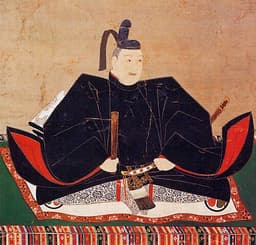
Tokugawa Hidetada
General · Modern
54.7Total
Basic Information
Born
1900
1579
Died
1979
1632
Era
Modern
Modern
Nationality
United Kingdom
Japan
Occupation
General
General
Civilization
Western
Eastern
Score Comparison
Military (10%)
45.0
10.0
Political (20%)
55.0
60.0
Influence (20%)
65.0
56.7
Legacy (20%)
52.0
58.0
Leadership (15%)
70.0
78.0
Strategy (15%)
66.3
43.3
TOTAL
59.1
54.7
Louis Mountbatten — Complete Timeline
1943 AD
Appointed Supreme Allied Commander South East AsiaOther◆ Major
Mountbatten was appointed Supreme Allied Commander of the South East Asia Command (SEAC). He oversaw Allied operations against Japanese forces in Burma, Sumatra, and the Dutch East Indies, coordinating British, Indian, American, and Chinese forces until the Japanese surrender in 1945.
World War IIMilitary CommandSEAC
Impact: regional
1947 AD
Appointed Last Viceroy of IndiaPolitical Action◆ Major
Mountbatten was appointed Viceroy of India by the British government with a mandate to oversee the transfer of power to Indian hands. He arrived in March 1947 and immediately began negotiations with Indian leaders including Nehru, Jinnah, and Gandhi for a unified or partitioned independence.
Indian IndependenceDecolonizationBritish Empire
Impact: global
Announced Partition of India PlanOther◆ Major
Mountbatten announced the plan for the partition of British India into two independent dominions, India and Pakistan, on June 3, 1947. The plan set an accelerated timeline of August 15, 1947, for independence, leading to massive population transfers and communal violence.
PartitionIndiaPakistanDecolonization
Impact: globaldestructive
1955 AD
Served as First Sea LordOther◆ Major
Mountbatten was appointed First Sea Lord, the professional head of the Royal Navy. He served from 1955 to 1959, overseeing naval modernization and the transition from conventional to nuclear-powered submarines and aircraft carriers during the Cold War.
Royal NavyCold WarMilitary Leadership
Impact: national
1979 AD
Assassinated by IRA BombingPolitical Action◆ Major
Mountbatten was killed by a bomb planted on his fishing boat, Shadow V, by the Provisional Irish Republican Army (IRA) near Mullaghmore, County Sligo, Ireland. The explosion also killed three others, including his grandson Nicholas Knatchbull. The assassination was a major propaganda victory for the IRA.
IRAAssassinationNorthern Ireland Conflict
Impact: nationaldestructive
Tokugawa Hidetada — Complete Timeline
1614 AD
Siege of Osaka (Winter Campaign)War◆ Major
Tokugawa Hidetada, as shogun, led the Tokugawa forces in the winter campaign of the Siege of Osaka against Toyotomi Hideyori. The siege ended with a negotiated peace, but Hidetada's forces filled the castle's outer moats, weakening its defenses. This was a key step in eliminating the Toyotomi threat.
SiegeOsakaToyotomi
Impact: national
1615 AD
Siege of Osaka (Summer Campaign)War
Tokugawa Hidetada commanded the Tokugawa army in the summer campaign of the Siege of Osaka. The Tokugawa forces decisively defeated the Toyotomi army, leading to the destruction of Osaka Castle and the death of Toyotomi Hideyori. This ended the last major opposition to Tokugawa rule.
SiegeOsakaTokugawa Victory
Impact: national
Promulgation of the Buke Shohatto (Laws for the Military Houses)Reform◆ Major
Tokugawa Hidetada, with the retired shogun Ieyasu, issued the Buke Shohatto, a code of conduct for daimyo. It restricted castle construction, marriage alliances, and military power, and required daimyo to reside in Edo periodically (sankin kotai). This law consolidated Tokugawa control over the feudal lords.
Legal CodeDaimyo ControlEdo Period
Impact: nationalconstructive
1616 AD
Consolidation of the Bakufu SystemPolitical Action◆ Major
After Tokugawa Ieyasu's death in 1616, Tokugawa Hidetada assumed full authority as shogun. He strengthened the bakufu's administrative structure, appointed loyal fudai daimyo to key positions, and continued policies to centralize power. His reign solidified the Tokugawa shogunate's foundation for over 250 years.
GovernanceCentralizationEdo Period
Impact: nationalconstructive
Expert Analysis
Origins
**Louis Mountbatten** (1900-1979) was born into the British royal family, the son of Prince Louis of Battenberg and Princess Victoria of Hesse. He joined the Royal Navy at age 13, serving in World War I. His naval career was shaped by his family's connections and his own ambition. He attended Christ's College, Cambridge, but his education was cut short by war.
**Tokugawa Hidetada** (1579-1632) was born the third son of Tokugawa Ieyasu, the founder of the Tokugawa shogunate. He was raised in the context of Japan's Warring States period, trained in military arts and governance. His early life was dominated by his father's campaigns, and he was designated heir in 1590, becoming lord of Edo Castle.
Rise to Power
Mountbatten's rise was accelerated by World War II. In 1943, he was appointed Supreme Allied Commander of the South East Asia Command (SEAC), overseeing campaigns in Burma. His leadership in SEAC, though criticized by some, earned him prominence. In 1947, he was appointed the last Viceroy of India, tasked with transferring power to Indian hands. His diplomatic skills were tested in negotiations with Indian and Pakistani leaders.
Hidetada became shogun in 1605, when his father Ieyasu retired, but real power remained with Ieyasu until his death in 1616. Hidetada consolidated his authority through the Siege of Osaka (1614-1615), which eliminated the Toyotomi threat. He commanded the summer campaign, leading to the destruction of Osaka Castle. After Ieyasu's death, Hidetada fully controlled the bakufu, issuing the Buke Shohatto and controlling daimyo.
Leadership & Governance
Mountbatten's leadership was characterized by a hands-on, charismatic style. As Viceroy, he pushed for a quick partition plan, setting August 15, 1947, as the deadline. He worked closely with Jawaharlal Nehru and Muhammad Ali Jinnah, but his plan led to massive population transfers and violence. His governance score is 55.0, reflecting his role as a facilitator rather than a ruler.
Hidetada ruled as shogun, focusing on institutionalizing the bakufu system. He issued the Buke Shohatto (1615) to regulate daimyo, forbade castle repairs, and controlled marriages. He also enforced the sankin kotai (alternate attendance) system, centralizing power. His leadership score is 78.0, indicating effective governance within a feudal framework.
Triumph & Tragedy
Mountbatten's greatest triumph was overseeing the peaceful transfer of power to India and Pakistan, avoiding a prolonged conflict. However, the partition resulted in up to 2 million deaths and 15 million displaced. His failure to anticipate violence tarnished his legacy. He also served as First Sea Lord (1955-1959), modernizing the navy, but was assassinated by the IRA in 1979.
Hidetada's triumph was the elimination of the Toyotomi clan at Osaka, securing Tokugawa supremacy. He successfully consolidated the bakufu, ensuring stability for 250 years. However, his policies were repressive, stifling dissent and leading to the isolation of Japan. His military score is only 10.0, reflecting his reliance on his father's strategies.
Character & Destiny
Mountbatten was ambitious, charming, and decisive, but his haste in partition showed a lack of foresight. He believed in the British Empire but also in its orderly dismantling. His assassination was a tragic end, reflecting the ongoing conflict in Northern Ireland.
Hidetada was dutiful and cautious, overshadowed by his father Ieyasu. He was determined to uphold the Tokugawa legacy, but his rigidity contributed to Japan's isolation. His character was shaped by loyalty to his clan and a desire for stability.
Legacy
Mountbatten's legacy is mixed: he is remembered as the architect of partition, a controversial figure in India, Pakistan, and Britain. His name is associated with the Mountbatten Plan and the violence that followed. His influence score is 65.0, reflecting his impact on decolonization.
Hidetada's legacy is more stable: he solidified the Tokugawa shogunate, which ruled until 1868. His policies shaped Japan's feudal structure and isolationist policy. His legacy score is 58.0, indicating a lasting but rigid impact.
Conclusion
Louis Mountbatten, with a total score of 59.1, had a greater global impact than Tokugawa Hidetada's 54.7. Mountbatten's decisions shaped the modern boundaries of South Asia, affecting over 1.5 billion people today. Hidetada's consolidation of the bakufu had a profound but more regionally confined effect. While Hidetada was a more effective leader within his system (leadership 78.0 vs 70.0), Mountbatten's influence on post-colonial states and international relations surpasses Hidetada's legacy. Thus, Mountbatten's impact is greater.
Rankings
🥇
Louis MountbattenLeader
Mil: 45.0Pol: 55.0Inf: 65.0
59.1
🥈
Tokugawa Hidetada
Mil: 10.0Pol: 60.0Inf: 56.7
54.7
+4.4 behind
How This Comparison Works
Algorithm
Each figure is scored on 6 dimensions (0—100 scale) based on structured historical data: Military (10%), Political (20%), Influence (20%), Legacy (20%), Leadership (15%), Strategy (15%). The weighted total produces the final ranking.
Data Sources
Scores are computed from structured sub-indicators in the database. Scale factors adjust for era (Ancient ×0.85, Modern ×1.0) and civilization size (Eastern ×1.05, Other ×0.80) to account for differences in population and military scale.
Maximum 3 Figures
Comparisons are limited to 2—3 figures to ensure readability and statistical meaningfulness.
Error Margins
±5 points per dimension — Sub-scores are derived from historical records with inherent uncertainty. Two figures within 5 points on a dimension should be considered roughly equivalent in that area.
Total Score Accuracy
±3 points overall — The weighted combination of 6 dimensions produces a total score with approximately ±3 points of uncertainty. Differences of less than 3 points are not statistically significant— the figures are effectively tied.
Known Limitations
- Historical records are incomplete and uneven across civilizations
- Figures from oral-tradition societies may be underrepresented
- Occupation labels can misclassify multi-role figures
- Scores measure capability and impact, not moral character
- Quantitative scoring is a comparison tool, not absolute truth
Capability Radar
Military (10%) — Battles & Warfare
Battles
45
40
Win Rate
55
45
Expansion
40
25
Political (20%) — Governance & Reform
Reform
60
65
Diplomacy
75
60
Economy
50
55
Influence (20%) — Cultural & Global Reach
Cultural
55
50
Global
65
45
Legacy (20%) — Historical Impact
Historical
70
60
Longevity
50
55
Leadership (15%) — Power & Stability
Tenure
70
70
Stability
45
75
Strategy (15%) — Tactics & Innovation
Strategy
60
40
Tactics
50
35
Reform
65
30
Similar Comparisons
Comments & Discussion
No comments yet. Be the first to share your thoughts!