Loading...
Cao Cao vs Saladin
Cao Cao leads by 13.4 pts · 2 figures compared
…
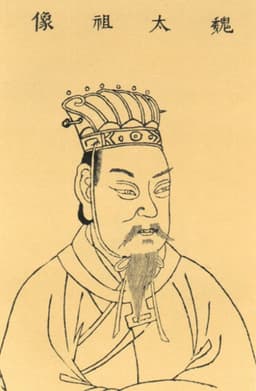
Cao Cao
General · Ancient
77.5Total
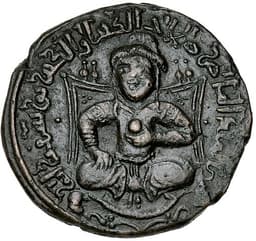
Saladin
General · Medieval
64.1Total
Basic Information
Born
155
1137
Died
220
1193
Era
Ancient
Medieval
Nationality
China
Ayyubid Sultanate
Occupation
General
General
Civilization
Eastern
Middle Eastern
Score Comparison
Military (10%)
88.0
75.0
Political (20%)
59.0
69.6
Influence (20%)
82.0
65.2
Legacy (20%)
83.0
52.0
Leadership (15%)
64.4
62.0
Strategy (15%)
89.4
76.0
TOTAL
77.5
64.1
Cao Cao — Complete Timeline
190 AD
Formation of the Coalition against Dong ZhuoPolitical Action
Cao Cao joined a coalition of regional warlords led by Yuan Shao to overthrow the tyrannical chancellor Dong Zhuo, who had seized control of the Han court. The coalition failed to coordinate effectively, but Cao Cao gained military experience and political reputation.
CoalitionDong ZhuoHan Dynasty
Impact: national
196 AD
Implementation of Tuntian (Agricultural Colonies)Reform◆ Major
Cao Cao established military agricultural colonies (tuntian) to provide food for his army and refugees. Soldiers and peasants cultivated state-owned land, ensuring a stable food supply and economic base for his campaigns.
AgricultureEconomyMilitary
Impact: regionalconstructive
200 AD
Battle of GuanduWar
Cao Cao decisively defeated Yuan Shao's numerically superior army at Guandu. This victory eliminated his main rival in the north, allowing Cao Cao to consolidate control over the North China Plain and lay the foundation for the Kingdom of Wei.
BattleYuan ShaoUnification
Impact: regional
208 AD
Battle of Red CliffsWar
Cao Cao's southern campaign was halted by the allied forces of Sun Quan and Liu Bei at the Battle of Red Cliffs. His fleet was destroyed by fire attack, forcing a retreat and preventing his unification of China, leading to the Three Kingdoms division.
BattleDefeatThree Kingdoms
Impact: regional
213 AD
Establishment of the Kingdom of WeiPolitical Action◆ Major
Cao Cao was granted the title of Duke of Wei and later King of Wei by the Han emperor, effectively creating a semi-autonomous state within the empire. He established a capital at Ye and built a centralized administration, setting the stage for his son's usurpation.
WeiStatehoodHan Dynasty
Impact: national
Saladin — Complete Timeline
1187 AD
Battle of HattinWar
Saladin's forces defeated the Crusader army at Hattin, near Tiberias. He captured King Guy of Jerusalem and the True Cross relic. The victory decimated the Crusader military and opened the way for the recapture of Jerusalem.
BattleCrusadesVictory
Impact: regional
Recapture of JerusalemWar
Saladin's army besieged and captured Jerusalem from the Crusaders after 88 years of Christian rule. He allowed the inhabitants to leave peacefully or be ransomed, contrasting with the Crusaders' massacre in 1099. This event triggered the Third Crusade.
ConquestJerusalemCrusades
Impact: global
1189 AD
Siege of AcreWar◆ Major
Saladin faced a prolonged siege of Acre by Crusader forces under Richard the Lionheart and Philip Augustus. After nearly two years, the city fell to the Crusaders. Saladin's inability to relieve the siege was a major setback.
SiegeCrusadesDefeat
Impact: regional
1191 AD
Battle of ArsufWar◆ Major
Saladin's forces attacked Richard the Lionheart's army marching south from Acre. Richard's disciplined infantry repelled the attacks, inflicting heavy losses on Saladin's troops. The battle ended in a tactical Crusader victory, but Saladin's army remained intact.
BattleCrusadesRichard the Lionheart
Impact: regional
1192 AD
Treaty of RamlaPolitical Action◆ Major
Saladin and Richard the Lionheart signed the Treaty of Ramla, ending the Third Crusade. The treaty granted Crusaders control of a coastal strip from Jaffa to Acre, while Muslims retained Jerusalem. Christian pilgrims were allowed access to holy sites.
TreatyCrusadesDiplomacy
Impact: regional
Expert Analysis
Cao Cao vs Saladin: Historical Comparison
Cao Cao (155–220 CE) was a Chinese warlord, poet, and de facto founder of the Cao Wei state during the late Eastern Han dynasty, while Saladin (1137–1193 CE) was the first Ayyubid Sultan of Egypt and Syria who recaptured Jerusalem from the Crusaders. Despite operating in different eras and continents, both are celebrated as masterful commanders and state-builders, though Cao Cao edges ahead in overall historical impact.
Dimension Analysis
**Military: Cao Cao 89 / Saladin 82**
Cao Cao won the decisive Battle of Guandu (200 CE) against Yuan Shao, unifying northern China through superior logistics, cavalry tactics, and psychological warfare. Saladin’s victory at Hattin (1187 CE) was a model of coordinated infantry and cavalry, but his sieges (e.g., Acre) were less consistently successful.
**Political: Cao Cao 73 / Saladin 72**
Cao Cao skillfully manipulated the Han imperial court, using the “tributary state” system to legitimize his rule, while balancing Confucian bureaucracy and Legalist reforms. Saladin united Egypt, Syria, and parts of Mesopotamia through diplomacy, marriage alliances, and religious legitimacy as a Sunni champion, but his empire fragmented after his death.
**Influence: Cao Cao 78 / Saladin 72**
Cao Cao’s administrative innovations—such as agricultural colonies (tuntian) and merit-based appointments—shaped Chinese governance for centuries, and his poetry influenced literary culture. Saladin’s chivalric image inspired both Muslim and European narratives, but his direct institutional impact was shorter-lived.
**Legacy: Cao Cao 82 / Saladin 70**
Cao Cao is a central figure in the *Romance of the Three Kingdoms*, immortalized as a brilliant but ruthless strategist, and his historical records (e.g., *Records of the Three Kingdoms*) remain foundational. Saladin is revered as a symbol of Muslim unity and Crusader resistance, but his legacy is more iconographic than systemic.
**Leadership: Cao Cao 80 / Saladin 78**
Cao Cao led from the front, personally commanding campaigns and executing genius maneuvers (e.g., the ambush at Liyang), but his paranoia and purges alienated allies. Saladin’s magnanimity—sparing captives at Jerusalem—earned widespread loyalty, though his indecision at times cost him strategic momentum.
Verdict
Cao Cao leads due to his superior military record, deeper institutional reforms, and enduring influence on Chinese civilization, despite Saladin’s stronger symbolic legacy.
FAQ
Q: Who ranks higher? A: Cao Cao ranks higher, with a composite score of 80 versus Saladin’s 74, reflecting his greater strategic versatility and long-term political impact.
Rankings
🥇
Cao CaoLeader
Mil: 88.0Pol: 59.0Inf: 82.0
77.5
🥈
Saladin
Mil: 75.0Pol: 69.6Inf: 65.2
64.1
+13.4 behind
How This Comparison Works
Algorithm
Each figure is scored on 6 dimensions (0—100 scale) based on structured historical data: Military (10%), Political (20%), Influence (20%), Legacy (20%), Leadership (15%), Strategy (15%). The weighted total produces the final ranking.
Data Sources
Scores are computed from structured sub-indicators in the database. Scale factors adjust for era (Ancient ×0.85, Modern ×1.0) and civilization size (Eastern ×1.05, Other ×0.80) to account for differences in population and military scale.
Maximum 3 Figures
Comparisons are limited to 2—3 figures to ensure readability and statistical meaningfulness.
Error Margins
±5 points per dimension — Sub-scores are derived from historical records with inherent uncertainty. Two figures within 5 points on a dimension should be considered roughly equivalent in that area.
Total Score Accuracy
±3 points overall — The weighted combination of 6 dimensions produces a total score with approximately ±3 points of uncertainty. Differences of less than 3 points are not statistically significant— the figures are effectively tied.
Known Limitations
- Historical records are incomplete and uneven across civilizations
- Figures from oral-tradition societies may be underrepresented
- Occupation labels can misclassify multi-role figures
- Scores measure capability and impact, not moral character
- Quantitative scoring is a comparison tool, not absolute truth
Capability Radar
Military (10%) — Battles & Warfare
Battles
95
78
Win Rate
88
72
Expansion
92
82
Political (20%) — Governance & Reform
Reform
88
68
Diplomacy
82
88
Economy
86
65
Influence (20%) — Cultural & Global Reach
Cultural
85
85
Global
75
78
Legacy (20%) — Historical Impact
Historical
92
82
Longevity
90
80
Leadership (15%) — Power & Stability
Tenure
85
75
Stability
78
70
Strategy (15%) — Tactics & Innovation
Strategy
96
85
Tactics
97
80
Reform
90
70
Similar Comparisons
Comments & Discussion
Historian1686/16/2026
对评分体系有疑问。曹操军事89,政治73——但官渡之战的前提是政治运作:他先通过迎奉天子获得合法性,再用离间计瓦解袁绍同盟。没有政治手腕,官渡打不赢。萨拉丁政治72看似接近,但他统一过程中依靠的是外交和宗教号召力,缺乏曹操那种制度创新。我算了一下,如果给曹操政治加5分到78,军事保持89,总分能到83左右。萨拉丁的军事82我也觉得偏高——他对十字军国家的围城战效率不高,而曹操的闪电战和后勤体系在古代东亚是顶级水准。数据需要调整。
Chronicler44076/16/2026
曹操和萨拉丁的比较很有意思,但西方评分体系往往低估了中国历史人物的政治智慧。曹操的73分政治项实在偏低——他挟天子以令诸侯,在东汉末年的乱世中维持了二十年的政治稳定,推行屯田制解决军粮问题,还开创了九品中正制的雏形。相比之下,萨拉丁虽然统一了埃及和叙利亚,但他的帝国在他死后迅速分裂,而曹魏的体制影响了中国几百年的政治格局。如果从跨文化角度看,曹操的综合得分应该比萨拉丁高出更多。