Loading...
Saladin vs Shaka Zulu
Shaka Zulu leads by 6.1 pts · 2 figures compared
…
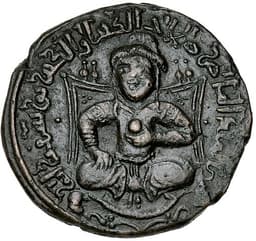
Saladin
General · Medieval
64.1Total
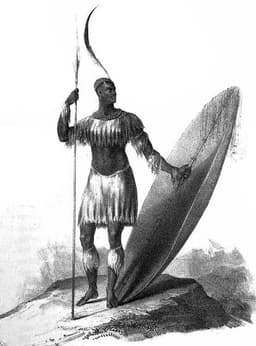
Shaka Zulu
General · Modern
70.2Total
Basic Information
Born
1137
1787
Died
1193
1828
Era
Medieval
Modern
Nationality
Ayyubid Sultanate
Zulu Kingdom
Occupation
General
General
Civilization
Middle Eastern
Other
Score Comparison
Military (10%)
75.0
80.0
Political (20%)
69.6
72.0
Influence (20%)
65.2
68.0
Legacy (20%)
52.0
68.0
Leadership (15%)
62.0
62.0
Strategy (15%)
76.0
80.8
TOTAL
64.1
70.2
Saladin — Complete Timeline
1187 AD
Battle of HattinWar
Saladin's forces defeated the Crusader army at Hattin, near Tiberias. He captured King Guy of Jerusalem and the True Cross relic. The victory decimated the Crusader military and opened the way for the recapture of Jerusalem.
BattleCrusadesVictory
Impact: regional
Recapture of JerusalemWar
Saladin's army besieged and captured Jerusalem from the Crusaders after 88 years of Christian rule. He allowed the inhabitants to leave peacefully or be ransomed, contrasting with the Crusaders' massacre in 1099. This event triggered the Third Crusade.
ConquestJerusalemCrusades
Impact: global
1189 AD
Siege of AcreWar◆ Major
Saladin faced a prolonged siege of Acre by Crusader forces under Richard the Lionheart and Philip Augustus. After nearly two years, the city fell to the Crusaders. Saladin's inability to relieve the siege was a major setback.
SiegeCrusadesDefeat
Impact: regional
1191 AD
Battle of ArsufWar◆ Major
Saladin's forces attacked Richard the Lionheart's army marching south from Acre. Richard's disciplined infantry repelled the attacks, inflicting heavy losses on Saladin's troops. The battle ended in a tactical Crusader victory, but Saladin's army remained intact.
BattleCrusadesRichard the Lionheart
Impact: regional
1192 AD
Treaty of RamlaPolitical Action◆ Major
Saladin and Richard the Lionheart signed the Treaty of Ramla, ending the Third Crusade. The treaty granted Crusaders control of a coastal strip from Jaffa to Acre, while Muslims retained Jerusalem. Christian pilgrims were allowed access to holy sites.
TreatyCrusadesDiplomacy
Impact: regional
Shaka Zulu — Complete Timeline
1816 AD
Introduction of the iklwa and horns of the buffalo formationReform
Shaka introduced the iklwa, a short stabbing spear, and the 'horns of the buffalo' tactical formation to the Zulu army. These innovations replaced the traditional throwing assegai and allowed for close-quarters combat, significantly increasing the Zulu's military effectiveness and enabling rapid conquest.
Military InnovationTacticsZulu Warfare
Impact: regional
1819 AD
Conquest of the Ndwandwe KingdomWar◆ Major
Shaka's Zulu army defeated the Ndwandwe kingdom at the Battle of Gqokli Hill, a decisive victory that eliminated a major rival. This conquest allowed Shaka to consolidate control over a large territory in present-day KwaZulu-Natal, marking the rise of the Zulu as a dominant regional power.
ConquestZulu ExpansionNdwandwe
Impact: regional
1828 AD
Assassination of ShakaPolitical Action◆ Major
Shaka was assassinated by his half-brothers Dingane and Mhlangana, with the support of his aunt Mkabayi. The coup ended his reign of terror and expansionist wars, leading to a period of instability and the eventual rise of Dingane as king.
AssassinationSuccession CrisisZulu Kingdom
Impact: regionaltragic
Expert Analysis
Shaka Zulu vs Saladin
# The Conqueror's Mirror: Saladin and Shaka Zulu
On a dusty plain in the Holy Land, a Kurdish general watched his armies shatter the Crusader kingdom of Jerusalem. Half a world away and six centuries later, a Zulu king stood on a hill in southern Africa, his warriors sweeping around an enemy army like the horns of a buffalo. Both men built empires from fractured lands. Both changed the course of military history. Yet one is remembered as a paragon of chivalry, the other as a figure of terrifying brutality. What drove these two conquerors down such different paths?
Origins
Saladin was born in 1137 into a Kurdish family serving the Zengid dynasty, a world of Islamic scholarship and courtly politics. His father, Najm ad-Din Ayyub, was a minor governor, and young Yusuf—his given name—grew up in Damascus and Baalbek, steeped in the Sunni revival that sought to push back Crusader and Shia influence alike. The era was one of fragmentation: the Muslim Near East was divided among warring emirs, while Crusader states clung to the coast. Saladin’s world prized honor, poetry, and religious learning as much as warfare.
Shaka entered the world in 1787 in a very different crucible. The son of a minor Zulu chieftain, Senzangakhona, and a woman named Nandi from the rival Langeni clan, Shaka’s childhood was marked by rejection. His father refused to acknowledge him, and he grew up among his mother’s people, an outsider in a land of small, warring Nguni chiefdoms. The Mfecane—a period of violent upheaval and migration—was brewing. Here, survival demanded innovation, not chivalry.
Rise to Power
Saladin’s ascent came through service. He joined the court of Nur ad-Din, the great Zengid ruler, and proved himself as a capable administrator and soldier. When Nur ad-Din sent him to Egypt in 1169 to prop up the faltering Fatimid Caliphate, Saladin seized the opportunity. He crushed internal rivals, abolished the Shia caliphate, and declared loyalty to the Sunni Abbasids. By 1174, upon Nur ad-Din’s death, Saladin controlled Egypt and Syria. His rise was methodical, diplomatic, and patient—a chess game played over decades.
Shaka’s rise was a lightning strike. After his father’s death in 1816, Shaka returned to the Zulu clan with a small following and a radical vision. He seized power with the support of his half-brother Dingiswayo, the Mthethwa king, and immediately began transforming the Zulu military. Where Saladin inherited a system and refined it, Shaka tore the old order apart. He abolished the traditional throwing spear, the assegai, and replaced it with the iklwa—a short, broad-bladed stabbing spear that forced warriors to fight hand-to-hand. He introduced the “horns of the buffalo” formation, where fast-moving flanks encircled the enemy while a central “chest” pinned them in place. In just three years, he turned a minor clan into a conquering army.
Leadership & Governance
Saladin ruled as a sultan, a title that combined military command with religious legitimacy. His leadership was defined by magnanimity. After the Battle of Hattin in 1187, where he annihilated the Crusader army and captured King Guy of Jerusalem, he personally spared the lives of many prisoners. When he recaptured Jerusalem later that year, he allowed the Christian inhabitants to leave with their possessions—a stark contrast to the Crusaders’ massacre of Muslims and Jews when they took the city in 1099. He governed through a network of loyal emirs, patronage of scholars, and careful diplomacy. His military genius lay in logistics, siege warfare, and the ability to unite fractious allies under a single banner.
Shaka ruled as an absolute monarch, his authority enforced by fear and the implacable discipline of his army. He centralized power ruthlessly, absorbing conquered clans into the Zulu nation through a system of age-regiments (amabutho) that broke old loyalties. His military innovations were devastatingly effective: at the Battle of Gqokli Hill in 1819, his forces defeated the powerful Ndwandwe kingdom despite being outnumbered, using the horns formation to encircle and destroy the enemy. But his governance came at a terrible cost. The Mfecane, driven largely by Shaka’s wars, depopulated vast swathes of southern Africa as refugees fled his armies. Where Saladin built alliances, Shaka crushed rivals. Where Saladin offered terms, Shaka offered annihilation.
Triumph & Tragedy
Saladin’s greatest triumph was the recapture of Jerusalem in 1187, a moment that echoed across the Islamic world. His greatest tragedy came during the Third Crusade. At the Siege of Acre (1189–1191), he watched helplessly as Richard the Lionheart and Philip Augustus ground down his garrison after two years. At the Battle of Arsuf in 1191, Richard’s disciplined infantry repelled his attacks, forcing Saladin into a strategic stalemate. The Treaty of Ramla in 1192 was a masterful compromise—it granted Crusaders control of the coast while leaving Jerusalem in Muslim hands—but it was also an admission that he could not expel the Franks entirely.
Shaka’s triumph was the creation of the Zulu Empire, a polity that stretched from the Tugela River to the Pongola. His tragedy was his own destruction. By 1828, his rule had grown paranoid and erratic. After his mother Nandi’s death, he ordered a year of mourning that included mass executions and a ban on crops, leading to famine. His half-brothers Dingane and Mhlangana, with the support of his aunt Mkabayi, assassinated him that same year. The man who had forged a nation was killed by his own blood.
Character & Destiny
Saladin was a man of his age—the age of chivalry, religious devotion, and courtly ideals. He was known to weep at the death of his enemies, to send gifts to Richard while besieging him, and to quote the Quran in his letters. His character shaped his destiny: his mercy at Jerusalem earned him a reputation that outlived his military defeats. He understood that empire required legitimacy, not just force.
Shaka was a product of a harsher world—the Mfecane, where mercy was weakness and innovation meant survival. His character was forged in rejection and violence. He trusted no one, loved only his mother, and saw war as the only path to unity. His destiny was to create a nation that would outlast him, but at the price of his own humanity.
Legacy
Saladin is remembered as a hero in the Muslim world and a model of chivalry in the West. His name graces streets, schools, and even a species of eagle. Dante placed him in Limbo, among the virtuous pagans. His legacy is one of honor, diplomacy, and the ideal of just warfare.
Shaka’s legacy is more complex. He is revered as the father of the Zulu nation, a military genius whose tactics influenced later guerrilla warfare. But he is also remembered for the bloodshed of the Mfecane. His story has been romanticized in film and literature, yet the true Shaka remains a figure of awe and unease—a conqueror who built an empire on the bones of his enemies.
Conclusion
Standing at opposite ends of the medieval and modern worlds, Saladin and Shaka Zulu faced the same fundamental challenge: how to unite a fractured people and forge a lasting empire. One chose mercy; the other chose terror. One built through patience; the other through speed. Their differences were not accidents of character but reflections of their worlds—the elegant courts of the Near East and the brutal crucible of the Mfecane. In the end, both succeeded in creating something that outlasted them. But the question of how a conqueror should be remembered—for his mercy or his might—remains as sharp as the iklwa and as timeless as the walls of Jerusalem.
Rankings
🥇
Shaka ZuluLeader
Mil: 80.0Pol: 72.0Inf: 68.0
70.2
🥈
Saladin
Mil: 75.0Pol: 69.6Inf: 65.2
64.1
+6.1 behind
How This Comparison Works
Algorithm
Each figure is scored on 6 dimensions (0—100 scale) based on structured historical data: Military (10%), Political (20%), Influence (20%), Legacy (20%), Leadership (15%), Strategy (15%). The weighted total produces the final ranking.
Data Sources
Scores are computed from structured sub-indicators in the database. Scale factors adjust for era (Ancient ×0.85, Modern ×1.0) and civilization size (Eastern ×1.05, Other ×0.80) to account for differences in population and military scale.
Maximum 3 Figures
Comparisons are limited to 2—3 figures to ensure readability and statistical meaningfulness.
Error Margins
±5 points per dimension — Sub-scores are derived from historical records with inherent uncertainty. Two figures within 5 points on a dimension should be considered roughly equivalent in that area.
Total Score Accuracy
±3 points overall — The weighted combination of 6 dimensions produces a total score with approximately ±3 points of uncertainty. Differences of less than 3 points are not statistically significant— the figures are effectively tied.
Known Limitations
- Historical records are incomplete and uneven across civilizations
- Figures from oral-tradition societies may be underrepresented
- Occupation labels can misclassify multi-role figures
- Scores measure capability and impact, not moral character
- Quantitative scoring is a comparison tool, not absolute truth
Capability Radar
Military (10%) — Battles & Warfare
Battles
78
85
Win Rate
72
90
Expansion
82
88
Political (20%) — Governance & Reform
Reform
68
85
Diplomacy
88
60
Economy
65
65
Influence (20%) — Cultural & Global Reach
Cultural
85
80
Global
78
70
Legacy (20%) — Historical Impact
Historical
82
85
Longevity
80
75
Leadership (15%) — Power & Stability
Tenure
75
70
Stability
70
55
Strategy (15%) — Tactics & Innovation
Strategy
85
90
Tactics
80
95
Reform
70
98
Similar Comparisons
Comments & Discussion
BattleAxeBarbarian6/16/2026
Saladin was a chivalrous knight? Give me a break. He butchered the Knights Templar after Hattin and enslaved thousands. Shaka at least was honest about his brutality—he created a revolutionary military system with the iklwa short stabbing spear and the buffalo horns formation. Saladin played court politics in Cairo and Damascus; Shaka forged warriors who could run 50 miles in a day and fight immediately. Give me raw, honest innovation over polished PR any day.
数据猎手6/16/2026
什么“天选征服者”啊,数据对比就知道门道了:萨拉丁打哈丁战役用了约3万人,对手才2万,但十字军在高地有水源优势,他靠切断水源而非正面碾压赢的。恰卡呢?姆福洛齐河战役,他带着3千祖鲁人横扫黑魔的1万大军,伤亡比1:10。一个靠地利和后勤,一个靠战术碾压。吹萨拉丁的多半没算过账本——历史就是胜者吹牛大会。
ClassicsChad6/16/2026
Both were products of their fractured worlds, but the key difference is what they left behind. Saladin united Egypt and Syria under a single Sunni banner, creating institutions that outlasted his dynasty—madrasas, hospitals, administrative reforms. Shaka destroyed clan structures, triggered the Mfecane that depopulated vast swaths of southern Africa, and his kingdom imploded within a decade of his death. One built a civilization; the other just built a reputation. The buffalo horns dissolve when
铁血考据党6/16/2026
别把恰卡说得好像只会杀人放火好吗?他创新了军事体系:按年龄划分“伊布托”(团),打破部落忠诚,让贫民子弟靠军功晋升。萨拉迪?他只是个政治投机商,先给努尔丁当小弟,接着在埃及自立门户,然后把赞吉王朝的遗产全吞了。恰卡至少是从被放逐的私生子一路打上去的,萨拉丁靠的是岳父和继父的关系网。哪个更狠?一目了然。