Loading...
Douglas MacArthur vs Saladin
Douglas MacArthur leads by 1.6 pts · 2 figures compared
…
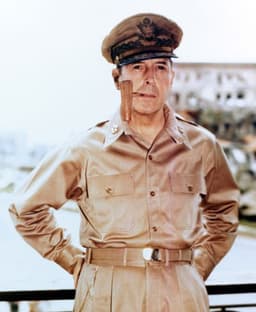
Douglas MacArthur
General · Modern
65.7Total
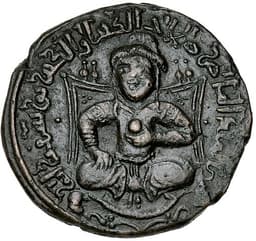
Saladin
General · Medieval
64.1Total
Basic Information
Born
1880
1137
Died
1964
1193
Era
Modern
Medieval
Nationality
United States
Ayyubid Sultanate
Occupation
General
General
Civilization
Western
Middle Eastern
Score Comparison
Military (10%)
85.0
75.0
Political (20%)
78.0
69.6
Influence (20%)
68.0
65.2
Legacy (20%)
40.0
52.0
Leadership (15%)
78.0
62.0
Strategy (15%)
68.0
76.0
TOTAL
65.7
64.1
Douglas MacArthur — Complete Timeline
1942 AD
Battle of Bataan and CorregidorWar◆ Major
MacArthur commanded US and Filipino forces defending the Bataan Peninsula and Corregidor Island against Japanese invasion. After months of resistance, he was ordered to evacuate to Australia, leaving his troops who later surrendered and endured the Bataan Death March.
World War IIPacific TheaterDefeat
Impact: regionaltragic
1944 AD
Return to the PhilippinesWar◆ Major
MacArthur led the Allied invasion of Leyte Gulf, fulfilling his promise 'I shall return.' The campaign liberated the Philippines from Japanese occupation, a major strategic victory in the Pacific War.
World War IIPacific TheaterVictory
Impact: regionalconstructive
1945 AD
Surrender of JapanWar
MacArthur, as Supreme Commander for the Allied Powers, accepted Japan's formal surrender aboard USS Missouri in Tokyo Bay. This ended World War II and began the Allied occupation of Japan under his leadership.
World War IIJapanOccupation
Impact: globalconstructive
Occupation of Japan ReformsReform◆ Major
MacArthur oversaw the Allied occupation of Japan, implementing sweeping reforms including a new constitution, land redistribution, women's suffrage, and demilitarization. These changes transformed Japan into a democratic and pacifist state.
JapanPost-WarDemocratization
Impact: globalprogressive
1950 AD
Inchon LandingWar◆ Major
MacArthur planned and executed a bold amphibious assault at Inchon, South Korea, behind North Korean lines. The operation cut North Korean supply lines and recaptured Seoul, turning the tide of the Korean War.
Korean WarAmphibious AssaultVictory
Impact: regionalconstructive
1951 AD
Dismissal by President TrumanPolitical Action◆ Major
President Harry S. Truman relieved MacArthur of command for insubordination after MacArthur publicly advocated for expanding the Korean War into China. The dismissal sparked a political controversy in the US and ended MacArthur's military career.
Korean WarCivil-Military RelationsDismissal
Impact: nationaldestructive
Saladin — Complete Timeline
1187 AD
Battle of HattinWar
Saladin's forces defeated the Crusader army at Hattin, near Tiberias. He captured King Guy of Jerusalem and the True Cross relic. The victory decimated the Crusader military and opened the way for the recapture of Jerusalem.
BattleCrusadesVictory
Impact: regional
Recapture of JerusalemWar
Saladin's army besieged and captured Jerusalem from the Crusaders after 88 years of Christian rule. He allowed the inhabitants to leave peacefully or be ransomed, contrasting with the Crusaders' massacre in 1099. This event triggered the Third Crusade.
ConquestJerusalemCrusades
Impact: global
1189 AD
Siege of AcreWar◆ Major
Saladin faced a prolonged siege of Acre by Crusader forces under Richard the Lionheart and Philip Augustus. After nearly two years, the city fell to the Crusaders. Saladin's inability to relieve the siege was a major setback.
SiegeCrusadesDefeat
Impact: regional
1191 AD
Battle of ArsufWar◆ Major
Saladin's forces attacked Richard the Lionheart's army marching south from Acre. Richard's disciplined infantry repelled the attacks, inflicting heavy losses on Saladin's troops. The battle ended in a tactical Crusader victory, but Saladin's army remained intact.
BattleCrusadesRichard the Lionheart
Impact: regional
1192 AD
Treaty of RamlaPolitical Action◆ Major
Saladin and Richard the Lionheart signed the Treaty of Ramla, ending the Third Crusade. The treaty granted Crusaders control of a coastal strip from Jaffa to Acre, while Muslims retained Jerusalem. Christian pilgrims were allowed access to holy sites.
TreatyCrusadesDiplomacy
Impact: regional
Expert Analysis
Saladin vs Douglas MacArthur
# The Conqueror and the Commander: Saladin and Douglas MacArthur
On a July morning in 1192, two of the most formidable commanders of their age faced each other across the plains of Jaffa. One was a tall, bearded Kurd in simple linen, the other a red-haired English king in chain mail. Saladin and Richard the Lionheart had fought to a bloody stalemate, and now they were negotiating. When Richard's horse was killed beneath him, Saladin sent him a fresh one—a gesture of chivalry that has echoed through centuries. Seven hundred and fifty-nine years later, on another battlefield, General Douglas MacArthur waded ashore at Leyte Gulf, fulfilling his famous promise to the Filipino people. He was a man who commanded cameras as deftly as armies, who wore a corncob pipe and aviator sunglasses as his signature. What drives one leader to offer a horse to his enemy and another to stage his own landing for the newsreels? The answer lies not in their era or religion, but in the very marrow of their character and the worlds they sought to shape.
Origins
Saladin was born in 1137 in Tikrit, modern-day Iraq, into a Kurdish family serving the Zengid dynasty. The medieval Near East was a fractured mosaic of warring Muslim emirs, Crusader kingdoms, and Byzantine intrigues. His father, Najm ad-Din Ayyub, was a military governor, and young Yusuf—his given name—grew up in Damascus and Aleppo, studying Sunni theology and the Quran. The Crusaders had held Jerusalem since 1099, a wound that festered in Muslim consciousness. Saladin's world was one of honor codes, tribal loyalties, and religious duty, where a commander's reputation rested as much on mercy as on victory.
Douglas MacArthur was born in 1880 at Little Rock, Arkansas, into a military dynasty. His father, Arthur MacArthur, was a Civil War hero and governor-general of the Philippines. The young Douglas absorbed West Point's discipline and the imperial confidence of turn-of-the-century America. He was a brilliant student, top of his class, and his early career tracked through the Philippines, Mexico, and World War I's trenches. Where Saladin inherited a fractured world of faith and feudalism, MacArthur inherited a rising American empire armed with industrial might and an unshakeable belief in its own destiny.
Rise to Power
Saladin's ascent was slow and strategic. He served under Nur ad-Din, the Zengid ruler who dreamed of uniting Islam against the Crusaders. In 1169, Saladin was sent to Egypt to shore up the faltering Fatimid Caliphate. Instead, he quietly built his own power base, abolished the Shia caliphate, and declared loyalty to the Abbasids. By 1174, upon Nur ad-Din's death, Saladin had the army, the treasury, and the religious legitimacy to claim the sultanate. His rise was a masterclass in patience: he never seized power; he absorbed it, like water filling a vessel.
MacArthur's rise was meteoric, theatrical, and often controversial. By World War I, he was a brigadier general, the youngest in the American Expeditionary Forces, decorated for bravery. In 1930, he became Army Chief of Staff—the youngest ever—and crushed the Bonus Army marchers with a ruthlessness that haunted his reputation. His exile to the Philippines in 1935 felt like a dead end. Then came Pearl Harbor. MacArthur's defense of Bataan and Corregidor, though ultimately a defeat, made him a symbol of resistance. His escape to Australia, ordered by President Roosevelt, came with his immortal promise: "I shall return." It was a vow that transformed a retreat into a prophecy.
Leadership & Governance
Saladin led from the front, sharing his soldiers' rations and sleeping on the ground. At the Battle of Hattin in 1187, he used thirst as a weapon, cutting off the Crusader army from water under the July sun. His victory was total: King Guy of Jerusalem captured, the True Cross lost. Yet when he recaptured Jerusalem that October, he refused to emulate the Crusaders' 1099 massacre. He allowed the Christian inhabitants to leave with their possessions, often for a modest ransom, and personally protected the Church of the Holy Sepulchre. His governance was a blend of military pragmatism and Islamic jurisprudence—he built schools, hospitals, and canals, but never fully centralized his realm, trusting instead to family loyalty and religious authority.
MacArthur governed from a podium and a palace. As Supreme Commander for the Allied Powers in occupied Japan, he was a proconsul with near-absolute power. He rewrote Japan's constitution, granted women the vote, broke up the zaibatsu monopolies, and redistributed land. He was a reformer, a democratizer, and a paternal autocrat all at once. His military genius was real: the Inchon Landing in 1950 was a stroke of audacity that turned the Korean War's tide. But his strategy was often rigid, his ego immense. He believed he was fighting communism, but he also believed he was fighting for his own place in history.
Triumph & Tragedy
Saladin's greatest triumph was Jerusalem. The city had been in Crusader hands for 88 years; its recapture made him the hero of Islam. But his tragedy was Acre. In 1189, the Crusaders besieged the city for two years, and Saladin could not break them. When Richard the Lionheart arrived, the siege became a war of attrition. The Battle of Arsuf in 1191 demonstrated Richard's tactical brilliance: Saladin's cavalry charges broke against ranks of English crossbowmen and spearmen. The Treaty of Ramla in 1192 gave the Crusaders a coastal strip but left Jerusalem in Muslim hands. Saladin died the next year, his treasury so depleted by war that he left only forty-seven dirhams and a single piece of gold.
MacArthur's triumph was Japan's surrender aboard the USS Missouri on September 2, 1945. He stood at the microphone, a conqueror who chose to rebuild rather than punish. His tragedy was Korea. After Inchon, he drove north toward the Yalu River, ignoring Chinese warnings. When hundreds of thousands of Chinese troops poured across the border, his army collapsed into the longest retreat in American history. His demand to bomb China and use nuclear weapons brought him into direct conflict with President Truman, who fired him in April 1951 for insubordination. The general who had promised "I shall return" was sent home in disgrace.
Character & Destiny
Saladin was defined by his sense of honor. He wept at the death of his nephew, prayed in the dust before battle, and treated his enemies with a magnanimity that shocked the Crusaders. He was not a flawless strategist—he lost Acre and Arsuf—but he was a unifier. His character built a coalition that outlasted him. His destiny was to be the mirror in which the Crusaders saw their own brutality reflected.
MacArthur was defined by his sense of self. He believed he was destined for greatness, and he performed greatness daily. His speeches were Shakespearean, his exits dramatic. But his character contained a fatal flaw: he could not accept limits. He saw the Korean War as a crusade against communism, not a limited conflict. His dismissal was not just a political act; it was the collision of a man who saw himself as above history with a president who understood that history has no single hero.
Legacy
Saladin is remembered as the ideal of chivalric virtue in both East and West. Dante placed him in Limbo among the virtuous pagans. His tomb in Damascus remains a pilgrimage site. His Ayyubid dynasty did not long survive him, but his example—of mercy in victory, of faith in action—endures.
MacArthur's legacy is more contested. In Japan, he is revered as a founding father of modern democracy. In the Philippines, his name is on streets and statues. In Korea, the Inchon Landing is still studied in military academies. But in American memory, he is a cautionary tale—the general who forgot that in a democracy, the soldier serves the civilian.
Conclusion
Two men, seven centuries apart, each a master of war and a shaper of peace. Saladin offered a horse to his enemy; MacArthur offered a constitution to his conquered. One ruled by the Quran and the sword, the other by the microphone and the pen. Their differences tell us something profound about the eras they inhabited—and about the eternal tension between the warrior who fights for God and the warrior who fights for himself. In the end, both discovered that history's judgment is not determined by how many battles you win, but by how you treat the people who survive them.
Rankings
🥇
Douglas MacArthurLeader
Mil: 85.0Pol: 78.0Inf: 68.0
65.7
🥈
Saladin
Mil: 75.0Pol: 69.6Inf: 65.2
64.1
+1.6 behind
How This Comparison Works
Algorithm
Each figure is scored on 6 dimensions (0—100 scale) based on structured historical data: Military (10%), Political (20%), Influence (20%), Legacy (20%), Leadership (15%), Strategy (15%). The weighted total produces the final ranking.
Data Sources
Scores are computed from structured sub-indicators in the database. Scale factors adjust for era (Ancient ×0.85, Modern ×1.0) and civilization size (Eastern ×1.05, Other ×0.80) to account for differences in population and military scale.
Maximum 3 Figures
Comparisons are limited to 2—3 figures to ensure readability and statistical meaningfulness.
Error Margins
±5 points per dimension — Sub-scores are derived from historical records with inherent uncertainty. Two figures within 5 points on a dimension should be considered roughly equivalent in that area.
Total Score Accuracy
±3 points overall — The weighted combination of 6 dimensions produces a total score with approximately ±3 points of uncertainty. Differences of less than 3 points are not statistically significant— the figures are effectively tied.
Known Limitations
- Historical records are incomplete and uneven across civilizations
- Figures from oral-tradition societies may be underrepresented
- Occupation labels can misclassify multi-role figures
- Scores measure capability and impact, not moral character
- Quantitative scoring is a comparison tool, not absolute truth
Capability Radar
Military (10%) — Battles & Warfare
Battles
85
78
Win Rate
75
72
Expansion
85
82
Political (20%) — Governance & Reform
Reform
85
68
Diplomacy
75
88
Economy
70
65
Influence (20%) — Cultural & Global Reach
Cultural
70
85
Global
80
78
Legacy (20%) — Historical Impact
Historical
85
82
Longevity
70
80
Leadership (15%) — Power & Stability
Tenure
80
75
Stability
65
70
Strategy (15%) — Tactics & Innovation
Strategy
90
85
Tactics
80
80
Reform
70
70
Similar Comparisons
Comments & Discussion
数据捕手6/16/2026
数据从不说谎,但比较这两位就像拿骆驼对比飞机。麦金莱在菲律宾人口足有5,000倍于萨拉丁的军队,却仍花了三年才平定游击战——萨拉丁1191年在雅法面对理查德时,兵力劣势却打出外交胜利。说句难听的,麦克阿瑟的“我回来了”口号背后,是超过5,000名美军在撤退时未随他离开的难堪记录。数据面前,传奇缩水。
Historian2686/16/2026
As a military historian, I'd argue Saladin would have outmaneuvered MacArthur in any terrain. MacArthur's Leyte landing was pure theater—he waded ashore to cameras, but his real battle was against his own ego, having abandoned the Philippines in 1942. Saladin, conversely, fought from a fractured base, unifying warring emirs before crushing the Crusaders at Hattin. One man staged a photo-op; the other built a coalition. MacArthur’s command was a performance; Saladin’s was a crusade.