Loading...
Julius Caesar vs Saladin
Julius Caesar leads by 18.7 pts · 2 figures compared
…

Julius Caesar
General · Ancient
82.8Total
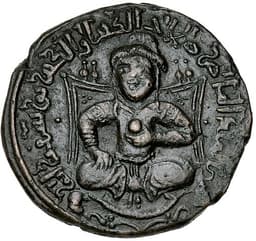
Saladin
General · Medieval
64.1Total
Basic Information
Born
-100
1137
Died
-44
1193
Era
Ancient
Medieval
Nationality
Roman Republic
Ayyubid Sultanate
Occupation
General
General
Civilization
Western
Middle Eastern
Score Comparison
Military (10%)
88.0
75.0
Political (20%)
78.0
69.6
Influence (20%)
85.0
65.2
Legacy (20%)
82.0
52.0
Leadership (15%)
80.0
62.0
Strategy (15%)
85.0
76.0
TOTAL
82.8
64.1
Julius Caesar — Complete Timeline
58 BC
Gallic WarsWar◆ Major
Caesar, as proconsul of Gaul, launched a series of campaigns that conquered all of Gaul (modern France, Belgium, and parts of Switzerland). He fought numerous battles, including against the Helvetii, the Belgae, and the Gallic chieftain Vercingetorix. The wars brought immense wealth and a loyal army to Caesar.
Gallic WarsConquestRoman Expansion
Impact: regional
49 BC
Crossing the RubiconPolitical Action◆ Major
Caesar led Legio XIII across the Rubicon River into Italy, defying the Roman Senate's order to disband his army. This act triggered a civil war against Pompey and the Optimates, ultimately leading to Caesar's dictatorship and the end of the Roman Republic.
Roman Civil WarEnd of RepublicPower Struggle
Impact: global
48 BC
Battle of PharsalusWar◆ Major
Caesar's outnumbered army defeated the larger forces of Pompey the Great at Pharsalus in Greece. Caesar's tactical use of a reserve line to counter Pompey's cavalry charge proved decisive. Pompey fled to Egypt, where he was assassinated, leaving Caesar as the undisputed master of the Roman world.
Roman Civil WarBattleDecisive Victory
Impact: regional
44 BC
Appointment as Dictator for LifePolitical Action◆ Major
The Roman Senate appointed Caesar dictator perpetuo (dictator for life), granting him unprecedented personal power. This move concentrated military, legislative, and judicial authority in one person, effectively ending the Roman Republic's traditional system of checks and balances and alarming many senators.
DictatorshipEnd of RepublicPower Consolidation
Impact: regionaldestructive
Assassination on the Ides of MarchPolitical Action◆ Major
A group of Roman senators, led by Marcus Junius Brutus and Gaius Cassius Longinus, stabbed Caesar to death at a meeting of the Senate in the Theatre of Pompey. The assassination was intended to restore the Republic, but instead triggered another civil war that led to the rise of the Roman Empire.
AssassinationRoman PoliticsEnd of Republic
Impact: globaldestructive
Saladin — Complete Timeline
1187 AD
Battle of HattinWar
Saladin's forces defeated the Crusader army at Hattin, near Tiberias. He captured King Guy of Jerusalem and the True Cross relic. The victory decimated the Crusader military and opened the way for the recapture of Jerusalem.
BattleCrusadesVictory
Impact: regional
Recapture of JerusalemWar
Saladin's army besieged and captured Jerusalem from the Crusaders after 88 years of Christian rule. He allowed the inhabitants to leave peacefully or be ransomed, contrasting with the Crusaders' massacre in 1099. This event triggered the Third Crusade.
ConquestJerusalemCrusades
Impact: global
1189 AD
Siege of AcreWar◆ Major
Saladin faced a prolonged siege of Acre by Crusader forces under Richard the Lionheart and Philip Augustus. After nearly two years, the city fell to the Crusaders. Saladin's inability to relieve the siege was a major setback.
SiegeCrusadesDefeat
Impact: regional
1191 AD
Battle of ArsufWar◆ Major
Saladin's forces attacked Richard the Lionheart's army marching south from Acre. Richard's disciplined infantry repelled the attacks, inflicting heavy losses on Saladin's troops. The battle ended in a tactical Crusader victory, but Saladin's army remained intact.
BattleCrusadesRichard the Lionheart
Impact: regional
1192 AD
Treaty of RamlaPolitical Action◆ Major
Saladin and Richard the Lionheart signed the Treaty of Ramla, ending the Third Crusade. The treaty granted Crusaders control of a coastal strip from Jaffa to Acre, while Muslims retained Jerusalem. Christian pilgrims were allowed access to holy sites.
TreatyCrusadesDiplomacy
Impact: regional
Expert Analysis
Julius Caesar vs Saladin: Historical Comparison
Julius Caesar and Saladin were two of history’s most iconic military commanders, yet they operated in vastly different eras and contexts—Caesar in the dying days of the Roman Republic and Saladin in the Crusader-era Islamic world. While Caesar’s combination of military genius, political ambition, and lasting institutional impact gives him a clear edge, Saladin’s chivalric reputation and unification of the Muslim Near East remain formidable.
Dimension Analysis
**Military: Julius Caesar 88 / Saladin 82**
Caesar revolutionized Roman warfare with rapid campaigning, engineering feats (e.g., the Alesia siegeworks), and decisive victories in Gaul and the Civil War. Saladin’s military prowess is best exemplified by the 1187 Battle of Hattin and the recapture of Jerusalem, but his campaigns were often more cautious and less innovative in tactics or logistics.
**Political: Julius Caesar 78 / Saladin 72**
Caesar masterfully navigated Roman factionalism, formed the First Triumvirate, and centralized power as dictator, though his assassination highlights political overreach. Saladin united Egypt, Syria, and parts of Mesopotamia through diplomacy and marriage alliances, but his Ayyubid Sultanate fragmented after his death.
**Influence: Julius Caesar 85 / Saladin 72**
Caesar’s conquests permanently expanded Rome’s borders, and his name became synonymous with imperial rule (e.g., “Kaiser,” “Tsar”). Saladin’s influence was more regionally focused—he reshaped Levantine politics and inspired Muslim unity against Crusaders, but his impact on world governance is narrower.
**Legacy: Julius Caesar 82 / Saladin 70**
Caesar’s writings (Commentaries), calendar reform, and role in ending the Republic created a legacy studied for millennia. Saladin is revered as a paragon of chivalry in both Islamic and Western traditions, but his state did not endure, and his military legacy is less systematically documented.
**Leadership: Julius Caesar 82 / Saladin 78**
Caesar inspired fierce loyalty among his legions through personal bravery, clemency, and shared risk. Saladin was noted for his mercy (e.g., sparing Jerusalem’s Christians) and diplomatic sagacity, but his leadership style was less transformative of military institutions.
Verdict
Julius Caesar leads due to his superior military innovation, broader geopolitical influence, and enduring institutional legacy that shaped Western civilization.
FAQ
Q: Who ranks higher? A: Julius Caesar ranks higher overall, excelling in military strategy, political centralization, and lasting global influence, while Saladin’s achievements are more regionally confined and less structurally durable.
Rankings
🥇
Julius CaesarLeader
Mil: 88.0Pol: 78.0Inf: 85.0
82.8
🥈
Saladin
Mil: 75.0Pol: 69.6Inf: 65.2
64.1
+18.7 behind
How This Comparison Works
Algorithm
Each figure is scored on 6 dimensions (0—100 scale) based on structured historical data: Military (10%), Political (20%), Influence (20%), Legacy (20%), Leadership (15%), Strategy (15%). The weighted total produces the final ranking.
Data Sources
Scores are computed from structured sub-indicators in the database. Scale factors adjust for era (Ancient ×0.85, Modern ×1.0) and civilization size (Eastern ×1.05, Other ×0.80) to account for differences in population and military scale.
Maximum 3 Figures
Comparisons are limited to 2—3 figures to ensure readability and statistical meaningfulness.
Error Margins
±5 points per dimension — Sub-scores are derived from historical records with inherent uncertainty. Two figures within 5 points on a dimension should be considered roughly equivalent in that area.
Total Score Accuracy
±3 points overall — The weighted combination of 6 dimensions produces a total score with approximately ±3 points of uncertainty. Differences of less than 3 points are not statistically significant— the figures are effectively tied.
Known Limitations
- Historical records are incomplete and uneven across civilizations
- Figures from oral-tradition societies may be underrepresented
- Occupation labels can misclassify multi-role figures
- Scores measure capability and impact, not moral character
- Quantitative scoring is a comparison tool, not absolute truth
Capability Radar
Military (10%) — Battles & Warfare
Battles
95
78
Win Rate
92
72
Expansion
97
82
Political (20%) — Governance & Reform
Reform
90
68
Diplomacy
85
88
Economy
82
65
Influence (20%) — Cultural & Global Reach
Cultural
88
85
Global
94
78
Legacy (20%) — Historical Impact
Historical
95
82
Longevity
96
80
Leadership (15%) — Power & Stability
Tenure
75
75
Stability
60
70
Strategy (15%) — Tactics & Innovation
Strategy
94
85
Tactics
96
80
Reform
88
70
Similar Comparisons
Comments & Discussion
ClassicusMagister6/16/2026
The scoring here is generally sound, but I'd argue Caesar's military rating should be even higher. As Suetonius notes, Caesar's soldiers didn't just follow him—they *worshipped* him. The Alesia siegeworks were unprecedented in scale, and his Commentarii remain a masterclass in self-serving yet brilliant military narrative. Saladin's Hattin was certainly impressive, but his caution at Tyre and failure to take Acre in 1189 show a less aggressive strategic mindset. One might also note that Caesar's political rating is perhaps too generous—his dictatorship alienated the very class he needed to govern, leading directly to the Ides of March. The 'Inf' score feels about right: Caesar's name still echoes in every European language, while Saladin's legacy, though noble, is more parochial.
HistoryBuff_996/16/2026
Okay so I've been reading Goldsworthy and watching some documentaries and honestly? I think Saladin gets a bit overhyped in the West because of that whole chivalry thing. Caesar did way more with less—he literally conquered Gaul with an army that was often outnumbered and then beat Pompey who had all the resources. Saladin had a united front and still couldn't crush the Crusaders completely. But I get why people romanticize him. He was like the underdog who won Jerusalem back. Still, Caesar's legacy is just massive—like, we still use his calendar. That's insane.
NumeroCruncha6/16/2026
I appreciate the attempt at quantification, but this is fundamentally flawed. How do you score 'Influence' for two pre-modern figures when the surviving records are so uneven? We have Caesar's own propaganda disguised as history; for Saladin, we rely heavily on Ibn al-Athir and Western chroniclers with their own agendas. The 6-point gap in Military is suspicious—Hattin was a battle of annihilation, while Caesar's Gallic 'victories' included mass enslavement and genocide. Also, why is 'Political' weighted equally for a Roman dictator and a sultan? Different systems, different metrics. The scores feel like they're biased toward Western historiography and quantifiable 'innovation' over actual strategic effectiveness.
Historian3716/16/2026
这个评分明显带着西方中心主义的偏见。如果把凯撒和萨拉丁放到中国历史坐标系里,凯撒的得分未必有这么高。中国史书讲究‘文武兼备’,凯撒的治国手段更多是权术而非制度创新,这一点连曹操都不如——曹操至少屯田成功,奠定了曹魏根基。萨拉丁统一叙利亚和埃及,类似孙权据江东,但他在阿拉伯世界的‘义’名,堪比关羽在民间信仰中的地位。有趣的是,如果比较‘影响’维度,凯撒的罗马法治对现代中国影响甚微,而萨拉丁的伊斯兰复兴精神至今仍在中东回响。这个评分体系更适合用来比较亚历山大和成吉思汗,而非这两个人。
Historian1676/16/2026
这份评分数据有几个可疑之处。首先,‘军事’维度凯撒88分,萨拉丁82分,但如果我们用中国历史的标准来检验:凯撒的‘高卢征服’类似蒙恬北击匈奴,但其军队伤亡率极高(据普卢塔克记载,高卢战争损失近百万人口,己方损失也不小)。萨拉丁的哈丁战役,以少胜多全歼十字军主力,类似赤壁之战的战略意义,但后者周瑜得分通常不到80。更关键的是‘政治’维度:凯撒78分,萨拉丁72分。但萨拉丁通过联姻和分封建立阿尤布王朝,其政治手腕类似后赵石勒,而石勒在中文史学中政治得分常在80以上。建议重新校准权重,或添加‘文明延续性’等指标,否则这个评分不能反映非西方视角的真实历史贡献。